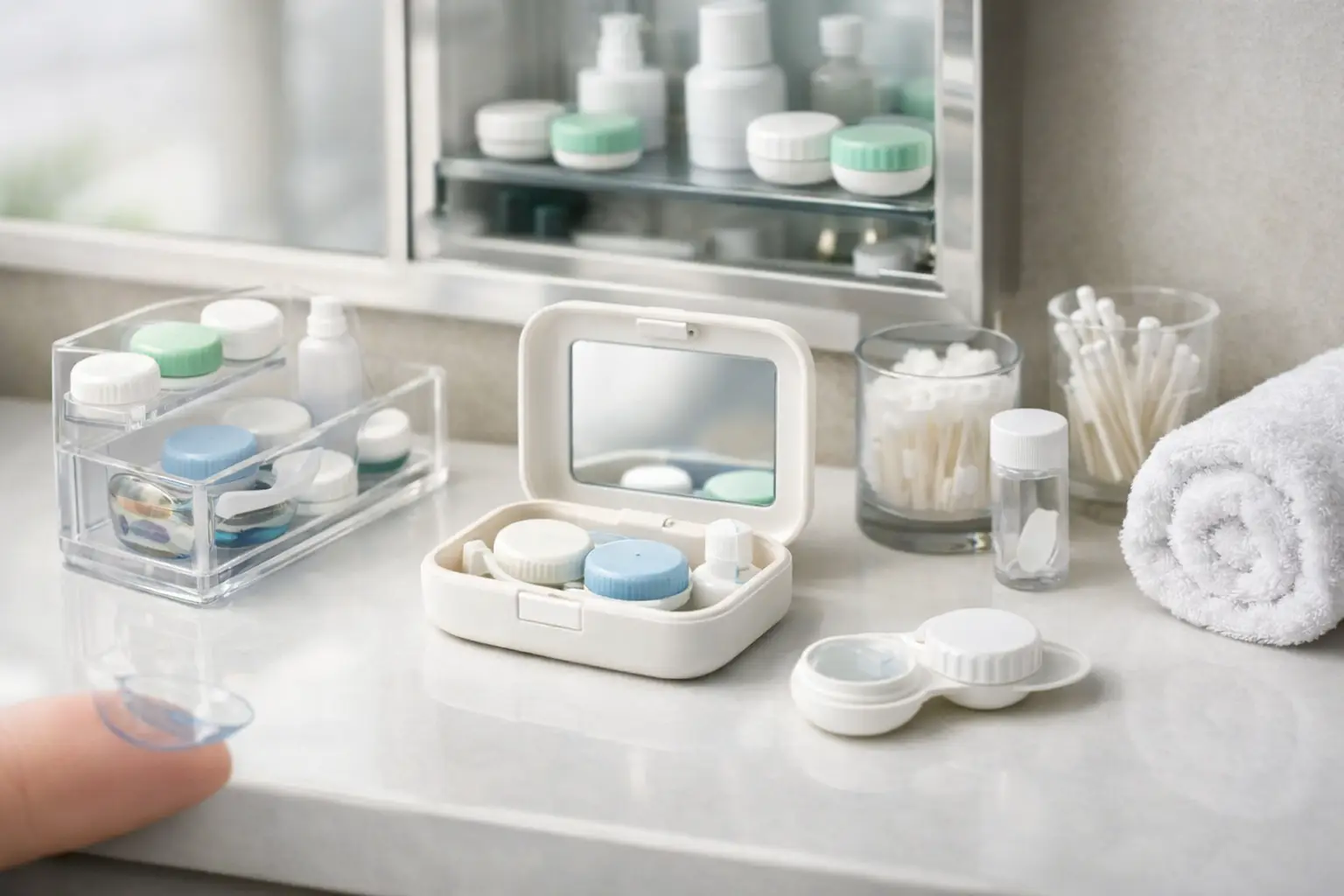
A contact lens case is small. The confusion around it rarely is. When you have more than one pair of lenses, a quick drawer search can turn into guessing which case holds your current prescription, which pair is blue, and whether a lens is still within its replacement schedule. This lens storage review looks at what a storage system should do beyond simply holding cases.
Why Lens Storage Becomes a Daily Problem
Most contact lens storage starts with good intentions. Packaging is kept nearby for reference, a case is placed in the medicine cabinet, and a spare pair goes into a bathroom drawer. Over time, boxes get discarded, labels peel away, and similar-looking cases start to blend together.
The result is not just visual clutter. You may lose the prescription details needed to reorder, forget whether a pair is cosmetic or corrective, or keep using lenses without a clear record of when they were purchased or opened. For wearers who rotate between multiple colors, prescriptions, or replacement schedules, a basic container does not provide enough context.
A useful system creates one reliable home for lens cases and the details attached to them. That is the difference between storing lenses and actually managing them.
Lens Storage Review: What Matters Most
The best lens storage option depends on how many pairs you use and how much information you need to keep track of. Still, a practical review should look beyond appearance. The goal is to reduce mix-ups every time you reach for a case.
Clear identification for every pair
A system should make it easy to identify each pair without opening cases or searching through old packaging. Prescription strength, lens color, purchase date, expiration date, and replacement timing can all matter. If that information lives in different places, it is easy to lose.
Color-coded identification is especially useful for people who wear colored contacts. A pair labeled brown, hazel, gray, or blue should be instantly recognizable. The same applies when you have a backup prescription, lenses for occasional wear, or different powers for each eye.
Space for the details people usually throw away
Contact lens boxes contain useful information, but they are not designed for long-term organization. They take up room, get bent, and are often discarded as soon as the lenses are transferred to a case. Once the box is gone, important details may be gone with it.
A purpose-built organizer should preserve the information you need without requiring you to keep a pile of cardboard boxes. Look for a way to record the prescription, color, expiration date, and purchase information beside the correct lens case. This makes future reorders and routine checks much simpler.
A layout that prevents case mix-ups
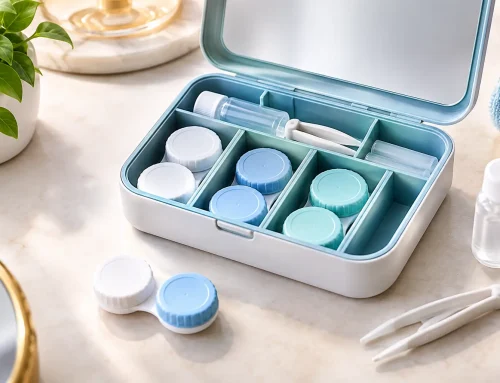
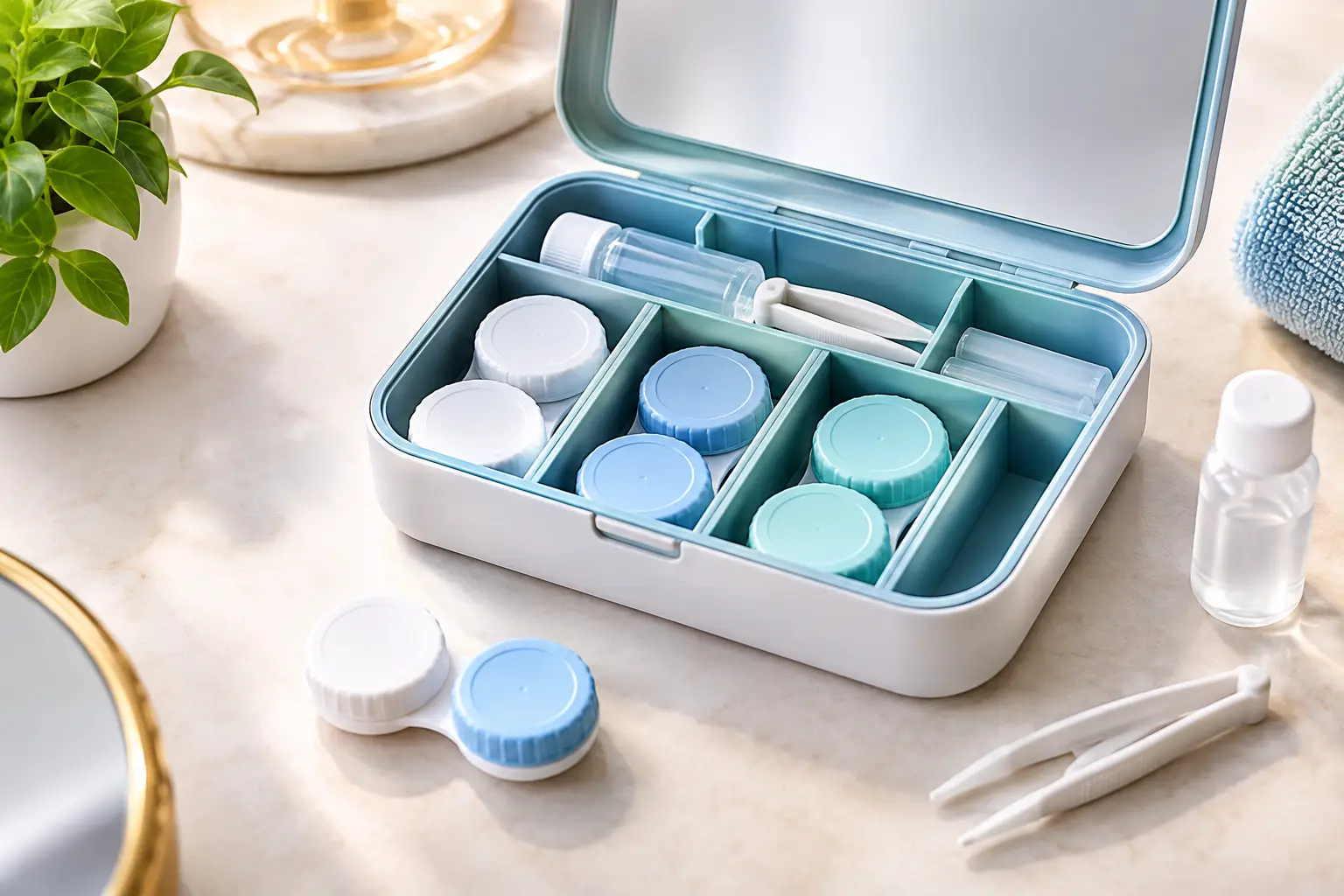
A storage solution should give every lens case a defined place. Loose cases in a drawer are easy to knock over, combine, or confuse with one another. A structured layout helps you see what you own at a glance and return each pair to the same spot after use.
This matters most when several cases look alike. If you have ever picked up a case and had to ask yourself what is inside, your storage setup is asking too much of your memory.
A clean, easy-to-maintain home
Organization should make your lens routine easier to maintain, not add another chore. The ideal setup keeps cases together in one designated area of your bathroom, drawer, or medicine cabinet. It should be simple to wipe clean and easy to reset after you replace a pair.
Keep in mind that an organizer is not a replacement for proper lens care. Continue to clean, disinfect, and replace lens cases according to your eye care professional’s guidance and the instructions for your contact lens solution. Storage helps you keep track of your routine. It does not change the care your lenses require.
What a Better Routine Looks Like
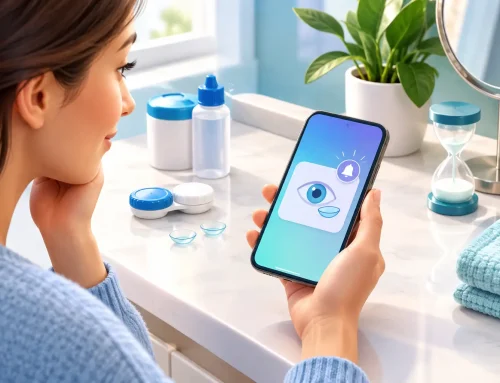
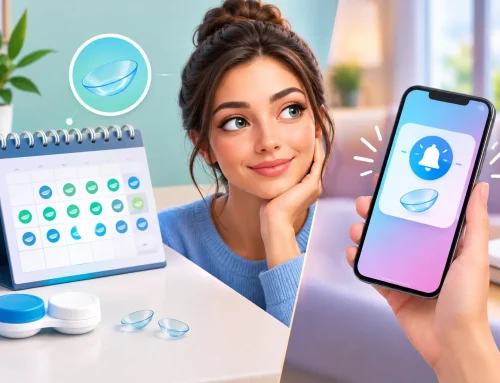
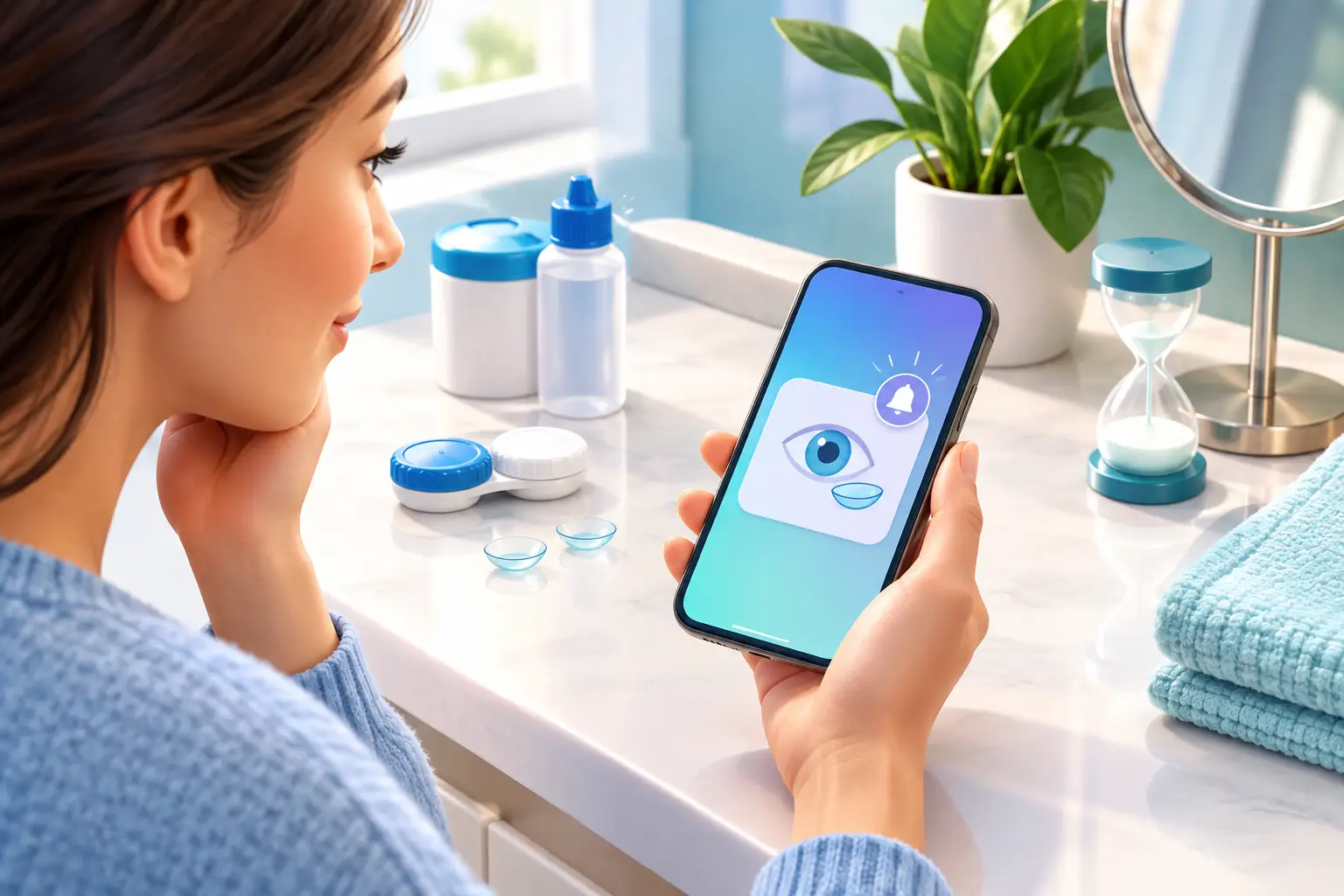
Without a system, lens care often relies on scattered reminders: a note in your phone, an old order email, a box in a drawer, or a date you hope to remember. That approach can work for one pair, but it becomes unreliable as soon as your collection grows.
With dedicated lens storage, the process becomes more straightforward. Place each lens case in its assigned spot. Record the key details when you open or purchase a pair. When it is time to wear, clean, replace, or reorder lenses, the information is already where you need it.
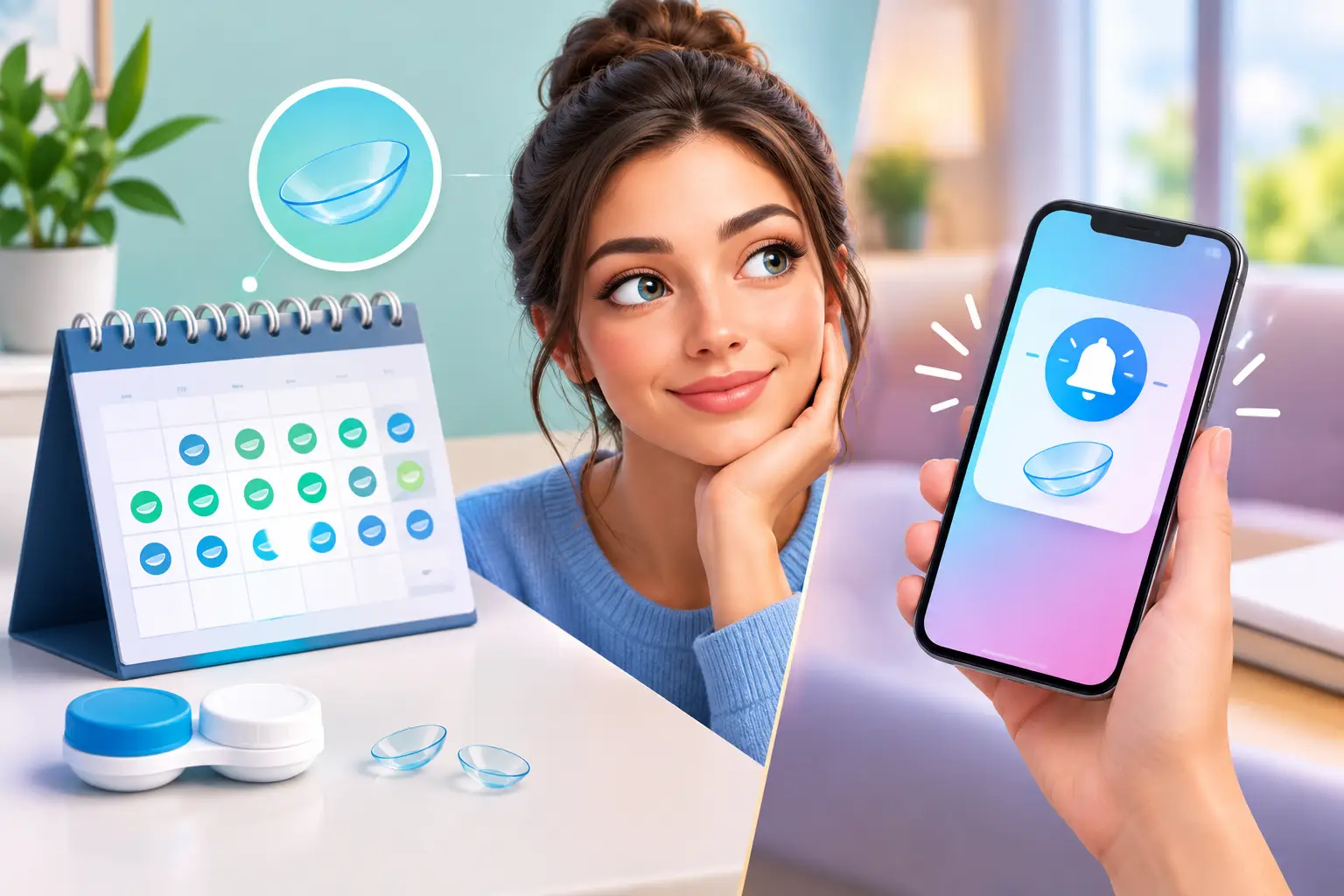
This is particularly helpful for monthly, quarterly, or yearly replacement lenses. Instead of wondering how long a pair has been sitting in the cabinet, you have a visible record to check. The goal is not to make lens care complicated. It is to remove the small, repeated moments of uncertainty that make the routine feel messy.
Who Benefits Most From Organized Lens Storage?
A dedicated organizer is useful for nearly any contact lens wearer, but it is most valuable when you manage more than one lens type or replacement cycle. That includes people with prescription lenses and a separate pair of cosmetic contacts, as well as wearers who keep backup pairs on hand.
It can also make a noticeable difference if you share a bathroom or store personal care items in a limited space. A labeled system gives your lenses a clear place instead of letting them disappear among skincare, medication, and everyday toiletries.
Parents and caregivers may also appreciate the clarity of keeping lens details together for an adult child or family member who needs a little more structure around their eye care routine. In every case, the benefit is the same: fewer assumptions and less time spent looking for information.
What to Look for Before You Buy
Not every small box or drawer organizer is a good lens storage solution. Generic containers may hold cases, but they do not necessarily help you identify what is in them or track the information that matters.
Before choosing one, consider whether it gives each case a dedicated location, supports written or visible lens details, and makes it easy to distinguish one pair from another. Also think about where it will live in your daily routine. The best organizer is one you will use consistently because it fits naturally into the place where you handle your lenses.
Avoid choosing based on capacity alone. A large container can still create confusion if everything is stored together without labels or a clear system. A smaller, purpose-built design often works better because it gives each item a job and each pair a place.
The Trade-Off: Simple Storage vs. Complete Organization
A basic container is inexpensive and may be enough for someone who wears one type of lens, follows a simple replacement schedule, and already keeps prescription details in an easy-to-find place. There is nothing wrong with a simple solution when it truly stays simple.
The trade-off appears when lens information starts living outside the container. If cases are in one drawer, prescriptions are in an email, colors are remembered from the packaging, and expiration dates are written on a separate note, the routine becomes fragmented. You may save space at first, but lose time and confidence later.
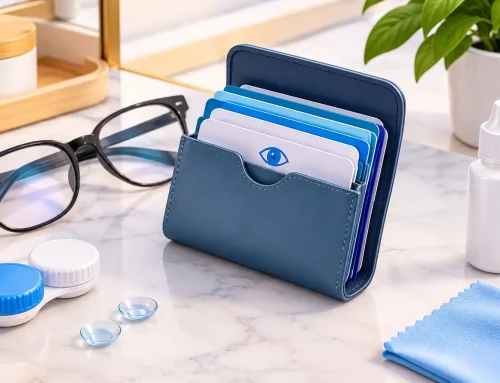
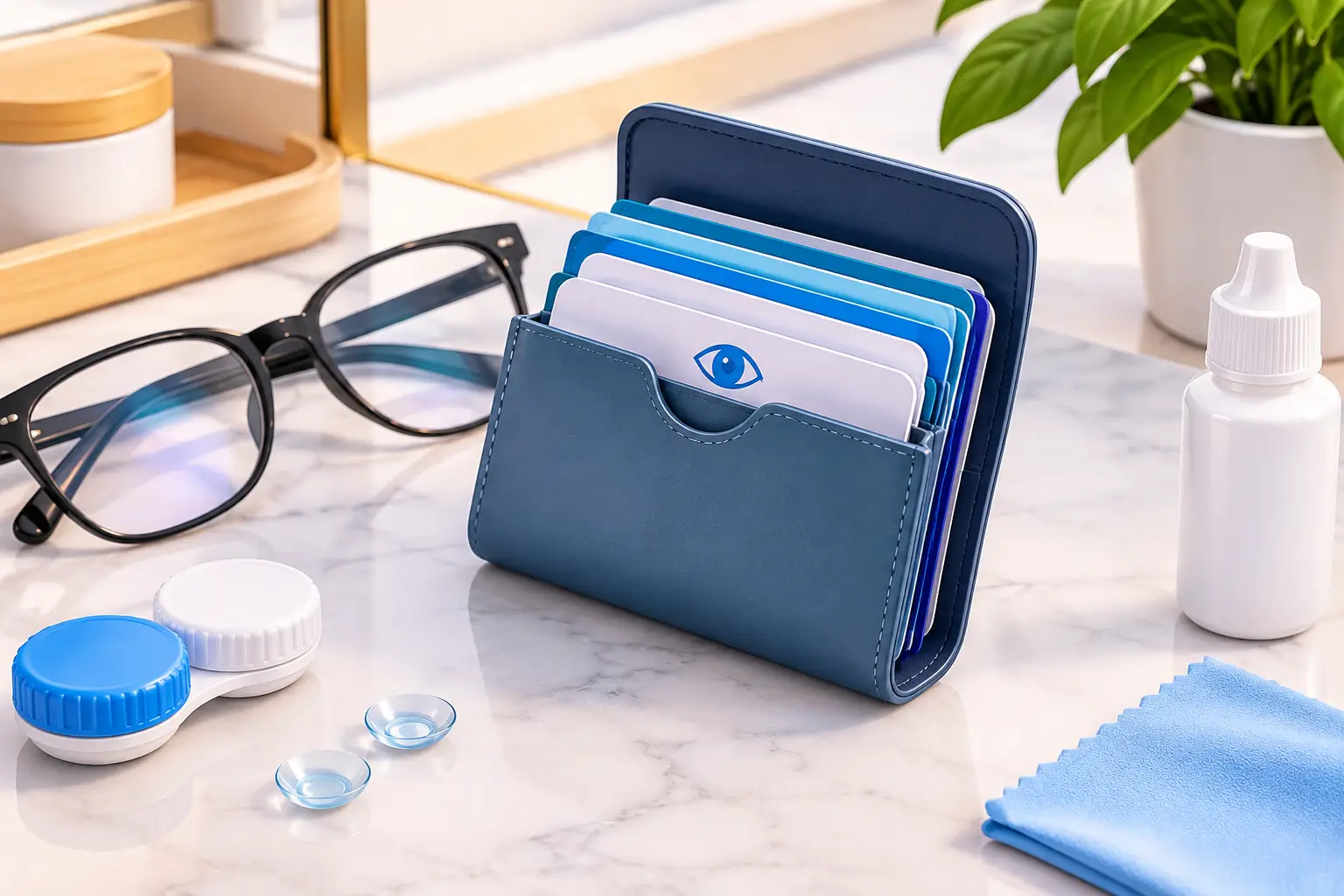
EYEBOX® is designed around this specific gap. It stores lens cases while keeping the prescription, color, expiration date, and purchase information connected to each pair. Rather than asking you to remember details or keep packaging around, it turns those details into part of the storage system itself.
A Small System With a Practical Payoff
The right lens organizer will not change your prescription or replace professional eye care. What it can change is the moment you open a drawer and immediately know which lenses are which, when they were purchased, and what needs attention next.
That kind of clarity is worth building into your routine. Your lenses are personal, often expensive, and easy to confuse. Giving them an organized home makes everyday care feel more controlled from the first case to the next reorder.