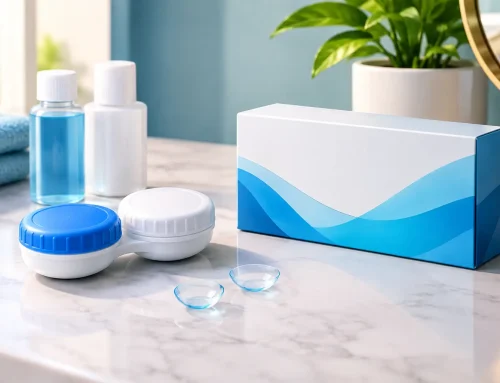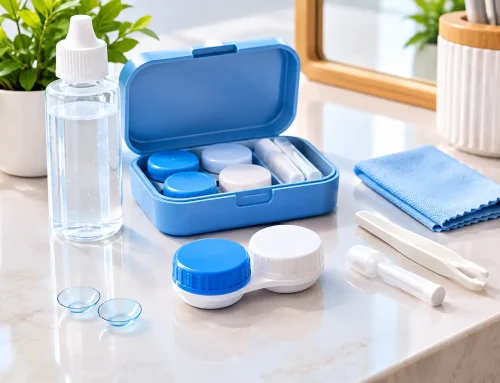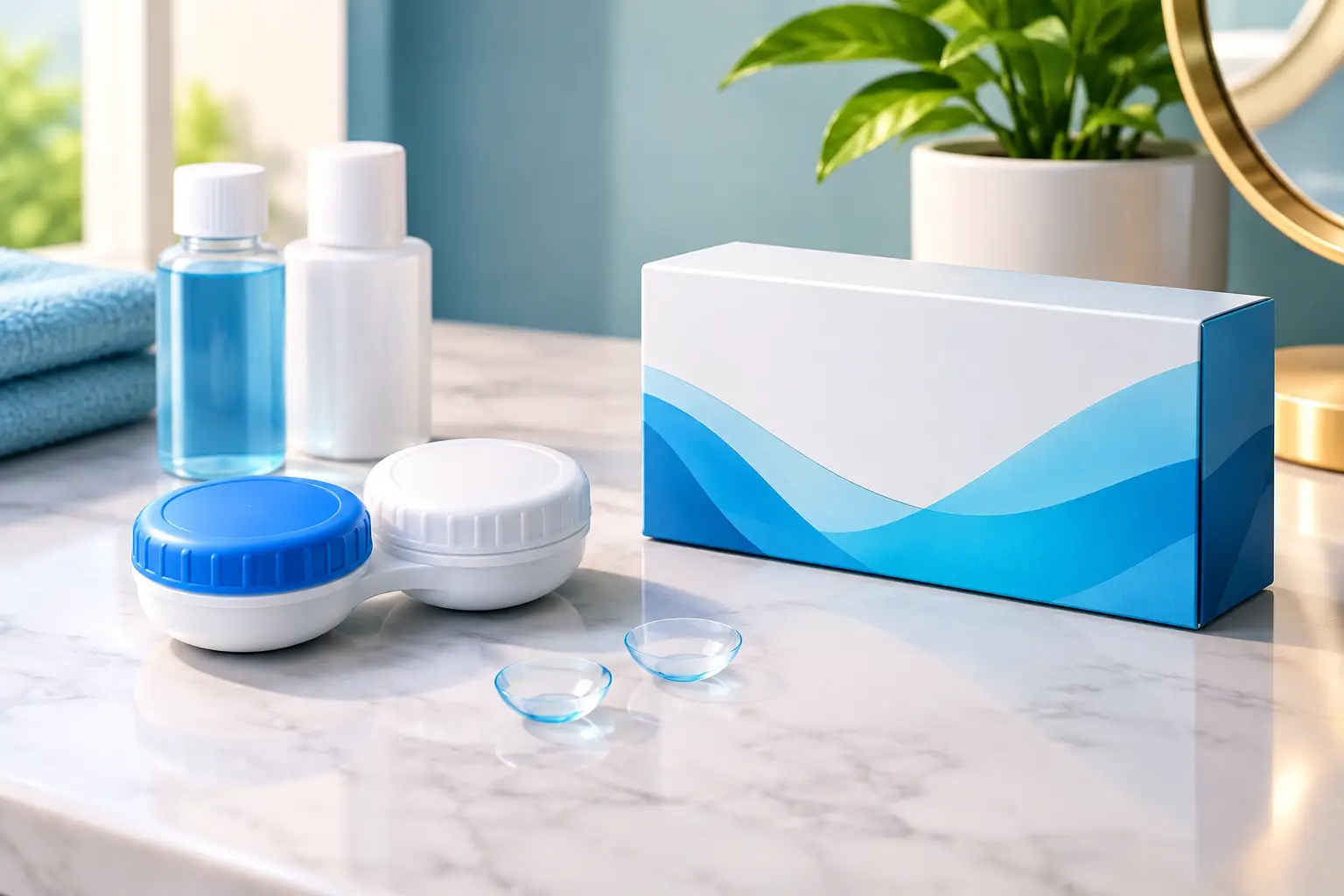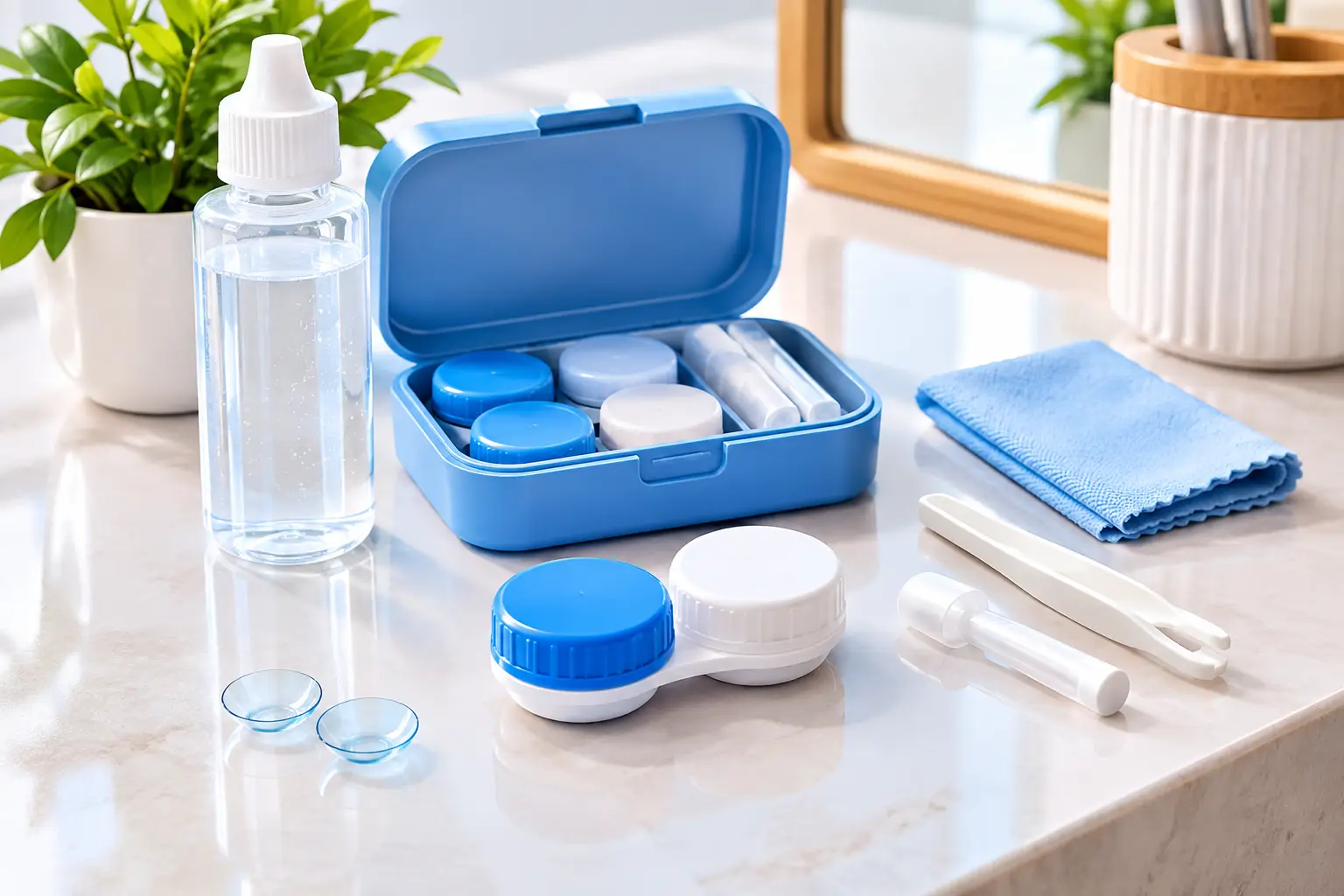

A case divider review matters most when your contact lens drawer has stopped making sense. You may have several lens cases that look identical, loose boxes with partial prescription details, and no easy way to remember which colored pair expires next. A divider can make the space look neater, but the right setup should also help you identify every pair quickly and keep the details you need within reach.
What a Case Divider Should Actually Solve
A basic case divider separates small items into compartments. That is useful, especially if your lens cases currently roll together in a drawer or collect around the bathroom counter. Each pair gets a defined spot, which reduces visual clutter and makes your routine feel less scattered.
But contact lenses create a more specific organization problem than earrings, vitamins, or office supplies. Lens cases do not display the prescription, color, brand, purchase date, or replacement schedule. Once the outer packaging is gone, a tidy compartment may still leave you guessing.
That distinction is the key to a useful case divider review. The best option is not simply the one with the most sections. It is the one that helps you separate lens cases and connect each case to the information that tells you exactly what it is.
Case Divider Review: What to Look For
Before choosing a divider or organizer, consider how many pairs you manage and how often you switch between them. Someone who wears one clear prescription pair may need simple storage. Someone who keeps multiple prescriptions, colored contacts, backup lenses, or different replacement schedules needs a system with more built-in clarity.
Clear spaces for each lens case
Individual compartments are the starting point. A case should sit in its own designated space rather than touch other cases or accessories. This helps prevent the all-too-common moment when you pick up a case and cannot remember whether it holds your everyday lenses or a cosmetic pair.
Look for compartments that fit the cases you actually use. If the spaces are too large, cases can shift around and the divider loses its purpose. If they are too tight, retrieving and returning a case becomes annoying enough that you may stop using the system consistently.
A way to record lens details
This is where standard dividers often fall short. A sticky note on the outside of a drawer is easy to lose. Writing directly on a lens case is not always practical, especially when you need to track more than a short label.
A better organization method gives you a dedicated place to record key details, including prescription strength, lens color, expiration date, purchase date, and where the lenses came from. Those details turn a compartment into a reliable reference point rather than just a small storage square.
Labels you can understand at a glance
Tiny handwriting and vague labels create their own confusion. Labels should be clear enough to read during a busy morning, without opening several cases or searching through old packaging.
Color coding can be especially helpful for people who wear colored contacts. It provides a visual shortcut when several pairs are stored at once. Color should support the written record, though, not replace it. Two shades can look similar, and the color alone cannot tell you whether a pair is current or expired.
A clean, repeatable setup
An organizer only works if it becomes part of your normal routine. You should be able to put a lens case back in its assigned position after cleaning or wearing your lenses. You should also be able to update information when you open a new pair without creating a separate spreadsheet, note app, or pile of paper reminders.
The goal is not to add another task to lens care. It is to remove the repeated mental work of remembering what belongs where.
Where Standard Dividers Help – and Where They Do Not
A basic drawer divider can be a good low-cost starting point if you have a small collection of lens supplies. It can stop cases from moving around, contain solution bottles and accessories, and make a crowded bathroom drawer easier to use. For some households, that may be enough.
The trade-off is that general-purpose dividers separate objects, not information. They do not tell you which prescription is in a case, whether a colored pair is blue or gray, or when you should stop using a lens. You still need another system for tracking those details.
Small storage boxes offer a similar benefit. They keep items together and can look clean on a shelf or in a cabinet. Yet if every compartment contains the same-looking lens case, the organization is only visual until you need to identify a specific pair.
A purpose-built contact lens organizer addresses both parts of the problem: where the case goes and what the lenses are. The EYEBOX® is designed around this everyday need, combining dedicated case storage with space to preserve essential lens information. Instead of relying on memory or discarded packaging, you can keep the record connected to the pair it belongs to.
The Difference Between Neat and Truly Organized
A neat drawer can still hide mistakes. You might have six lens cases lined up perfectly, but without their details, opening the wrong one remains possible. That is especially frustrating when your prescriptions are close, when you use lenses for different occasions, or when you have more than one color in rotation.
True organization makes decisions easier. When each case has a place, a label, and a record, you do not have to reconstruct the information every time you reach for lenses. You spend less time checking old emails, looking through cabinets, or wondering whether you already opened a newer pair.
This also helps with expiration awareness. Many lens wearers know expiration information matters, but the date is easy to lose when packaging gets tossed after opening. Keeping it visible in your storage system gives you a practical reminder before a lens becomes a question mark.
Who Gets the Most Value From a Lens Case Divider?
A divider with tracking features is especially useful if you wear more than one type of lens. That includes people who keep clear prescription lenses for daily wear and colored contacts for special looks, as well as people whose prescription has changed and who still have older pairs around.
It can also make a real difference for anyone who buys lenses in batches. When several similar cases enter your routine at once, it is easy to assume you will remember every detail later. Usually, you will not need the information until months later, when the box is long gone.
If you only use one pair and replace it on a simple schedule, a basic compartment may be enough. Still, even a single pair benefits from a consistent place and a visible record. The best choice depends on how much information you are currently trying to keep in your head.
How to Set Up Your Organizer So It Stays Useful
Start by gathering every lens case, unopened lens package, and any details you have saved elsewhere. Check each pair before placing it in a compartment. Record the prescription, color if applicable, expiration date, and purchase information while the packaging is still available.
Then assign one location to each pair and return it there every time. Avoid using a compartment as a temporary holding spot for whatever case is closest. A system only stays clear when each space has one meaning.
When you open a new pair, update the record right away. This takes far less time than trying to identify a case later. If you discontinue a pair or reach its expiration date, remove it from the organizer so old information does not remain mixed in with active lenses.
The Practical Verdict
The strongest case divider is not necessarily the one with the most compartments. It is the one that reduces mix-ups, keeps lens cases orderly, and preserves the details that packaging usually carries away. General dividers are helpful for containing clutter, but they leave the tracking work to you.
For contact lens wearers with multiple pairs, the more useful approach combines physical separation with clear records and easy identification. Give every case a home, keep its details beside it, and your next lens choice can be simple instead of a guessing game.