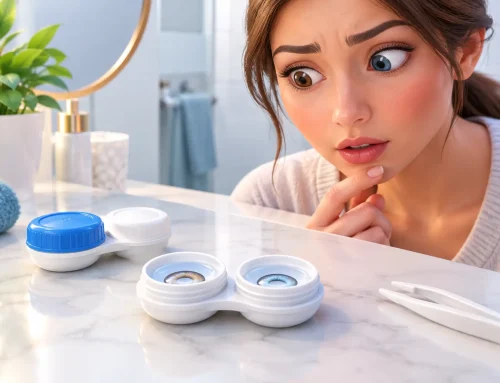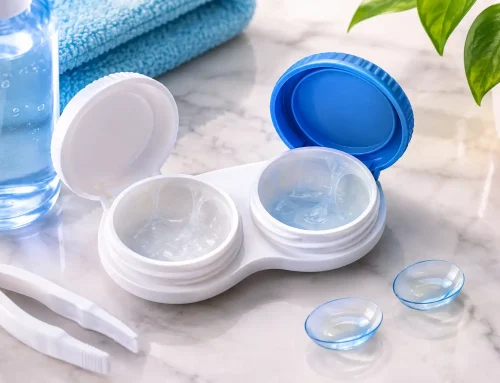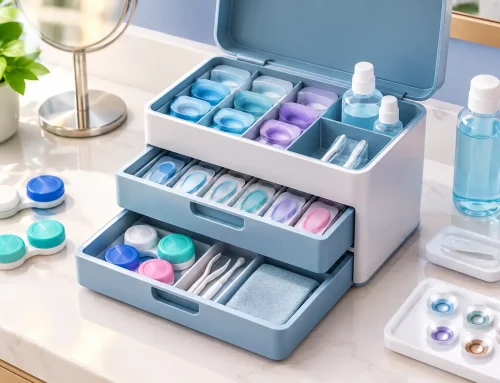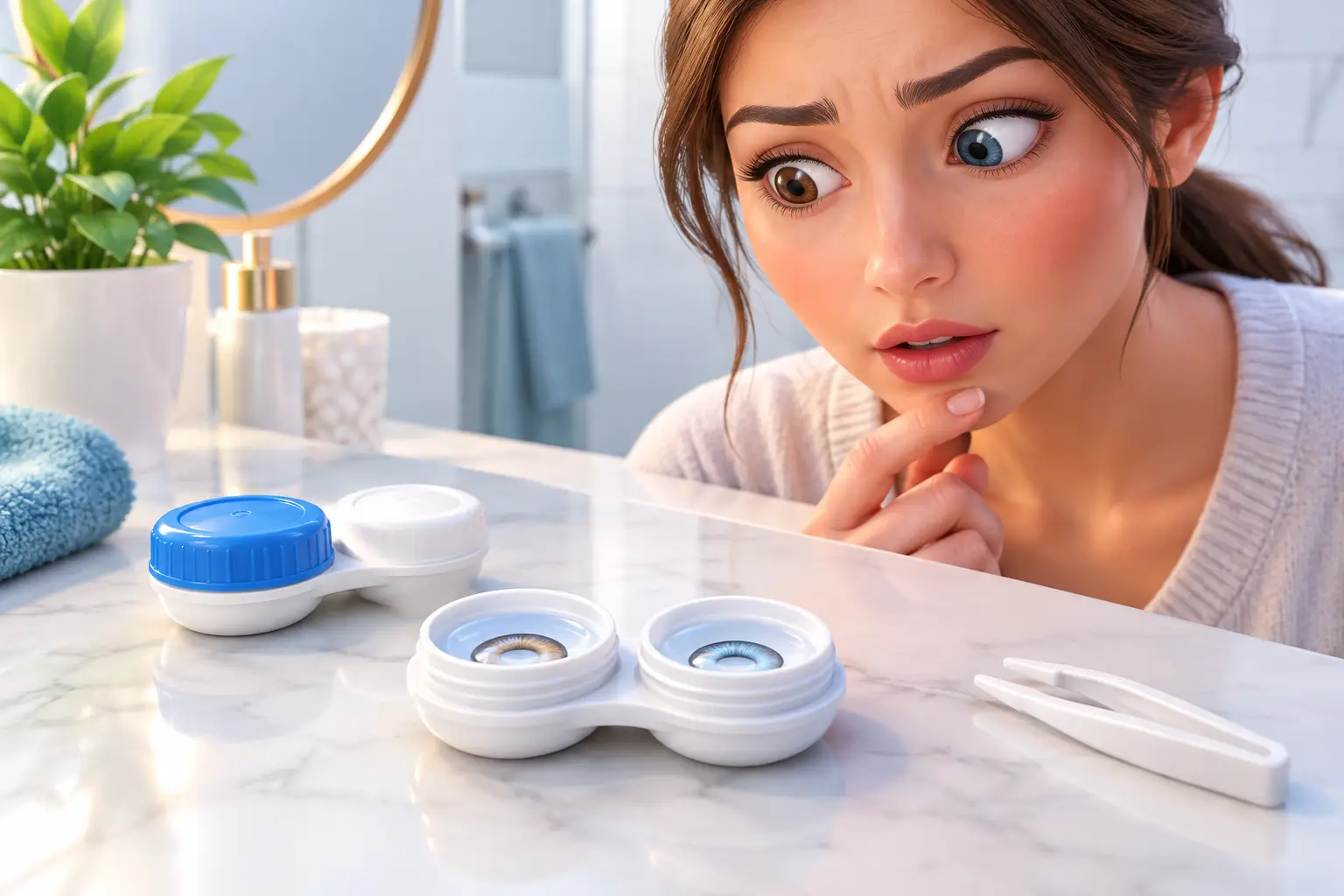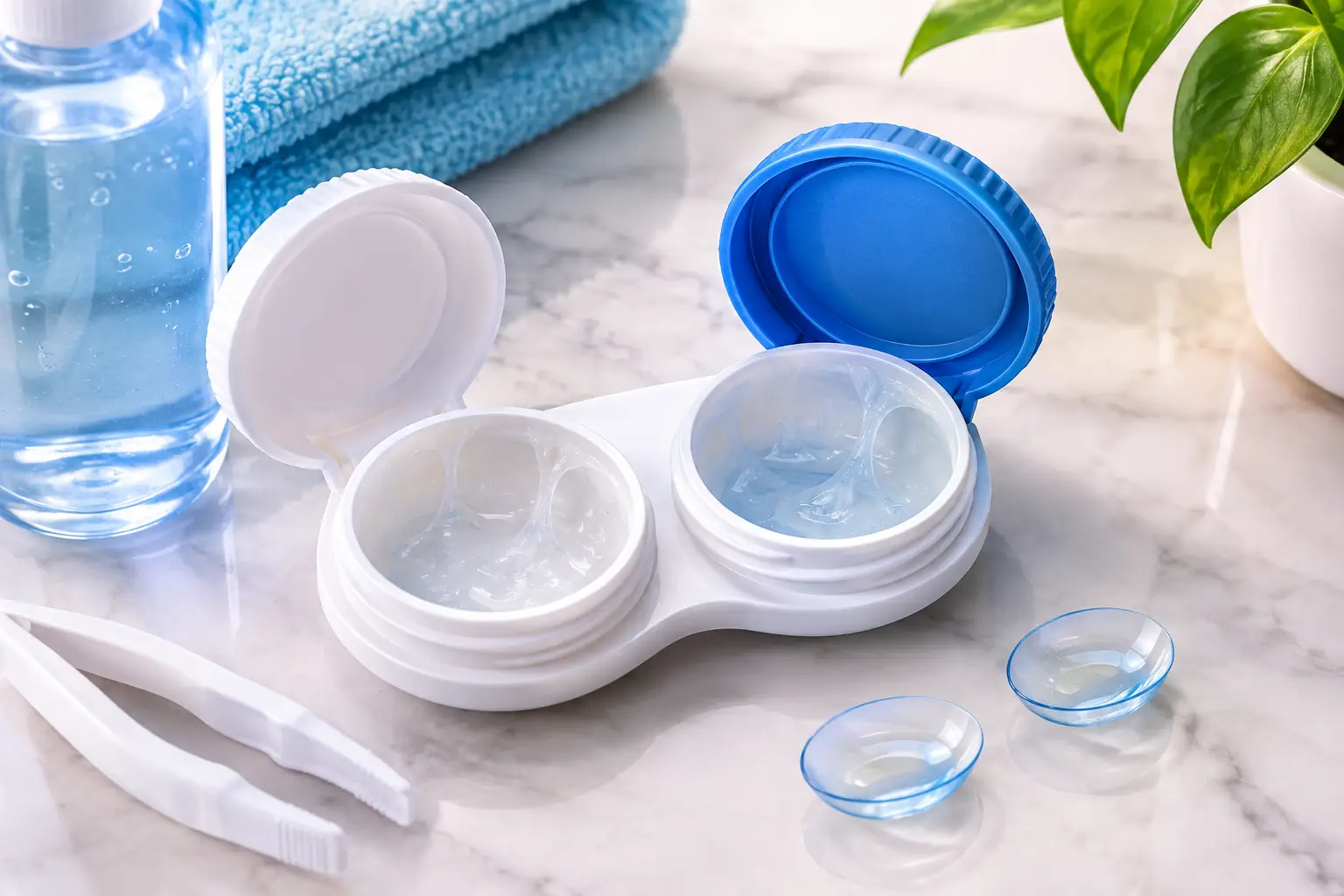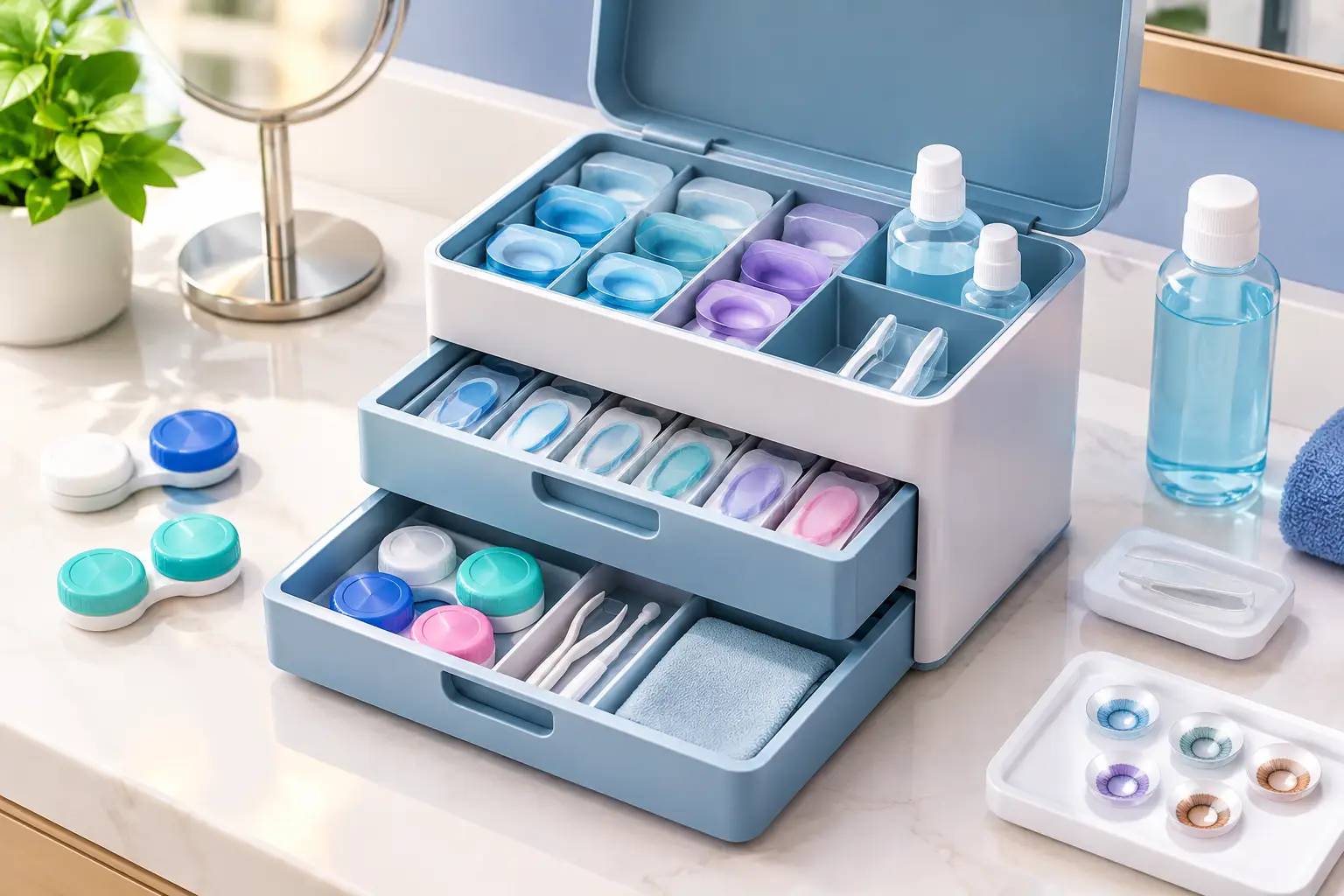
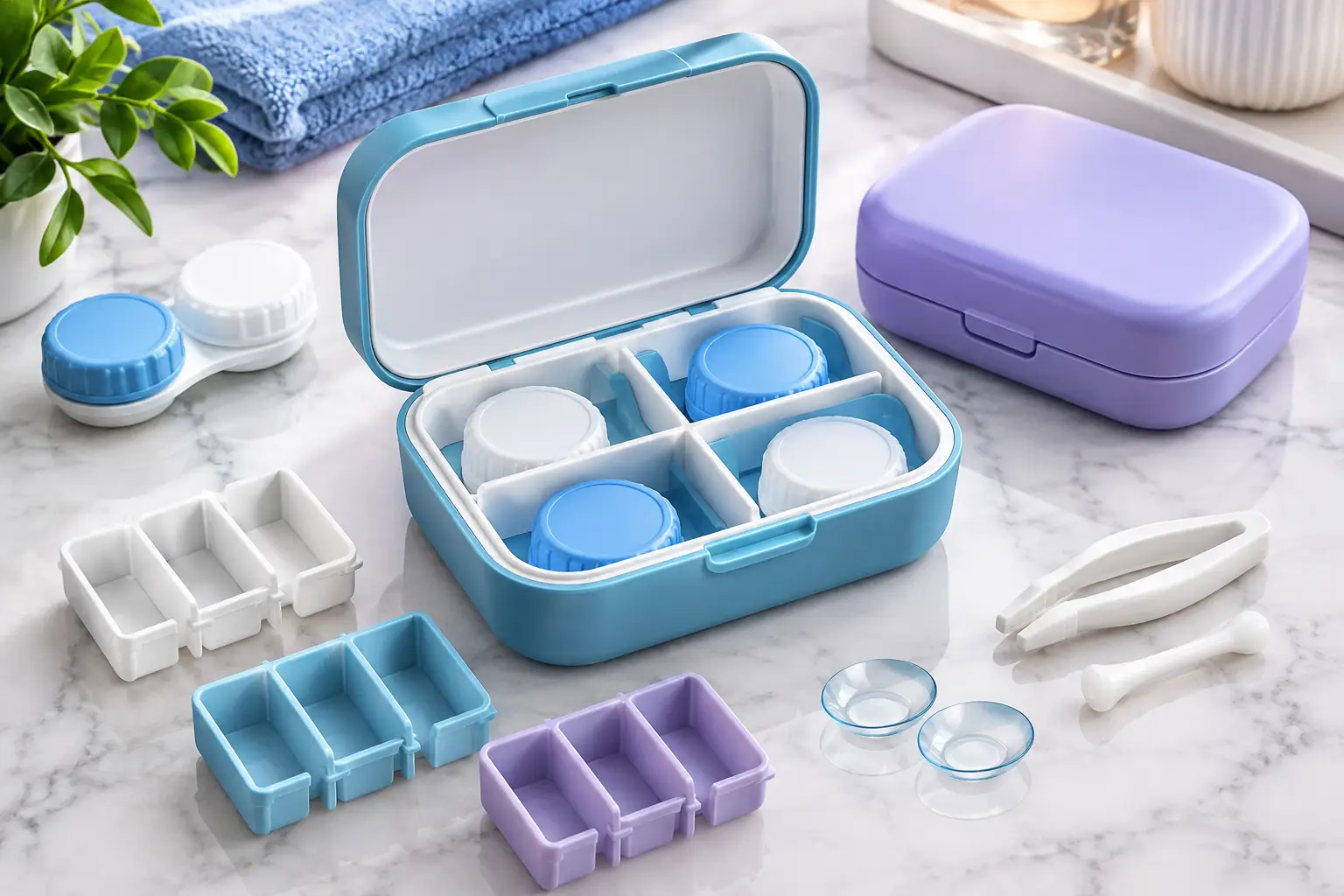
A drawer full of nearly identical contact lens cases can turn a simple morning routine into guesswork. If you wear different prescriptions, keep backup pairs, or switch between clear and colored lenses, the best lens case dividers do more than make a space look tidy. They help you know exactly which case belongs to which lenses, what information goes with them, and when it is time to replace them.
For contact lens users, organization is not about creating a picture-perfect bathroom counter. It is about avoiding the familiar problems: a case without its original box, a color name you can no longer remember, a prescription written on a scrap of paper, or an expiration date that gets lost when packaging is thrown away. The right divider system gives every lens case a clear home and makes the details easier to keep with it.
What Makes the Best Lens Case Dividers?
The best divider is not necessarily the one with the most compartments. A useful system has compartments that fit the way you actually use contact lenses at home. It should separate cases clearly, keep the storage area easy to clean, and leave enough room to identify what is inside each section.
Start with dedicated spaces. When lens cases are loosely grouped in a basket or drawer, they shift around, touch other items, and become easy to mix up. Individual compartments create a simple rule: one pair of lenses, one assigned spot. That is especially helpful when several cases look alike or when family members share a bathroom cabinet.
Visibility matters just as much. Deep, dark storage bins can hide cases at the bottom, while open dividers make it easier to see what you have before reaching for anything. If a system includes labels, cards, or a place to record lens details, it removes another layer of confusion. You should be able to identify a pair without opening a case or searching for discarded packaging.
Finally, look for a layout that supports your routine rather than forcing you to reorganize constantly. Some people need room for one current pair and a backup. Others keep several cosmetic lens colors, different prescriptions, or specialty lenses. A divider that works for one person may feel cramped or overly complicated for another.
The four features worth looking for
When comparing lens case dividers, focus on these practical features:
- Separate, clearly defined compartments that prevent cases from rolling together or getting mixed up.
- Easy-to-clean surfaces that work well in bathrooms, drawers, and medicine cabinets where residue and clutter can build up.
- A way to identify each pair using labels, color coding, or written records for prescription, lens color, purchase date, and expiration date.
- Enough capacity for your lens routine without becoming so large that it takes over your storage space.
A divider can be simple and still be effective. The key is whether it solves the reason you are looking for one in the first place: too many small cases, too little information, and no reliable system for telling everything apart.
Dividers Alone Solve Only Part of the Problem
A standard drawer organizer can separate contact lens cases, but it cannot always preserve the information that makes those cases useful. This is where many otherwise organized routines break down.
For example, you may place two identical cases in separate compartments and still forget which pair has the stronger prescription. Or you may remember that a pair is blue but not know its brand, replacement schedule, or expiration date. Physical separation prevents mix-ups in the moment. A record-keeping system helps prevent them weeks or months later.
That distinction matters most for people who wear colored contacts. Lens colors can look different depending on lighting, your natural eye color, or the way they appear in the case. “The gray ones” may not be specific enough when you own multiple shades. Keeping the product name, color, and purchase details with the case makes reordering and replacing lenses much less frustrating.
The same is true when you have old cases in a drawer. Without a visible expiration date or purchase note, it is hard to tell whether a pair is current, a backup, or something that should no longer be used. A good organization setup gives you the information you need before you make a decision.
Choose a Setup Based on How Many Lenses You Manage
If you use one prescription and keep one active pair at a time, a small divided section may be all you need. Assign one space to your current lens case and one to a backup case. Keep the supporting lens information beside or below each compartment so you do not need to rely on memory.
If you have multiple prescriptions, divide by prescription first. This is often safer and clearer than sorting by brand or case color. Once your sections are assigned, add a simple identifier for the eye prescription, lens type, and replacement timeline. A quick glance should tell you which pair belongs in your daily routine.
For cosmetic lens wearers, sorting by color is usually the most natural starting point. Give each shade its own position, then record its exact color name and expiration date. This prevents the common situation where several brown, hazel, or gray lenses become impossible to distinguish after the original boxes are gone.
If you manage both prescription and cosmetic lenses, consider separating them into different zones. Keeping daily vision lenses apart from occasional color lenses reduces clutter and makes it easier to reach for the right case when you are getting ready. The goal is not to create a complicated filing system. It is to make the correct choice feel obvious.
How to Set Up Lens Case Dividers Once and Keep Them Useful
The first setup takes only a few minutes, but it works best when you begin with a quick reset. Take every lens case, lens box, and note out of the drawer or cabinet. Match each case to the information you still have. If you find cases you cannot identify or expired products, do not let them continue taking up space in your active system.
Next, decide how you want to sort. Use the category that will be easiest for you to recognize every day: prescription strength, lens color, wearer, or current versus backup. Avoid creating categories that sound organized but do not match your habits. If you never think of your lenses by brand, sorting by brand will not help during a busy morning.
Then assign each pair a permanent compartment and record the essentials. At a minimum, keep the prescription or color, expiration date, and purchase information associated with that spot. If you use a recurring replacement schedule, add the date you opened or began using the lenses as well.
A purpose-built contact lens organizer such as EYEBOX® takes this a step further by pairing divided storage with a dedicated place for lens details. Instead of separating cases in one drawer and storing notes somewhere else, the system keeps the physical pair and its identifying information together. That is the difference between a drawer that merely looks organized and one that actually helps you make confident choices.
Common Divider Mistakes That Create More Confusion
The biggest mistake is treating every lens case as interchangeable. Cases may look the same, but the lenses inside can have different prescriptions, colors, wear schedules, and expiration dates. If the only way to identify them is opening each case, the divider is not doing enough work.
Another issue is storing lens packaging separately from the cases. Original boxes contain useful information, but they are often tossed into a different drawer, pushed into a cabinet, or discarded during cleanup. A better approach is to transfer the important details into the organizer at the time you put a new pair away.
Overfilling is also a problem. When several cases are squeezed into one section, the divider loses its purpose. Leave enough room to lift out a case without moving the others. If you have more pairs than your organizer holds, expand the system or remove items that are no longer current.
Finally, do not set up dividers once and forget them. Check your lens information whenever you open a new pair, reorder lenses, or notice that a case has been moved. Small updates are easier than trying to reconstruct months of lens history later.
A good lens case divider should give you a small moment of certainty: you open the drawer, see the right pair, and know exactly what it is. That kind of clarity makes daily lens care feel less like one more thing to keep track of and more like a routine that is already under control.