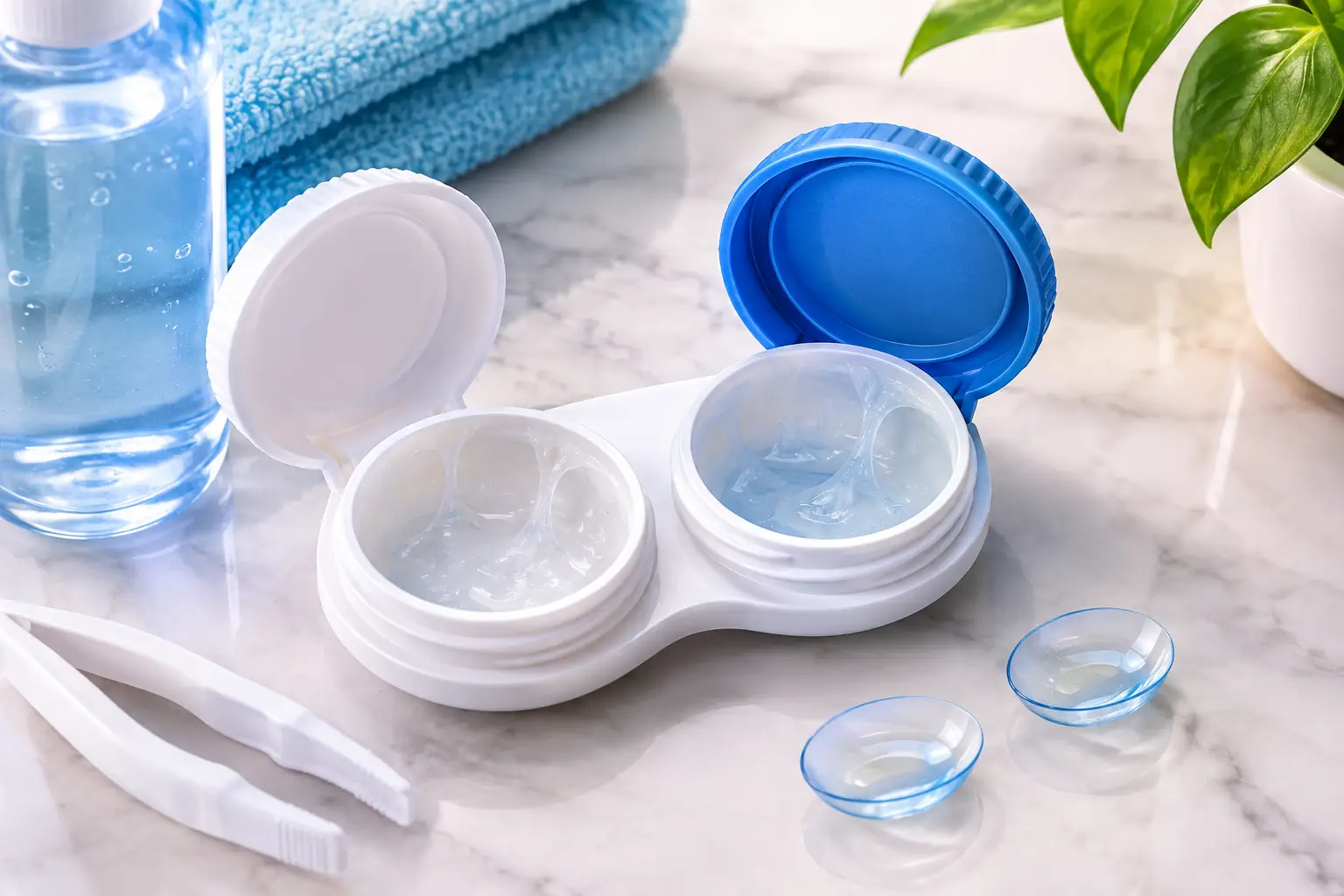
A lens case can look clean at a glance, then feel slick when you twist off the cap. If you are asking, why are contact cases slimy, the short answer is that moisture, old solution, and microorganisms can leave a film inside the case. It is a small sign that your lens-care routine needs attention – especially if you wear contacts every day or rotate between prescription and colored lenses.
A slimy case is not something to ignore or rinse away quickly. Contact lenses sit directly on your eyes, so the case that holds them deserves the same care as the lenses themselves. The good news is that cleaning up your routine is simple once you know what causes the buildup.
Why are contact cases slimy in the first place?
The slippery feeling is often caused by a layer called biofilm. Biofilm forms when bacteria or other microorganisms attach to a damp surface and create a protective, sticky coating. A contact lens case is a likely place for this to happen because it is regularly exposed to solution, oils from your hands, and lenses that have been worn all day.
Sometimes the film is not obvious. The case may look clear but still feel greasy, slippery, or slightly tacky inside. Other times, you may notice cloudy solution, residue around the threads, or a faint odor. None of these are signs that a case is ready for another night of use.
Old solution can also leave behind deposits. Multipurpose solution is designed to clean and disinfect lenses when used correctly, but it cannot do its job well when it is mixed with yesterday’s solution or poured into a case that was never cleaned and dried.
Topping off solution creates buildup
Topping off means adding fresh solution to solution already sitting in the case. It may feel like a time-saving habit, but it dilutes the disinfecting solution and gives residue and germs another chance to remain in the case.
Each time you remove your lenses, empty all of the old solution. Fresh solution should go into a clean, dry case only. Never reuse solution, even if it looks clear.
Water is not a safe shortcut
Rinsing a case with tap water may seem harmless, but water can contain microorganisms that should not come into contact with lenses or lens cases. The same rule applies to bottled water, distilled water, saliva, and homemade saline. Contact lens cases should only be rinsed and filled with the type of contact lens solution recommended for your lenses.
Your hands transfer oils and debris
Even a quick lens removal can transfer makeup, lotion, natural skin oils, and debris into the case. That is why washing and drying your hands before handling lenses matters. Clean hands reduce what gets deposited on your lenses, in your solution, and along the inside of the case.
What to do when your contact lens case feels slimy
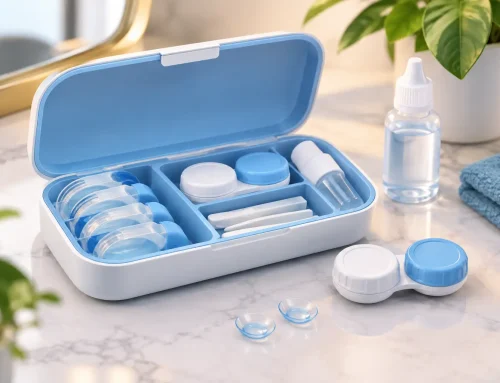
If your case feels slimy, cloudy, or unusually greasy, replace it rather than trying to rescue it. A new case is inexpensive, and replacing it removes the uncertainty of whether a film remains in hard-to-reach areas or beneath the cap threads.
Before using the replacement, inspect your lenses. If they look damaged, discolored, or coated with residue, do not wear them. Follow the instructions from your eye care professional and lens manufacturer for cleaning or replacing the lenses. If your eyes feel red, painful, itchy, sensitive to light, or unusually watery, remove your lenses and contact an eye care professional promptly.
A slimy case does not automatically mean you will develop an eye problem. Still, it is a useful warning that your storage routine is no longer as clean as it should be. Treat it as a reset point, not a minor cosmetic issue.
How to clean your contact lens case correctly
A clean case takes less than a minute to maintain. The key is doing it every time, rather than waiting until residue appears.
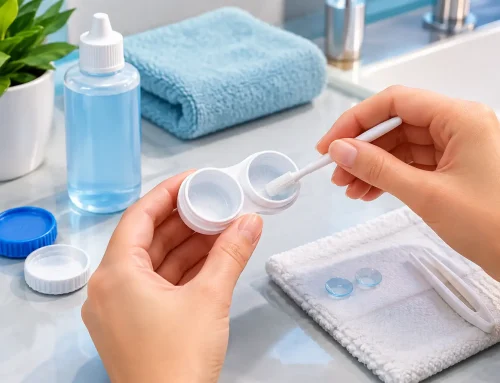
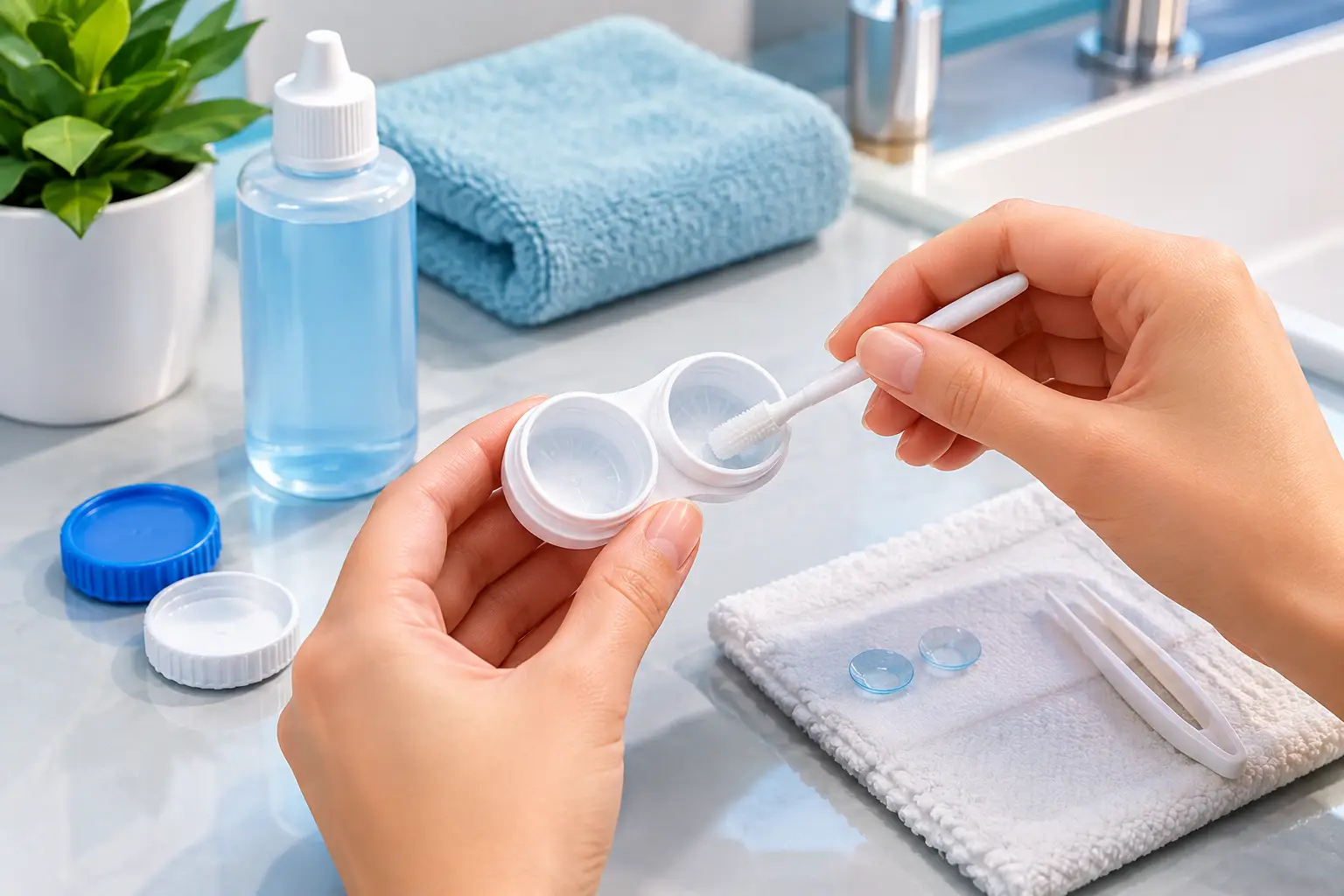
After putting in your lenses, pour out the used solution completely. Rinse each well and the caps with fresh contact lens solution – not water. Rub the interior gently with a clean finger if your lens-care instructions allow it, then shake out the excess solution.
Leave the case open with the wells facing down on a clean tissue or clean surface so it can air-dry between uses. Closing a wet case traps moisture, which creates a more welcoming environment for buildup. When it is time to remove your lenses again, start with fresh solution.
Do not use household cleaners, soap, alcohol, or disinfecting wipes inside the case. These products can leave residue that may irritate your eyes or damage your lenses. Contact lens solution is the appropriate product for the job.
Replace the case on a schedule
Even a well-cleaned case does not last forever. A practical rule is to replace your contact lens case at least every three months, or sooner if it becomes cracked, stained, slimy, or difficult to clean. Many solution bottles come with a new case, which makes replacement easy.
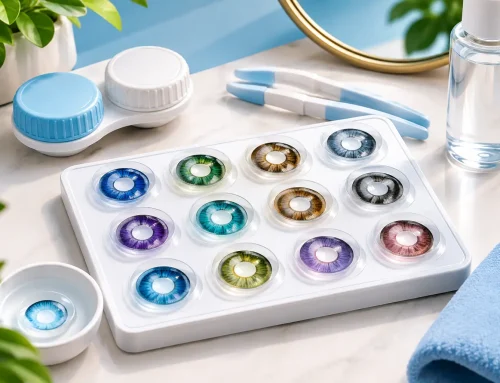
The challenge is remembering which case belongs to which lenses and when it was last replaced. This gets more complicated if you wear different prescriptions, switch between clear and colored contacts, or keep backup pairs on hand.
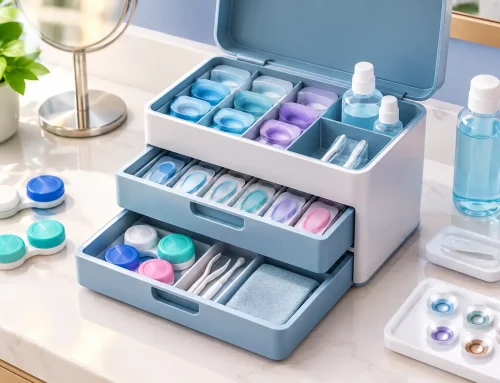
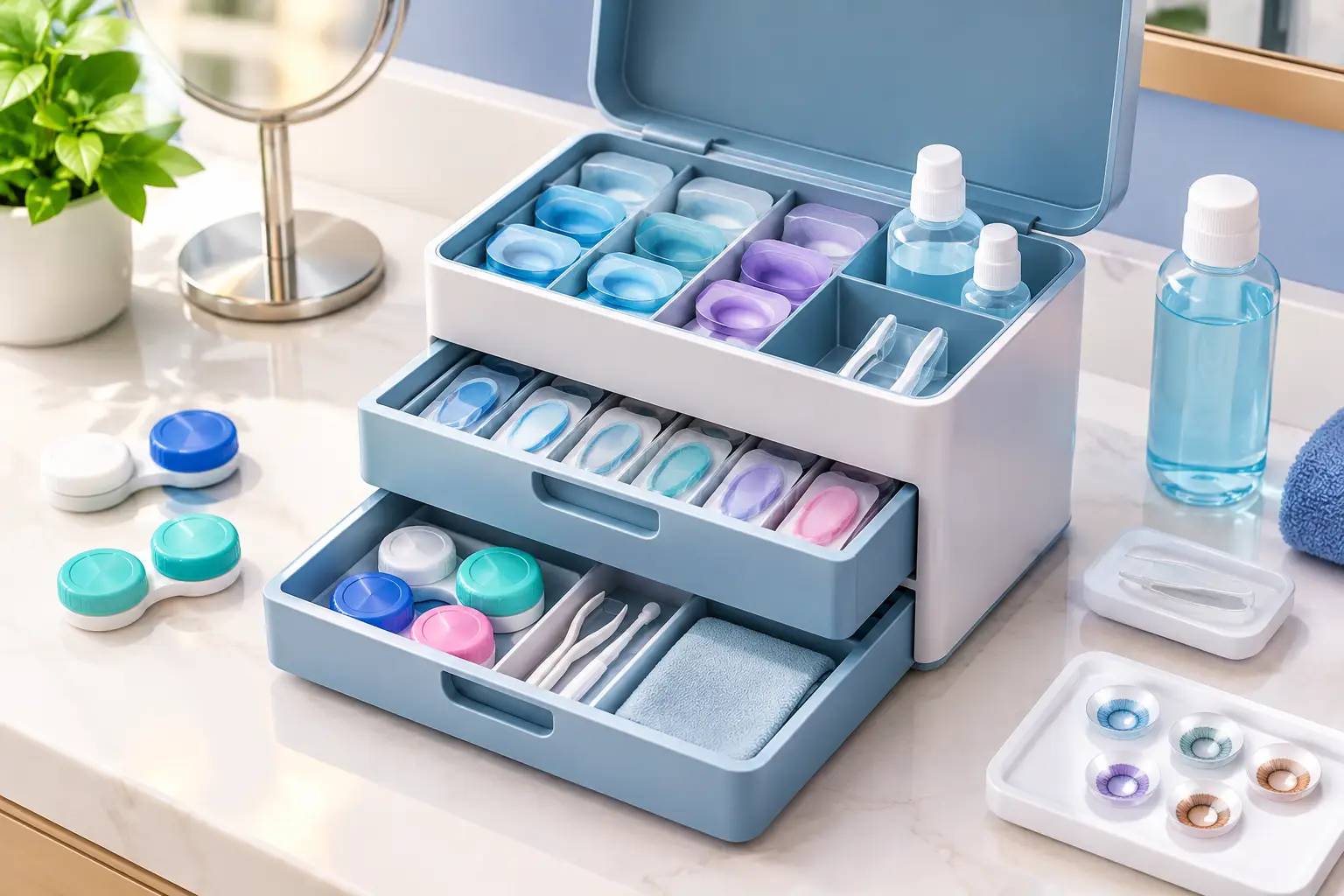
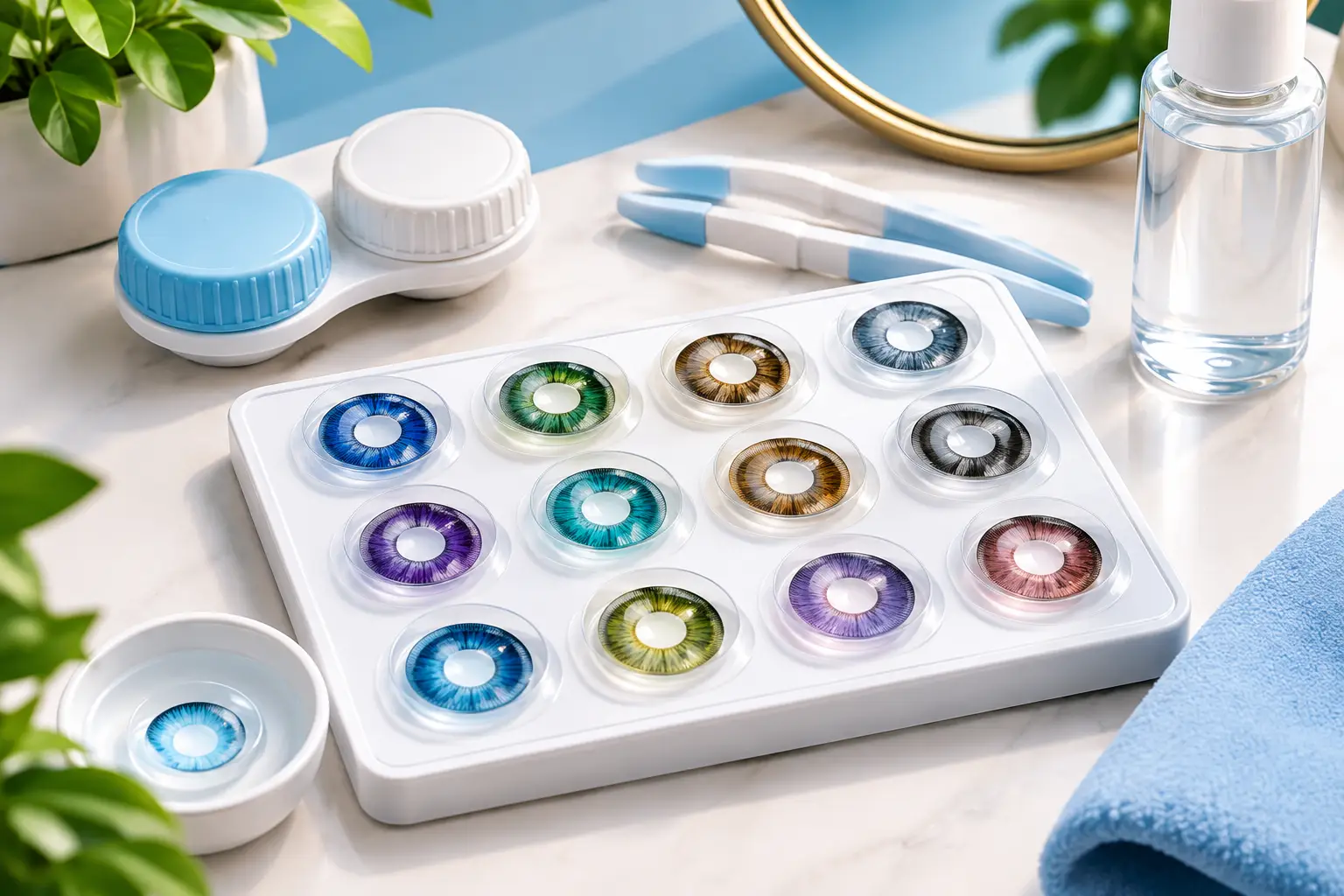
That is where an organized storage system can reduce everyday guesswork. EYEBOX helps keep cases together with the lens details that matter, including prescription, color, purchase information, and expiration dates. Instead of sorting through loose cases in a drawer or medicine cabinet, you can see what each pair is and keep your replacement schedule clearer.
Habits that keep contact cases cleaner
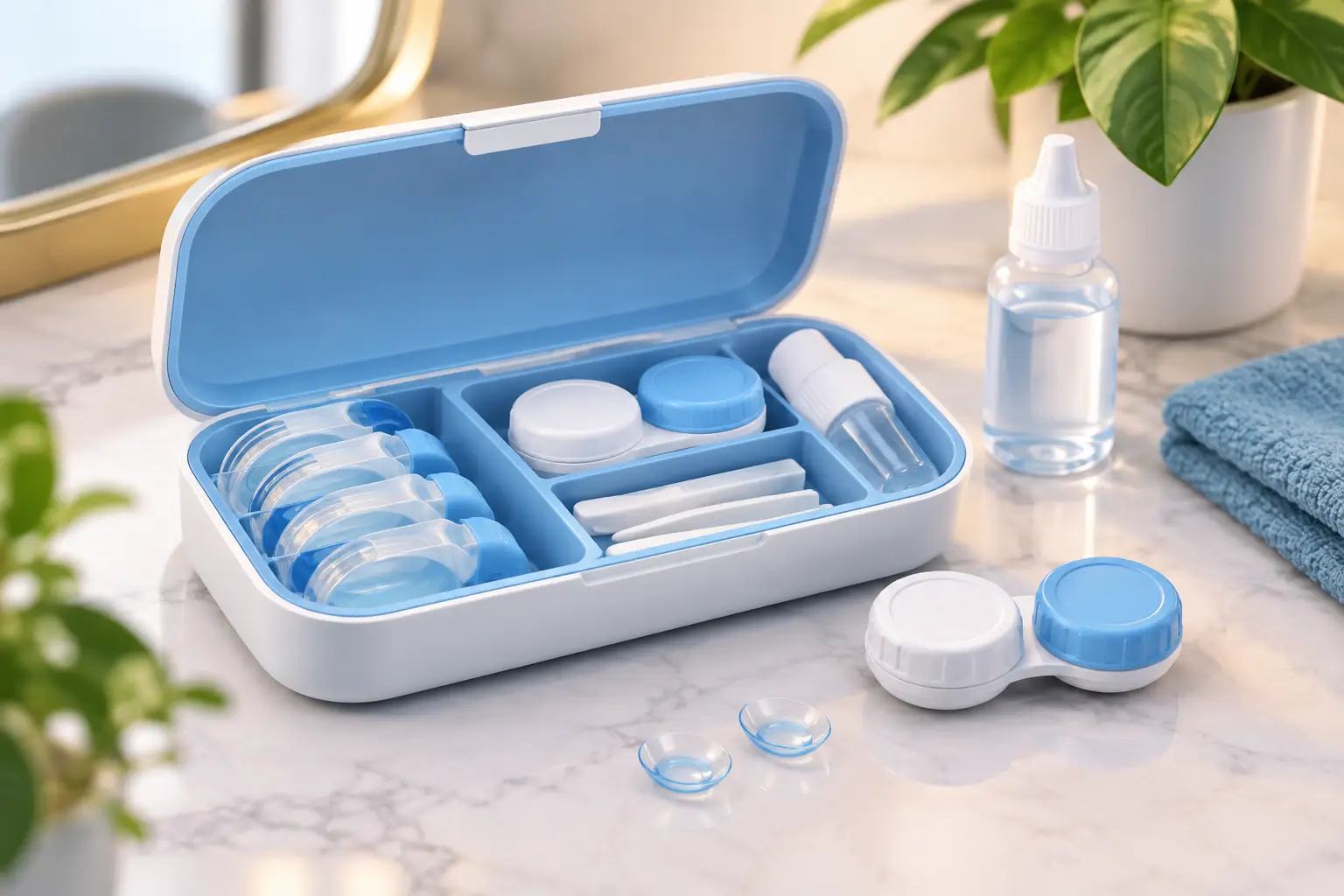
A clean case is less about buying more supplies and more about making a few steps automatic. Start by keeping your contact lens solution, case, and lens information in one consistent place. When your routine is scattered, it is easier to grab the wrong case, forget when it was changed, or reuse solution because the replacement bottle is elsewhere.
It also helps to label or record the details for every pair you use. Similar-looking cases can be confusing, particularly when you have lenses with different strengths or colors. Using the wrong case may not cause slime on its own, but mix-ups make it harder to notice when a case is overdue for replacement.
Pay attention to the condition of the case, not just the calendar. Replace it immediately if you notice any of the following:
- A slimy, greasy, or tacky feeling inside the wells
- Cloudy solution, visible particles, staining, or an unusual odor
- Cracks, rough edges, loose caps, or residue around the threads
- Uncertainty about how long the case has been in use
These signs are simple to spot when your supplies are organized and visible. They are easier to miss when several unmarked cases are pushed into a bathroom drawer.
When a slimy case may signal a bigger issue
If you frequently find residue in your cases despite using fresh solution and replacing cases regularly, look at the rest of the routine. Make sure you are using the solution recommended for your lens type and following the minimum soak time listed on the bottle. Some lenses require specific care systems, and not every solution works with every lens material.
Persistent buildup can also happen when lenses are worn beyond their replacement schedule. Daily, biweekly, and monthly lenses have different intended use periods. Wearing reusable lenses longer than directed can increase deposits on the lens surface, which can then transfer back into the case.
If the problem continues, ask your eye care professional to review your lens-care products and habits. A quick conversation can help identify whether the issue is your cleaning method, your solution, your lens replacement schedule, or a product mismatch.
Your contact lens case should feel clean, dry between uses, and easy to identify. A slimy case is your cue to replace it, refresh your solution routine, and give every pair of lenses a clear place in your system.