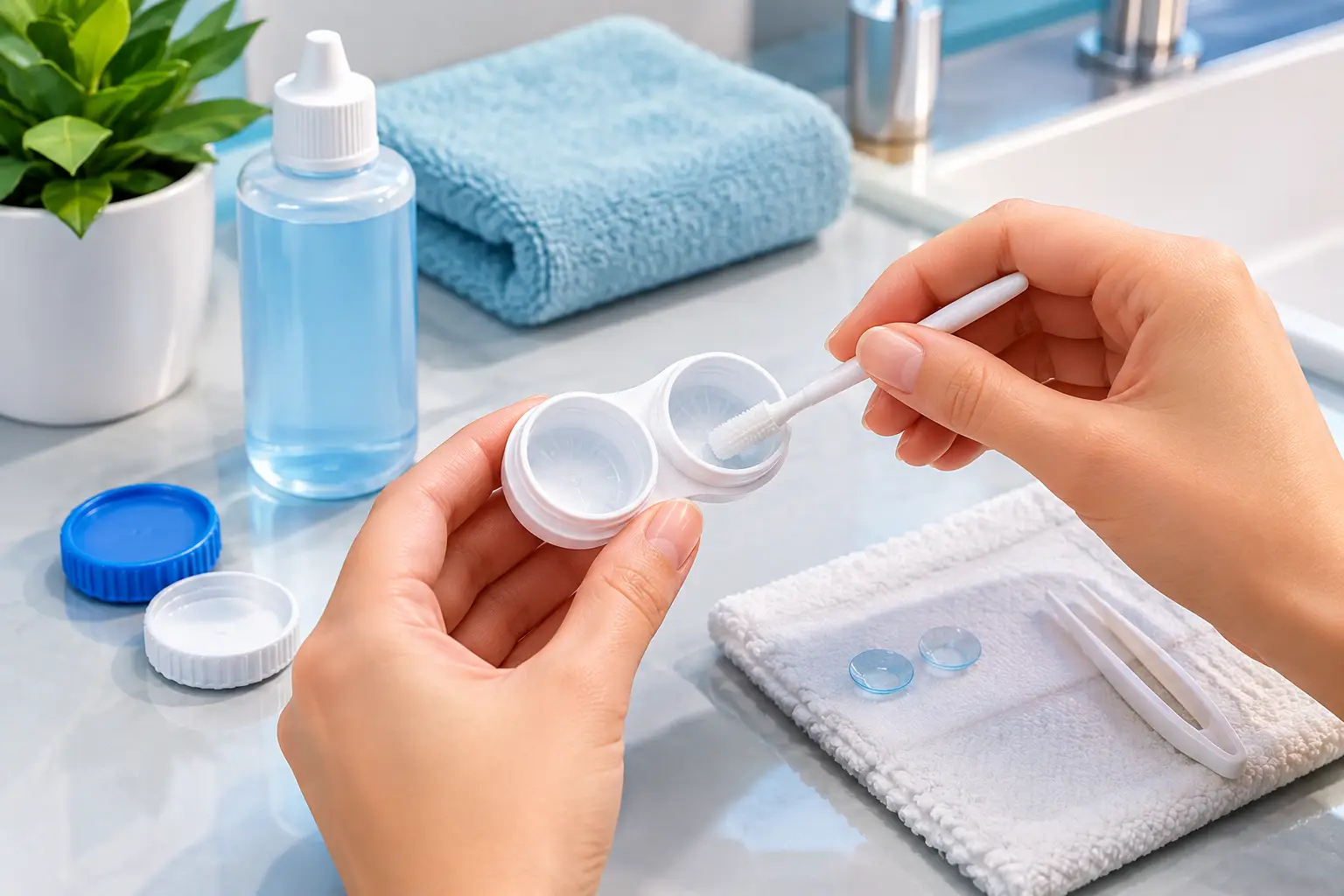
A clean contact lens case is easy to overlook until your bathroom counter starts telling a different story: loose caps, mystery solution, and several identical cases with no clear way to tell what belongs to which lenses. Clean storage is part of lens care, but it also gives you a better handle on the details that matter, including prescription, color, purchase date, and expiration date.
When you wear more than one pair of contacts, a simple routine prevents two common frustrations at once: using a case that is not properly cared for and losing track of which lenses are inside. The goal is not a complicated system. It is a clean case, fresh solution, and a clear record every time.
Why a contact lens case needs daily attention
Your lens case is not just a container. It comes into contact with lens solution, your lenses, and whatever is on your hands. If old solution is left behind, it can leave residue and create an environment where germs may grow. Topping off yesterday’s solution with more solution does not solve that problem.
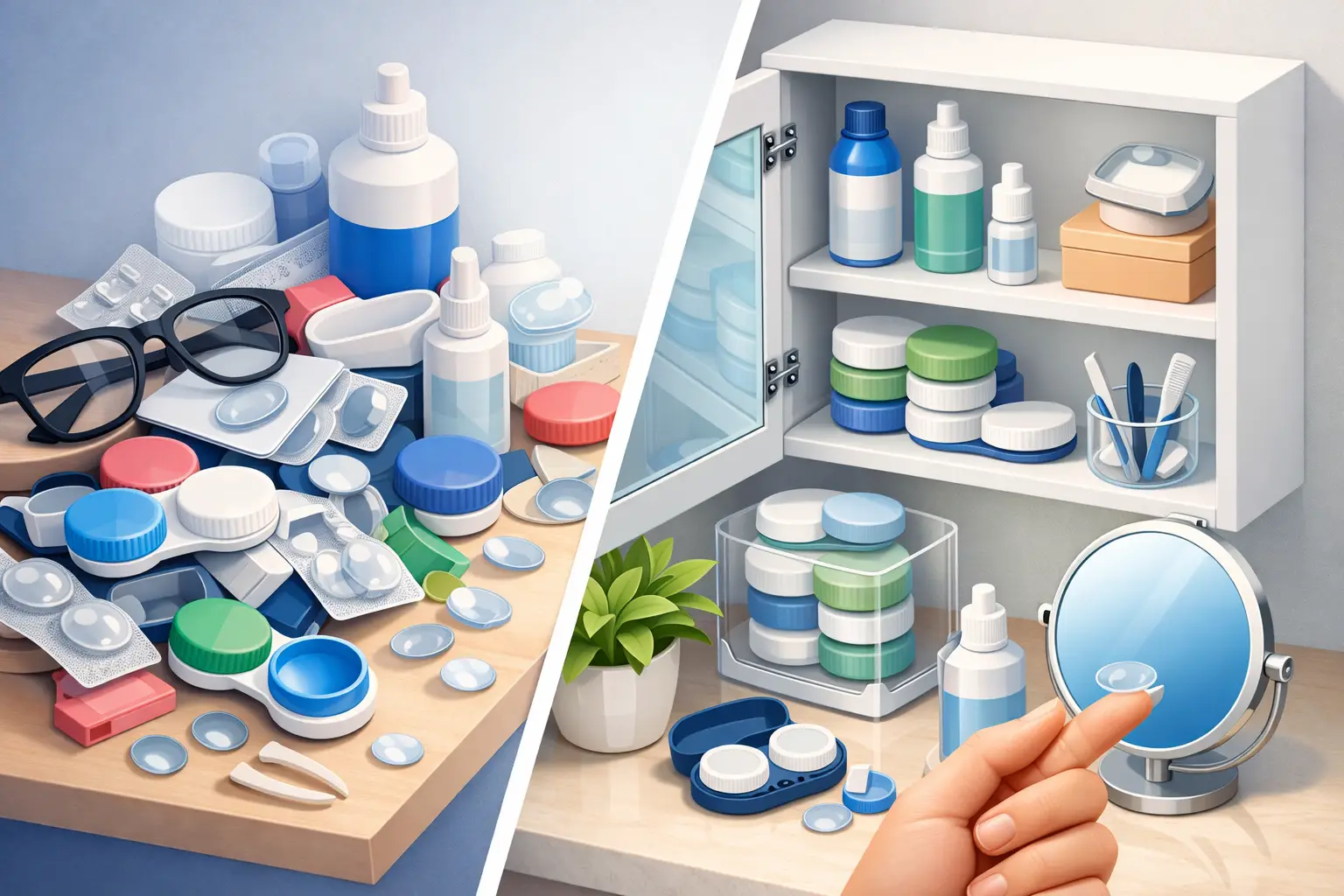
A case can also become a source of confusion. Maybe you have one pair for everyday vision correction, another for a different prescription, and colored contacts for special occasions. Once the original boxes are gone, similar-looking cases make it far too easy to forget the color, expiration date, or replacement schedule for each pair.
Daily cleaning addresses the hygiene side. Organized storage handles the information side. Both matter because contacts are personal care items, not something you should have to guess about.
How to clean a contact lens case every day
The best time to clean your case is when you put your lenses in. Build the process into the same few minutes you already spend removing your contacts.
Start with clean, dry hands
Wash your hands with soap and water, then dry them thoroughly with a clean, lint-free towel before touching lenses, caps, or the case. This reduces the chance of transferring dirt, lotion, makeup, or germs into the solution.
Avoid handling lenses right after applying hand cream. A quick rinse is not always enough to remove residue, and oily products can make the whole routine messier.
Empty the old solution completely
After removing your lenses, pour out all used solution from both sides of the case. Do not save it for later, and do not add fresh solution on top of it. Used solution has already done its job.
This is a small step with a big payoff. A full rinse-and-refresh routine is more reliable than trying to stretch a little solution for another night.
Rinse the case with fresh contact lens solution
Rinse each well and both caps using fresh multipurpose contact lens solution, unless your eye care professional or lens-solution directions tell you to use another method. Never rinse the case with tap water, bottled water, or saliva. Water can carry microorganisms that do not belong anywhere near your lenses or eyes.
Use enough solution to rinse away what remains. Then empty the case again. You are cleaning the case itself, not simply diluting leftover liquid.
Let it air-dry the right way
Leave the case open with the wells facing down on a clean tissue or paper towel. Let the caps air-dry as well. Closing a damp case can trap moisture and defeat the purpose of cleaning it.
Keep the drying spot away from obvious splashes and clutter. A clean, dry area of the counter is better than placing the case beside a wet sink or under a dripping towel.
Refill only when you store your lenses
When it is time to put lenses away, fill each well with fresh solution before placing the lenses inside. Use enough solution to fully cover each lens, and close the caps securely. Follow the replacement and soaking instructions for your specific lens type and solution.
If your lenses are daily disposables, they should be discarded after use rather than stored in a case. A case is for reusable lenses, and the right routine depends on the lenses your eye care professional has prescribed or approved.
Keep clean cases from becoming mixed-up cases
A freshly cleaned case still creates problems if you cannot identify what is inside it. This is especially true for people who keep several pairs of prescription lenses, colored contacts, or lenses with different replacement schedules.
Start by assigning every pair a clear identity. Record the prescription, lens brand, color if applicable, expiration date, purchase date, and the date you opened the package. If you have a right and left prescription that differ, make that clear too. Those details are useful when you need to reorder, replace a lens, or check whether a pair is still within its approved wear period.
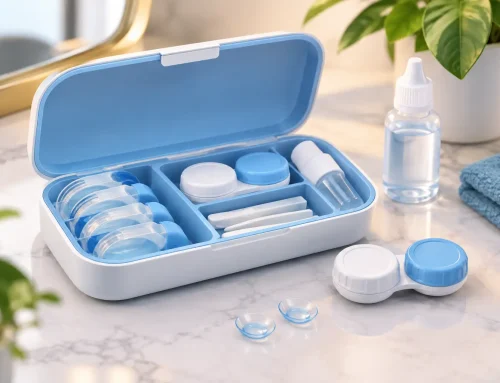
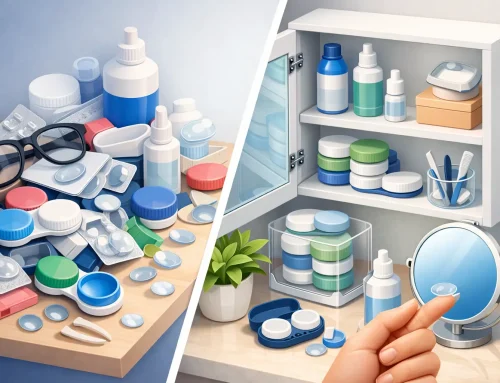
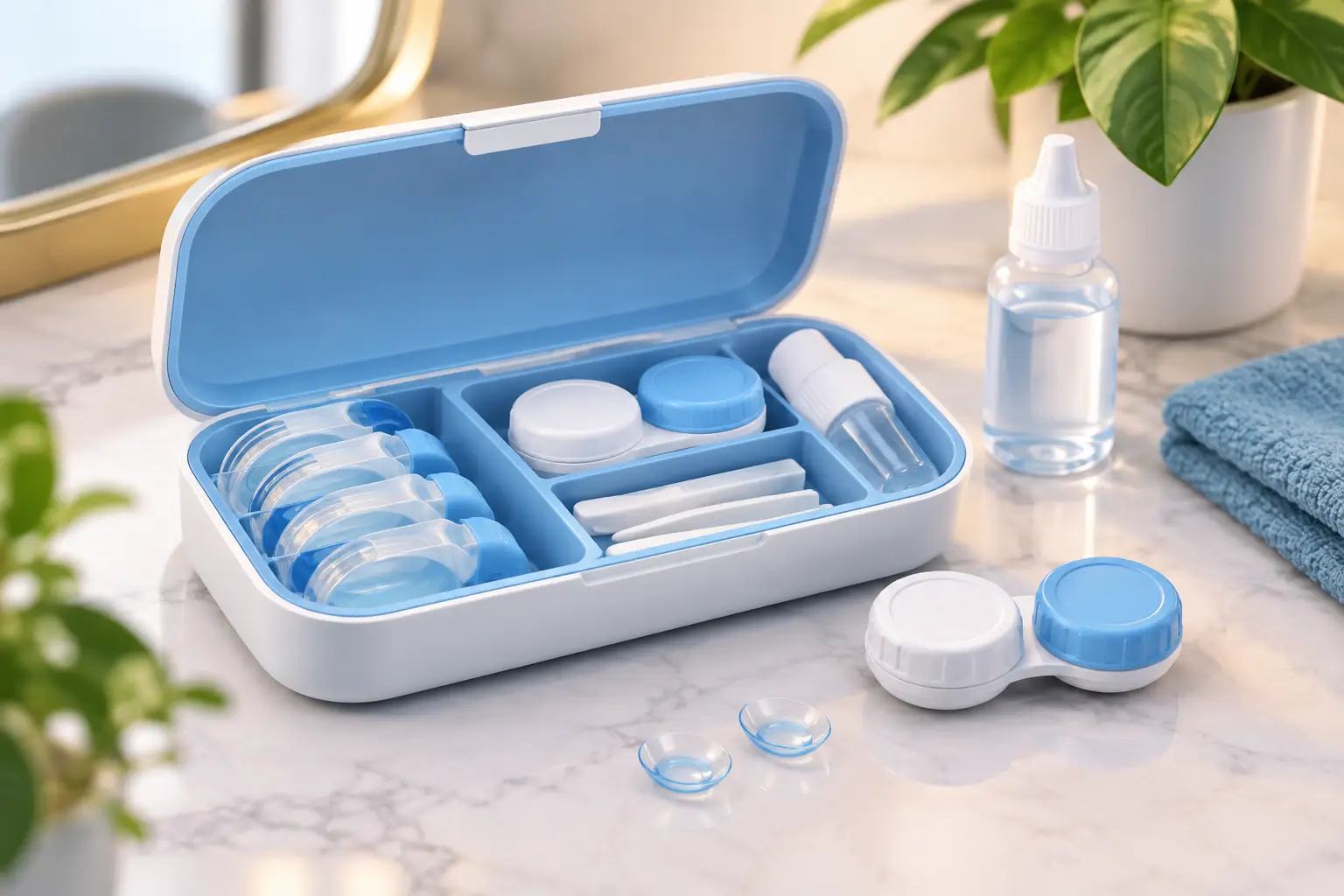
Keep cases in a designated home rather than scattering them across drawers, medicine cabinets, and countertop corners. An organizer built for contact lens users, such as EYEBOX®, makes it easier to store cases alongside the information that usually disappears with the packaging. Color-coded identification can help you tell similar pairs apart before you open a cap.
This is not about making your bathroom look perfect. It is about removing uncertainty. When you can see which case belongs to which lenses, you are less likely to reach for a pair you did not intend to wear.
Common case-cleaning mistakes to stop
Most lens-case problems come from habits that feel harmless because they save a few seconds. They are worth changing.
- Topping off old solution: Empty the case first. Fresh solution works best when it is actually fresh.
- Using water to rinse the case: Water is not a safe substitute for contact lens solution.
- Putting lenses into a dirty or damp case: Clean, air-dry, and refill the case as part of one routine.
- Reusing a case for too long: Cases wear down, collect residue, and become harder to keep clean over time.
- Trusting memory for lens details: If you own several pairs, write down the prescription, color, and dates instead of relying on a label that may be gone.
There is one practical exception to the idea of doing everything at night: if you notice a cracked cap, buildup that will not rinse away, an unusual smell, or a case that no longer closes properly, replace it immediately. Do not wait for your usual schedule.
When to replace your contact lens case
Replace your case at least every three months, or sooner if your eye care professional or lens-solution instructions recommend it. Some people find it easiest to start a new case when they open a new bottle of solution. The exact reminder system matters less than having one you will follow.
Write the case replacement date down where you track your lens information. That way, the task does not get lost among all the other small personal care routines that are easy to postpone. If you use multiple cases, track each one separately rather than assuming they were all started at the same time.
A new case is inexpensive compared with the cost of replacing lenses or dealing with an avoidable eye problem. If you experience redness, pain, sensitivity to light, discharge, or blurred vision, remove your lenses and contact an eye care professional promptly.
A clean case works best when it is part of an organized routine you can repeat without thinking. Give every pair of lenses a clean place, keep the details beside it, and let your nightly lens care feel clear instead of cluttered.