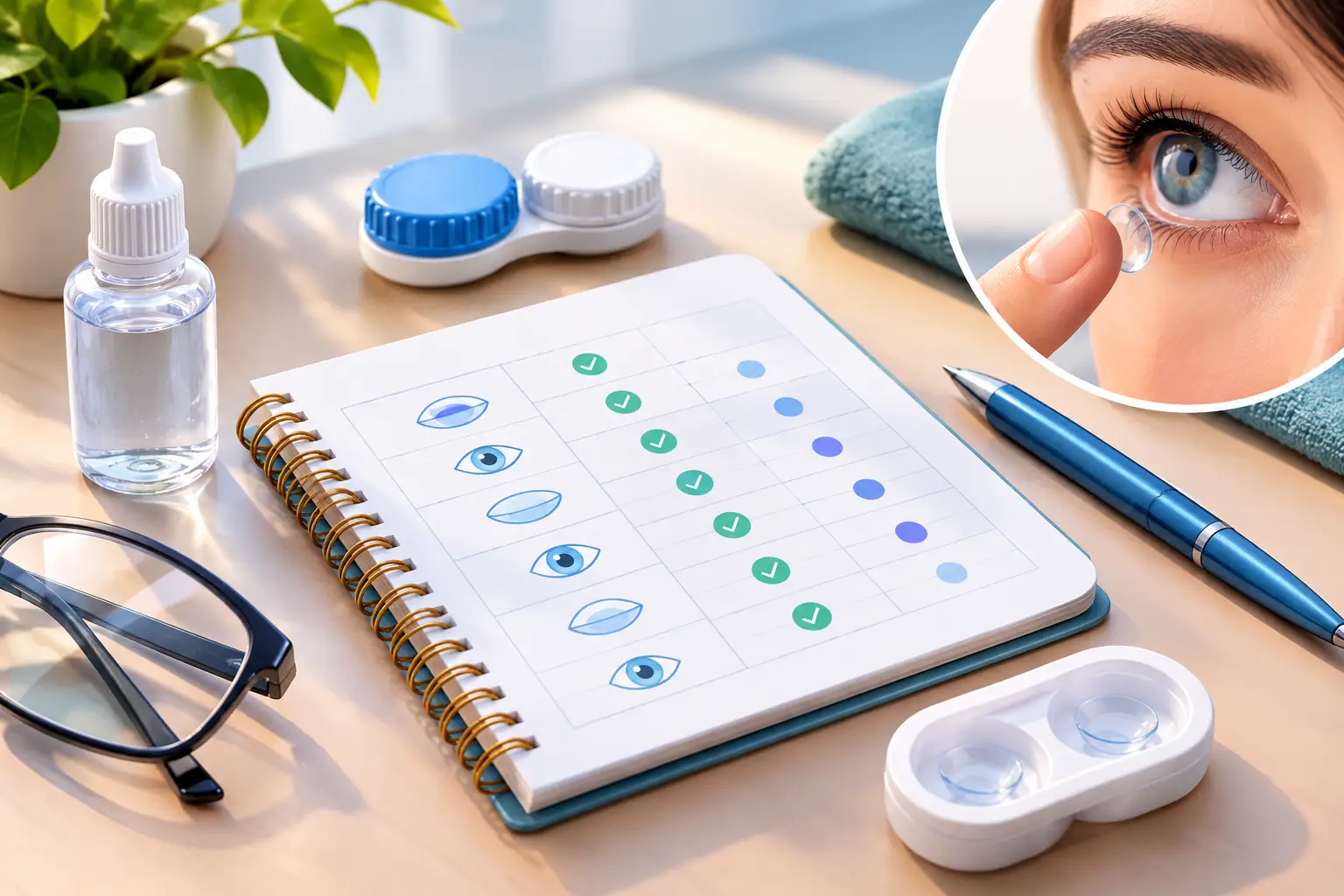
A contact lens box can tell you almost everything you need to know – until it gets tossed, soaked on the bathroom counter, or mixed in with three other boxes. A simple purchase log example gives every pair of lenses a reliable record, so you do not have to guess which color, prescription, or replacement schedule belongs to each case.
For people who wear more than one type of lens, this is more than a tidy spreadsheet habit. It is a practical way to avoid opening the wrong pair, ordering the wrong replacement, or losing track of an unopened box that is close to its printed expiration date.
What a Contact Lens Purchase Log Should Track
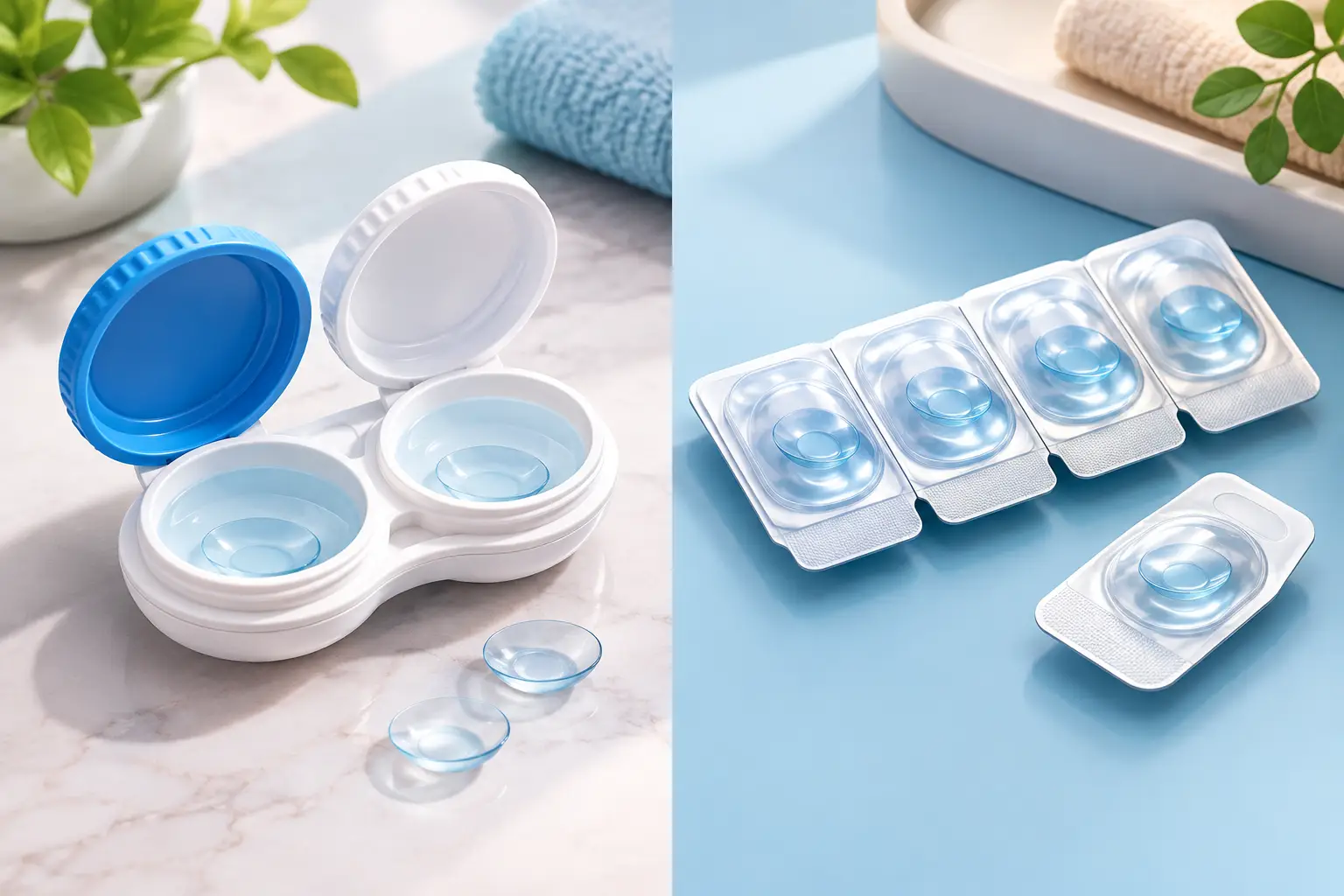
A purchase log is a single record of the details printed on your contact lens packaging, plus the information that matters once the lenses are in your care. It works whether you wear daily disposables, monthly lenses, colored contacts, or a mix of prescription and cosmetic pairs.
The goal is not to record every tiny detail for its own sake. The goal is to make the next decision easy: Which lenses are these? When were they purchased? What should be replaced, reordered, or discarded?
At minimum, include the brand or lens name, prescription, color, purchase date, quantity, price, and the expiration date printed on the unopened package. If you wear reusable lenses, add the date you opened a pair and the replacement date based on your eye care professional’s instructions and the manufacturer’s schedule.
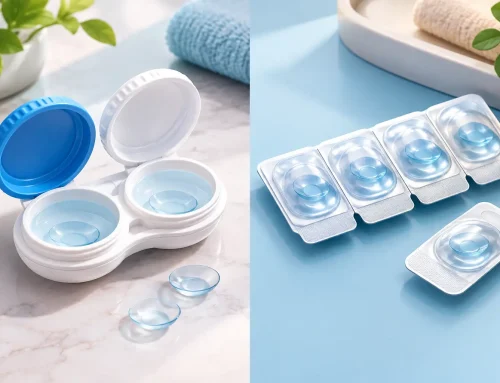
Those are two different dates. The package expiration date applies to unopened lenses. The replacement date applies after a lens has been opened and worn. Keeping both in your log prevents a common mix-up.
Purchase Log Example You Can Copy
Here is a straightforward purchase log example for a person who wears clear prescription lenses most days and colored lenses on occasion.
| Lens ID | Brand / Type | Prescription | Color | Purchased | Opened | Replace By | Package Expires | Quantity | Price | Notes | |—|—|—|—|—|—|—|—|—|—|—| | 1 | Monthly prescription lens | R: -2.50, L: -2.25 | Clear | May 4, 2026 | May 6, 2026 | June 6, 2026 | March 2029 | 6 pairs | $68 | Everyday pair | | 2 | Monthly colored lens | Plano | Hazel | May 4, 2026 | Not opened | Add after opening | March 2029 | 2 pairs | $42 | Occasion wear | | 3 | Daily disposable lens | R: -2.50, L: -2.25 | Clear | April 12, 2026 | N/A | Dispose after one use | January 2030 | 90 lenses | $94 | Keep unopened boxes together | | 4 | Colored lens | Plano | Gray | March 15, 2026 | April 1, 2026 | May 1, 2026 | November 2028 | 1 pair | $29 | Discard on replacement date |
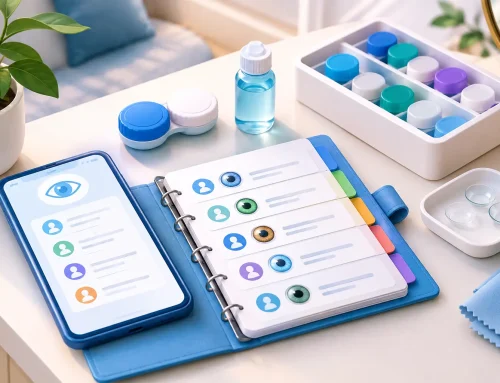
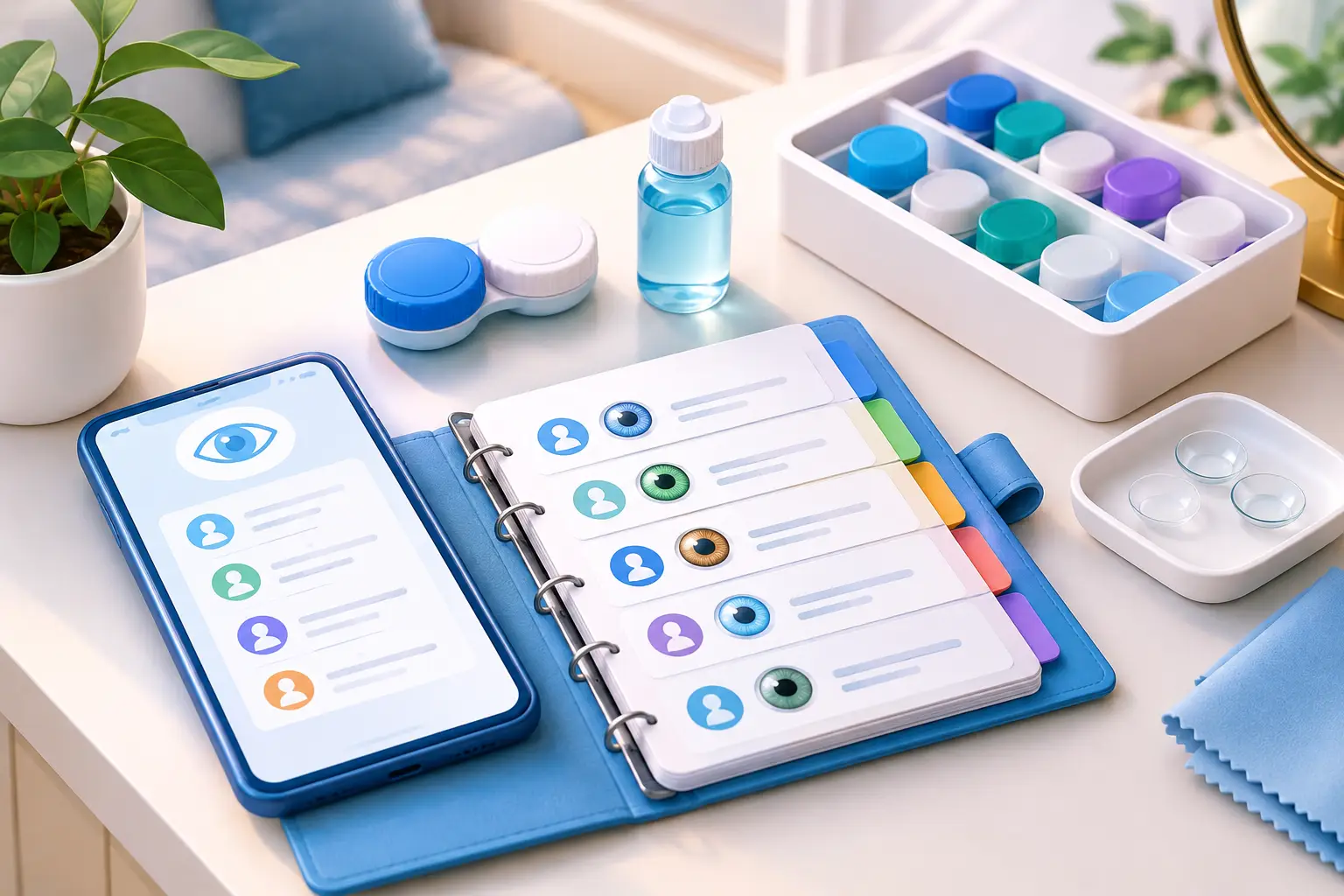
You can keep this log in a notebook, a notes app, or a simple spreadsheet. The best format is the one you will update when you open a new pair. If you prefer a physical system, place the matching lens details with the case where you store it. That way, the record and the lenses stay connected instead of becoming two separate things to manage.
How to Fill It Out Without Overcomplicating It
Start when you buy the lenses, not when you are already trying to identify an unmarked case. Copy the information from the box while it is in front of you. This takes a minute and saves much more time later.
First, give each pair a simple ID. Numbers work well, but you can also use labels such as “daily clear,” “hazel,” or “weekend gray.” The label should be easy to match to the storage spot or lens case you use.
Next, write the prescription exactly as shown on the packaging. If your right and left lenses differ, record both values clearly. For specialty lenses, you may also want to record base curve, diameter, or any other identifier shown on the box. This is especially helpful when you use similar products with slightly different fit or prescriptions.
Then add color and purpose. “Clear” is useful information, too. A log becomes much easier to scan when it tells you whether a pair is for everyday vision correction, a particular look, or a backup supply.
Finally, add dates as they happen. Enter the purchase date immediately. Enter the open date when you break the seal. Then calculate the replacement date according to the lens type. Daily lenses are discarded after a single use, while lenses designed for two weeks or a month should follow their labeled replacement schedule and your eye care professional’s guidance.
Why Purchase Dates Matter More Than You Think
Many lens wearers remember their prescription but lose track of the practical details around it. A purchase date helps you see how quickly you use each product, when it is time to reorder, and whether a box has been sitting unopened longer than expected.
It also gives you a clearer picture of your lens spending. If you rotate colors or keep multiple prescriptions on hand, the price column can show which purchases are regular essentials and which are occasional extras. That does not mean you need to turn lens care into a budgeting project. It simply means fewer surprises when it is time to buy again.
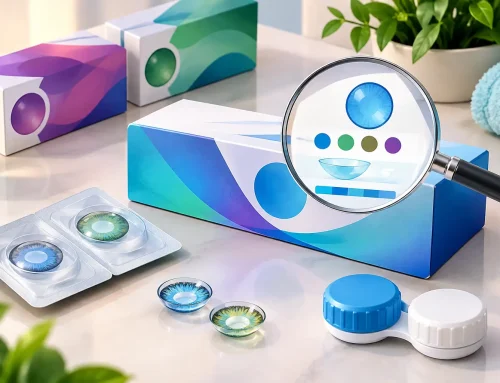
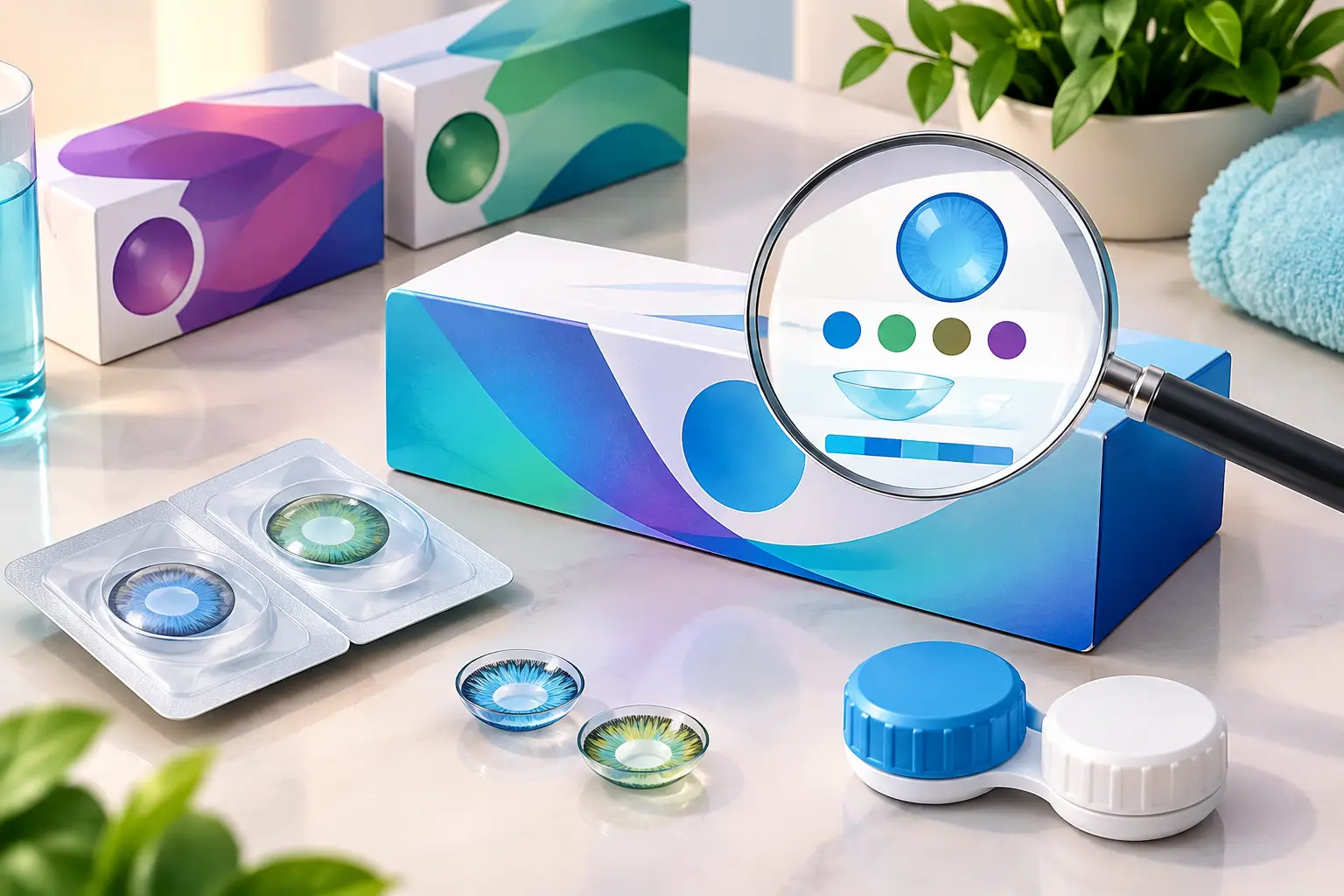
For colored contacts, purchase records are particularly useful because several shades can look similar once they are out of their original boxes. “Brown,” “honey,” “hazel,” and “warm hazel” may not be interchangeable, even if the cases look nearly identical in a drawer.
Keep the Log Connected to Your Storage System
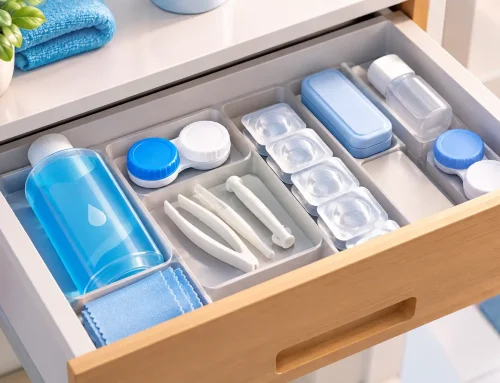
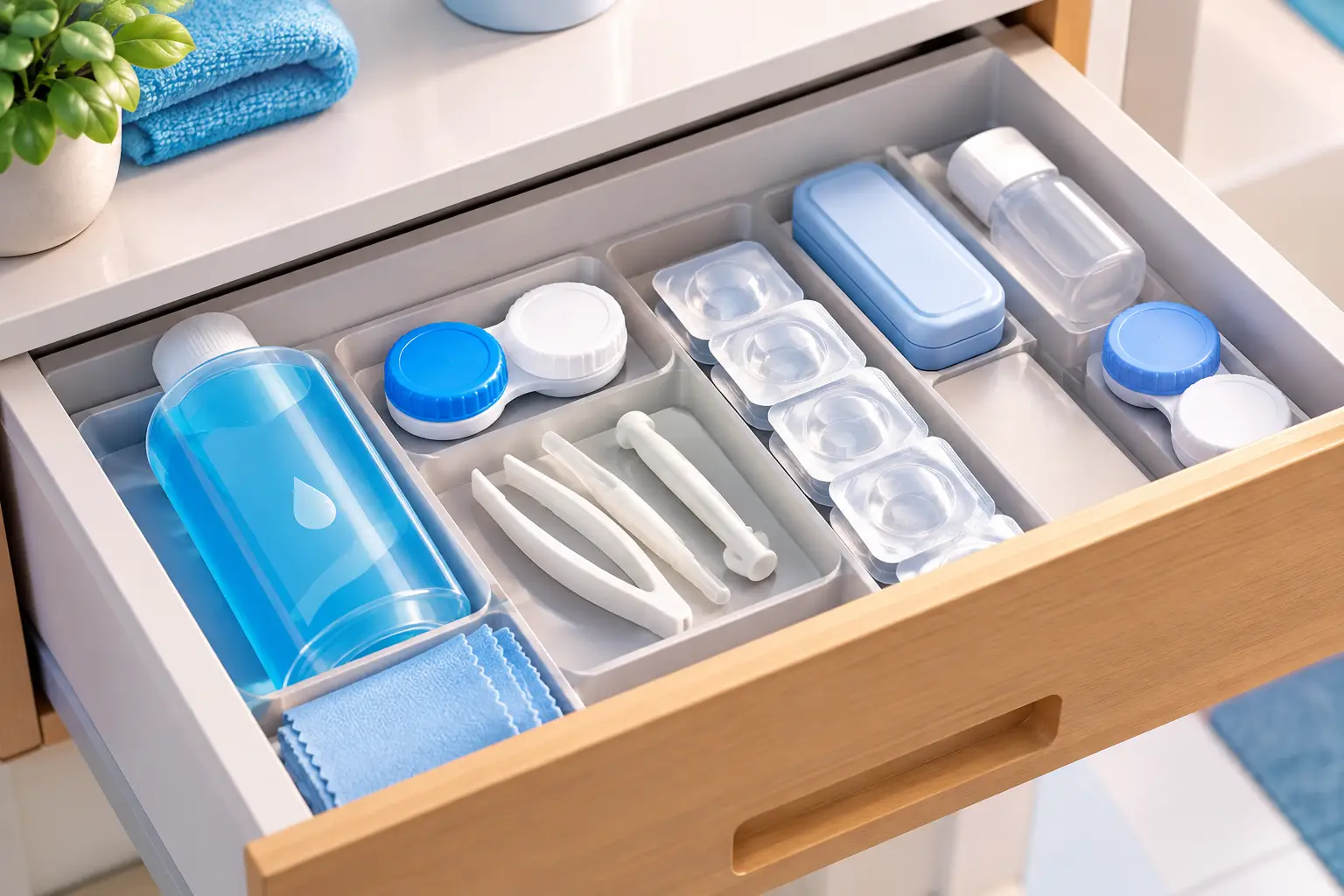
A log only helps if it stays easy to use. The most common failure is storing lens cases in one place, packaging in another, and purchase details in an old email or forgotten notes app. When information is scattered, checking one lens pair becomes a search project.
Instead, create one home for each pair and its details. A purpose-built organizer such as EYEBOX can keep lens cases alongside key information like prescription, color, purchase details, and expiration dates. The benefit is simple: when you reach for a case, the identifying information is right there too.
Color-coding can make the system even faster. Assign one color or label to clear daily lenses, another to monthly prescription lenses, and another to cosmetic lenses. You do not need a complicated code. You just need a visual cue that prevents similar cases from being confused.
A Few Details Worth Checking Before You Wear a Pair
Your purchase log is an organization tool, not a substitute for proper lens care or professional advice. Always follow the wear, cleaning, and replacement instructions provided with your lenses. Do not wear a lens that is damaged, uncomfortable, or past its recommended replacement date.
Before inserting a pair, check that the case label matches the log entry, the lenses are in the correct right and left compartments when applicable, and the pair has not reached its replacement date. For unopened inventory, check the printed package expiration date rather than relying on memory.
If your prescription changes, mark older stock clearly instead of assuming it is still appropriate to wear. Your eye care professional can tell you whether any unused lenses remain suitable for your current needs.
Make Your Next Lens Purchase Easier
The best purchase log is not the most detailed one. It is the one you can read at a glance on a rushed morning. Record the facts that help you identify, use, replace, and reorder each pair, then keep that record with your lens storage rather than buried in packaging.
A small habit at the time of purchase can replace the familiar frustration of staring at an unlabeled case and wondering what is inside. Give every lens pair a clear place and a clear record, and your routine becomes much easier to trust.