A lens case versus blister pack decision usually starts at the bathroom counter: you open a new pair, toss the little foil package, and later cannot remember the color, prescription, replacement schedule, or expiration date. The truth is that these two items do different jobs. One holds your lenses after opening. The other holds the details that make those lenses easy to identify.
If you wear more than one pair – perhaps clear prescription lenses during the week and colored contacts for special occasions – keeping only the case can create a guessing game. Keeping only the blister pack is not useful once reusable lenses need clean storage. A better routine gives both pieces a clear role.
Lens Case Versus Blister Pack: Different Jobs
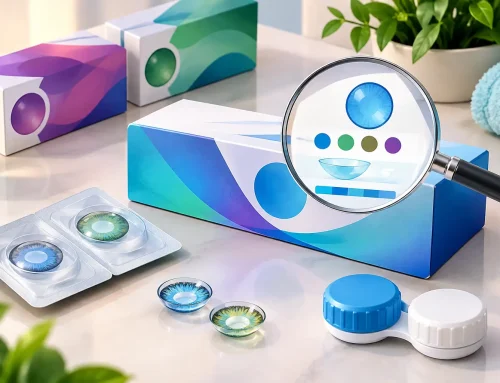
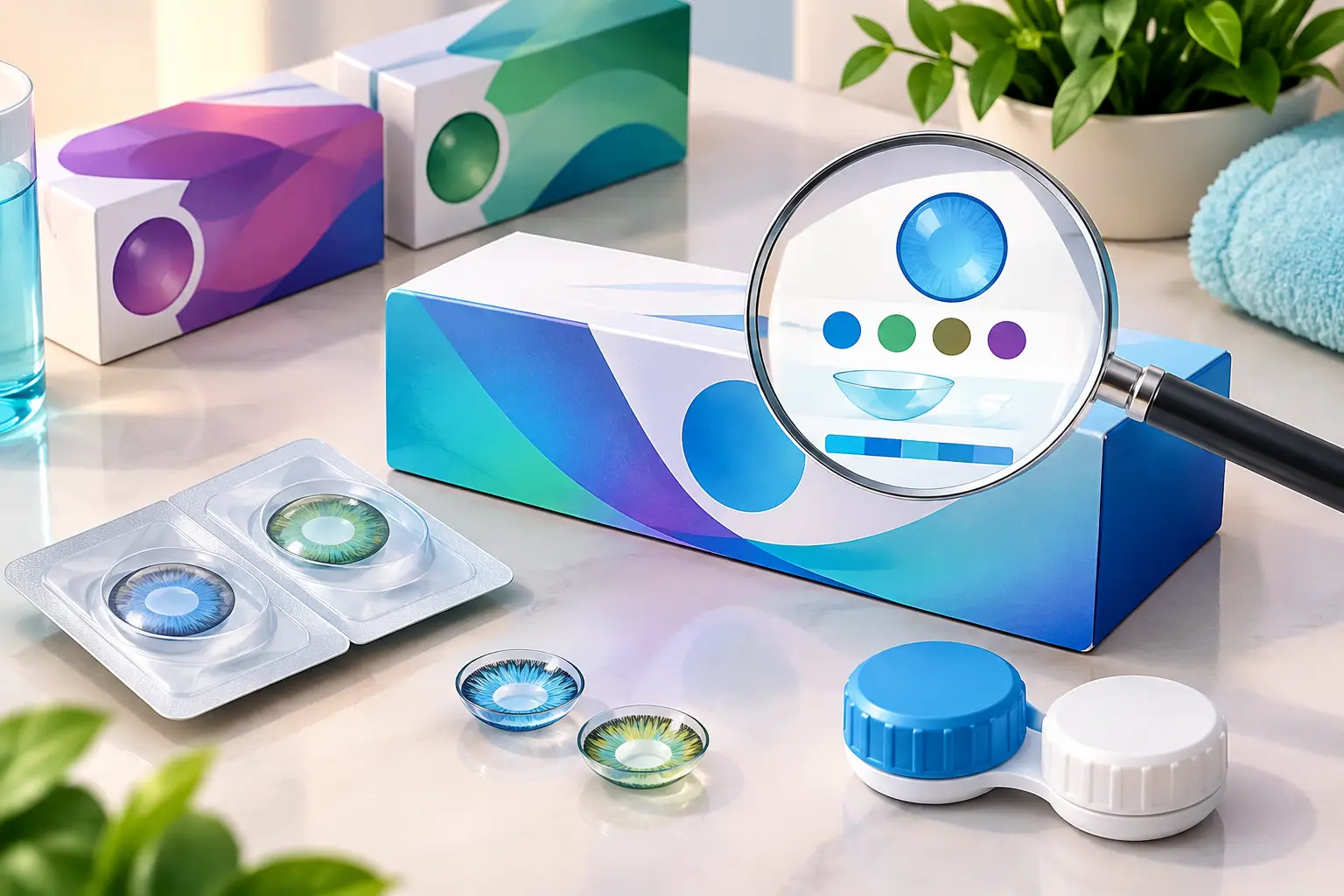
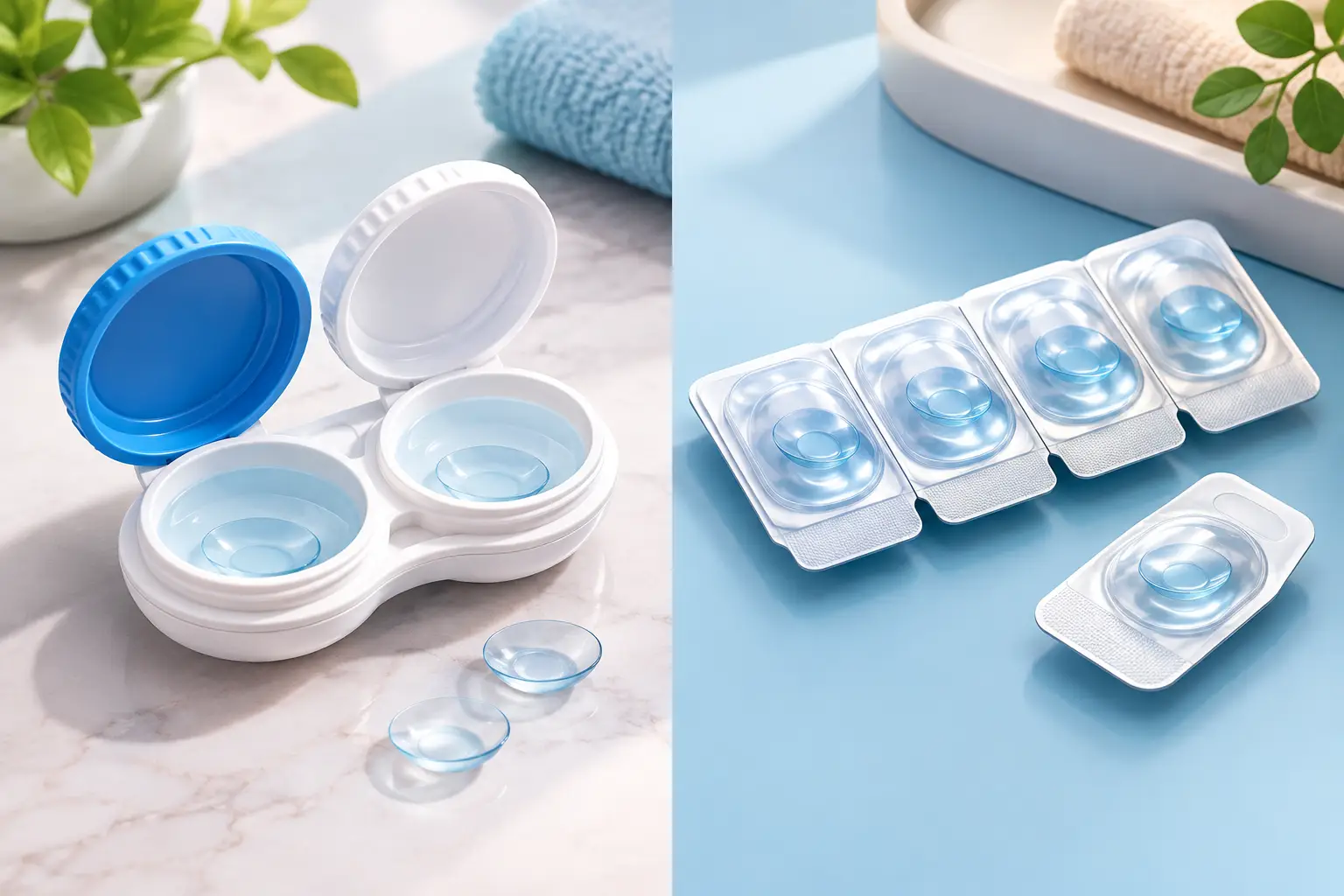
A contact lens blister pack is the sealed package your lenses come in. Before opening, it keeps each lens in its sterile solution and provides the manufacturer information printed on the foil or label. Depending on the brand, that information may include the lens power, base curve, diameter, color, lot number, expiration date, and replacement type.
A lens case is for reusable contact lenses after the original package has been opened. It holds fresh contact lens solution and keeps the right and left lenses separated between wears. For monthly, biweekly, and other reusable lenses, a clean case is part of the daily lens-care routine.
They are not interchangeable. A used lens should not go back into its original blister pack, and a lens case does not preserve the full product information from the packaging. Treating the blister pack as a record and the lens case as storage prevents a lot of avoidable confusion.
What You Lose When You Throw Away the Blister Pack
The packaging looks disposable, so it often gets discarded before its information has been saved. That is where problems begin, especially when several lens cases look alike.
Your exact prescription details
A contact lens prescription is more than a general glasses prescription. The power can differ between eyes, and some lenses include additional specifications such as cylinder, axis, or add power. If you have several opened pairs, relying on memory makes it easy to grab the wrong lenses.
The right and left markings on a lens case help, but they do not tell you which prescription, brand, or lens design is inside. The blister pack often does.
Color and style information
Colored contacts can look surprisingly similar once they are out of their packaging. A gray-blue shade, hazel blend, and subtle enhancement tint may be hard to distinguish in a case, particularly when you own several options. The package gives you the product name and color so you can repeat a look you like and avoid mixing shades.
Expiration and replacement timing
There are two dates to think about. The expiration date printed on unopened packaging tells you how long that sealed product remains usable. The replacement schedule tells you how long a reusable lens should be worn after it is opened. Those are not the same date.
Throwing away the package can make it harder to check the unopened-lens expiration date. Failing to record the opening date makes it easy to overextend a pair of reusable lenses. A simple written record removes the uncertainty.
Purchase and reorder details
When it is time to reorder, many wearers remember only part of what they bought. Was it the 30-pack or 90-pack? Was the color Honey, Hazel, or Warm Brown? Which eye had the stronger power? Packaging gives you a reference point instead of turning every reorder into a search through old emails and half-remembered product names.
When a Lens Case Is the Priority
For reusable lenses, the lens case is essential once a lens has been opened. Use a case designed for contact lenses, fill it with fresh recommended disinfecting solution, and keep the right and left compartments clearly separated.
Do not top off old solution. Empty the case, rinse it with fresh contact lens solution as directed by your eye care professional or the solution label, and let it air dry between uses. Water is not a substitute for contact lens solution. It can introduce organisms that may harm your eyes.
A case also needs replacement. Cases can collect residue over time, even when they look clean. Follow your eye care professional’s guidance and the case or solution instructions for replacement timing. If the case is cracked, dirty, missing a cap, or no longer closes securely, replace it.
For daily disposable lenses, the answer is different. A daily disposable lens is meant to be worn once and discarded. It does not belong in a lens case for reuse. In that situation, the blister pack matters mostly as an information source until you have recorded the details you need.
The Organized Approach: Keep the Information, Not the Clutter
You do not need to save a pile of empty foil packs forever. You do need a reliable system that connects each lens case to the details on its packaging.
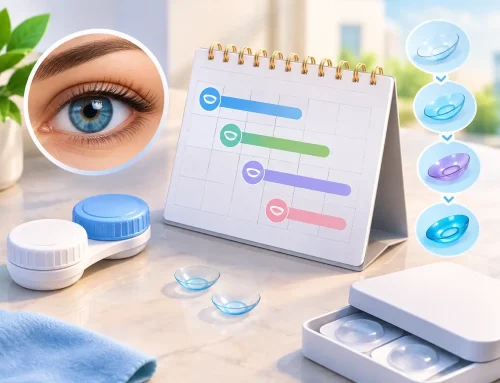
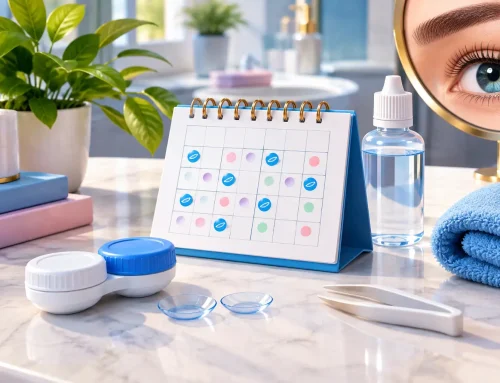
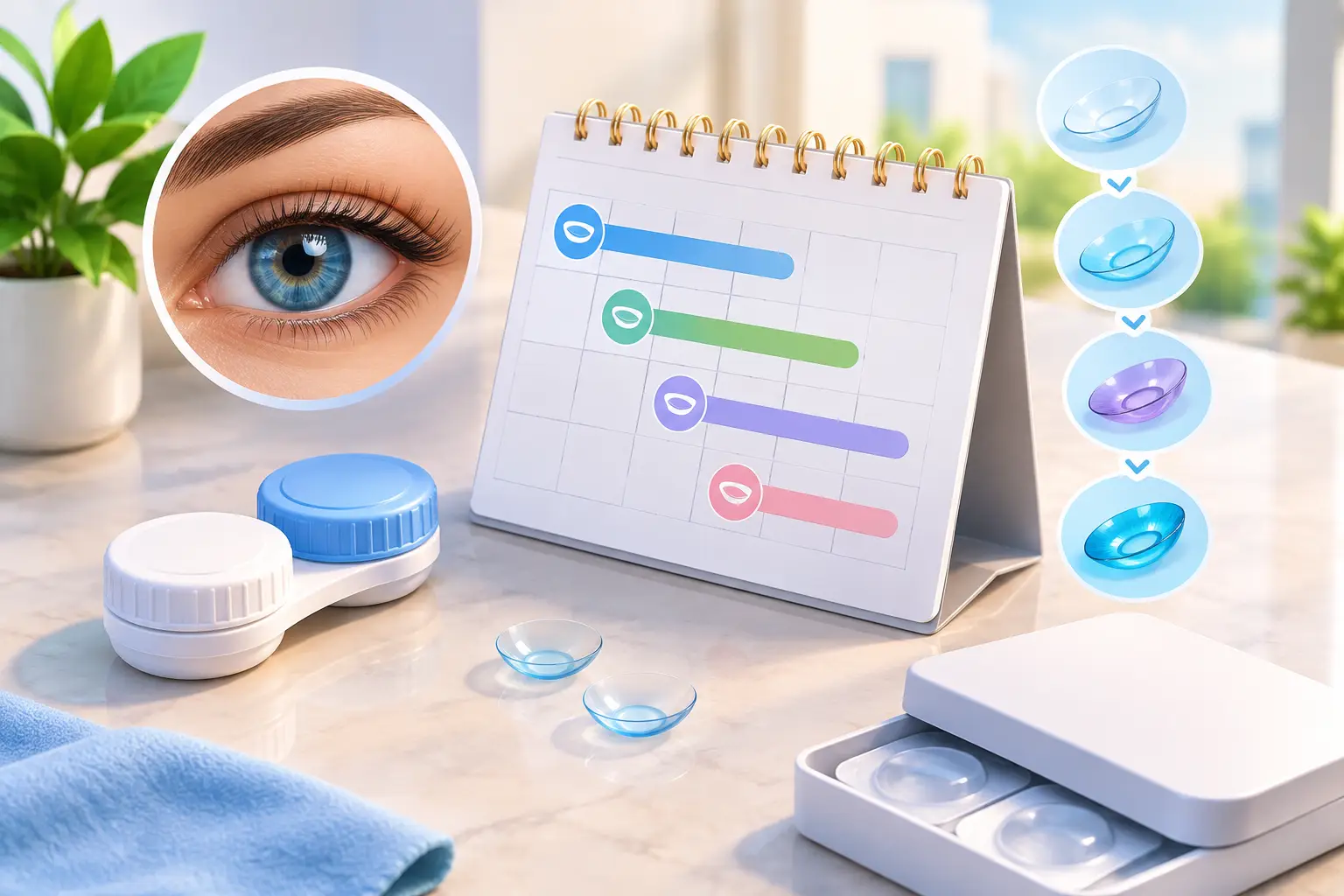
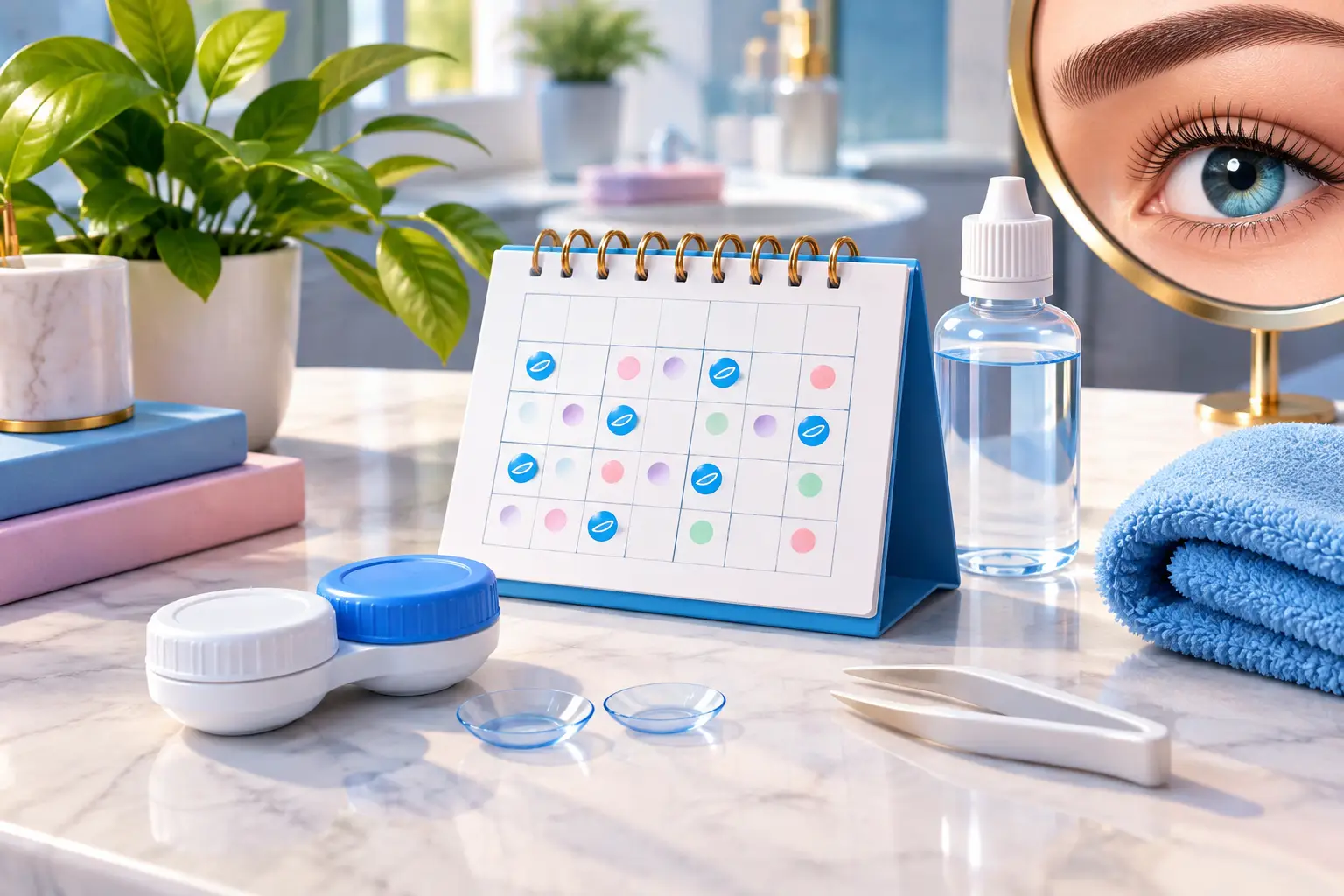
Start when you open a new pair. Record the lens brand, prescription for each eye, color if applicable, expiration date, purchase date, and the date you opened reusable lenses. Then label or assign that record to the matching case. If you use multiple pairs, a color-coded system is especially helpful because it gives each pair a quick visual identity.
This takes a minute at the start and saves repeated frustration later. Instead of opening several cases to figure out which pair is which, you can see what you have at a glance. Instead of wondering whether a pair is still within its replacement period, you have the date in front of you.
An organizer such as EYEBOX brings those pieces together by storing lens cases while keeping the prescription, color, expiration, and purchase information associated with each pair. The goal is not to keep more packaging. It is to stop losing the details that packaging carried.
A Simple Setup for Multiple Lens Pairs
The best system is one you will actually use. Set it up in the same place where you handle your contacts so the information stays current.
For each reusable pair, keep the case clean, assign it a clear label or color, and record the opening date. For unopened backup lenses, retain enough package information to identify the product and check its expiration date. For colored lenses, include the color name rather than relying on what the lens appears to look like in solution.
If you switch between lenses for different activities or looks, avoid moving lenses into a random spare case without updating the record. That small shortcut is how one pair becomes an unknown pair. When in doubt, do not wear a lens you cannot confidently identify.
Common Mix-Ups to Avoid
The most common mistake is assuming the case alone tells the full story. “Right” and “left” identify the eye, but not the lens brand, power, color, or age. Another common mistake is keeping an empty package nearby with no connection to a specific case. Once you have three or four cases in a drawer, that package is no longer a useful reference.
It is also easy to confuse expiration with replacement time. An unopened lens can have a printed expiration date years away, while a monthly lens may need to be replaced one month after you open it. Record both when they apply.
Finally, do not use a lens case as a place to hold old lenses “just in case.” If a lens is past its recommended replacement schedule, damaged, uncomfortable, or unidentified, it is not a backup. Replace it and consult your eye care professional if you have questions about irritation, redness, pain, or changes in vision.
A contact lens routine feels much easier when every case has a name, every pair has a date, and the details you paid for do not disappear with the packaging.