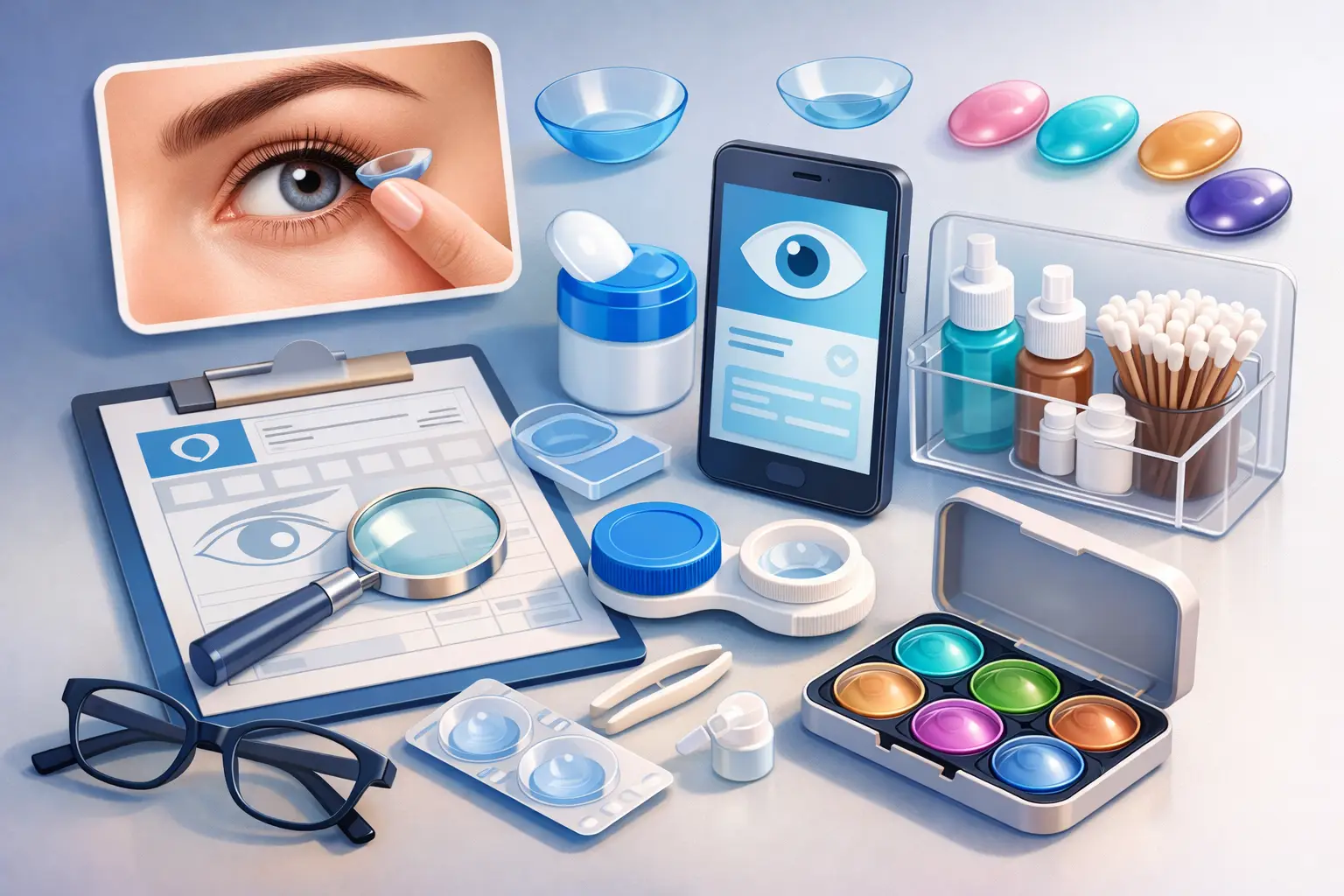
A contact lens box can disappear in one bathroom-cleaning session, taking the prescription, color name, replacement schedule, and expiration details with it. The best prescription record methods prevent that familiar scramble when it is time to reorder, open a new pair, or figure out which lens case belongs to which lenses.
For contact lens wearers, keeping a prescription record is not about adding another chore. It is about making the details you already need visible and reliable. The right method depends on how many lenses you use, whether you wear colored contacts, and whether you prefer digital tools, physical labels, or both.
What a useful contact lens record should include
A prescription record should do more than show your power. Contact lenses can look nearly identical while having different prescriptions, colors, replacement schedules, or purchase dates. If you keep multiple pairs, a vague note that says blue contacts or monthly lenses can create more confusion than it solves.
At minimum, track these details for every active pair:
- Right-eye and left-eye prescription information, including power and any additional specifications on the package
- Lens brand, style, and color, especially for cosmetic or colored lenses
- The purchase date, expiration date, and replacement schedule
- The date you opened the lenses or began using them
You may also want to keep your eye care provider’s office information and the date your prescription was issued. That is separate from tracking an individual lens pair, but it is useful when you need to confirm whether a prescription is still current before ordering more lenses.
The goal is simple: when you look at a lens case, you should be able to identify what is inside without guessing.
Best prescription record methods for everyday lens use
There is no single perfect system for every contact lens wearer. A person with one clear daily lens prescription has fewer details to manage than someone rotating several colored lenses, different powers, or monthly and yearly lens styles. Here is how the most common methods compare in real life.
Keep the original packaging
The original box is the most accurate source of lens information. It contains the exact brand, prescription values, lot information, expiration date, and often the color or style name. Keeping it is useful, particularly until you have transferred the details somewhere permanent.
The downside is clutter. Lens packaging takes up more space than most people expect, and empty or partly used boxes are easy to toss during a cleanup. Packaging also does not help much once lens cases are separated from their boxes. If you rely on this method alone, the record disappears as soon as the box does.
A better approach is to treat packaging as the source document, not the storage system. Record its details when you open it, then keep or recycle the box based on your own needs.
Save a photo of each lens label
Taking a clear photo of the box label is quick and free. It preserves the original information without requiring you to save every carton. Create one album in your phone called Contact Lens Details, and name or favorite the photos so they are easy to locate.
This works especially well for users who reorder the same lenses regularly. When you need to confirm a color name, expiration date, or exact prescription, the information is available even if the packaging is gone.
Photos have one limitation: they do not identify the lens cases sitting in your bathroom cabinet. You may have the details saved, but still need to scroll through several images and compare labels before you know what each case contains. Photos work best as a backup to a physical identification method.
Use a notes app or spreadsheet
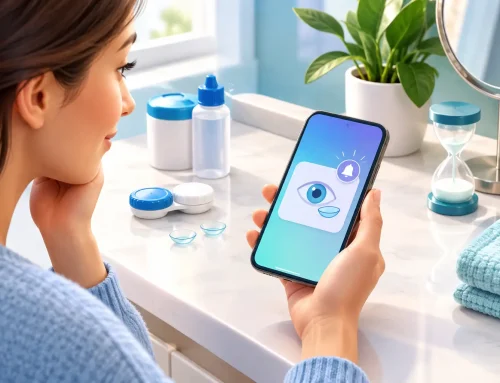
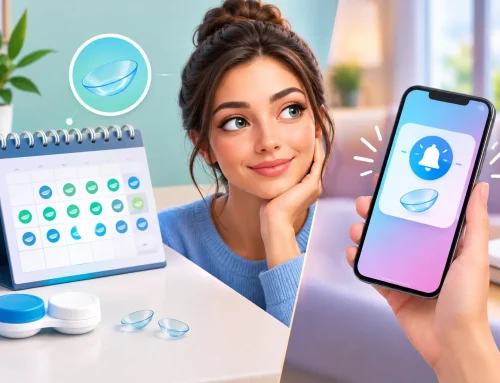
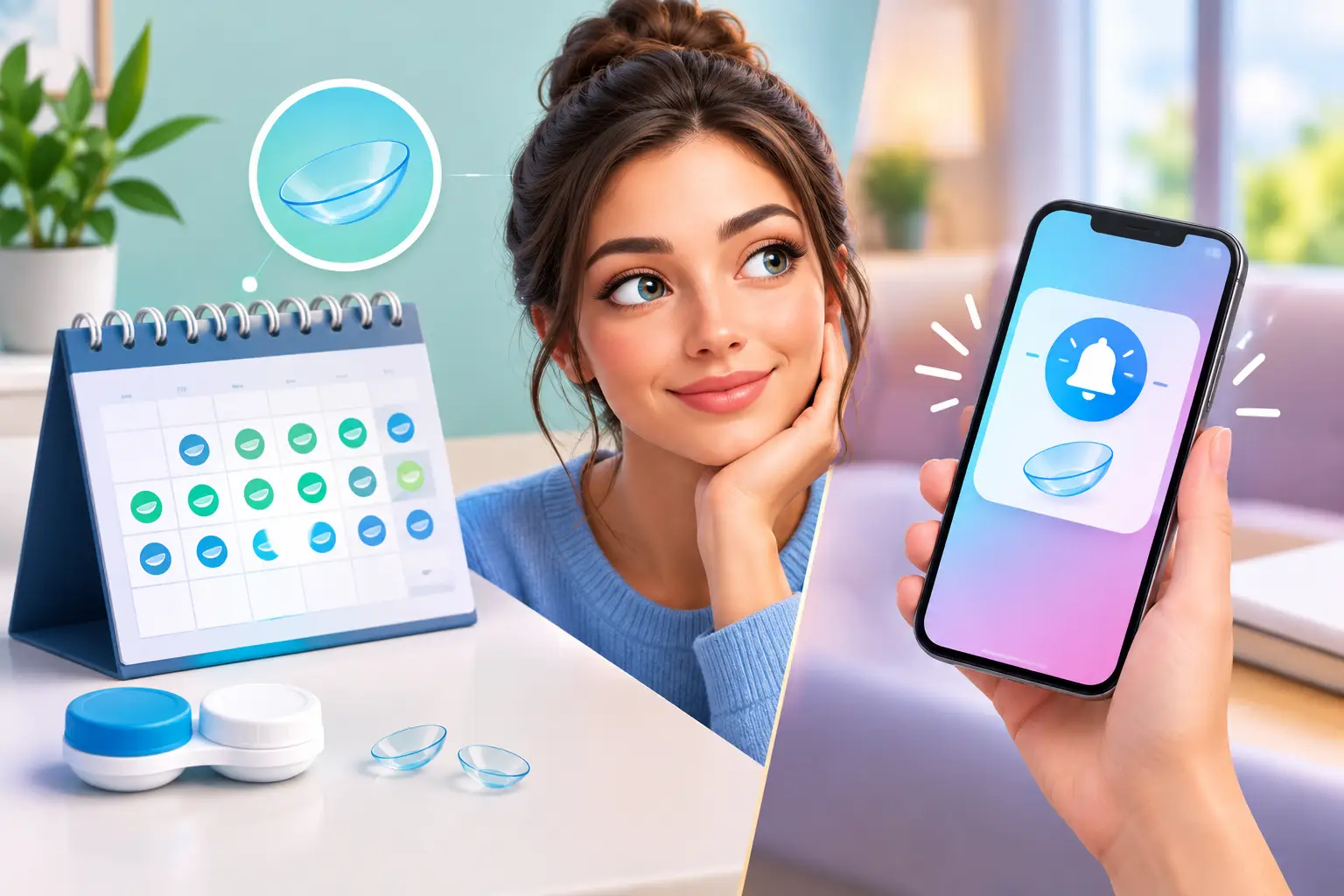
A simple digital note can hold records for every lens type you own. You can create one entry per pair and include the prescription, color, date opened, replacement date, and where you bought it. A spreadsheet can be useful if you want to sort by color, expiration date, or next replacement date.
This method gives you flexibility. You can update it after a purchase, add a reminder, and keep old records without filling a drawer with boxes. It is also helpful if you wear lenses occasionally and need a history of what you purchased in the past.
Still, digital records require consistency. If you do not update the note when you open a new pair, the information becomes incomplete. They also create a gap between the screen and the actual cases. A record that lives only on a phone cannot stop you from picking up the wrong case in the morning.
Label individual lens cases
Small labels bring the information directly to the lens case. A label can include the color, right or left eye, and date opened. For a simple setup, that may be enough to prevent mix-ups.
This is a practical choice for someone using only one or two pairs. However, labels are limited by size. Writing a full prescription, brand, replacement schedule, and expiration date on a tiny case can be hard to read. Labels can also peel, fade, or leave adhesive behind when you switch lenses.
Use labels for quick identification, but keep the full prescription record somewhere else. Think of the label as the name tag and your larger record as the complete file.
Use a dedicated physical organizer with records
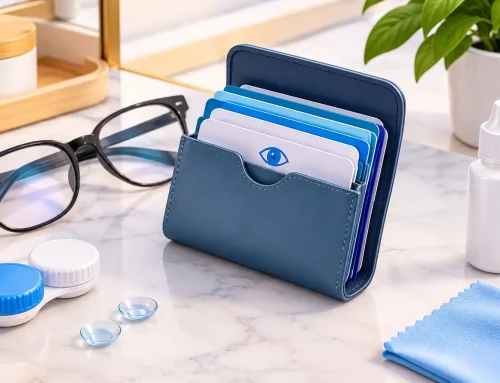
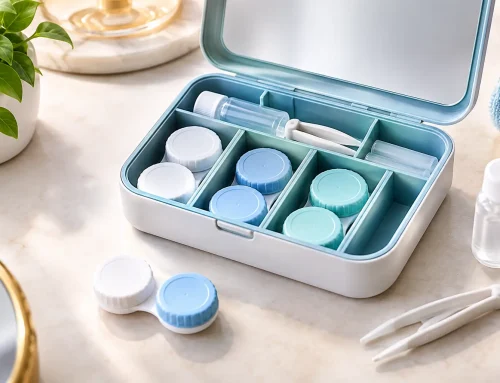
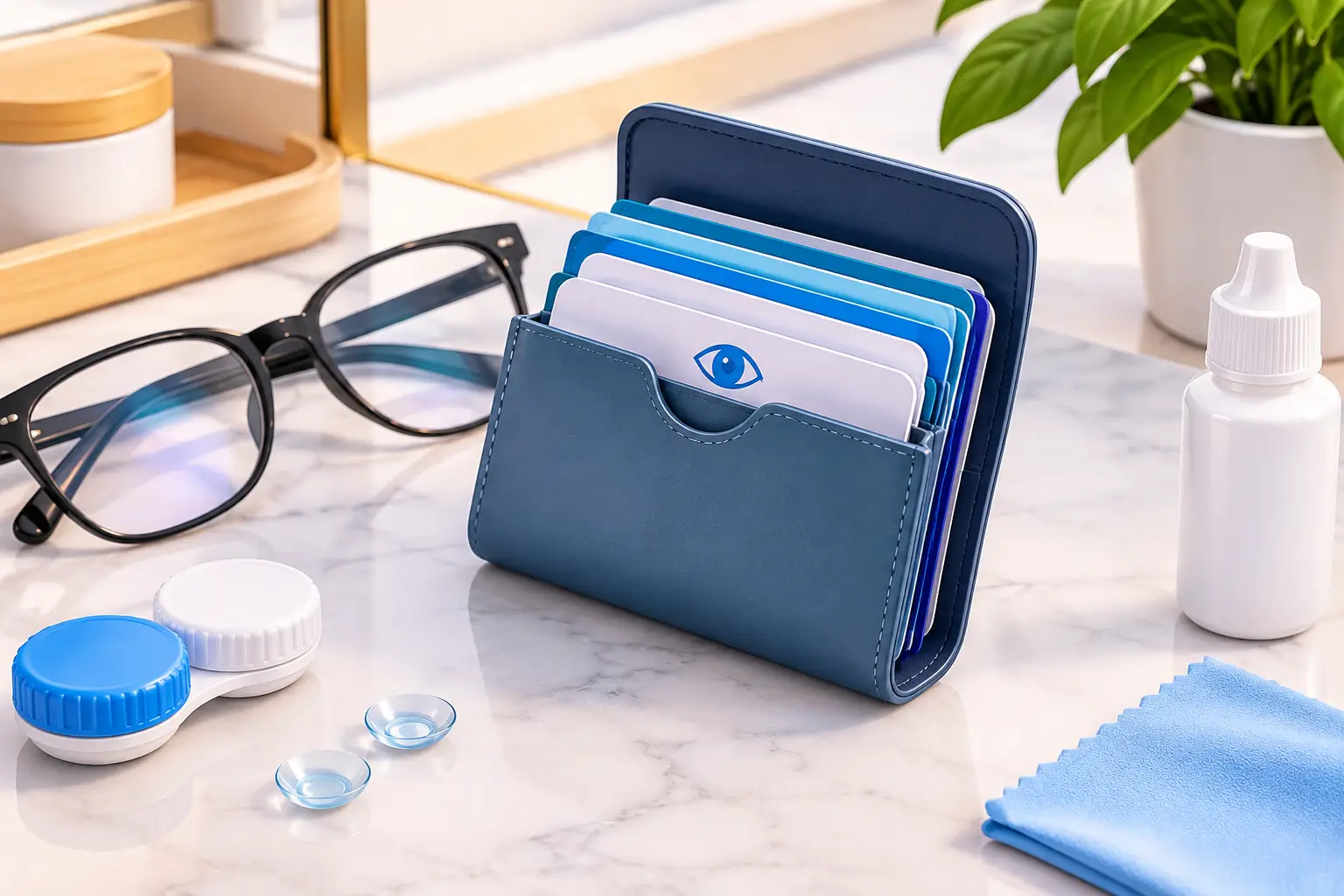
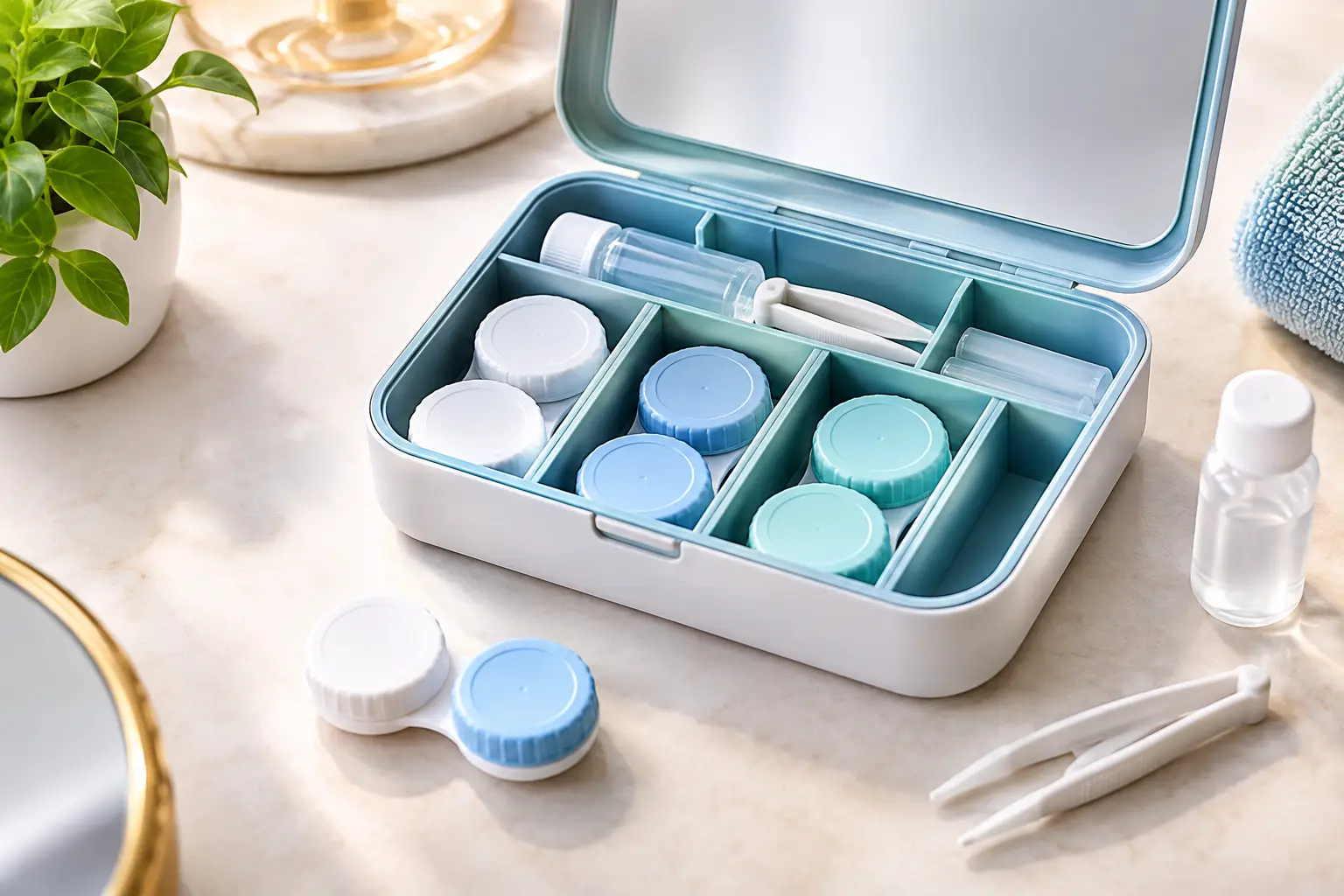
For people managing multiple lens cases, a purpose-built organizer is often the clearest option. It keeps cases in assigned spaces while preserving the corresponding lens details nearby. Instead of opening a drawer full of look-alike cases, you can match each case to a clear record for prescription, color, expiration, and purchase information.
This approach is especially useful for colored contact lens wearers, users with separate left- and right-eye prescriptions, and anyone who keeps more than one active pair. The biggest benefit is that storage and identification stay together. You do not need to remember where you wrote the details or which photo matches which case.
EYEBOX is designed around this exact problem, giving contact lens users a dedicated place to store lens cases while keeping key details organized and easy to check. It turns scattered packaging, handwritten notes, and unmarked cases into one understandable system.
Build a record system you will actually maintain
The best system is not the one with the most features. It is the one you can update in less than a minute when you open or replace lenses.
Start by collecting every active lens case, package, and old note you have. Check each package for the details you need, then decide on one primary home for the information. If you use a physical organizer, fill in the record before placing a case inside. If you prefer a digital note, create the entry while the box is still in your hand.
Next, use a consistent naming format. For example, write Hazel Monthly – Right Eye or Gray Daily – Left Eye rather than simply contacts. The added detail makes a difference when several colors or prescriptions are in use.
Finally, add one habit to your lens routine: update your record when you open a new pair. Do not wait until you need to reorder. The box is most useful when it is open in front of you, and that is when the information is easiest to capture accurately.
Avoid the record-keeping mistakes that cause mix-ups
Most contact lens confusion comes from records that are incomplete, outdated, or separated from the lenses themselves. Keeping only a prescription card may tell you your power, but it will not tell you when a specific pair was opened. Saving only a purchase email may confirm the order, but it may not help distinguish two similar colors.
Avoid relying on memory for replacement dates. It is easy to remember the month you bought lenses and much harder to remember the day you started wearing a particular pair. Record the opening date immediately, then calculate or note the replacement date based on the schedule recommended for that lens type.
Also, do not assume every lens with the same color label is interchangeable. Different brands and styles can have different specifications. Use the packaging details and follow the instructions from your eye care provider. A well-organized record supports safe routines, but it does not replace professional guidance or proper lens care.
When a simple method is enough
If you wear one lens type, have the same prescription in both eyes, and replace lenses on a predictable schedule, a phone photo plus a dated note may be all you need. Keep the active box until you confirm the details are saved, and review the expiration date before opening a new pair.
If you wear several colors, keep backups, have different prescriptions, or tend to lose packaging, choose a system that connects each case to its information. The more pairs you manage, the more valuable physical organization becomes.
Your contact lenses should not come with a daily guessing game. Give each pair a clear place, record the details when they are available, and make your next reorder or lens change a quick, confident decision.