
A contact lens box can look like a string of tiny abbreviations, especially when you are replacing lenses, sorting several pairs, or trying to remember which blue lenses were which. Learning to read contact lens parameters gives you a clear record of what belongs in each case – and makes it much harder to accidentally wear the wrong lens.
Those printed details are not just packaging information. They identify the lens design your eye care professional prescribed, the power for each eye, and often the replacement schedule and expiration date. If you wear colored contacts, the box may also be the only reliable place to confirm the exact color and product name after the lenses are out of their original packaging.
Where to find contact lens parameters
Most contact lens parameters appear on the side or back of the outer box and on each individual foil blister pack. The wording and layout vary by manufacturer, but the same core details are usually present. Look for labels such as PWR, SPH, BC, DIA, CYL, AX, ADD, EXP, and LOT.
Start with the outer box when you have it. It provides the easiest full view of the lens name, quantity, prescription, replacement schedule, and expiration date. The blister pack is useful once the box is gone, but its smaller print can be harder to read and may not include every detail you want to track.
Keep right-eye and left-eye information separate from the beginning. Many people have different powers in each eye, even if the difference is small. Two cases can look identical on a bathroom counter, but one mix-up can leave you seeing less clearly or feeling like something is off all day.
How to read contact lens parameters on your box
PWR or SPH: the lens power
PWR means power, while SPH means sphere. Both refer to the main correction strength of the lens, measured in diopters. You may see a plus sign, such as +2.00, or a minus sign, such as -3.50.
A minus power corrects nearsightedness, while a plus power corrects farsightedness. The sign matters. -2.00 and +2.00 are not interchangeable, so do not rely on the number alone when labeling or organizing your lenses.
If your prescription is the same in both eyes, you may have boxes with matching PWR values. Even then, it helps to keep the details visible. It prevents confusion if you later switch brands, add colored lenses, or receive an updated prescription.
BC: base curve
BC stands for base curve. This number, usually somewhere around 8.0 to 9.0, describes the curvature of the contact lens. It helps determine how the lens sits on the surface of your eye.
Base curve is not a strength measurement. A lens with the same power but a different BC may fit differently, so it is not a reason to substitute one lens for another. Follow the exact brand and parameters recommended by your eye care professional unless they approve a change.
DIA: diameter
DIA means diameter, measured in millimeters. It tells you the width of the lens. A common value might be 14.0 or 14.2.
Like base curve, diameter affects fit. Cosmetic lenses can make diameter especially worth checking because two shades may look similar in their cases while coming from different product lines with different dimensions.
CYL and AX: astigmatism correction
If you wear toric lenses for astigmatism, your package will likely show CYL and AX in addition to PWR or SPH. CYL means cylinder and indicates the amount of astigmatism correction. AX means axis and is a number from 1 to 180 that specifies the orientation of that correction.
For example, a box may show PWR -2.50, CYL -1.25, and AX 090. All three values work together. A lens with the right power but the wrong cylinder or axis is not your prescribed lens.
Toric lens packaging can be particularly easy to confuse when you have several boxes with similar power values. Record the full set of numbers for each eye rather than writing only the sphere power.
ADD: extra near vision support
ADD appears on multifocal contact lenses. It refers to the additional magnification used to help with close-up vision. Depending on the brand, it may be written as Low, Medium, or High instead of a numeric value.
If you use multifocal lenses, track the ADD designation along with the rest of the prescription. A box marked Low and one marked High may look almost identical, but they are designed for different near-vision needs.
Other details worth keeping with your lenses
Your prescription is essential, but it is not the only information you may need later. The following details make reordering, organizing, and replacing lenses much easier:
- Lens brand and product name, since approved parameters can differ between brands.
- Right or left eye, often marked OD for right eye and OS for left eye.
- Color or pattern name for cosmetic lenses, including whether the lenses are plano or have vision correction.
- Replacement schedule, such as daily, biweekly, or monthly.
- Expiration date, which tells you how long unopened lenses remain sterile in their sealed packaging.
- Lot number, which can be helpful if a manufacturer or retailer asks for it.
The expiration date applies to unopened blister packs. Once you open a reusable lens, follow the replacement schedule provided for that lens type. A monthly lens is not meant to be worn until the printed box expiration date after opening. It is typically replaced one month after opening, even if it was not worn every day.
Do not confuse expiration with replacement timing
This is one of the most common contact lens organization mistakes. A box with an expiration date of 2028 does not mean an opened monthly lens is good until 2028. The printed date refers to the sealed lens inside its original sterile package.
Your replacement timing begins when you open the blister pack for reusable lenses. Write down the open date or replacement date somewhere you will actually see it. If you use several lens pairs, especially prescription and colored lenses, relying on memory quickly becomes unreliable.
Also, do not try to identify a lens by appearance alone. Clear lenses can be nearly impossible to distinguish once they are in cases. Colored lenses are easier to tell apart, but shades can still look different under bathroom lighting or when viewed through solution. The package details are the dependable reference.
A simple system for keeping parameters straight
The easiest routine starts before you throw away the box. When you open a new supply, save the details that matter: the full prescription for each eye, lens name, color, purchase date, expiration date, and planned replacement date. Then keep that information directly with the corresponding lens case.
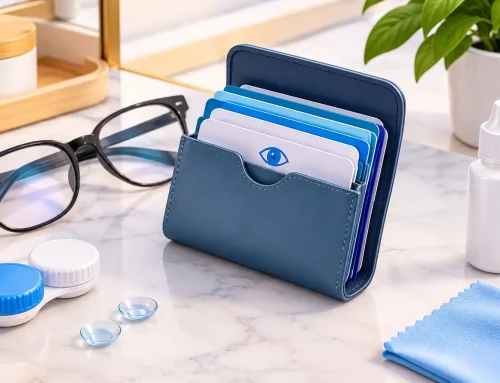
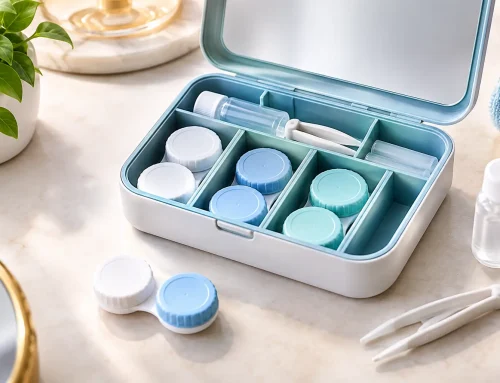
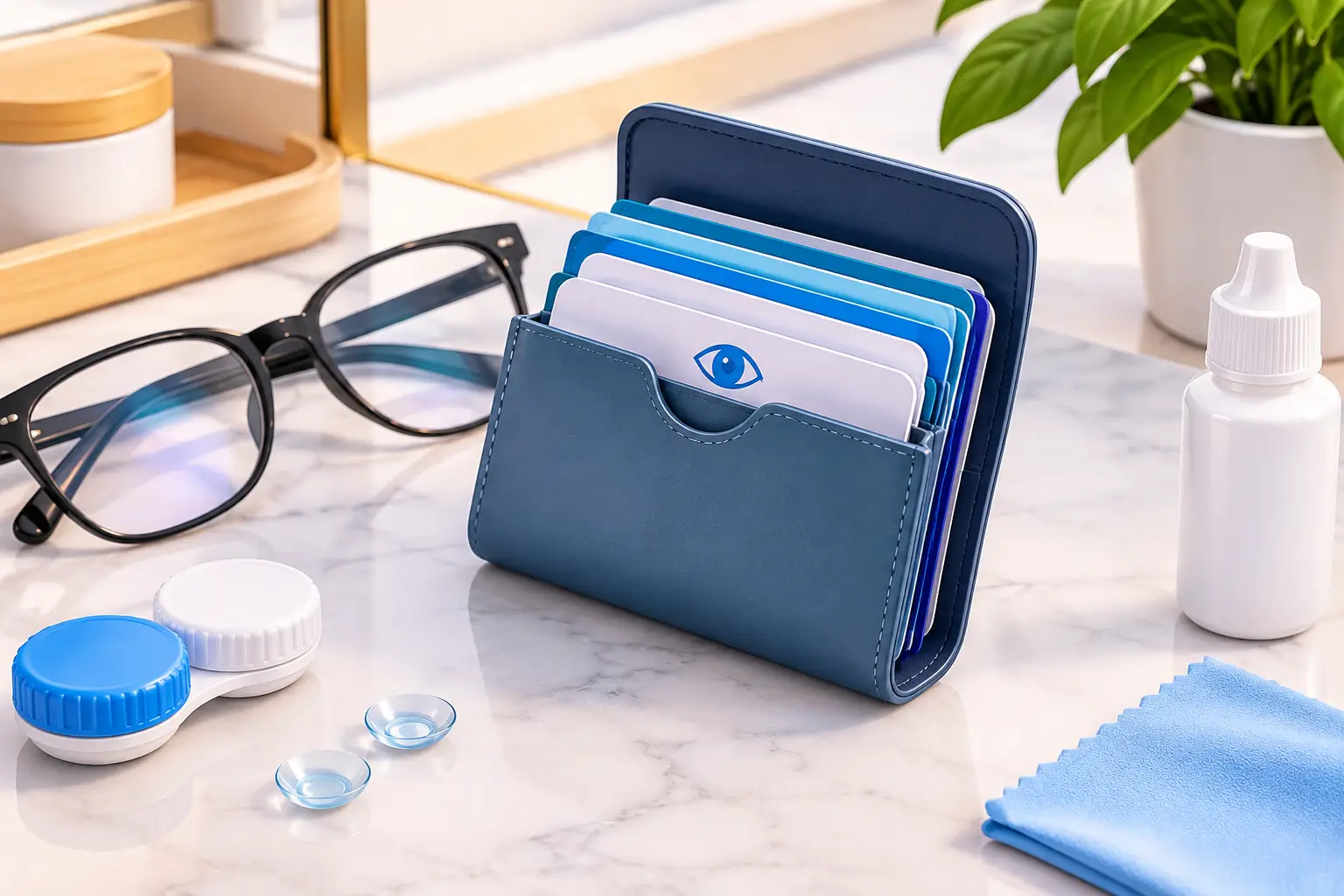
This creates a simple before-and-after difference. Instead of hunting through a drawer for an old box, guessing which case holds your right lens, or reopening an order confirmation to find a color name, you have one clear place to check. The EYEBOX® contact lens organizer is designed for exactly this kind of at-home lens organization, pairing stored cases with the details that identify them.
If you rotate between regular prescription lenses and cosmetic lenses, give every pair its own clearly labeled spot. Avoid moving lenses into a random spare case without transferring the identification details. A few seconds of setup protects you from a much more frustrating mix-up later.
When the numbers do not match
If a new box has parameters that differ from what you expected, pause before opening it. Check whether your prescription was updated, whether the box is labeled for the correct eye, and whether you ordered a different lens design. A different brand may also use different parameter options, even when it provides similar vision correction.
Do not change your own BC, DIA, cylinder, axis, or multifocal add based on what seems close enough. Contact lenses are medical devices, and fit matters as much as vision power. If something looks inconsistent, contact your eye care professional or the seller before wearing the lenses.
A clear label is a small thing, but it removes a surprising amount of uncertainty from your daily routine. Keep the numbers, dates, and color details where your lenses live, and every new pair will be easier to identify, use, and replace.