
A new color can change your look in seconds. But colored contacts safety depends on what happens before and after you put them in. The lens may be cosmetic, but it still sits directly on your eye. That means the same habits that protect prescription contact lens wearers apply to every pair, whether you wear them for a subtle enhancement, a costume, or a full color change.
The most common problems do not start with dramatic mistakes. They start with small, easy-to-miss details: a lens case that has not been replaced, a box thrown away before the expiration date was recorded, two similar cases sitting side by side, or a pair worn longer than intended. A simple routine keeps those details from becoming a bigger issue.
Colored Contacts Safety Starts With a Prescription
Colored contacts are medical devices, even when they have no vision correction. In the United States, you need a current prescription from an eye care professional to buy and wear them legally and safely. That prescription confirms more than your lens power. It helps verify that the lens diameter, base curve, material, and fit are appropriate for your eyes.
A decorative lens that does not fit correctly can cause irritation, scratches on the cornea, reduced oxygen reaching the eye, or infection. A lens can look fine in a package and still be wrong for your eye. Avoid buying lenses from novelty shops, beauty supply stores, costume retailers, or sellers that do not require a prescription.
If your eyes have changed, your old contact lens prescription may no longer be the right starting point. Blurry vision, dryness, headaches, or lenses that move around too much are all good reasons to schedule an eye exam rather than trying a different pair on your own.
Keep Your Lens Details Where You Can Find Them
Colored lenses often create an organization problem that clear lenses do not. You may have several colors, different replacement schedules, and perhaps separate prescription and cosmetic pairs. Once the original boxes are gone, it becomes much easier to forget which lenses are monthly, which are daily disposables, which color is in each case, or when a pair expires.
Do not rely on memory or on the look of the lens itself. Similar shades can be hard to tell apart, and a lens case does not show its replacement schedule. Keep the details for every pair together: the color name, prescription, purchase date, expiration date, replacement schedule, and which case belongs to it.
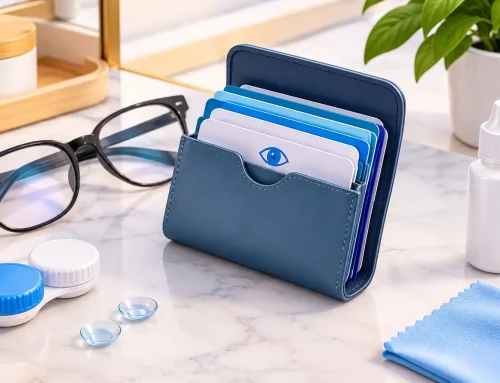
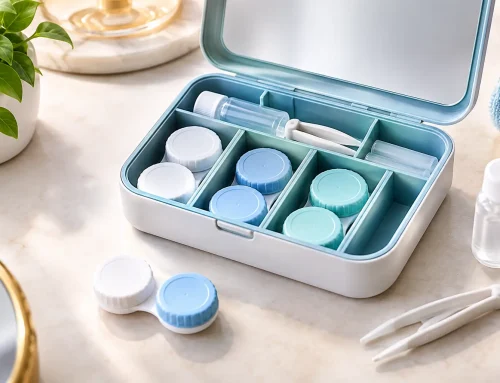
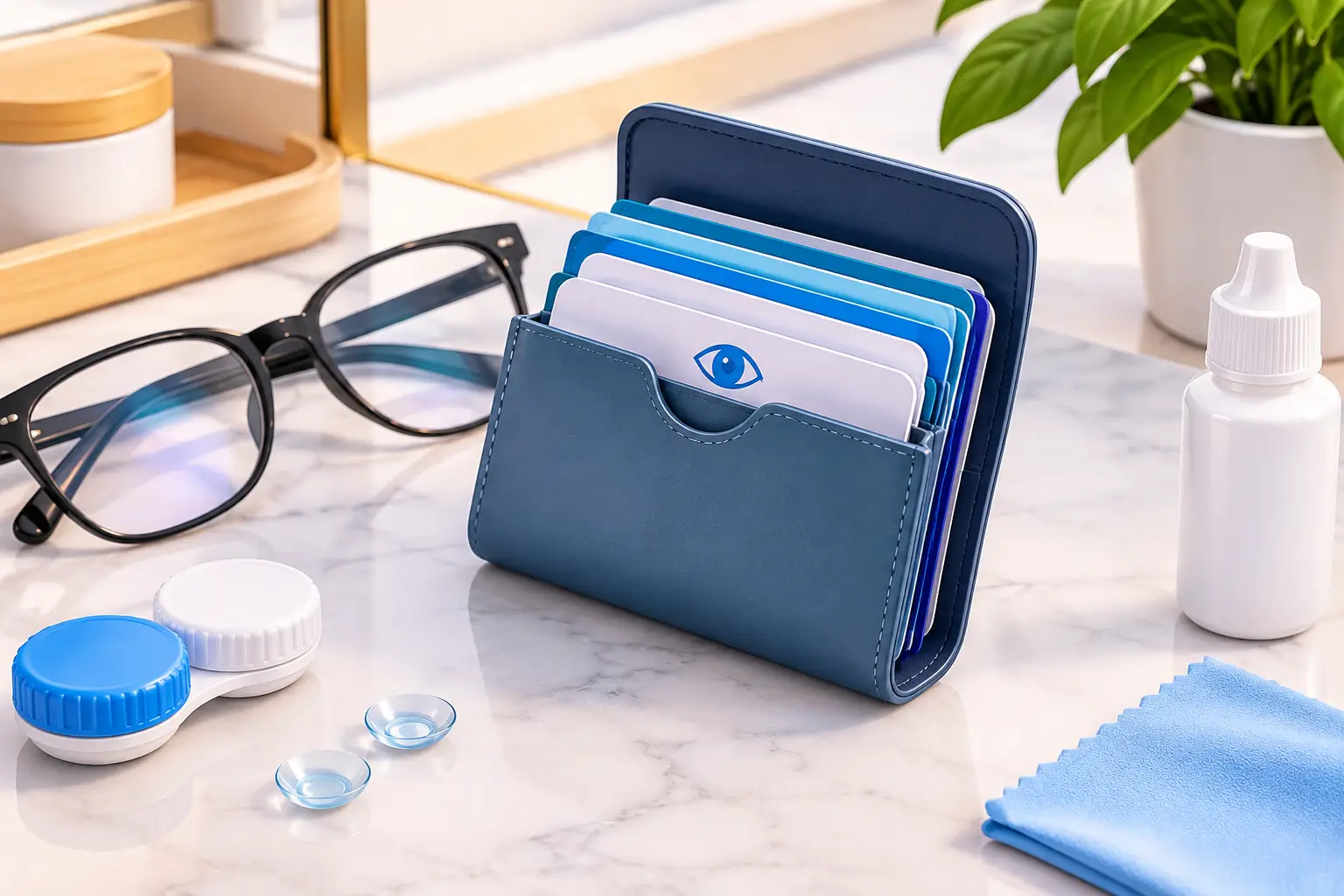
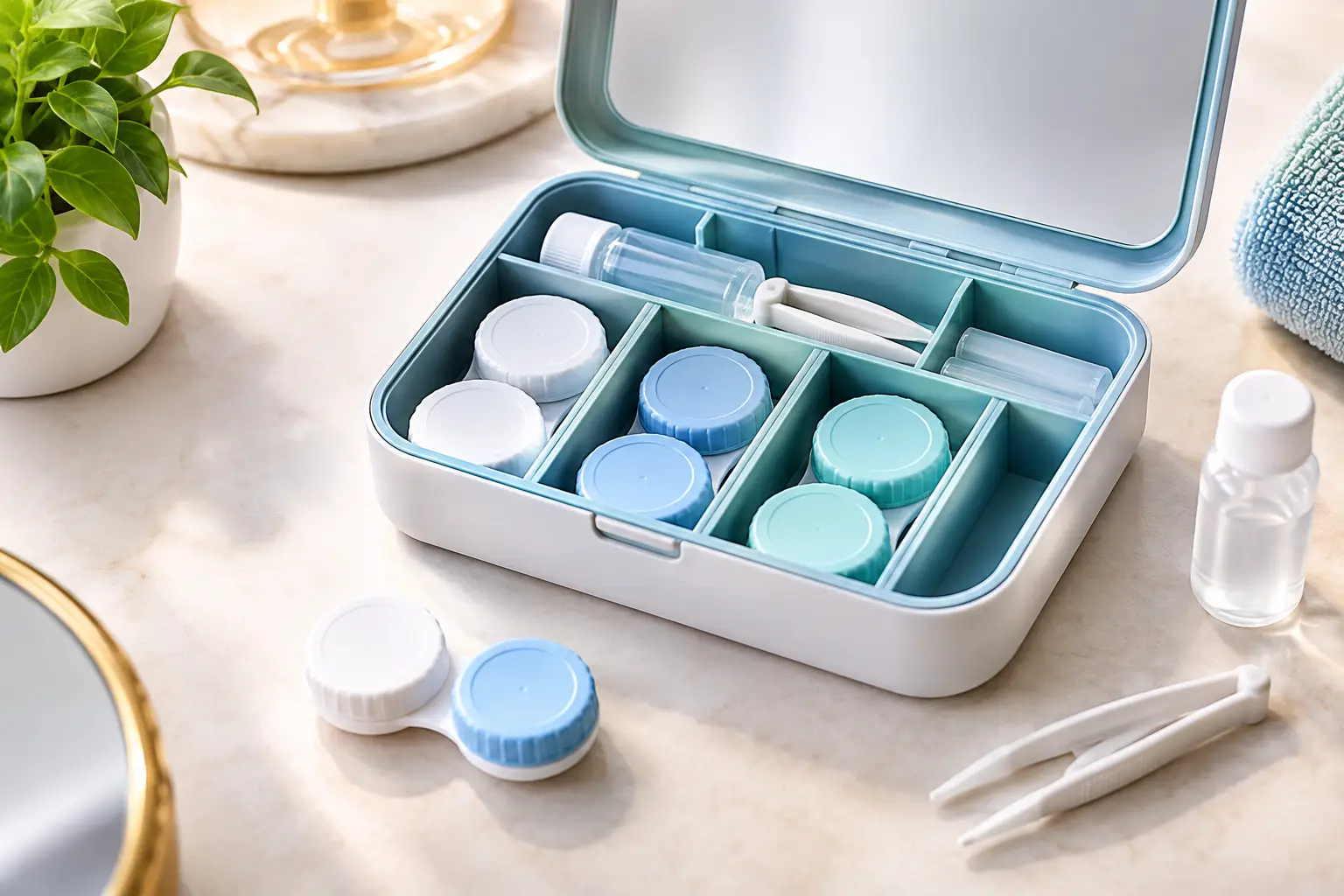
This is where an organizer such as EYEBOX can make the routine clearer. Instead of loose cases and discarded boxes in a bathroom drawer, you have one designated place to store your cases and preserve the information that goes with each pair. The goal is simple: when you reach for a lens, you should know exactly what it is and whether it is still within its recommended wear period.
Separate Similar Pairs Before They Get Mixed Up
If you wear more than one color, label or record each pair immediately after opening it. Do not wait until the packaging is gone. A brown enhancer and a hazel lens can look nearly identical in a case, especially under bathroom lighting.
Keep left and right lenses in their correct sides, even if your prescription is the same in both eyes. This habit reduces confusion and makes it easier to notice a torn or damaged lens before it goes back into your eye.
Use Clean Hands and Fresh Solution Every Time
The safest lens routine begins at the sink. Wash your hands with soap and water, then dry them thoroughly with a clean, lint-free towel before touching lenses, cases, or solution bottles. Lotion, makeup, fragrance, and household residue can transfer to the lens and cause discomfort or contamination.
Never rinse colored contacts with tap water. Water can carry microorganisms that may lead to serious eye infections. Saliva is not a substitute for solution either. If you do not have the correct contact lens solution available, do not put the lenses back in your eyes.
For reusable lenses, rub and rinse them with the disinfecting solution recommended by your eye care professional and the lens manufacturer. Even if a solution says “no-rub,” gently rubbing can help remove deposits. Then place each lens in fresh solution. Do not top off yesterday’s solution by adding more to what is already in the case.
The difference is easy to picture:
- Old solution leaves yesterday’s debris and germs in the case.
- Fresh solution gives the lens a properly disinfected place to soak.
- A clean case supports the work your solution is meant to do.
- A tracked replacement date helps prevent over-wearing a pair that should be discarded.
Replace the Case, Not Just the Lenses
Your lens case needs care too. Empty it after use, rinse it with fresh contact lens solution, and let it air-dry upside down on a clean surface. Do not rinse the case with water, and do not store it while it is closed and wet.
Replace the case regularly, generally at least every three months or as directed by your eye care professional. If it is cracked, cloudy, slimy, stained, or has an odor, replace it right away. A case may be small, but it is part of your lens-care system. Treating it as an afterthought can undermine an otherwise careful routine.
It also helps to keep each case assigned to one specific pair. Switching colors in and out of the same case without clear records makes it harder to track wear time and can lead to accidental mix-ups.
Follow the Replacement Schedule Exactly
Daily disposable colored contacts are designed to be worn once and discarded. They are not meant to be cleaned, stored, or worn again the next day. Biweekly and monthly lenses require the cleaning and storage routine described by their manufacturer, then must be discarded according to their schedule.
The schedule begins when you open the lens, not when you decide you have worn it enough times. A monthly lens opened on the first of the month should not become a “special occasion” lens that stays in a case for months because it was only worn a few times.
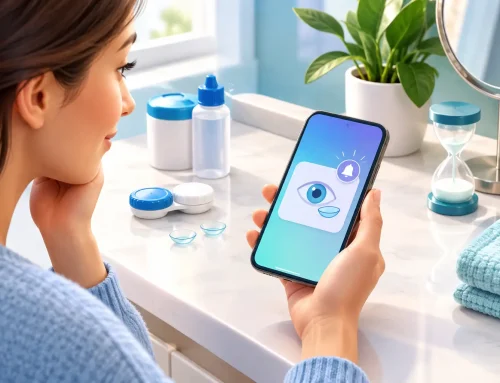
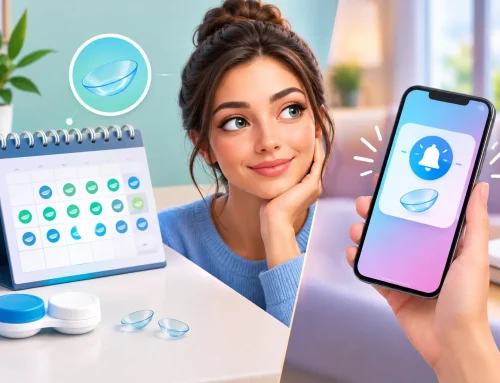
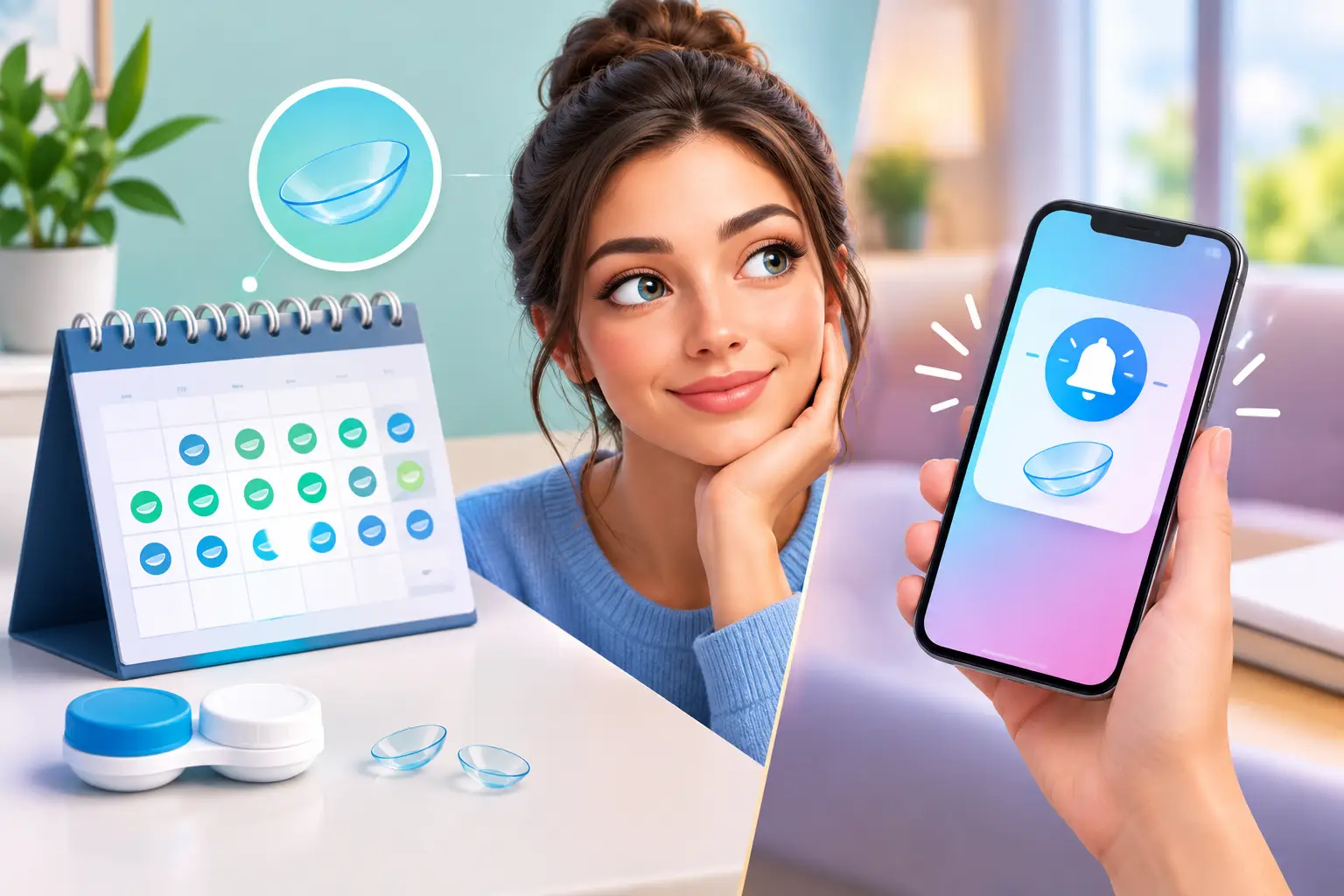
Record the opening date as soon as you start a new pair. That one step is especially useful for colored contacts, which many people wear less often than their everyday clear lenses. If you only reach for a certain color on weekends or for events, it is easy to lose track of how long it has been open.
Do Not Sleep, Swim, or Share Colored Contacts
Unless your eye care professional specifically prescribed lenses for overnight wear, remove them before sleeping. Sleeping in lenses raises the risk of infection because your eyes receive less oxygen while closed. This applies even if you are tired after an event and only plan to nap.
Take lenses out before swimming, using a hot tub, or showering. Water exposure adds unnecessary risk and can affect how the lens feels and fits. If a lens comes into contact with water, remove it as soon as possible and follow the care instructions for that lens type. For a daily disposable, that usually means discarding it.
Never share colored contacts with a friend, even for a quick photo or costume. Sharing transfers bacteria and other contaminants between eyes. It also ignores a basic fact: a lens fitted for one person may not fit another person safely.
Know When to Take Them Out
Your eyes are usually clear about when something is wrong. Remove your colored contacts immediately if you have redness, pain, burning, swelling, unusual discharge, sensitivity to light, sudden blurred vision, or the feeling that something is stuck in your eye.
Do not try to solve persistent discomfort by adding rewetting drops repeatedly or by wearing the lens for a few more hours. Take it out, use glasses if you need vision correction, and contact an eye care professional promptly. If you have significant pain, vision changes, or light sensitivity, seek urgent eye care.
A lens that feels uncomfortable may be dirty, damaged, inside out, dried out, expired, or simply not right for your eye. The trade-off is never worth it. A color change should be fun, not something you push through at the expense of your eye health.
Make the Safe Choice the Easy Choice
The best colored-contact routine is not complicated. It is a set of small decisions that remove uncertainty: buy with a prescription, use fresh solution, replace lenses and cases on schedule, and keep each pair clearly identified. When your color, prescription, case, and dates are all in one organized system, you spend less time guessing and more time enjoying the look you chose.
Before you put in your next pair, take ten seconds to check the lens, the date, and the case. That small pause is one of the simplest ways to care for your eyes.