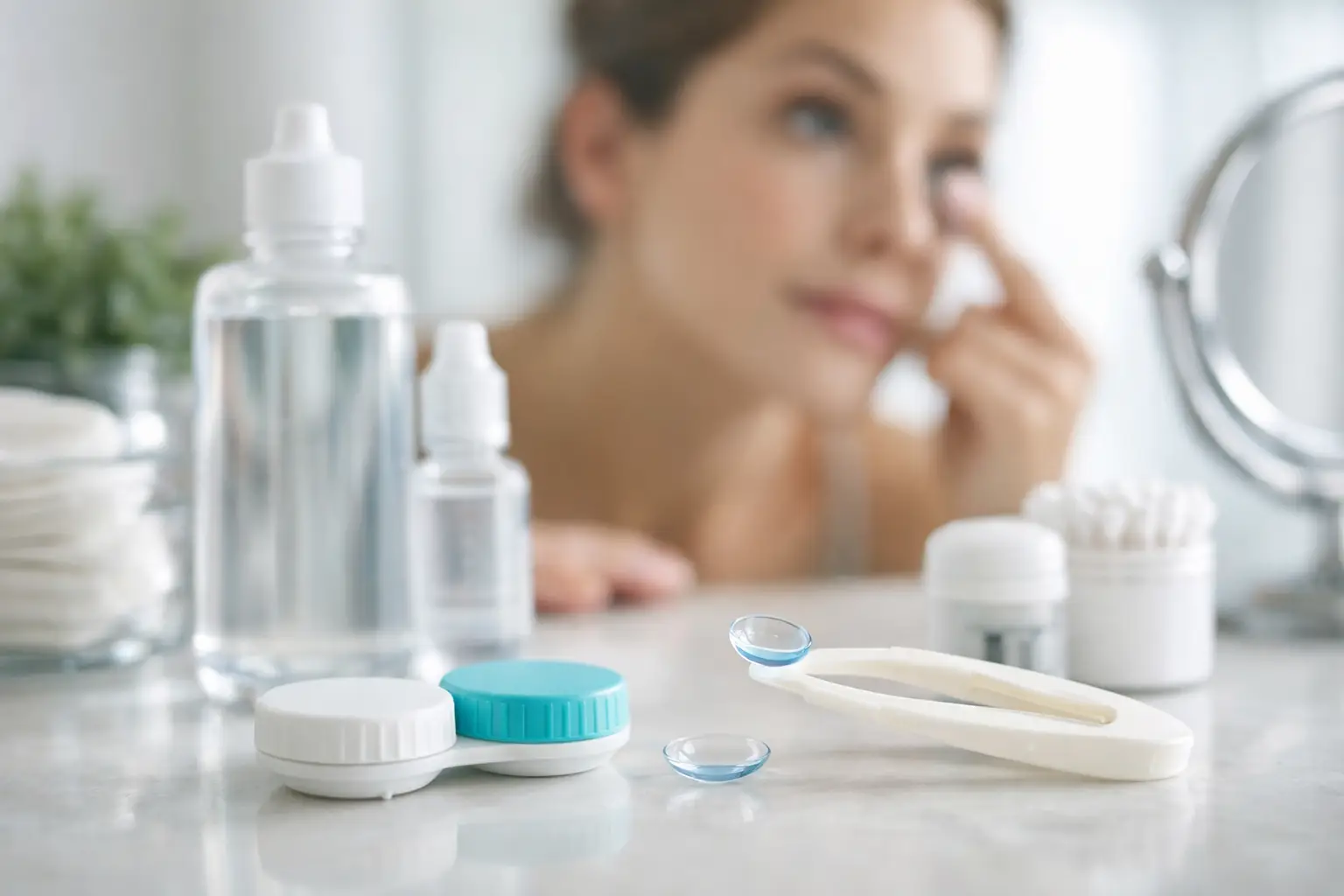
A contact lens case can look identical to the one beside it, even when the lenses inside have different prescriptions, colors, replacement dates, or wear schedules. That is why the best contact lens care accessories do more than hold supplies. They help you keep your lens routine clean, accurate, and easy to follow when life gets busy.
For people who wear more than one pair, a drawer full of loose cases and discarded lens boxes creates avoidable questions: Which pair is this? When did I open it? Is this the right color? Is it still within its recommended replacement window? The right accessories turn those small daily uncertainties into a simple system.
What Makes a Contact Lens Accessory Worth Having?
The most useful accessories solve a real routine problem. They should make it easier to handle lenses hygienically, store them in a consistent place, and retain the details that matter after the original packaging is gone.
Start with your own lens habits. A daily disposable wearer may need very little storage beyond a clean place for unopened packs and prescription information. Someone who rotates prescription lenses, colored contacts, or multiple reusable pairs needs more structure. In that case, organization is not just about a tidy bathroom counter. It is about knowing exactly what each pair is and how it should be used.
A good accessory should also be easy to maintain. If a product adds extra steps you will not realistically repeat, it can become more clutter than help. The best choices support the routine you already have while reducing the chance of confusion.
Best Contact Lens Care Accessories to Consider
A purpose-built lens organizer
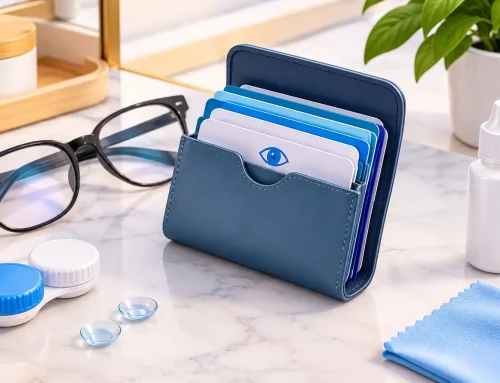
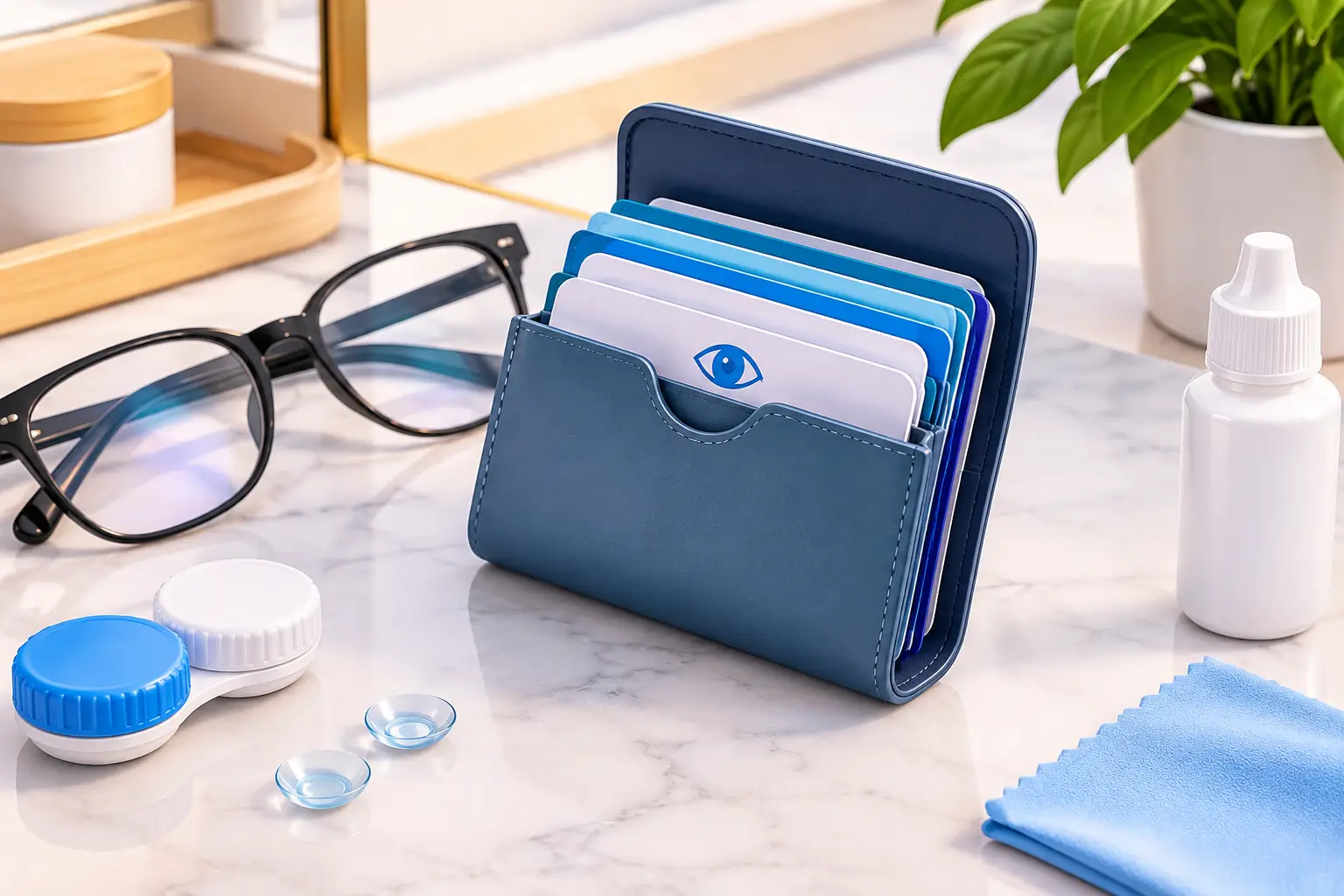
A contact lens organizer is especially useful when you keep several cases at once. Unlike a general storage bin, a purpose-built system gives each case a defined place and keeps the information connected to the lenses themselves.
This is where an organizer such as EYEBOX® can make a noticeable difference. It is designed to hold lens cases while preserving prescription, color, expiration date, and purchase details in one location. Instead of relying on memory or searching for a box you threw away weeks ago, you can identify each pair before you put it in.
The benefit is simple: less guessing. It is particularly practical for people who use cosmetic lenses alongside prescription lenses, have backup pairs, or share a bathroom where similar cases can easily get moved around.
Fresh, clean lens cases
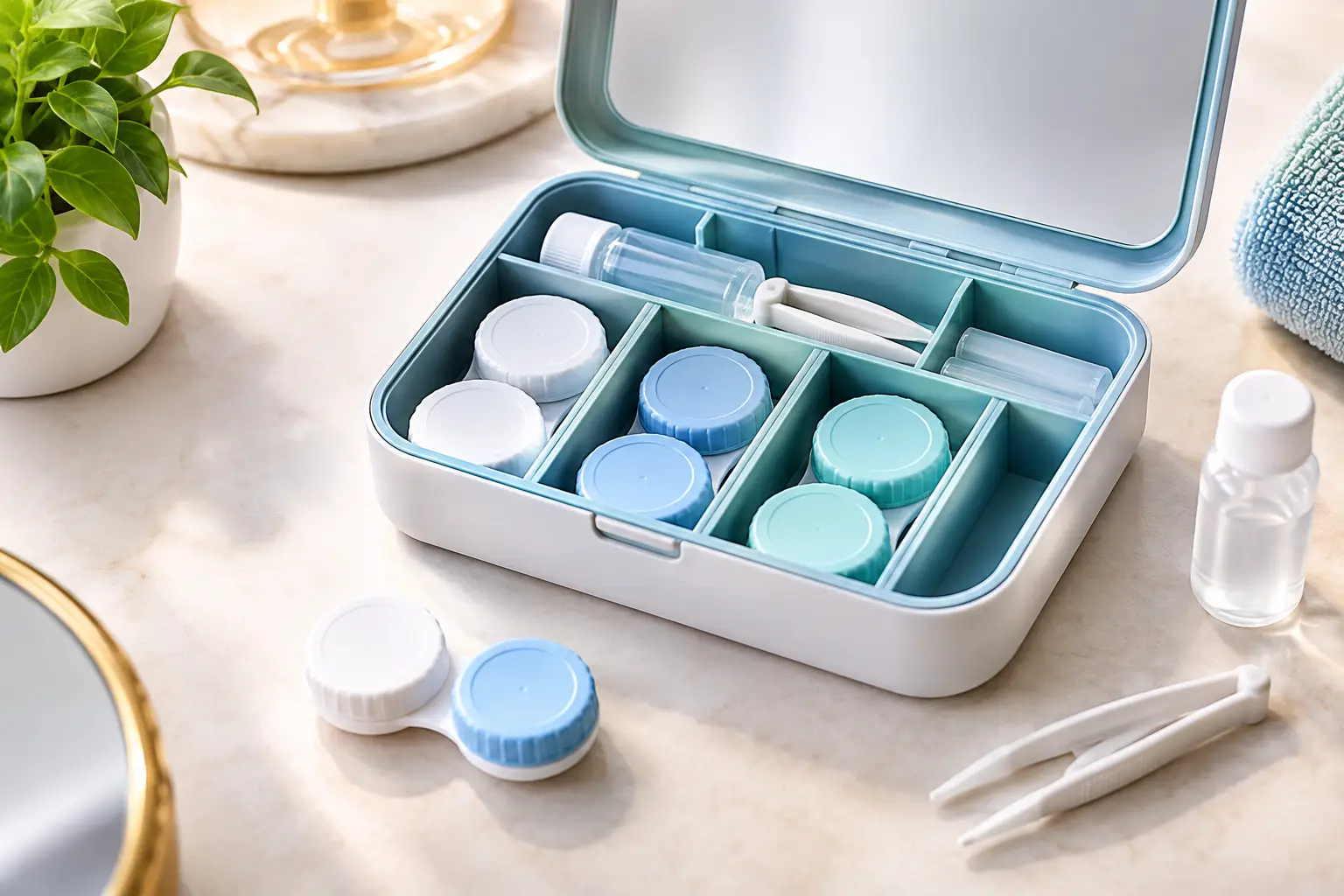
Your lens case is a basic accessory, but it deserves more attention than it usually gets. Reusable lens wearers need cases that are clean, in good condition, and appropriate for the disinfecting system recommended for their lenses.
Keep spare cases on hand so replacing one does not become a delayed task. Follow the instructions from your eye care professional, lens manufacturer, and solution manufacturer for cleaning and replacement. A case should not be rinsed with tap water or stored while dirty. Water can introduce microorganisms that do not belong anywhere near your eyes.
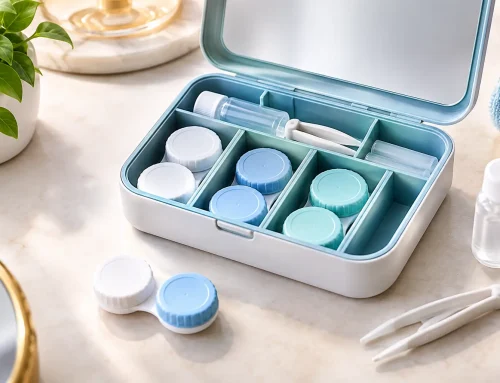
If you manage multiple pairs, choose cases with clear visual differences, such as distinct colors or marked lids. Still, color alone is not a full identification system. A pink case may tell you which case you grabbed, but not whether it contains your blue cosmetic lenses, your backup prescription pair, or a lens that is due for replacement. Pair visual cues with written details.
The right multipurpose solution or system
Solution is not a one-size-fits-all accessory. The best option depends on the lens material you wear and the care method your eye care professional recommends. Some lenses are designed for multipurpose solution, while others may require a different system.
Use fresh solution each time you store reusable lenses. Do not top off old solution, and do not use saliva, water, or homemade mixtures to rinse or soak lenses. Those shortcuts can feel harmless in the moment, but they can compromise proper lens care.
Organization helps here, too. Store your current solution with your lens-care supplies in a consistent spot, and check its expiration date before use. If you have multiple bottles open, label the opening date if that helps you follow the product instructions with confidence.
Lens information labels or a written record
Prescription strength, base curve, diameter, lens brand, color, and replacement schedule are easy to forget because much of that information lives on the original packaging. Once the box is tossed, the details often disappear with it.
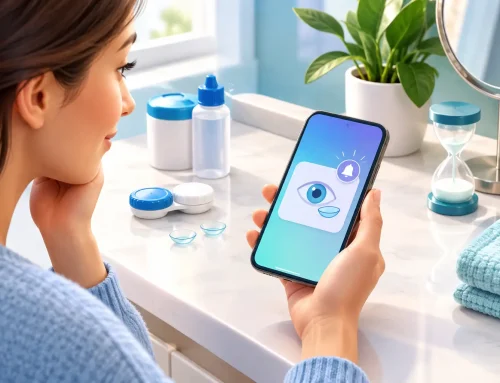
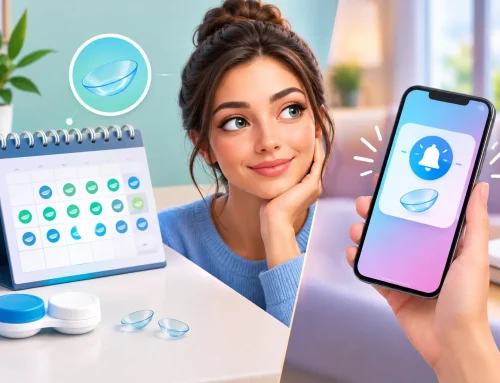
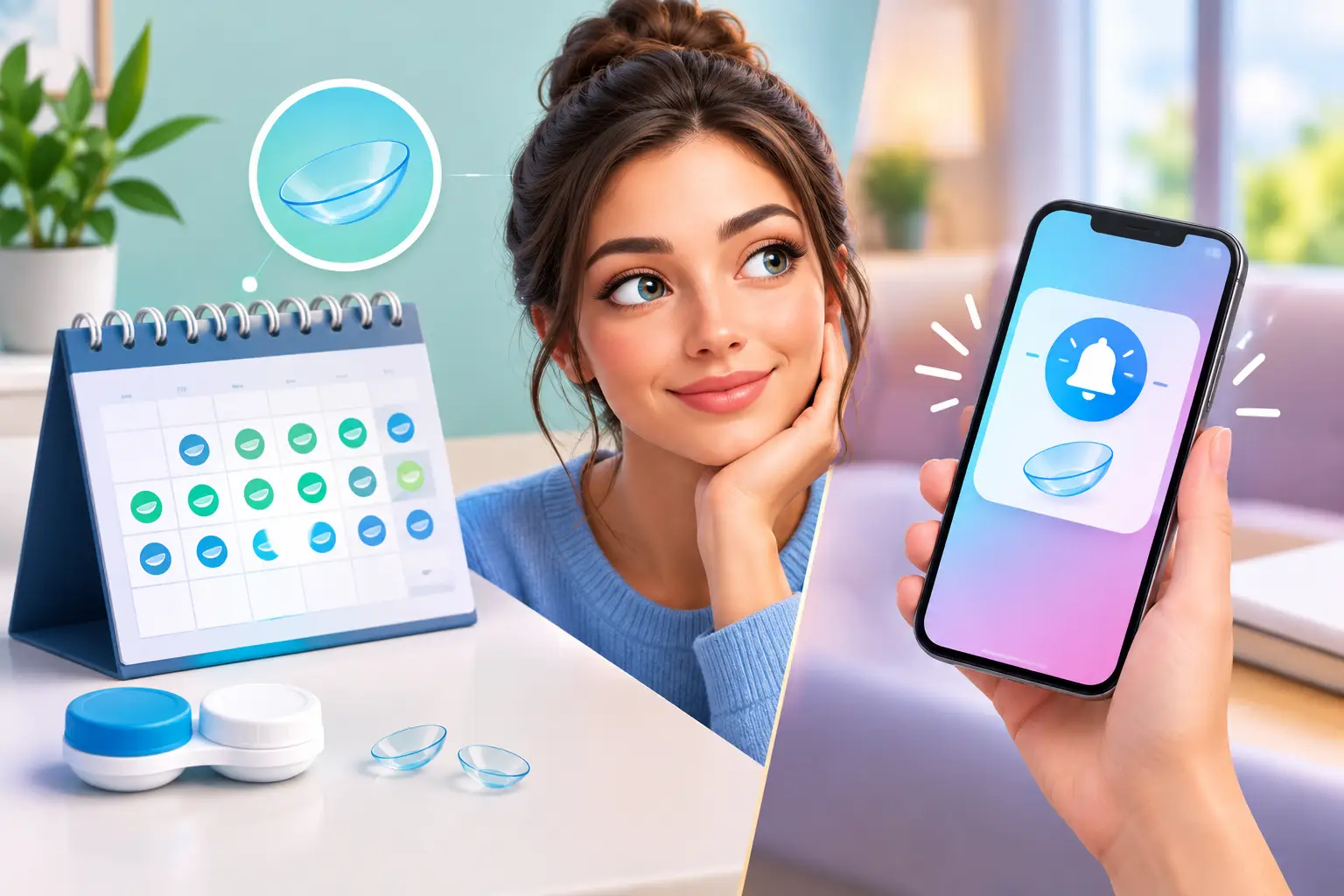
A simple written record is one of the most overlooked accessories in a lens routine. You can keep the key facts with each pair: what the lenses are, when they were purchased or opened, when they should be replaced, and where they came from. This is helpful even if you think you will remember. Multiple pairs make memory less reliable than a clear record.
For colored contacts, include the shade or product name. “Brown lenses” may not be specific enough if you own several similar styles. A precise label prevents you from opening, wearing, or replacing the wrong pair.
A dedicated lens-care area
You do not need a large vanity to create order. A defined area in a bathroom drawer, cabinet, or counter caddy can keep lens supplies from getting scattered among makeup, skin care, and household items.
The goal is not to store everything you own. It is to keep your active lens-care items together: your current cases, approved solution, backup cases, and your lens information system. When every item has a place, you are less likely to leave a case behind a faucet, misplace a bottle, or mix lens products with unrelated toiletries.
Keep the area clean and dry, and avoid placing lens-care supplies where they are likely to be splashed with water or covered in cosmetics. A little separation protects your routine from the mess that builds up during normal mornings and late nights.
Build a Routine Around Accuracy, Not Memory
The difference between a frustrating contact lens setup and a reliable one is usually consistency. You do not need dozens of accessories. You need a small group of tools that work together.
A practical setup includes a clean case for each active reusable pair, the correct care solution, a record of lens details, and one organized storage location. If you wear daily disposables, replace the reusable-case portion with an orderly way to store unopened packs and record your prescription and product details.
Each time you open a new pair, add the information before you discard the packaging. Record the prescription, color if applicable, purchase date, and the replacement timing specified for that lens. This takes a minute, but it removes a much bigger problem later when two nearly identical cases are sitting in the same drawer.
It also helps to make one person responsible for the system. If you share a counter or cabinet with roommates, a partner, or family members, your supplies can get shifted without anyone realizing the consequences. A designated lens-care space makes your routine easier to protect.
Common Accessories That Can Create More Confusion
Not every container is a good contact lens organizer. Tiny cosmetic pouches, unmarked plastic bins, and loose trays may hold cases, but they usually separate the cases from the information needed to identify them. They can make a space look cleaner while leaving the core problem unsolved.
Generic labels can have the same limitation. Writing “contacts” on a container does not distinguish between lenses with different powers, colors, dates, or replacement schedules. The more pairs you manage, the more specific your system needs to be.
Another common issue is holding onto old cases “just in case.” Extra supplies are useful, but expired solution, damaged cases, and unknown lenses are not. Keep backups that are clean and current, then clear out products you can no longer confidently identify or use according to their instructions.
Choose Accessories That Reduce Everyday Friction
The best setup is the one you will use every day without thinking twice. If you only wear one type of reusable lens, a clean case, approved solution, and a simple record may be enough. If you rotate several prescription or cosmetic pairs, a dedicated organizer becomes much more valuable because it keeps the lenses and their details together.
Your eye care professional should remain your source for guidance on lens type, wear schedule, cleaning method, and replacement timing. Accessories support that guidance by making it easier to follow at home.
A well-organized lens routine does not have to be complicated. When every case has a place and every pair has a clear identity, you spend less time sorting through supplies and more time feeling confident about what you are putting in your eyes.