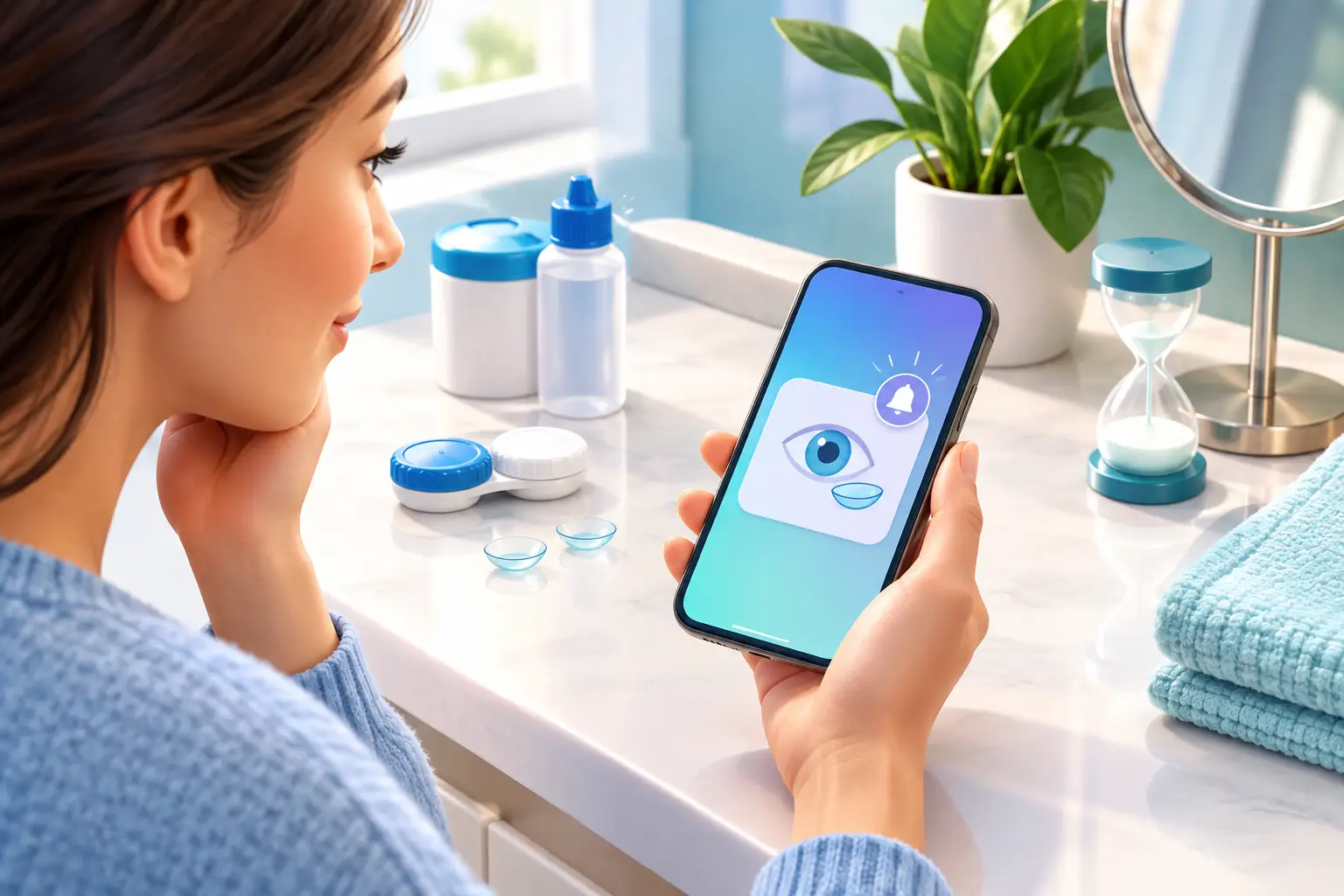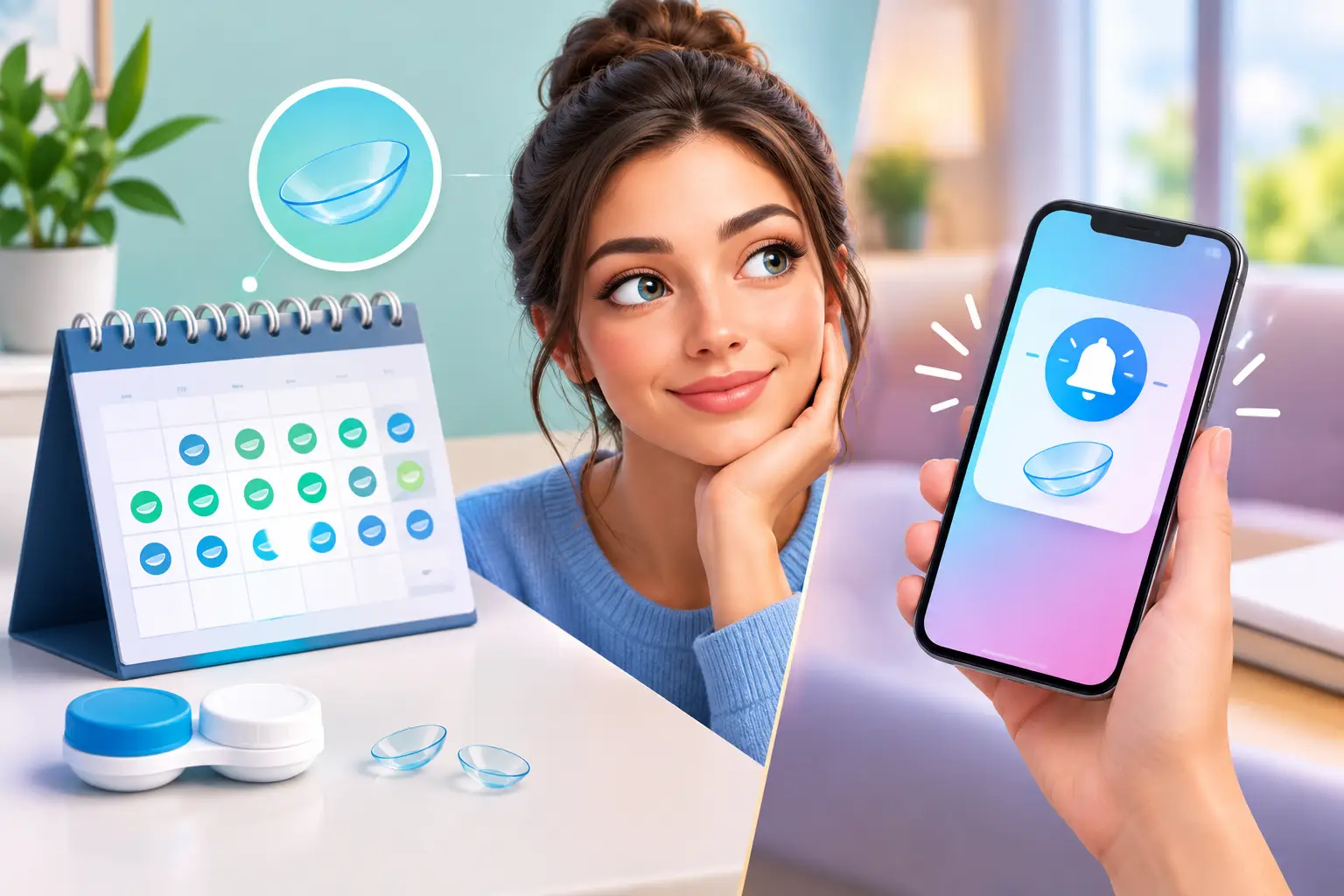

A contact lens case can look almost identical to the one beside it. That is exactly how mix-ups happen. To avoid wearing wrong contacts, you need more than a good memory – you need a clear system for knowing what is in every case before a lens goes anywhere near your eye.
This matters whether you wear one prescription every day, keep backup lenses, switch between glasses and contacts, or use colored contacts for different looks. A lens that is the wrong prescription, the wrong eye, the wrong color, or past its replacement schedule can turn a simple morning routine into discomfort, blurry vision, or an unnecessary call to your eye care professional.
Why Contact Lens Mix-Ups Are So Common
Most contact lens problems do not begin with carelessness. They begin with clutter. You open a new box, set aside the packaging, move a case into a drawer, and tell yourself you will remember the details later. A few weeks later, you have several similar cases and no easy way to confirm which pair is which.
The risk grows when you manage more than one type of lens. Maybe you have daily lenses and a spare monthly pair. Maybe your prescription changed but an older box is still around. Maybe you use colored lenses and keep several shades. Clear lenses can be especially confusing because the difference is not visible once they are sitting in solution.
Even people with a simple prescription can run into trouble when the right and left lens powers differ. It is easy to assume both sides are the same, especially during a rushed morning or late-night routine. If your lenses have different powers, a right-left swap may leave your vision noticeably off. With subtler prescription differences, the problem may be less obvious but still uncomfortable.
How to Avoid Wearing Wrong Contacts at Home
The easiest way to reduce mistakes is to give every lens pair a permanent, identifiable place. The goal is not to create a complicated routine. It is to make the correct information visible when you need it.
Keep the original details with the lens case
Your lens box contains information that matters: prescription power, brand, base curve, diameter, color, expiration date, and often the purchase date. Throwing the box away right after opening it removes your easiest reference point.
Instead, record those details before discarding any packaging. Keep the record with the lens case, not in a separate note you may forget to check. When a case and its details live together, you do not have to search through cabinets, photos, emails, or old order confirmations to figure out what you are wearing.
For reusable lenses, include the date you first opened the pair. This is different from the manufacturer expiration date. A monthly lens may be within its printed expiration date but still need replacement because its 30-day wear period has ended.
Label each pair clearly
A label should answer the questions you actually ask at the sink: What prescription is this? Which eye is it for? What color is it? When was it opened? When should it be replaced?
If you have multiple cosmetic lenses, color identification is not a small detail. “Brown” may not be enough when you own hazel brown, dark brown, and a natural brown enhancement lens. Write the specific color name so you can choose intentionally instead of opening cases one by one.
Use a format that is easy to scan. For example, note the lens type first, then the prescription and replacement date. Consistency matters more than the exact order. When every pair is labeled the same way, you can spot the information in seconds.
Separate active lenses from backups
An unopened backup box should not be stored with lenses you are currently wearing. Keeping them together increases the chance that you open a new pair too early or mistake an old active pair for a fresh one.
Create a simple distinction between active, unopened, and retired lenses. Once a pair is no longer in use, remove it from your everyday area rather than leaving it beside current cases. This prevents the familiar “I think these are the ones I am wearing” moment.
Put the right and left sides in the same order every time
Small habits reduce large mistakes. Keep the right lens on the same side of your storage area every time, and do the same with the left. Follow that pattern when you clean, store, and insert your lenses.
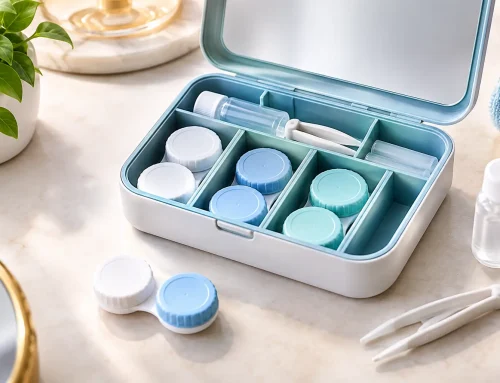
Do not rely only on a case cap marked “R” or “L,” particularly if several cases are in one drawer. The cap tells you which compartment is which, but it does not tell you which prescription, color, or replacement schedule belongs to that case. Pair side identification with the full lens details.
Check These Details Before You Put Lenses In
A quick check takes less time than dealing with irritated eyes or fuzzy vision later. Before inserting reusable contacts, confirm four things:
- The lens case belongs to the pair you intend to wear.
- The right and left prescription match the correct eye.
- The lens is within its replacement schedule and the original manufacturer expiration date.
- The lens looks clean, intact, and properly stored in fresh contact lens solution.
If something does not add up, do not guess. Use glasses until you can verify the lens details or contact your eye care professional. A lens is too close to your eye to make assumptions about.
Watch for Signs You May Be Wearing the Wrong Pair
Wearing the wrong contacts does not always feel dramatic. Sometimes the clue is simply that your vision feels “almost right” but not clear. You may squint more, struggle to focus at a distance, or notice headaches after wearing lenses that normally feel fine.
Discomfort is another signal. A wrong lens type, damaged lens, inside-out lens, expired lens, or lens that has been worn beyond its replacement period can cause irritation. Redness, pain, light sensitivity, discharge, sudden blurred vision, or a feeling that something is stuck in your eye are not problems to push through. Remove the lenses and seek prompt guidance from an eye care professional, especially if symptoms continue.
It also depends on the mix-up. Accidentally wearing a colored lens you did not plan to wear may be mostly an appearance issue if it is the same approved lens fit and prescription. Wearing a lens with the wrong power, a lens intended for the other eye, or a lens with unknown history is a different situation. The safest choice is to confirm details before use rather than trying to judge by how the lens feels.
Build a Routine That Does Not Depend on Memory
The best organization system works on busy days, not just on the day you set it up. Keep lens cases in one designated home area. Store each pair with its prescription, color, purchase details, and dates. Review your active pairs when you open a new lens box or replace a current pair.
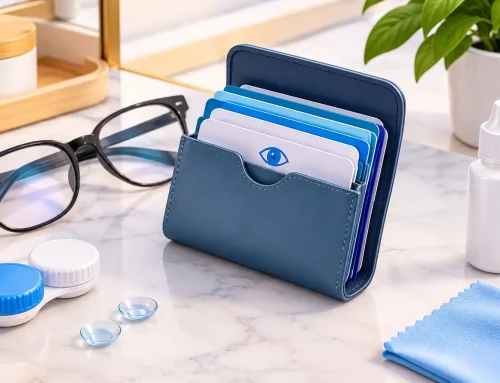
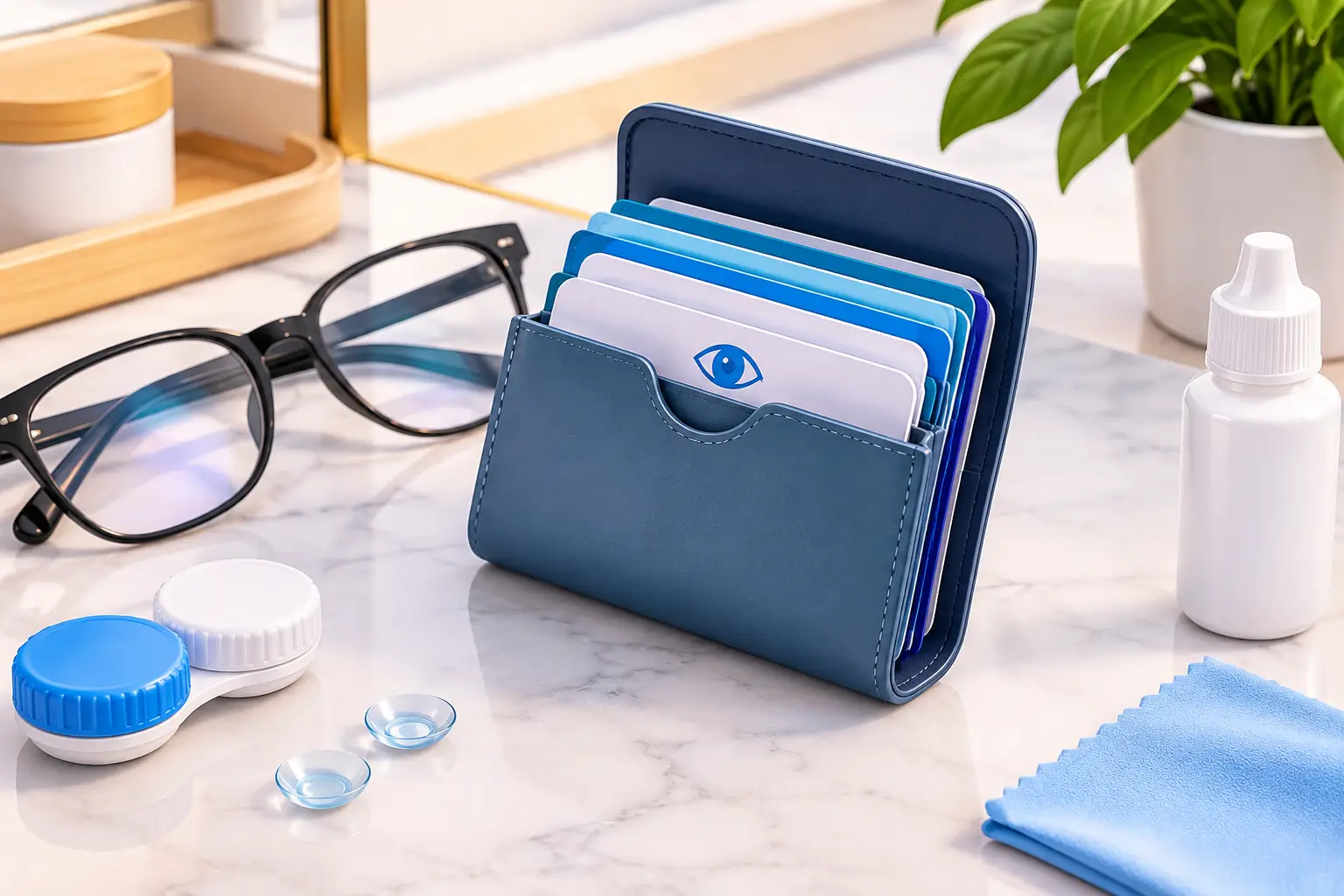
A purpose-built organizer such as EYEBOX can make this easier by keeping lens cases and essential usage details together, with color-coded identification for multiple pairs. Instead of loose cases in a bathroom drawer and lost packaging somewhere else, you have one reference point for what each pair is and when it needs attention.
You do not need a perfect spreadsheet or an elaborate tracking system. You need a routine that answers the basic questions before you insert a lens. Which pair is this? Is it current? Is it for this eye? Is it still safe to wear?
A few seconds of clarity at the start of your routine can protect your comfort, your vision, and the money you have spent on your lenses. Make the correct pair the easy pair to find.