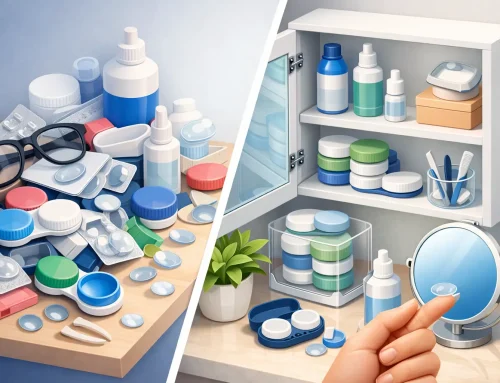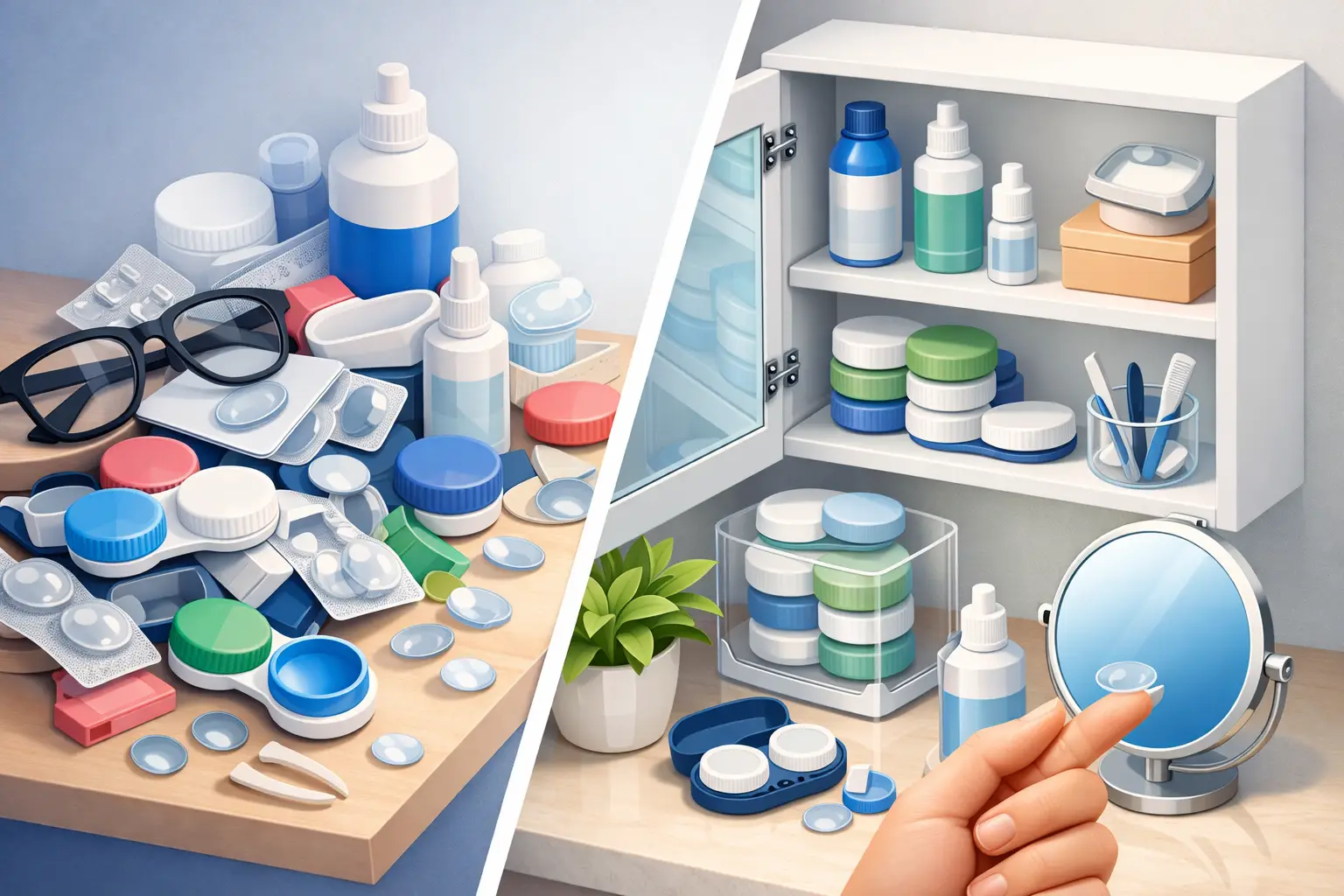
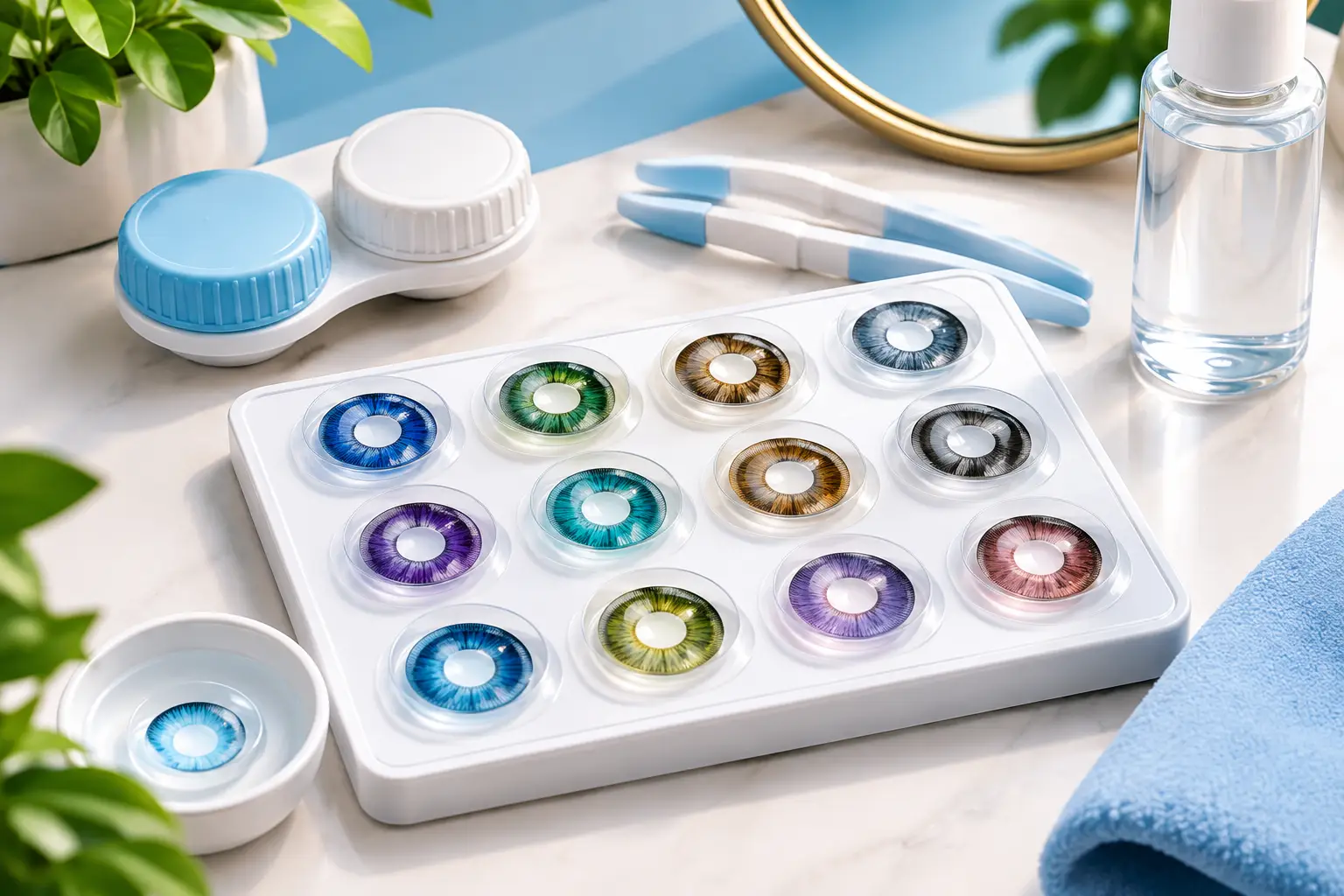
A drawer full of identical contact lens cases can turn a simple morning routine into guesswork. The best colored lens displays do more than make cosmetic lenses look neat. They help you see which lenses you have, match each pair to its details, and avoid the frustrating mix-ups that happen when packaging gets tossed too soon.
For people who wear several colors, keep backup prescription lenses, or switch between daily looks, a good display is really an organization system. The goal is not to put lenses on show. The goal is to keep every pair easy to identify, correctly stored, and connected to the information you need.
What Makes a Colored Lens Display Actually Useful?
A pretty tray may look good on a bathroom counter, but it does not solve much if you still cannot remember the prescription, replacement schedule, or expiration date for each pair. The most useful colored lens displays bring the lens case and its key details together.
When comparing options, look for four practical features:
- A clear place for each pair. Separate spaces reduce the chance of grabbing the wrong lens case when several colors look similar.
- Room for lens information. You should be able to keep the color name, prescription, purchase date, and expiration date with the lenses.
- Easy visibility. A quick glance should tell you what is available, what is currently in use, and what needs to be replaced.
- A clean, stable setup. Your display should keep cases upright and contained instead of rolling around in a drawer or getting buried under other bathroom items.
The best system depends on how many pairs you wear. Someone with one prescription pair and one cosmetic pair may need only a compact setup. A frequent colored-contact wearer with several shades, powers, and replacement schedules needs more structure.
Best Colored Lens Displays by Organization Style
1. Labeled Contact Lens Organizers
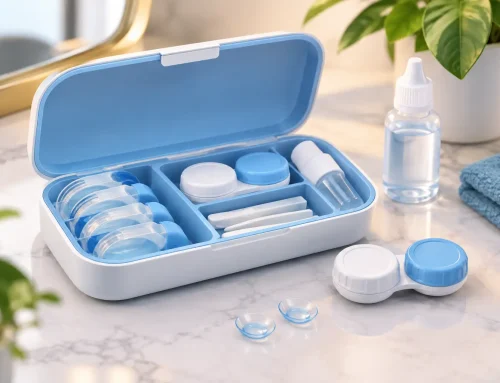
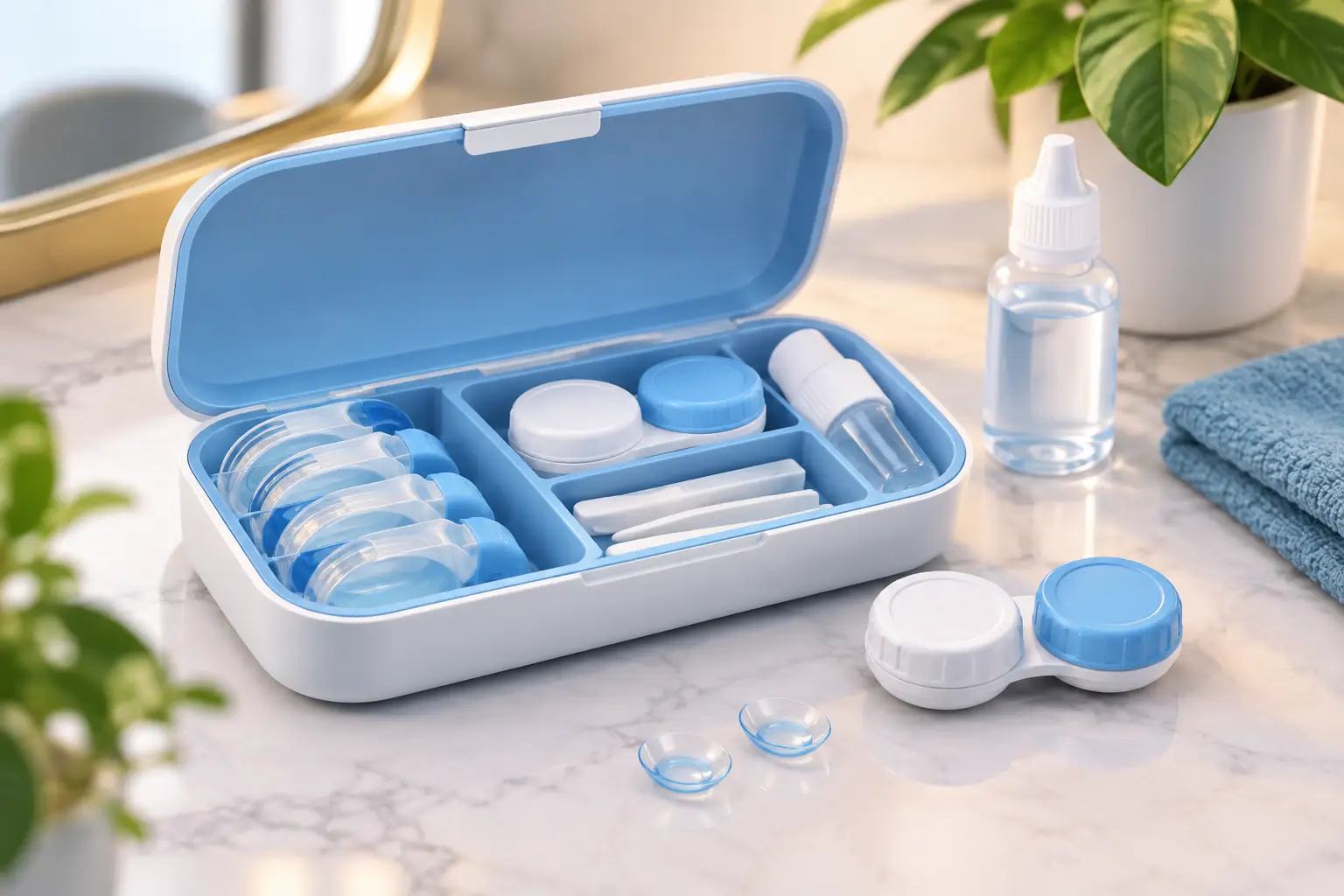
For most multi-lens wearers, a purpose-built organizer is the most practical choice. Instead of separating cases from their details, it creates a dedicated place for both. This is especially helpful for colored contacts, where a case may not tell you whether it contains hazel, gray, blue, or a subtle enhancement tint.
A labeled organizer works best when each compartment lets you record the information that tends to disappear with the original box: color, prescription, expiration date, and purchase details. That means less relying on memory and fewer mystery cases sitting in the medicine cabinet.
EYEBOX is designed around this exact problem, keeping lens cases organized while preserving the usage details that make each pair identifiable. It is a strong fit for anyone who wants a repeatable at-home system rather than another loose container.
2. Clear Compartment Displays
Clear compartment organizers are a good choice when you want to see your supplies without opening several containers. They can help keep lens cases, unopened boxes, and lens-care accessories grouped in one place.
The trade-off is that visibility alone is not identification. Transparent compartments show you that you have several cases, but they do not tell you which case holds your prescription lenses or which color is close to its replacement date. If you choose this style, add simple labels and update them whenever you open a new pair.
This setup can work well for wearers who use a small, consistent lens collection. It becomes harder to manage as more colors and prescriptions enter the rotation.
3. Drawer Inserts With Individual Slots
A drawer insert is useful if counter clutter is your biggest frustration. Individual slots stop lens cases from sliding around, and a designated section can keep solution, spare cases, and unopened lenses from mixing with makeup or skincare products.
This option is best when the drawer is already clean and dedicated to eye-care essentials. Without labels, though, it can become a more organized version of the same problem: several nearly identical cases with no reliable record of what is inside.
If you use a drawer display, keep each pair’s details directly in its slot. A small label with the color, power, and replace-by date makes the system much more dependable.
4. Color-Coded Case Systems
Color-coded lens cases can provide a fast visual cue. You might assign one case color to everyday prescription lenses, another to blue lenses, and another to special-occasion shades. This can reduce confusion when you are moving quickly.
The limitation is that case color is only helpful if you maintain the system consistently. A pink case does not automatically tell you whether the lenses are pink-toned, what power they are, or when they should be replaced. Color coding works best as a secondary layer alongside written information.
For example, you can use color-coded cases to distinguish categories, then keep the exact lens color and prescription recorded with each pair. That gives you speed without sacrificing accuracy.
Why Lens Details Matter as Much as Lens Color
Colored lenses are easy to confuse because the differences can be subtle. Two gray shades may look nearly identical in their cases but create different results when worn. The same is true for lenses with different powers, replacement schedules, or purchase dates.
Keeping the original box nearby may seem like the easiest answer, but boxes get discarded, damaged, or separated from the matching case. Once that happens, you may be left guessing about a pair you paid for and intended to wear safely.
A reliable display closes that gap. Every pair stays connected to its identifying details, so you can check the information before use instead of searching through old receipts, photos, or empty packaging.
This matters even more when your lenses have different prescriptions for each eye. Labeling left and right information clearly helps prevent a rushed mistake. If your eye-care professional has given you specific instructions for wearing or replacing lenses, keep those instructions easy to reference as well.
Set Up Your Lens Display in Five Minutes
Start by gathering every lens case, unopened lens box, and piece of packaging you still have. Check each pair for the color name, prescription, expiration date, and recommended replacement timing. If a case cannot be identified with confidence, do not guess. Set it aside until you can confirm the details.
Next, assign one storage space to each pair. Write the lens color and prescription where you can see it immediately. Add the date you opened the pair if you use reusable lenses, since that date is often more useful day to day than the purchase date.
Then create a simple routine: when you open a new pair, record its information before throwing away the box. When you replace a pair, remove the old record at the same time. This takes less than a minute and prevents the display from becoming outdated.
Finally, keep only lens-related items in the display area. When cases share space with bobby pins, jewelry, makeup samples, and loose bottles, even a well-designed organizer loses its purpose.
Common Display Mistakes to Avoid
The first mistake is using a display as decoration rather than a working system. If it looks tidy but does not help you identify your lenses, it is not doing the job. The second is relying on memory, especially when you own more than two pairs. Lens color, prescription, and replacement timing are easy to forget once packaging is gone.
Another common issue is treating all colored contacts as interchangeable. Even lenses that appear similar may have different specifications or wear schedules. Keep each pair separate and clearly labeled.
A good colored lens display should make the right choice feel obvious before you ever open a case. When every pair has a place and every place has the right details, your lens routine becomes calmer, cleaner, and much easier to trust.