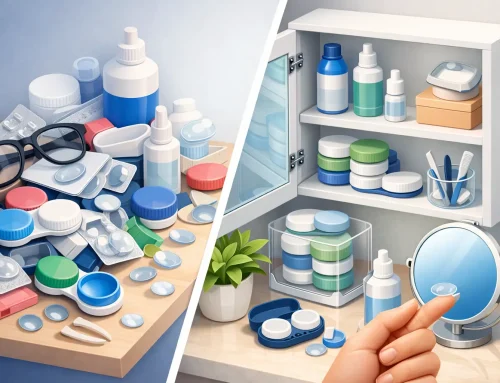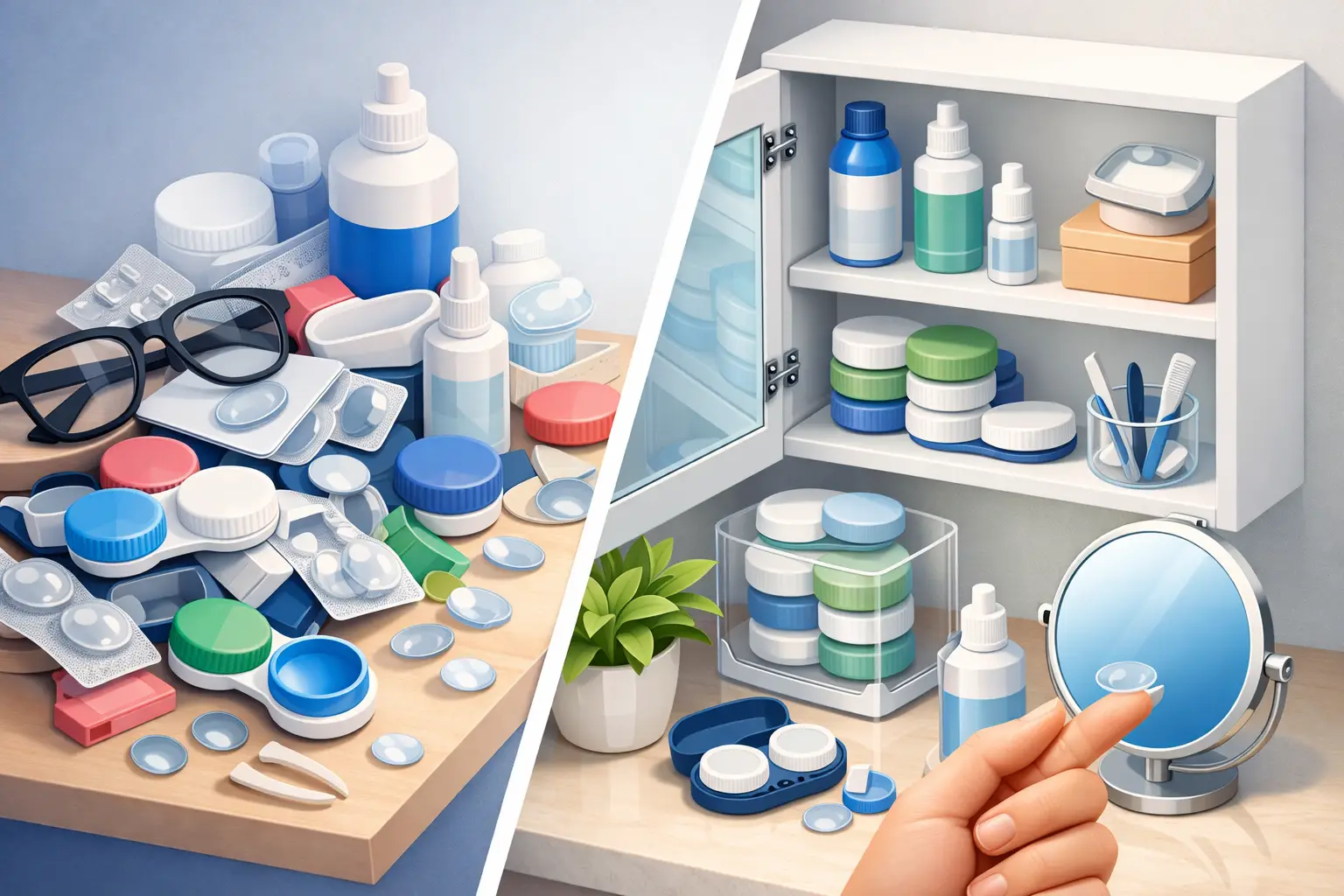
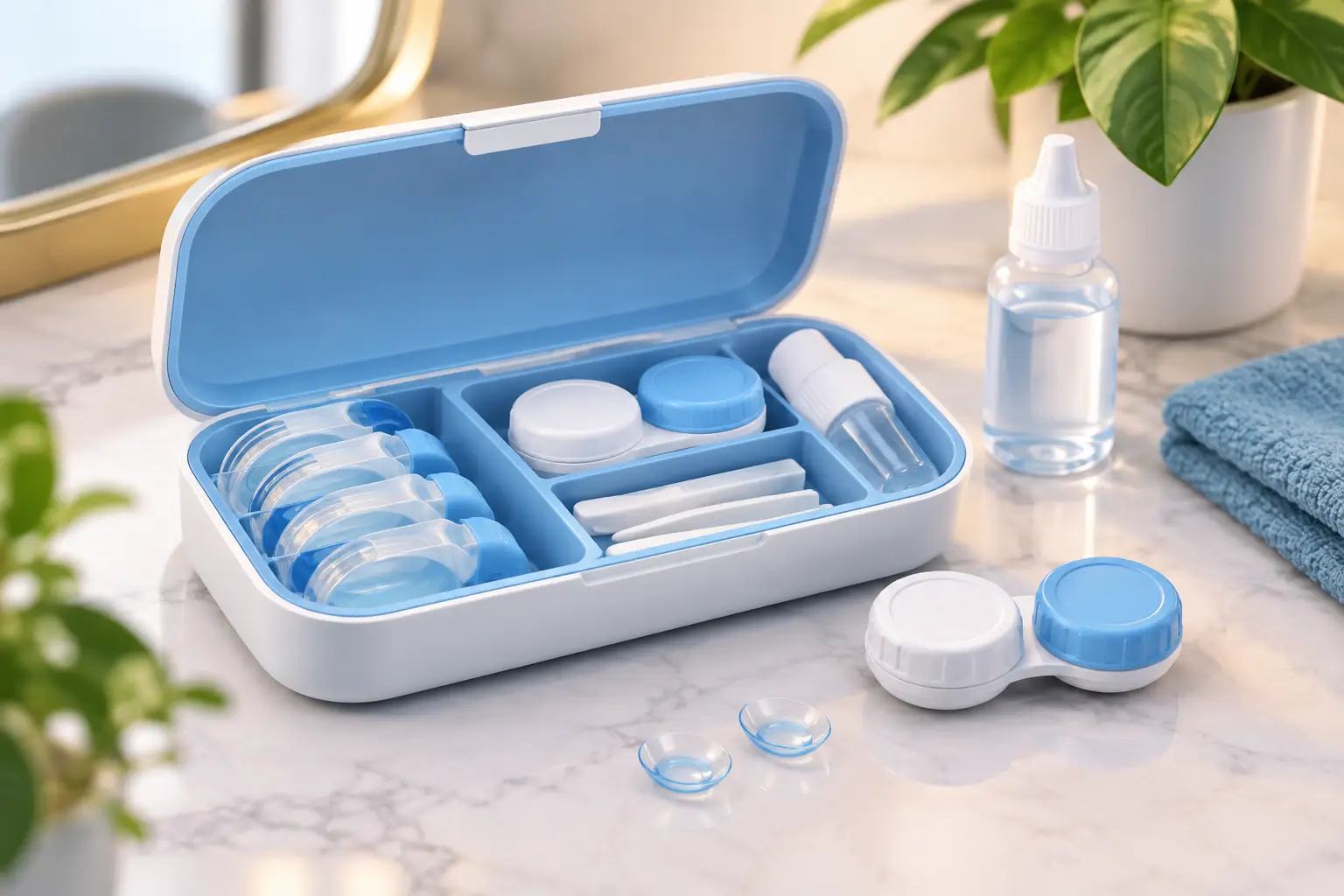
A contact lens case can look almost identical to the one beside it, even when the prescription, color, replacement schedule, or expiration date is completely different. That is the problem a good prescription organizer is meant to solve. This prescription organizer review looks at what actually matters when you are choosing a system for multiple pairs of prescription or cosmetic contact lenses.
For contact lens users, organization is not about making a drawer look neat. It is about knowing which lenses you have, where the correct case is, and whether the information you need is still available after the original box is gone. The right organizer turns scattered cases and discarded packaging into one clear routine.
What a Prescription Organizer Should Do
A basic container can hold lens cases, but it does not necessarily help you identify what is inside them. A useful prescription organizer needs to do more than create a designated spot on the counter or in the bathroom drawer. It should help connect each lens case to the details that make that pair usable.
For most people, those details include the prescription, lens color, brand or style, purchase date, expiration date, and replacement schedule. If you wear a standard clear lens every day, you may only need to track one or two pairs. If you rotate colored contacts, have a backup supply, or use different prescriptions for special occasions, the need for clear identification grows quickly.
The best systems keep this information close to the lens case instead of depending on memory. That distinction matters when cases are the same size, the colors are similar, or you have several pairs open at once.
Prescription Organizer Review: What to Compare
When comparing organizers, start with your actual lens routine rather than the number of compartments. More spaces are not automatically better if the system does not make those spaces easy to understand.
Storage that fits lens cases
The organizer should have designated places for the type of cases you use. Loose cases tend to drift around a drawer, get separated from their labels, or end up next to products that have nothing to do with lens care. Individual storage areas create a simple home for each pair and make it easier to see when something is missing.
Consider how many pairs you manage at one time. Someone with one active pair and one replacement pair has different needs than someone who wears several cosmetic colors plus prescription lenses. Choose enough capacity for your normal routine, with a little room for the pairs you are likely to add.
Labels you can understand at a glance
A label is only useful if it answers the question you have in the moment: Which pair is this? Small, vague labels can create as much confusion as no labels at all. Look for room to record meaningful details, not just a number or a generic category.
Color-coded identification can also make the process faster. This is especially helpful for colored contacts, where the name on a package may not be enough to remind you how the lenses look once they are in a plain case. A visual cue paired with written details reduces second-guessing.
A place to preserve lens information
Many contact lens problems start after packaging is thrown away. The box may have held the prescription, expiration date, lens diameter, base curve, color name, or purchase details. Once it is gone, users are left searching through old emails, trying to remember which pair came from where, or opening several cases to figure it out.
A purpose-built organizer should preserve the information you would otherwise lose. This is particularly valuable if your prescription changes over time or if you keep unopened and active lenses from different purchases. Keeping records with the cases makes the information practical, not just archived.
Easy visibility and upkeep
An organizer should simplify your routine, not create another task you avoid. You should be able to open it, identify the pair you need, and return the case to its assigned space without rearranging everything. Clear organization also makes it easier to notice an empty space, an overdue replacement, or a pair you no longer use.
Keep in mind that an organizer does not replace standard contact lens hygiene. Cases should still be cleaned and replaced according to your eye care professional’s guidance and the lens manufacturer’s instructions. The organizer’s job is to keep cases and information orderly, not to change your lens-care requirements.
Why Generic Storage Often Falls Short
A makeup bag, plastic bin, medicine cabinet shelf, or drawer divider can hold contact lens supplies. The trade-off is that these options usually separate storage from identification. Your cases may be contained, but their details are still written on a box somewhere else, saved in a note on your phone, or not recorded at all.
Generic containers also make it easy for active cases and unopened supplies to blend together. This can be frustrating when you own multiple lens colors or when two prescriptions are close but not identical. It is not always obvious which case belongs to which set of details.
A contact lens organizer works best when storage and tracking are treated as one problem. Instead of asking, “Where did I put that box?” or “Is this the gray pair or the hazel pair?” you have one reliable place to check.
Who Benefits Most From a Dedicated System
A dedicated organizer may feel unnecessary if you use one pair of clear lenses and keep every package until it is empty. But many routines are more complicated than that. The value becomes clearer when you regularly manage multiple pairs, replacement dates, or lens colors.
It can be especially useful for people who wear prescription contacts during the week and cosmetic contacts for events, photos, or different looks. It also helps people who buy more than one pair at a time, have a changing prescription history, or share a bathroom where small personal-care items can easily get moved around.
The EYEBOX® is designed around this specific use case: holding contact lens cases while keeping key details such as prescription, color, expiration date, and purchase information together. Rather than adapting a container meant for jewelry or cosmetics, it gives contact lens users a system built for the details they tend to lose.
How to Set Up an Organizer So It Stays Useful
The first setup takes a few minutes, but it can prevent repeated confusion later. Gather every active lens case, unopened pair, and any packaging or order information you still have. Then match each case to its correct details before putting it into the organizer.
Write information clearly enough that you can understand it weeks later. Use the lens color name you recognize, not just a shortened description that may be unclear. If you wear lenses with different prescriptions, record enough information to distinguish them accurately. Include relevant dates, especially the expiration date and the date you started using a pair if you follow a replacement schedule.
Once everything has an assigned location, make returning the case part of your normal evening or morning routine. The system works because it removes decisions. Each pair goes back to the same place, with the same identifying information, every time.
Questions to Ask Before You Buy
Before choosing an organizer, think about what has caused the most frustration in your own routine. If your problem is clutter, basic storage may be enough. If your problem is confusing similar cases, losing prescription details, or forgetting which color is which, you need a system with stronger labeling and record-keeping features.
Ask whether the organizer can grow with your collection, whether you can read the information quickly, and whether it gives each case a consistent home. Also consider where you normally handle lens care. The best organizer is one you will keep in the place where your routine actually happens, not one that ends up unused in a cabinet.
Price matters, but so does the cost of replacing a forgotten pair, wearing the wrong lenses by mistake, or spending time searching for information you once had. A well-designed organizer earns its place by reducing those small, repetitive frustrations.
A Better Way to Keep Track of Your Lenses
Contact lenses are small, but the details attached to them are not. Prescription strength, color, expiration dates, and purchase records can all matter when you are deciding what to wear or what to replace. An organizer that keeps those details beside each case gives you more clarity with less daily effort.
Start with the pairs you use now, label them honestly, and give every case one dependable place to live. A few minutes of organization can make the next busy morning feel far less complicated.