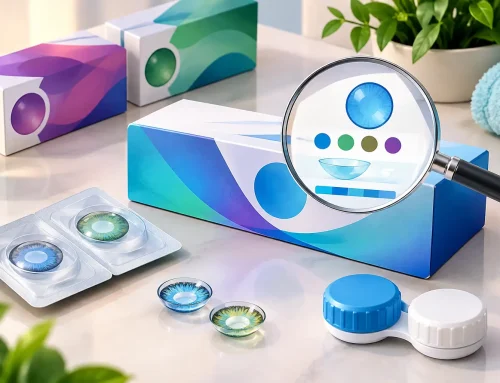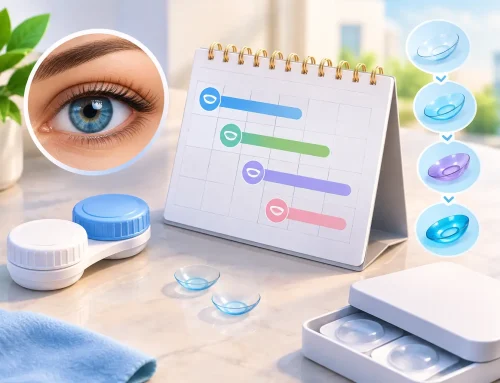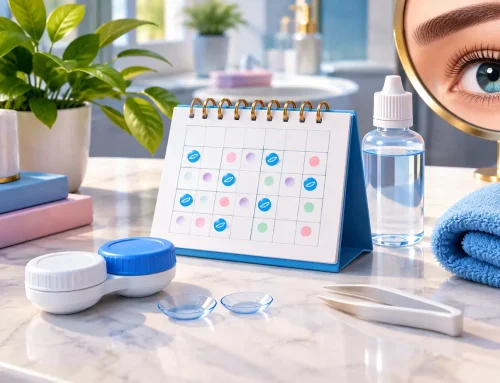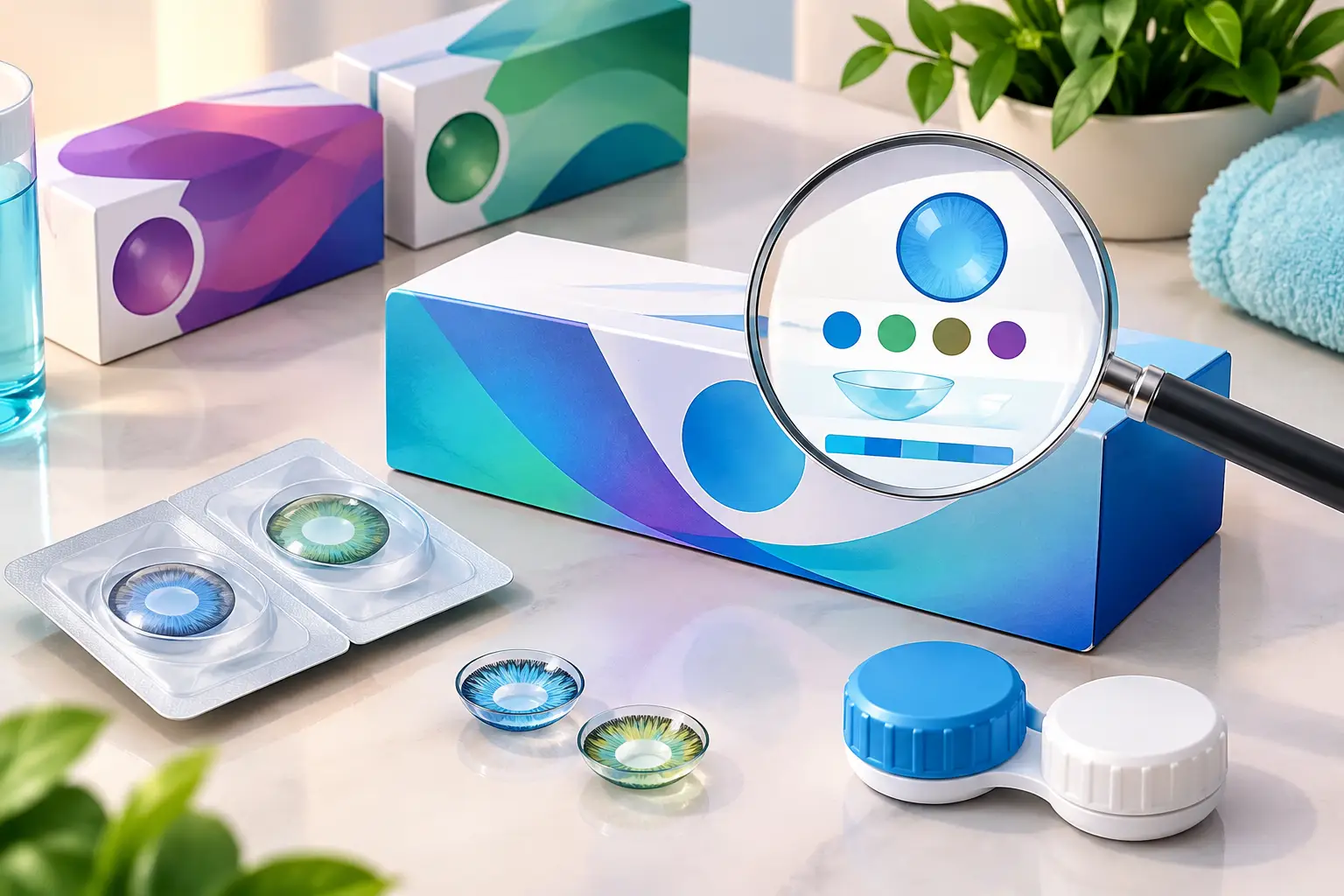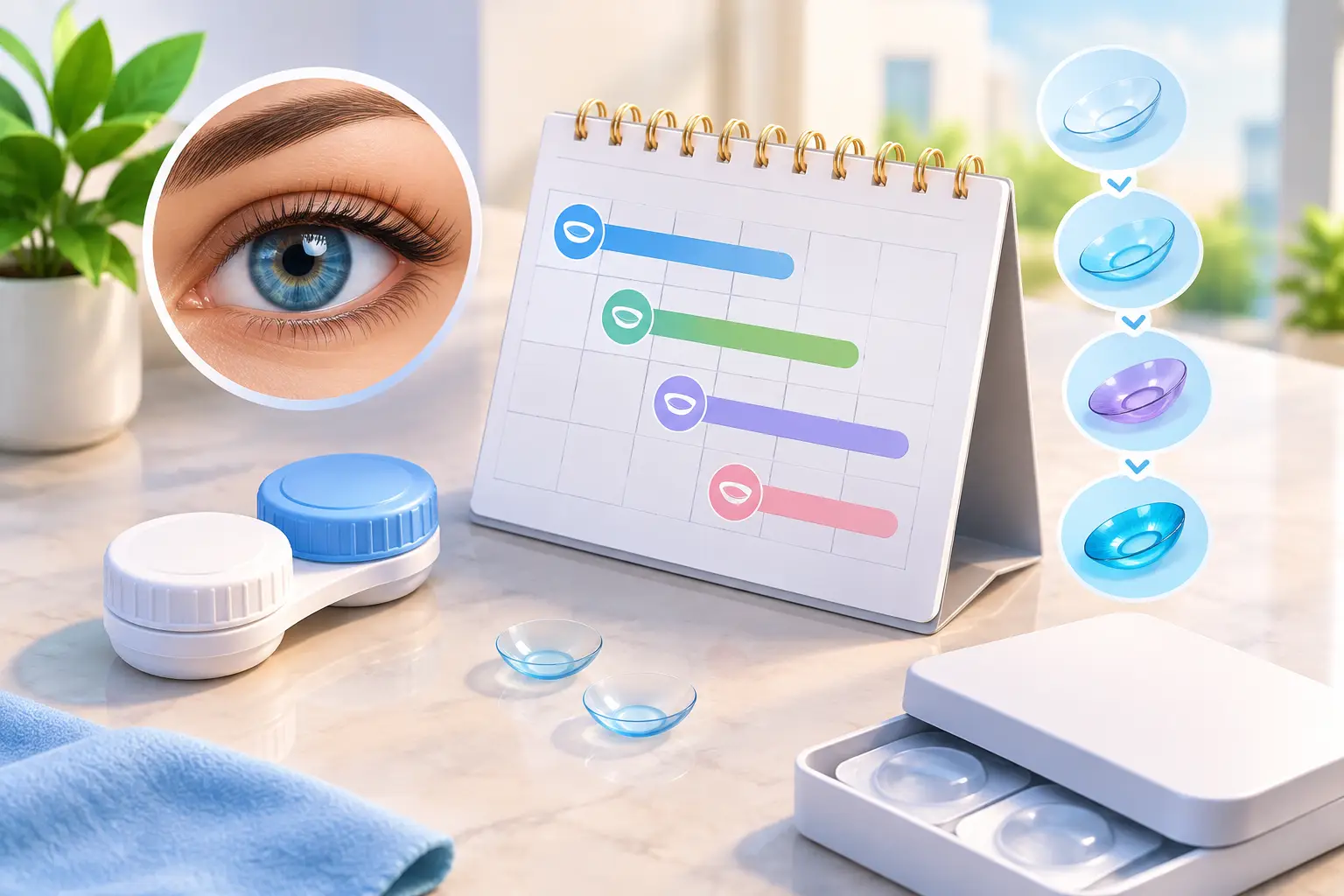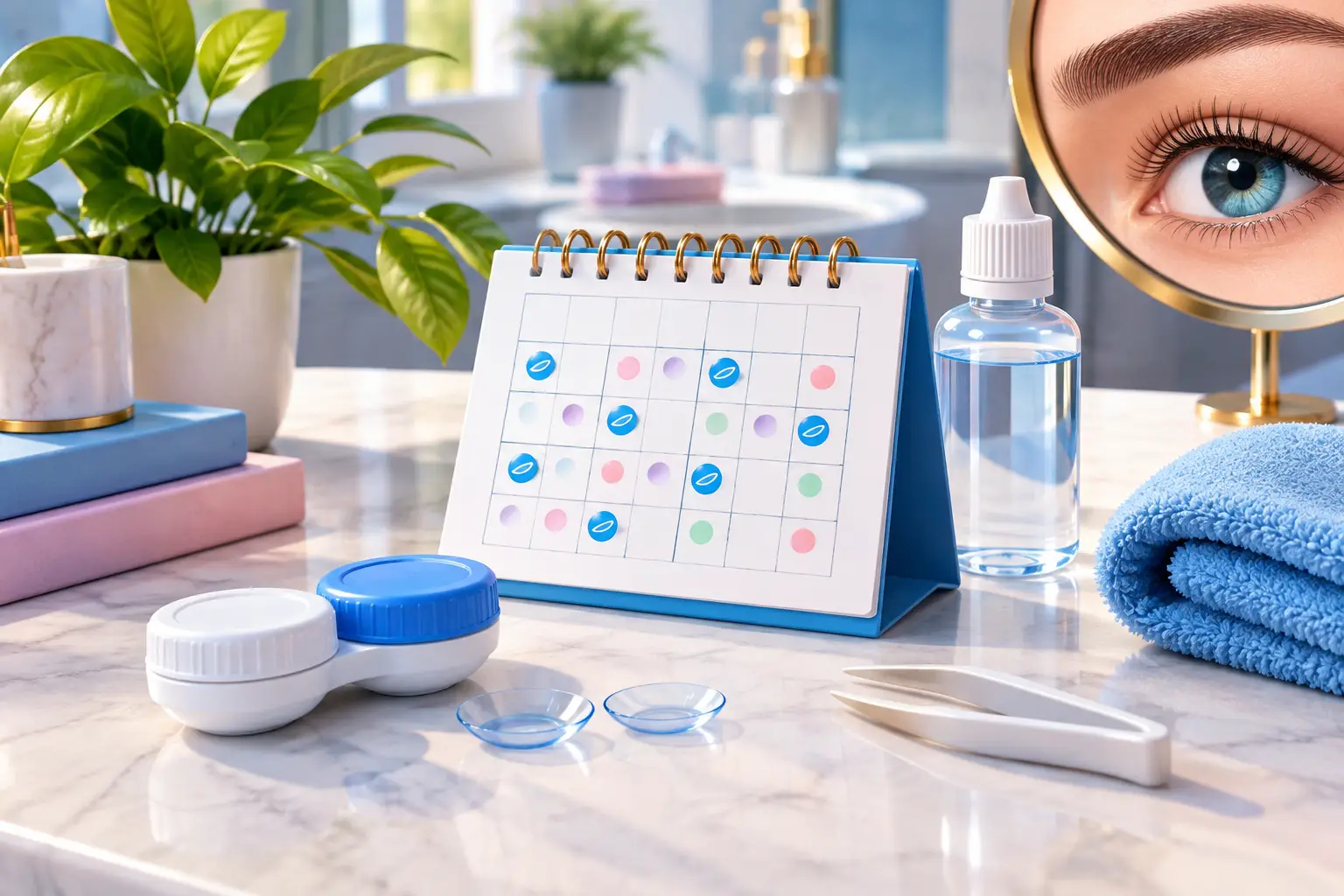

A contact organizer review should answer one practical question: does it make your lens routine easier to manage when the boxes, cases, and details start piling up? If you wear more than one pair of contacts, the problem is familiar. A drawer holds several nearly identical cases. The original packaging is gone. You remember that one pair is gray, another is blue, and another is your everyday prescription, but you cannot remember which is which or when each pair expires.
That is not a small inconvenience. Mixing up lens details can mean opening the wrong pair, losing track of purchase information, or continuing to rely on packaging you meant to keep. A well-designed organizer gives every pair a clear home and keeps the information that belongs with it close by.
Contact Organizer Review: What It Should Fix
A contact organizer is not simply a container for lens cases. A basic basket, makeup bag, or bathroom drawer divider can hold cases, but it does not solve the information problem. It cannot tell you the prescription, color, purchase date, or expiration date connected to a specific pair.
The best organizers address both parts of the routine: where your cases go and how you identify what is inside them. That distinction matters most for people with multiple prescriptions, colored contacts, backup pairs, or replacement schedules that do not line up neatly.
Without a dedicated system, lens information tends to get scattered. A prescription may be saved in an email, the expiration date may be on a discarded box, and the case may be sitting beside several others that look exactly the same. Organization becomes a memory test. A good system removes the guesswork.
What to Look for in a Contact Organizer
The right choice depends on how many lenses you manage and what information you are most likely to lose. Someone with one everyday pair may only need a simple reminder system. Someone who rotates cosmetic lenses, keeps spare prescription lenses, or uses different powers will benefit from more detailed labeling and separated storage.
When comparing options, look for these five functions:
- A designated spot for each lens case, so pairs do not get mixed together.
- Space to record prescription details, including power and any other information you need to reference.
- A way to identify color at a glance when you wear colored contacts.
- Clear expiration-date tracking, rather than relying on memory or old packaging.
- Room for purchase details, which can make replacements easier to manage.
A product does not need to be complicated to do these jobs well. In fact, too many compartments or tiny labels can create another frustrating system to maintain. The useful option is the one you can understand in seconds when you are getting ready in the morning or cleaning up at night.
Why Labels Matter More Than Extra Storage
More storage is not always better. If your lens cases sit in a larger container without labels, you have simply moved the same confusion into a tidier-looking box. The real value comes from being able to match a case with the correct details immediately.
Color-coded identification is especially helpful when cases are similar or when colored contacts are part of your routine. Rather than opening cases to guess what is inside, you can see the color and related information before you reach for a pair. That saves time, but more importantly, it helps you make a more confident choice.
Written details also give your routine a backup. You may remember your everyday prescription perfectly, but it is easy to forget the specifics of a pair you wear less often. Keeping the details with the case means you do not need to search through order confirmations or hold onto every cardboard lens box.
A Practical Look at a Purpose-Built System
EYEBOX® is designed around the specific problem that ordinary storage misses: keeping lens cases and key lens details together. Instead of asking you to create a labeling method on your own, it provides a dedicated place to organize cases while recording prescription, color, expiration date, and purchase information.
That focused approach is its main strength. It is made for the person who has opened a drawer and wondered which case belongs to which pair. It gives each pair a more intentional place in your daily setup, turning a loose collection of cases into a reference system you can actually use.
The trade-off is straightforward. If you only ever use one pair of contacts and never struggle to remember its details, a purpose-built organizer may feel like more structure than you need. But once you manage multiple pairs, especially a mix of prescription and colored lenses, the benefit becomes much clearer. The organizer is less about storing more items and more about preventing repeated little mistakes.
How to Set Up a Contact Organizer So It Stays Useful
An organizer only works if the information inside remains accurate. Start by gathering your active lens cases and any packaging, order records, or prescription details you still have. Record the information while it is available rather than assuming you will remember it later.
Assign one location to each pair and use the same naming approach every time. For example, identify a pair by color and prescription, or by its intended use, such as everyday clear lenses or weekend hazel lenses. The goal is not to create a perfect filing system. The goal is to make each pair easy to recognize without opening every case.
Review expiration dates whenever you add a new pair or replace an old one. This is a good moment to remove outdated details and clear out anything you no longer use. Keeping only active, relevant information prevents the organizer from becoming another crowded drawer.
Your organizer should also support, not replace, proper lens care. Continue following the wear, cleaning, replacement, and storage guidance provided by your eye care professional and lens manufacturer. A clear record helps you stay organized, but it does not change the care instructions for your lenses.
Who Gets the Most Value From One?
A contact organizer makes the biggest difference for people whose routine has outgrown a single lens case. That may include people who switch between prescription strengths, keep several colored contact options, buy backup lenses, or share a bathroom where small personal-care items get moved around.
It can also be useful for anyone who routinely throws away packaging after opening a new pair. The packaging may be clutter, but the details printed on it are often helpful later. An organizer lets you keep the information without keeping stacks of boxes.
If your current method is a drawer, a cup, or a handful of cases lined up by the sink, ask yourself one simple question: can you identify every pair and its expiration date right now? If the answer is no, a dedicated system can bring a little more order to a routine that should not require guesswork.
The best contact organization setup is the one that helps you reach for the right pair with a clear head. Give your lens cases a place, give their details a record, and let your daily routine feel less like a search.