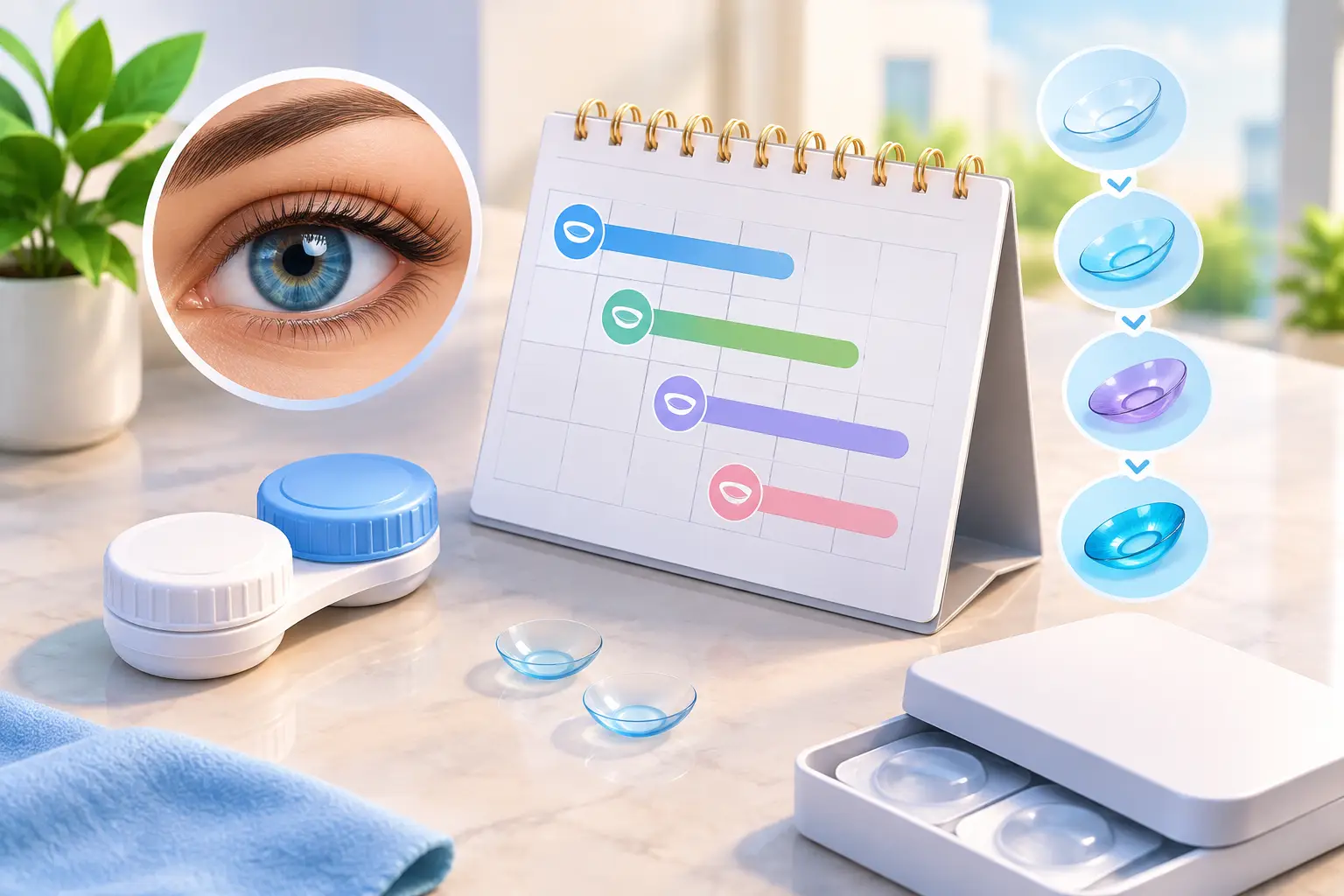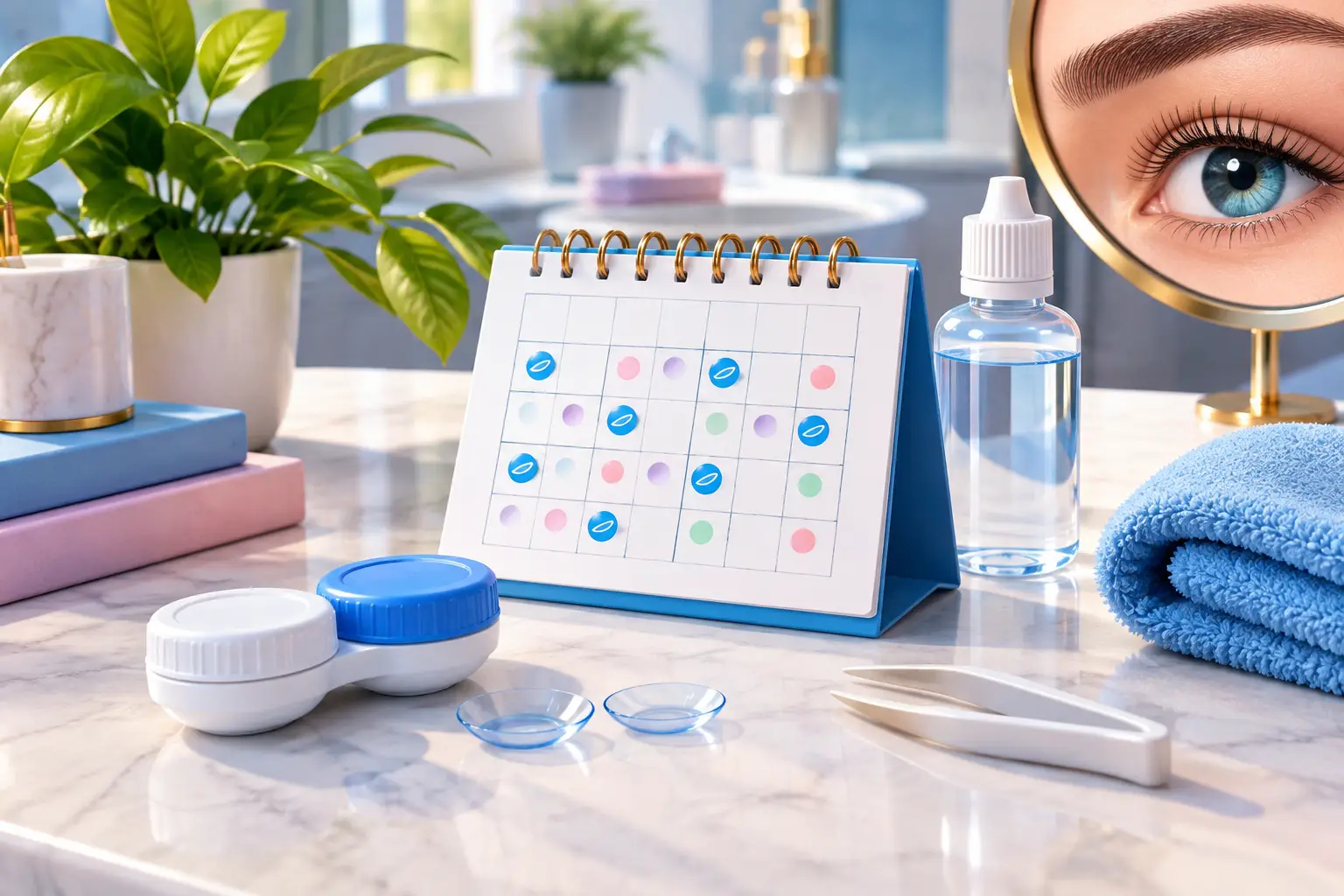

A monthly lens schedule sounds simple until you have more than one pair in your bathroom drawer. One case may hold your everyday prescription lenses, another may contain colored contacts for weekends, and a third may be waiting to be opened. That is exactly when it becomes difficult to manage monthly lens replacements without guessing which pair is current, which prescription belongs to which case, or when a lens should be discarded.
Monthly lenses are designed to be replaced on a set schedule after opening, based on the instructions from your eye care professional and the lens manufacturer. A good organization routine does more than make your space look neat. It gives you a clear answer every time you reach for a lens case: what these lenses are, when you opened them, and when they need to go.
Start With the Opening Date, Not the Purchase Date
The most common replacement mistake is using the date you bought lenses instead of the date you first opened a blister pack. If you purchased a backup supply weeks ago but did not open it until later, its monthly replacement clock generally begins when you open and start using that pair, not when it arrived at your door.
As soon as you open a new pair, record the date immediately. Do not rely on remembering that it was “around the beginning of the month.” A vague date creates a vague replacement deadline, which makes it easier to wear lenses longer than intended.
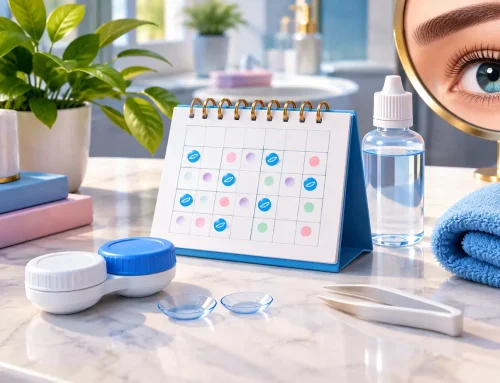
Choose one format that is easy to see. You can write the opening date on a small label, use a printed tracker, or keep the information with the lens case itself. The key is consistency. Every new pair should get the same information recorded at the same time.
Keep Each Lens Pair Identified
Two clear lens cases can look nearly identical, especially if you wear the same brand in different prescriptions or switch between prescription and cosmetic lenses. If the cases are not clearly identified, you may have to open packaging, search old emails, or simply guess.
Each pair should have a simple identity record. At minimum, keep the prescription or power, lens color if applicable, date opened, and replacement date together. If you use lenses with different parameters for each eye, include right and left eye details as well.
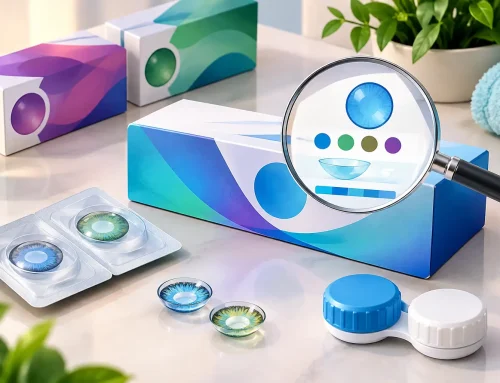
This is particularly useful for colored contact lens wearers. A pair labeled only “blue” may not be enough if you own several shades or styles. Recording the specific color and purchase details helps you reorder the correct pair later instead of trying to match a color from memory.
An organizer such as the EYEBOX® keeps lens cases and the details that belong to them in one dedicated place. Instead of treating a lens case as the only record, you create a clear home for the case, its identifying information, and its replacement timeline.
Use a Simple Labeling Formula
Keep the label short enough to read at a glance. A format like this works well:
Lens type or color + prescription + opened date + replace date
For example: “Everyday clear, -2.50, opened May 3, replace June 3.” If you use cosmetic lenses, you might write: “Hazel, plano, opened May 10, replace June 10.”
You do not need a complicated spreadsheet to stay organized. The best system is the one you will actually update when you open a new pair.
Set a Replacement Reminder You Will See
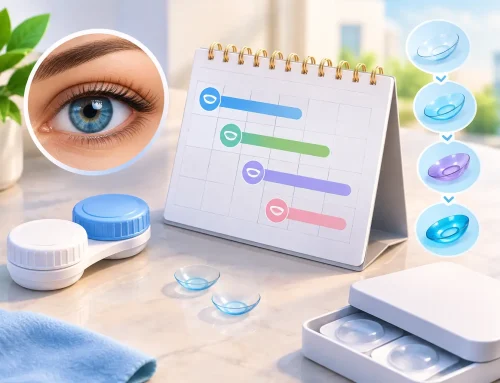
A written date is helpful, but reminders add a second layer of protection against forgetting. Set a recurring calendar alert for your replacement date, or choose a monthly routine that naturally prompts you to check your lenses.
For some people, the same numbered day every month is easiest. If you opened lenses on the 12th, schedule a reminder around the 12th of the following month. Others prefer a weekly check, such as every Sunday night, to see which pairs are nearing their replacement date.
If you manage several pairs, avoid using one generic reminder that says “replace contacts.” It will not tell you which pair needs attention. Name the reminder by lens type, color, or prescription. Specific reminders prevent the extra mental work that causes people to put off replacing a pair.
It also helps to keep unopened replacement lenses separate from pairs currently in use. An unopened box is inventory. An open lens case is part of your active routine. Mixing the two can make it harder to tell whether you have a fresh pair ready when the current one reaches its deadline.
Build a Clean, Repeatable Monthly Routine
Organization works best when it happens in small steps instead of one big cleanup after everything has become confusing. When you open a new monthly pair, take one minute to update its information. When you replace a pair, remove the old record and set up the new one right away.
Your routine can be as simple as this: open a fresh pair, note the date, calculate the replacement date according to your lens directions, label the pair, and place it in its assigned storage spot. Then discard the old lenses as directed and clean or replace the lens case based on your eye care professional’s recommendations.
That last part matters. A lens organizer can help prevent mix-ups, but it does not replace proper lens hygiene. Always follow the care instructions for your specific contacts and solution. Never top off old solution, reuse solution, or continue wearing lenses that are uncomfortable, damaged, or past their recommended replacement period.
What to Do When You Cannot Remember
Sometimes the date is already lost. Maybe the label came off, the original packaging was thrown away, or you found a lens case at the back of a cabinet. In that situation, guessing is not a good system.
If you cannot confirm when a monthly pair was opened, the safer choice is to stop using it and begin a fresh pair if available. Contact lenses sit directly on your eyes, so uncertainty is a reason to reset your routine, not stretch it.
Afterward, use the moment to improve the system. Add a visible date record, assign each lens case a dedicated location, and keep prescription details with the pair instead of in a separate pile of discarded boxes. A small amount of structure now prevents the same uncertainty next month.
Watch for These Signs Your System Needs Work
If you regularly ask yourself whether a pair is new or old, your records are too far from your lens cases. If you own multiple cases that look alike, your labels may need more detail. And if reminders appear but you do not act on them, tie replacement day to a habit you already keep, such as replenishing personal care supplies or cleaning your bathroom counter.
The goal is not to create more chores. It is to remove the daily friction of sorting through cases, packaging, and half-remembered dates.
Make Your Lens Details Easy to Find
Prescription details often disappear because lens boxes get tossed out as soon as a new pair is opened. That can be frustrating when it is time to reorder, compare a new prescription, or identify which colored lenses you liked best.
Keep the details that matter with your active lens pairs: brand, prescription, base curve or diameter if relevant to your order, color, expiration information, and purchase date. You may not need to look at every detail every day, but having it available saves time when you do.
This is especially helpful when your prescription changes. Mark older information clearly so it does not get confused with your current lenses. If you still have lenses from a previous prescription, keep them separate and confirm with your eye care professional whether they are appropriate to use.
A Better System Means Less Guessing
To manage monthly lens replacements well, you do not need to memorize every opening date or save every piece of packaging. You need one reliable place for your lens cases and one clear record for each pair.
When you can see the lens type, prescription, color, opening date, and replacement deadline together, replacing lenses becomes a quick part of your routine rather than a monthly mystery. Set up your next pair the moment you open it, and future you will not have to guess.