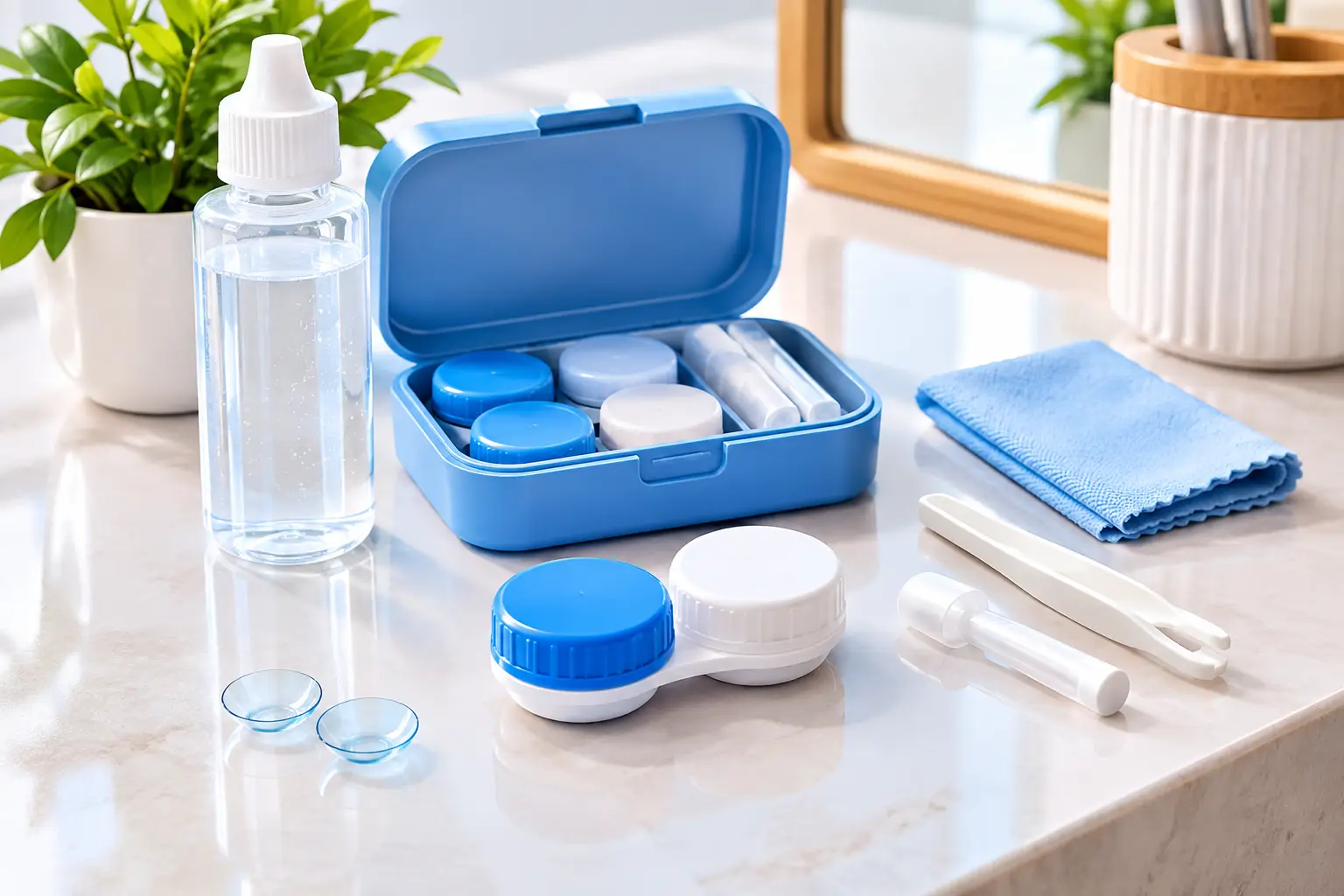

You do not usually realize you need a contact lens expiration date tracker until you are holding a lens case and asking the same annoying questions again: When did I open this pair? Is this the blue-gray pair or my regular prescription lenses? How long is this one still safe to wear? That small gap in memory is exactly how contact lens routines get messy.
For people who wear more than one pair, expiration tracking is not a minor detail. It affects comfort, hygiene, cost, and confidence. If you rotate prescription lenses, colored contacts, or occasional-use pairs, it becomes surprisingly easy to lose track once the original box is gone. The lens case stays. The key details do not.
Why a contact lens expiration date tracker matters
Most contact lens users are not careless. They are busy. They open a new pair, set the box aside, and assume they will remember the replacement schedule later. Then later turns into next week, and next week turns into guessing.
That guesswork creates two common problems. The first is wearing lenses longer than intended because the open date was never recorded. The second is throwing away lenses too early because you are not sure whether they are still within the recommended use period. One wastes money. The other can affect eye comfort and lens hygiene.
A good tracking system solves both issues by giving each pair a clear identity. You are not relying on memory, random notes, or half-peeled labels. You know what the lenses are, when you bought them, when you opened them, and when they should be replaced.
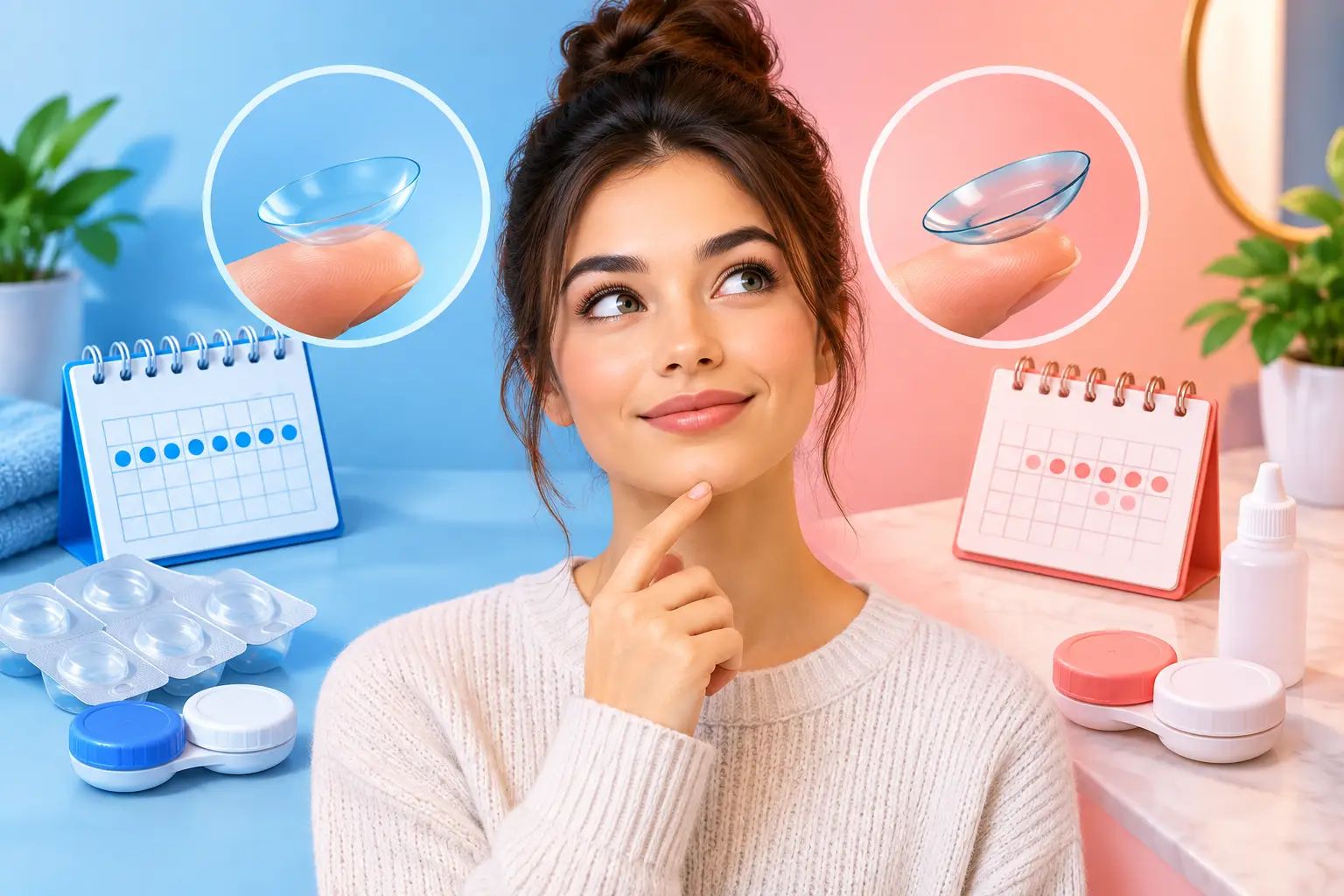
That matters even more if your lens collection includes similar-looking cases. Clear lens cases all start to look the same in a drawer or bathroom cabinet. If one pair is cosmetic and another is prescription, mixing them up is more than frustrating. It disrupts your routine and raises the chance of wearing the wrong pair.
What your tracker actually needs to track
A contact lens expiration date tracker does not need to be complicated. In fact, the more complicated it is, the less likely you are to keep using it. The best system tracks only the details that help you make quick, accurate decisions.
Start with the lens name or description. That could be your daily prescription lenses, green colored lenses, or backup toric pair. Add the purchase date if you want to monitor how long unopened inventory has been sitting around. Then record the date opened, since that is often the date that matters most for replacement schedules.
You should also track the replace-by date. This is the piece most people forget, even though it is the one they need most often. If you wear multiple lens types, include prescription strength and color so you can identify the correct pair at a glance. If you have ever opened two similar boxes and then forgotten which case belongs to which, you already know why this matters.
Why phone reminders are only a partial fix
A lot of people try to solve this with a note in their phone or a calendar reminder. That can help, but it usually breaks down in everyday use.
The problem is not just remembering one date. The problem is matching that date to the right physical pair of lenses and the right case. A reminder that says Replace contacts on the 15th only works if you still know which pair it refers to. Once you have multiple cases in rotation, a digital note without physical organization becomes another loose end.
This is why some tracking methods feel good on day one and fail by week three. The information lives in one place, while the lenses live somewhere else. You still have to connect the dots every time.
The simplest way to build a contact lens expiration date tracker
The easiest system is one that combines storage and labeling. Instead of treating lens care details as separate from the lens case itself, keep them together as part of one organized routine.
That means giving each pair its own designated place and recording the key details where you can see them when you reach for the case. At minimum, your system should answer four questions instantly: What lenses are these? When did I open them? When do they expire for use? Are they the pair I actually meant to grab?
A purpose-built organizer works better than scattered cases in a drawer because it removes the friction. You are not opening apps, searching old texts, or trying to decode your own handwriting on a sticky note. You are looking at the pair and its details together.
For many users, that is the difference between having a tracking plan and actually sticking to one.
A practical setup that works every day
If you want your contact lens expiration date tracker to last, build it around the moments when mistakes usually happen. Those moments are simple: when you open a new pair, when you put cases away, and when you reach for lenses later.
When you open a new pair, record the details immediately. Not later that night. Not after you finish getting ready. Right then. This is the one step that prevents almost every tracking problem that comes after.
Next, keep each pair in a consistent spot. If cases move around freely, your tracking system starts to fall apart. Physical consistency matters because your routine depends on visual recognition. You should be able to open your storage area and know which pair is which without second-guessing.
Finally, make the expiration information visible enough that you do not need to search for it. The whole point is reducing mental clutter. If the date is hidden, tiny, or written in a place you never check, the system is technically there but not actually helping.
A product like the EYEBOX fits this kind of routine because it is built around the real problem: contact lens users need one place to store lens cases while keeping the usage details attached to each pair. That sounds basic, but basic is the point. The more natural the system feels, the more reliable it becomes.
Common tracking mistakes that cause mix-ups
Some lens tracking mistakes look harmless at first. Writing only the month instead of a full date seems fine until you forget whether you opened the pair at the start of the month or near the end. Keeping the original packaging for reference works until the packaging gets thrown out. Storing multiple similar cases together feels manageable until you are rushing in the morning.
Another common problem is tracking only expiration and not identity. If you know one pair needs replacing on June 20 but you have no clear way to tell which case belongs to that date, the tracker has not really solved the problem.
There is also the issue of occasional-use lenses, especially colored contacts. Because they are not worn daily, people often assume they will remember the details. In reality, occasional use makes tracking harder, not easier. More time passes between wears, which means memory is less reliable.
Who benefits most from a tracking system
Almost any contact lens wearer can benefit from better organization, but some people need it more than others. If you wear multiple prescription pairs, use colored lenses regularly, or keep backup lenses on hand, a tracking system quickly goes from nice to necessary.
It is especially useful for people who like order in other parts of their routine but have never found a good way to organize contact lens details. You can be very clean, very careful, and still lose track of dates if the setup itself is flawed.
A contact lens expiration date tracker is also helpful if you have ever felt that you are wasting money on lenses you forgot about, replacing lenses too soon out of caution, or rechecking the same pair over and over because you are not fully sure what it is.
Better tracking means less daily friction
The real benefit of tracking is not just knowing a date. It is removing those small repeated decisions that make contact lens care more frustrating than it needs to be.
When your system works, you stop wondering which case is which. You stop keeping half-useful scraps of packaging. You stop relying on memory for details that should be written down once and kept with the pair. The routine becomes easier because the answers are already there.
That is what a good organization system should do. Not add extra steps, but remove the ones that never should have been necessary in the first place.
If your contact lens setup keeps asking you to remember more than you realistically will, that is not a personal failure. It is a sign that your routine needs a better structure. A simple tracker, tied directly to how you store each pair, can turn a messy habit into something clear, calm, and easy to trust.