A guide to lens replacement schedules starts with one frustrating reality: contact lenses can look perfectly fine long after they are due to be replaced. When the box is gone, the date is a guess, and several lens cases are sitting in the same drawer, it becomes far too easy to wear the wrong pair for too long.
Your replacement schedule is not just a reminder on a calendar. It is part of using lenses as directed, protecting your comfort, and keeping your prescription and color details straight. A simple system makes the routine easier, especially if you wear more than one type of lens.
What a Lens Replacement Schedule Actually Means
A replacement schedule tells you how long a specific pair of contact lenses is intended to be used after opening. The schedule comes from the lens manufacturer and your eye care professional. It is based on the lens material, how it is designed to be worn, and its approved use instructions.
The key phrase is after opening. A monthly lens does not become a two-month lens because you only wore it a few times. Once you open and begin using a reusable lens, its replacement clock starts. Marking that date right away removes the guesswork later.
Do not confuse the replacement date with the expiration date printed on unopened packaging. The package expiration date tells you how long a sealed lens remains sterile in its original blister pack. The replacement date tells you when to discard a lens after you have opened it. Both dates matter, but they solve different problems.
Common Types of Replacement Schedules
Most contact lenses fall into a few familiar categories. Your exact schedule should always match the instructions for your specific brand and prescription.
Daily disposable lenses
Daily disposables are worn once and discarded after each day of use. There is no cleaning, storing, or reusing them for another day. The main tracking task is making sure you are using the correct prescription, especially if you keep different powers, colors, or specialty lenses on hand.
Weekly and biweekly lenses
These reusable lenses are typically replaced every one or two weeks after opening. They need to be cleaned and stored correctly between wears, using the care system recommended for that lens type. A biweekly schedule can be easy to lose track of because 14 days rarely lines up neatly with the beginning or end of a month.
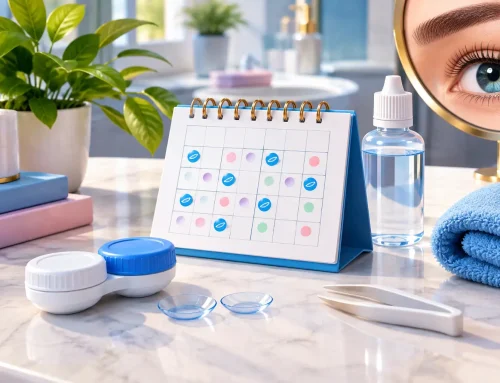
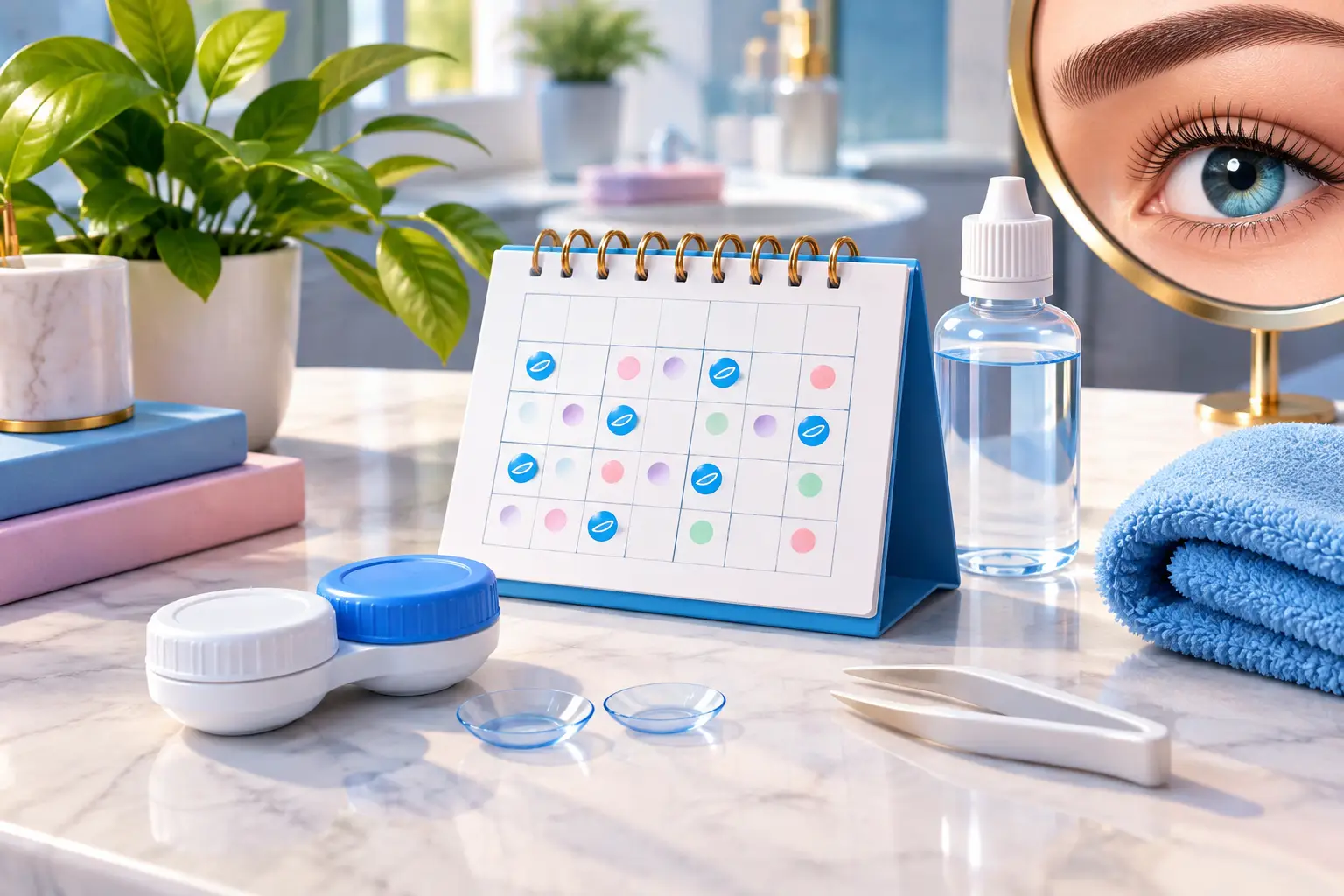
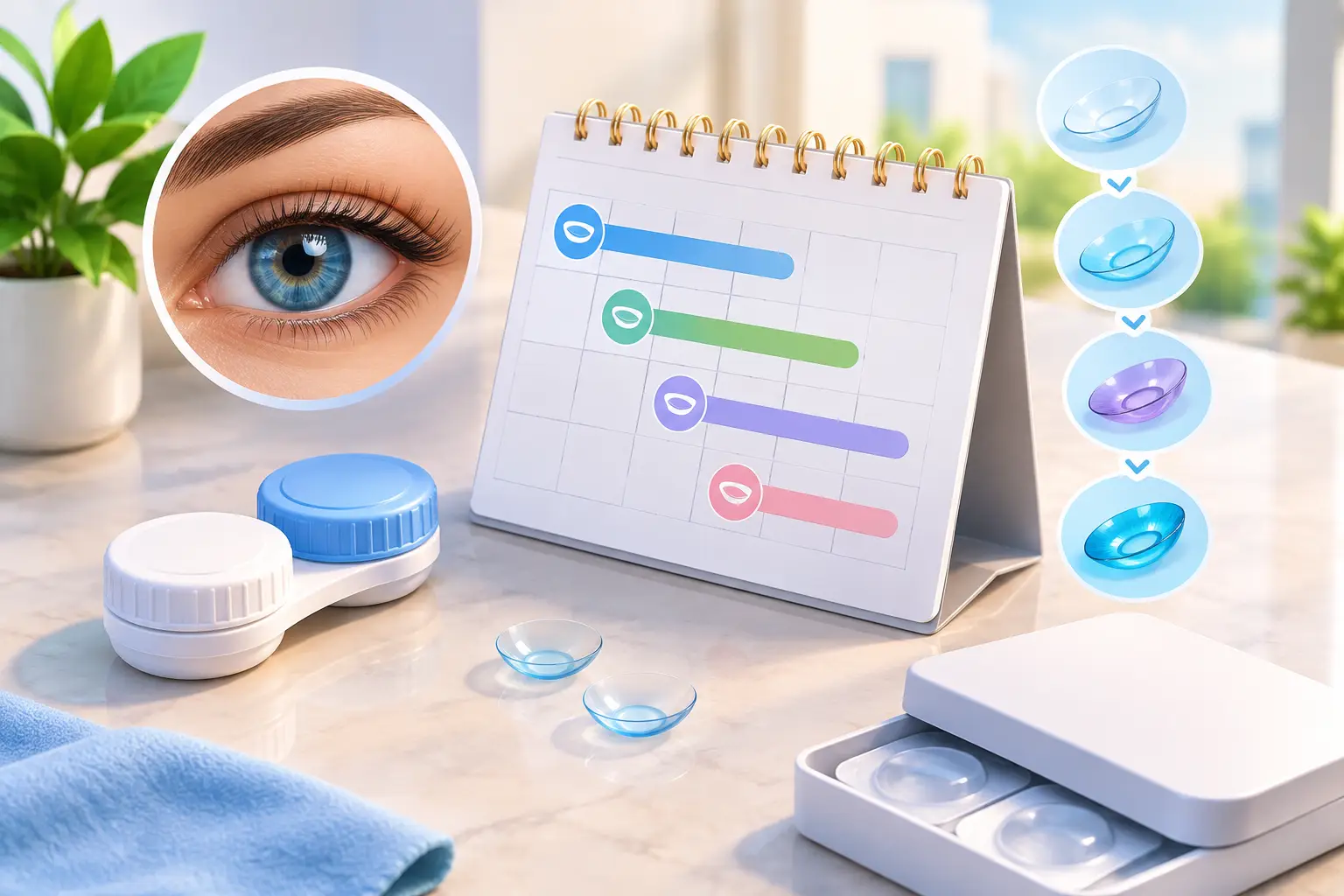
Choose a repeatable reminder method. For example, write down the opening date and replacement date at the same time, rather than relying on memory or trying to count backward from the day you notice discomfort.
Monthly lenses
Monthly lenses are replaced one month after opening, even if they were not worn every day. Because they remain in a lens case between uses, they often create the most confusion when several cases are nearby. One clear label can prevent you from reopening a pair that should have been discarded.
Extended-wear and specialty lenses
Some lenses have different wearing and replacement instructions. Extended-wear lenses, multifocal lenses, toric lenses, and cosmetic lenses may all have specific directions that should not be assumed from another pair you wear. If your schedule is unclear, check the original packaging or ask your eye care professional before using the lenses.
Why “I’ll Remember” Usually Fails
Contact lens details are easy to lose because they are spread across tiny blister packs, cardboard boxes, receipts, and cases that often look alike. Once the packaging is tossed, you may no longer know the lens brand, base curve, power, color, expiration date, or opening date.
That problem gets bigger when you switch between clear prescription lenses and colored contacts, keep backup lenses, or have different prescriptions for each eye. A case with no record attached to it can become a mystery item quickly.
A good organization routine turns every lens pair into a clearly identified item. You should be able to answer three questions without searching: What lenses are these? When did I open them? When do they need to be replaced?
How to Track Your Lens Schedule Without Guesswork
The easiest method is to record the details when you open a new pair, not later. Waiting until the end of the day, the end of the week, or the next time you clean your lenses leaves room for errors.
Start by recording the lens brand, prescription, color if applicable, opening date, replacement date, and unopened package expiration date. If your right and left eyes have different prescriptions, identify them separately. This takes less than a minute and can save you from mixing up lenses later.
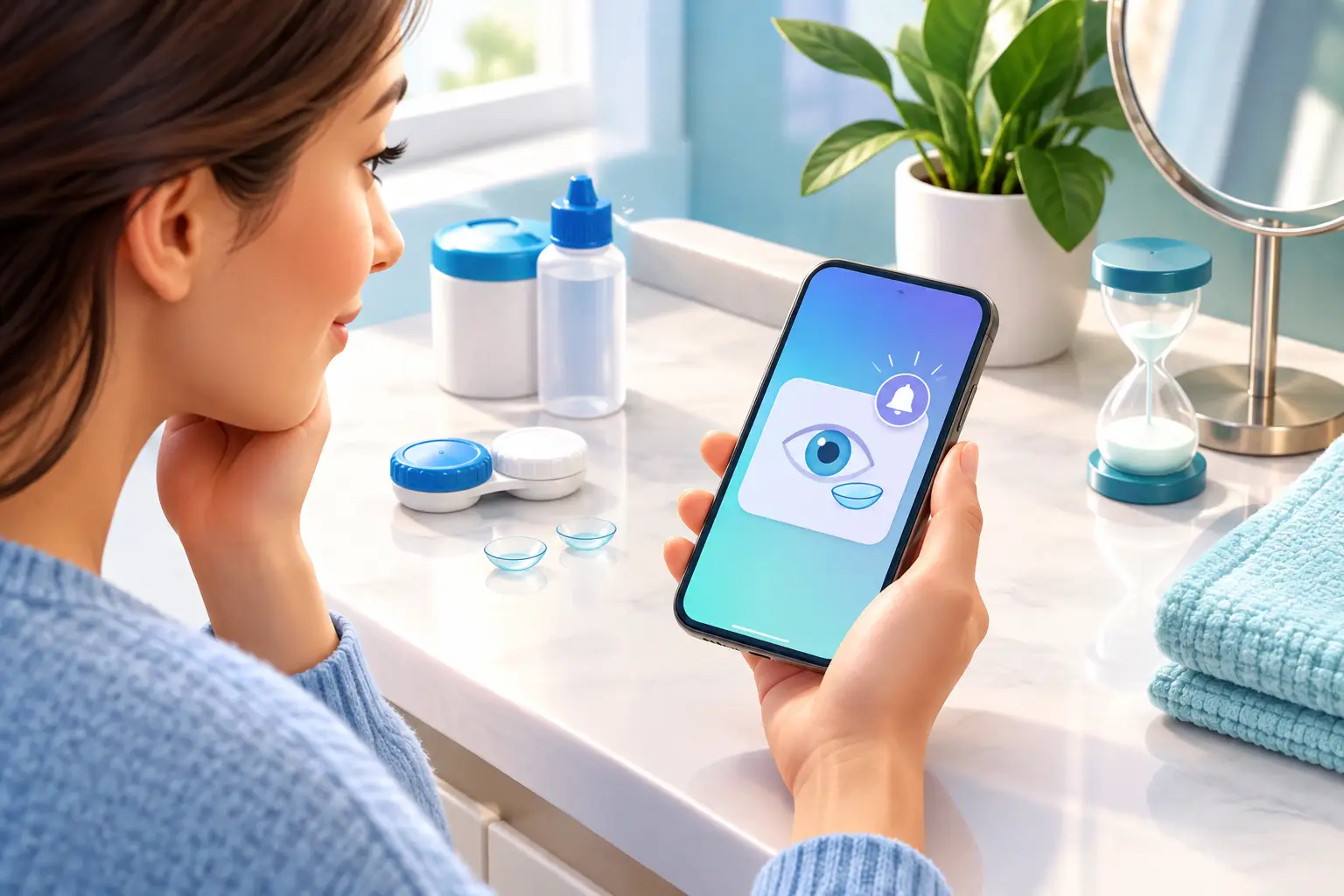
For reusable lenses, keep the record beside the lens case rather than in a random phone note or on packaging that may get thrown away. A phone reminder can be helpful, but a physical record is especially useful when you are standing at the bathroom counter deciding which case belongs to which pair.
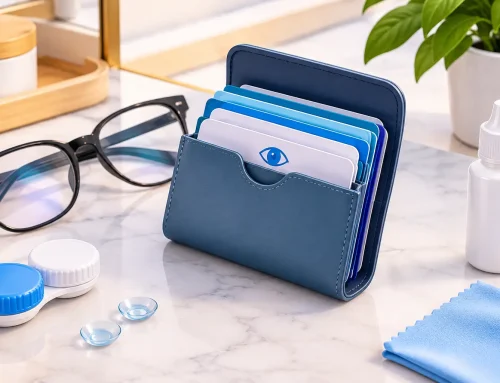
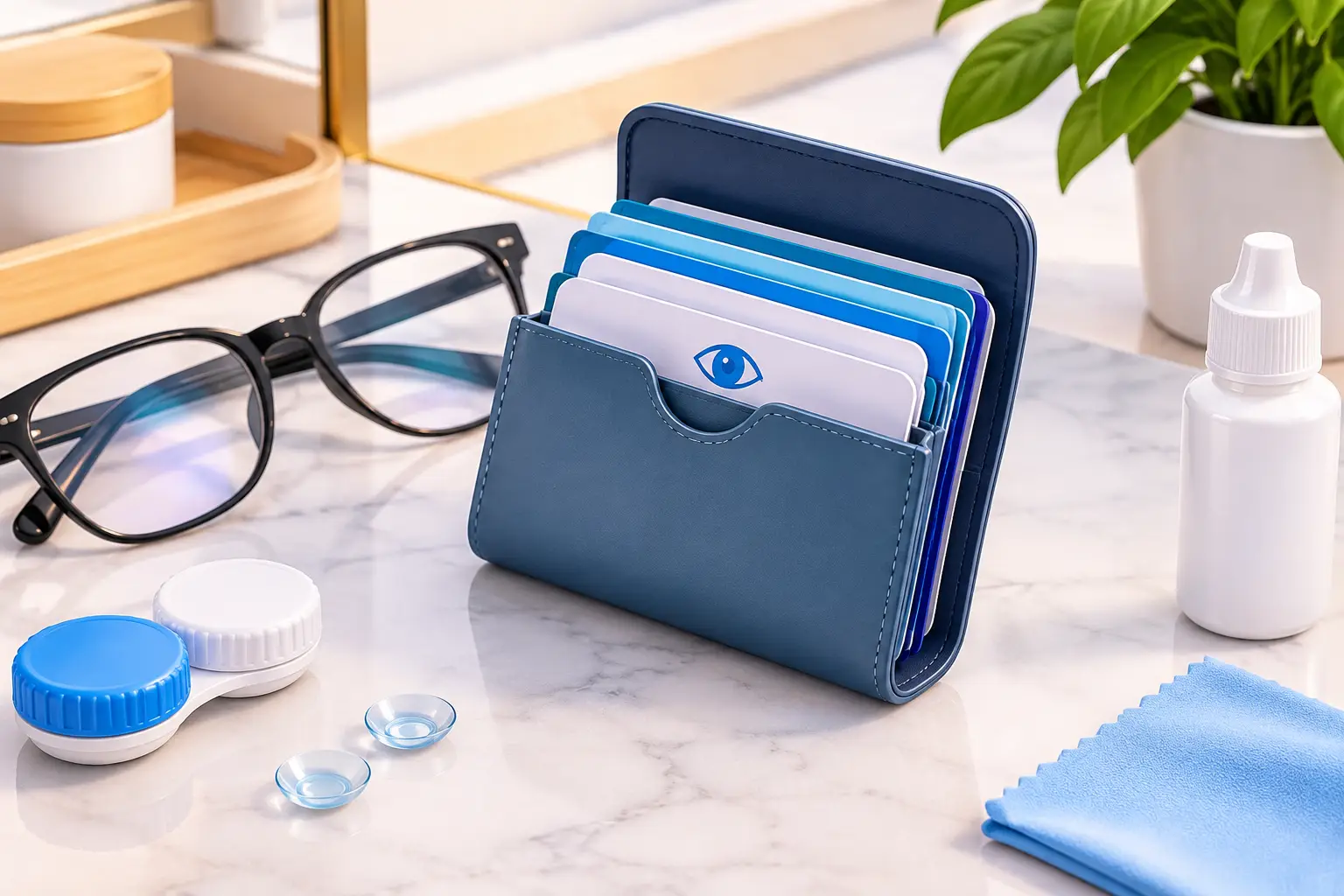
EYEBOX is designed for this exact kind of routine: keeping lens cases together with the details that are usually lost or forgotten. Its color-coded organization helps separate multiple pairs while giving you one place to record prescription, color, purchase information, and dates.
Build a Simple Replacement Routine
A schedule only works if it fits into something you already do. The best routine is usually the least complicated one.
When you open a reusable pair, set its discard date immediately. Place the case in its assigned spot, record the lens details, and remove the old pair if it is still taking up space. Keeping expired or retired cases next to current lenses is a common source of mix-ups.
For daily disposables, organize unopened boxes by prescription, lens type, and expiration date. Keep the oldest unexpired boxes where you will use them first. If you wear colored lenses only for certain occasions, write down their details too. Cosmetic lenses still need the same careful identification as prescription lenses.
Review your lens setup once a month. This is a practical moment to check for pairs that need to be replaced, boxes approaching expiration, low supplies, and records that need updating. It also gives you a chance to clear out empty packaging before it turns into clutter.
What Not to Do With Replacement Dates
Do not extend a replacement schedule because lenses still feel comfortable or look clean. A lens can collect deposits and wear down in ways that are not obvious at a glance. Follow the schedule provided for your lenses and the instructions from your eye care professional.
Do not use an old lens case as a date-tracking system. Cases are meant for storing lenses between uses, but they do not reliably tell you when a pair was opened. If you use multiple cases, relying on their appearance or where they happen to be sitting is especially risky.
Also, do not assume every lens in your collection follows the same timeline. A monthly clear lens, a colored lens, and a backup specialty lens may each have different instructions. Treat each pair as its own item with its own record.
When Your Schedule Needs Extra Attention
Replacement tracking matters even more during busy periods, when routines change and personal care details are easier to overlook. Moving, changing prescriptions, ordering a new lens brand, or adding colored contacts to your collection are all moments when labels and dates can get confused.
Pay close attention if you have recently changed the power in one eye, switched from daily lenses to reusable lenses, or opened a pair from an older box. Confirm the prescription and package expiration date before use. If the lens information is missing, do not guess.
If you experience redness, pain, unusual discomfort, blurred vision, discharge, or sensitivity to light, remove your lenses and contact an eye care professional promptly. A replacement schedule supports proper lens use, but it does not replace professional guidance when something feels wrong.
Make the Date Easy to Find
The best lens replacement schedule is the one you can see and follow without stopping to search for a box, receipt, or old reminder. Keep each pair identified, record the opening and discard dates right away, and separate current lenses from lenses that are no longer in use.
A little organization at the start of each new pair creates a calmer daily routine later. Instead of wondering whether a lens case is still current, you can know exactly what you are wearing and when it is time for a fresh pair.