
A contact lens case on the bathroom counter can look harmless until you cannot remember which pair is fresh, which one is for your left eye, or whether those blue lenses are Ocean Blue or Sky Blue. To prevent contact lens mixups, you need more than good intentions. You need a home system that keeps each pair, its details, and its replacement schedule together.
This matters most when you wear more than one type of lens. Maybe you alternate between everyday prescription lenses and colored contacts. Maybe you keep backup lenses, have different prescriptions for each eye, or use several cosmetic colors. When every lens case looks nearly identical, guessing can turn a quick morning routine into a frustrating one.
Why contact lens mixups happen
Most mixups start with packaging that gets thrown away too soon. The box or blister pack held the details you needed: prescription power, base curve, diameter, color, brand, expiration date, and purchase information. Once it is gone, all that remains may be a small case with no clear identity.
The problem gets worse over time. Lens cases collect in a drawer, medicine cabinet, or countertop basket. A case may be clean and properly closed but still impossible to identify at a glance. If you have two similar colors or multiple lenses from the same brand, a handwritten note on a loose scrap of paper is not much better. It can fade, get wet, or disappear when you need it.
A reliable setup removes the need to rely on memory. Instead of asking, “Is this the right pair?” you should be able to see the answer immediately.
Create one home for every lens case
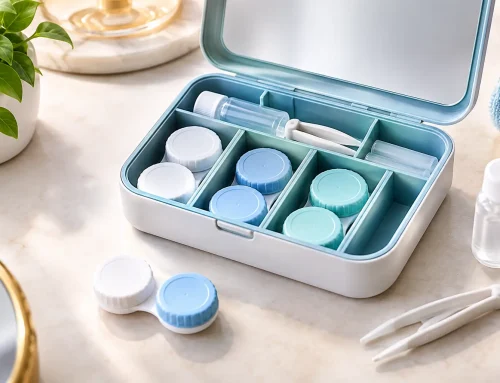
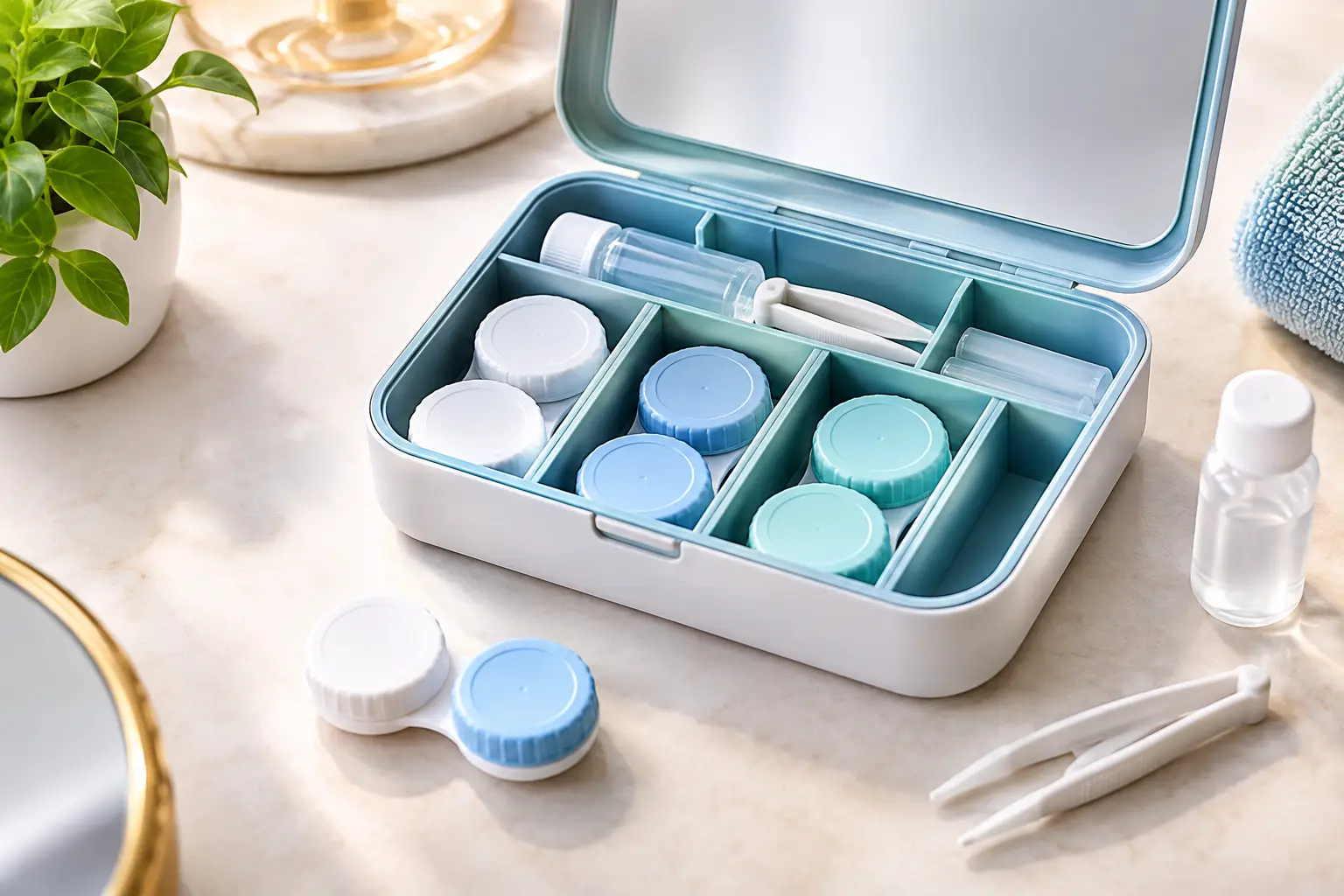
The easiest way to stay organized is to stop storing lens cases in several places. Pick one dedicated location for the cases you are actively using, plus any unopened or backup pairs you want to track. The goal is not to create a complicated routine. It is to make sure every pair returns to the same place after cleaning and storage.
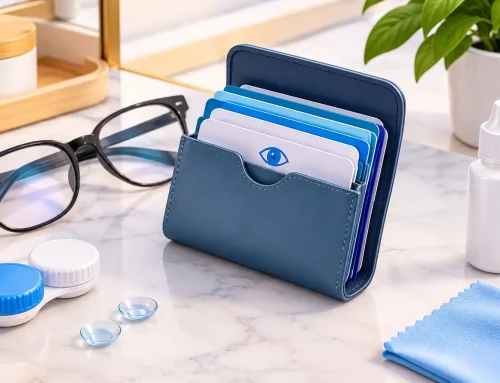
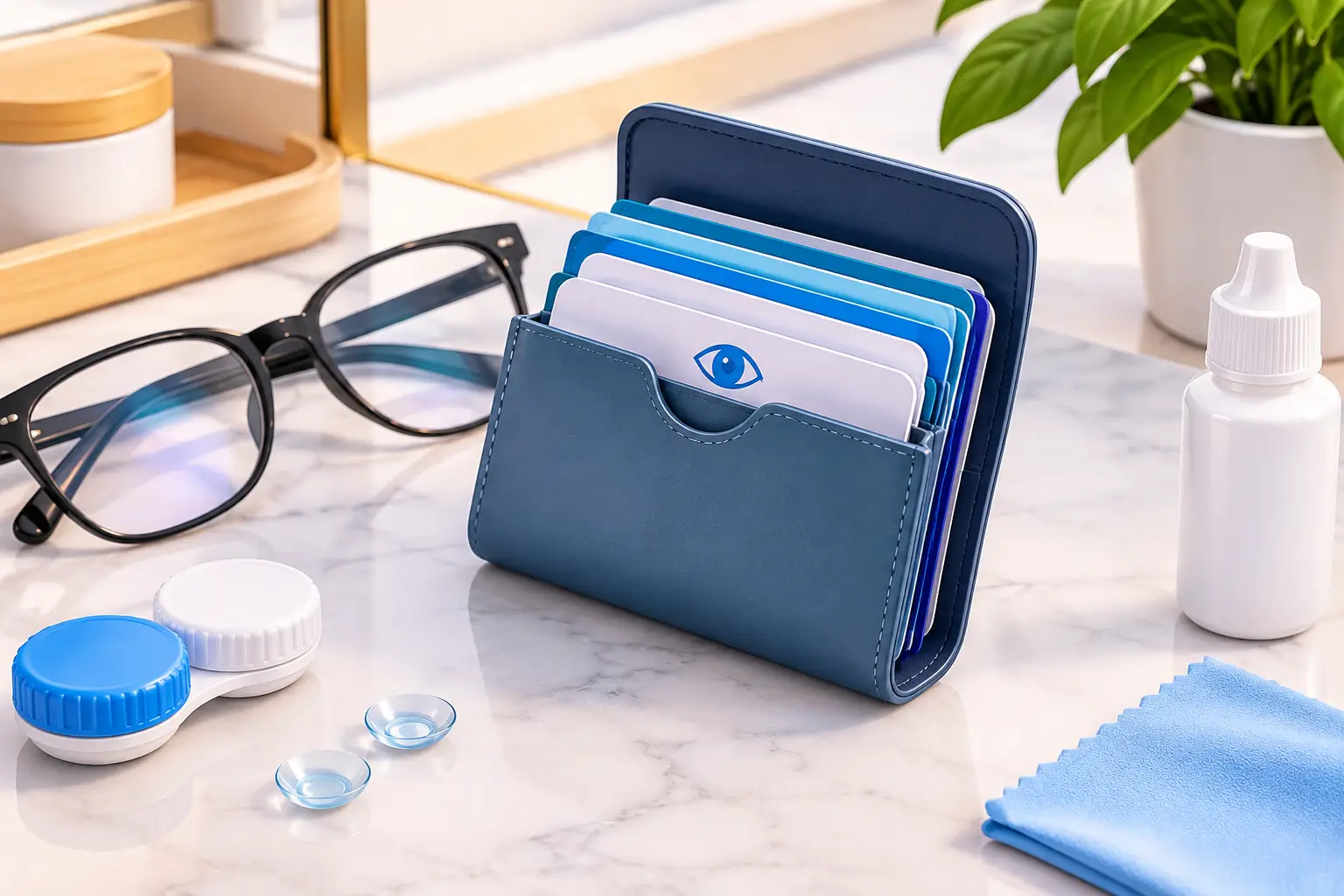
A purpose-built organizer is especially useful when you manage several pairs. EYEBOX® keeps lens cases with the information that identifies them, so the prescription, color, expiration date, and purchase details are not separated from the lenses themselves.
The key is consistency. If a pair lives in your organizer, it should not later end up loose in a drawer because you were in a hurry. A simple rule works well: clean the lenses, close the case, return the case to its assigned spot.
Label the details that actually distinguish each pair
“Blue contacts” is not always enough information. If you own more than one blue shade, or if a colored lens also has a prescription, the label needs to do more work. Record the details you would need to reorder the lens or confidently choose it on a busy morning.
For each pair, keep the prescription information, lens color or style, brand, expiration date, and the date you opened or began using it. If you buy lenses at different times, add the purchase date or order information as well. That makes it easier to identify what needs to be replaced and what you already have on hand.
If your right and left eye have different prescriptions, make that distinction impossible to miss. Use clear wording such as “Right: -2.25” and “Left: -1.75,” rather than assuming you will remember. A small difference in power can be easy to overlook when you are rushing.
Give similar pairs distinct names
Cosmetic lenses are often the hardest to separate because shades can look different in the case than they do on your eyes. Create names that make sense to you. For example, “Hazel – natural,” “Hazel – bold,” and “Gray – evening” are clearer than three labels that simply say “color contacts.”
The same idea applies to lenses used for different occasions. If one pair is your everyday option and another is reserved for a specific look, say so in the record. Clear labels reduce second-guessing and help you get the look you intended.
Use color coding as a visual shortcut
Labels give you the full answer. Color coding helps you find the answer faster. Assign each lens pair a consistent color marker, section, or identifier, then use it every time you put the case away.
For example, you might use one color for everyday prescription lenses, another for colored contacts, and a third for backup pairs. Or you can give each individual pair its own identifier if you have a larger collection. There is no single perfect system. The best one is the one you can understand without stopping to decode it.
Avoid relying only on the color of the lens itself. Colored contacts can appear darker or lighter depending on the solution, lighting, and case. A separate, visible identifier is much more dependable.
Keep replacement dates in view
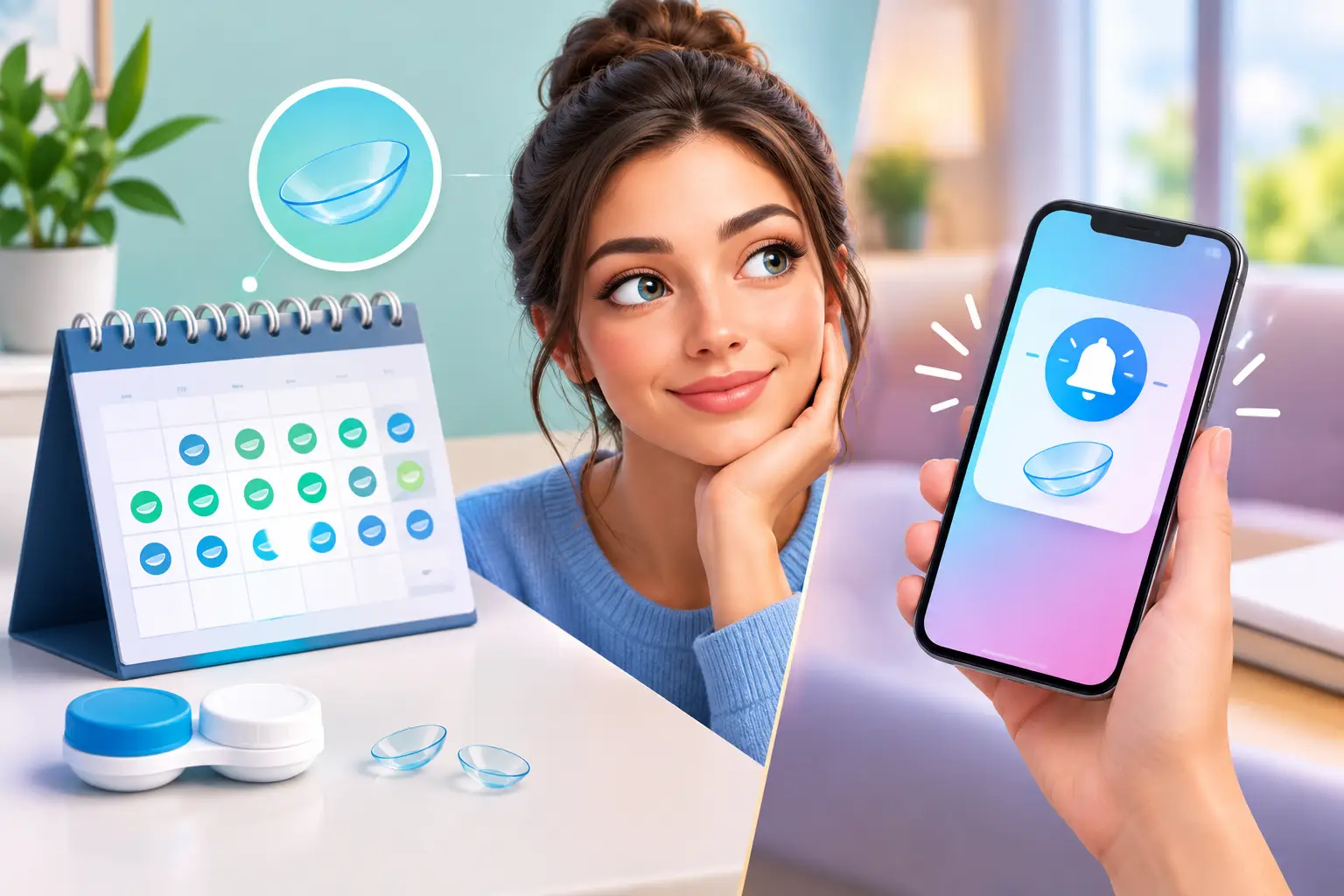
Mixups are not limited to choosing the wrong color or prescription. It is also easy to lose track of when a pair was opened, when it should be replaced, or when the unopened package expires. Those dates deserve a permanent place in your organization system.
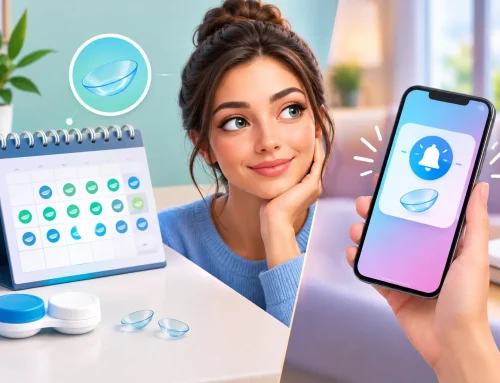
Write down the date you first use a pair and its recommended replacement timeframe. Daily, biweekly, monthly, and other replacement schedules are not interchangeable. Follow the instructions provided with your lenses and the guidance from your eye care professional, rather than stretching a pair because it still seems fine.
For unopened lenses, track the manufacturer expiration date from the packaging. This is particularly helpful if you stock up during a sale or keep multiple colors available. You will know which boxes to use first instead of finding an expired pair months later.
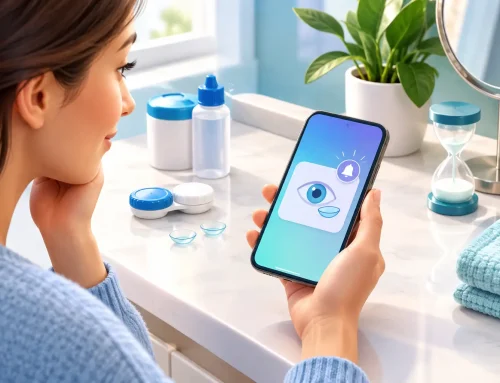
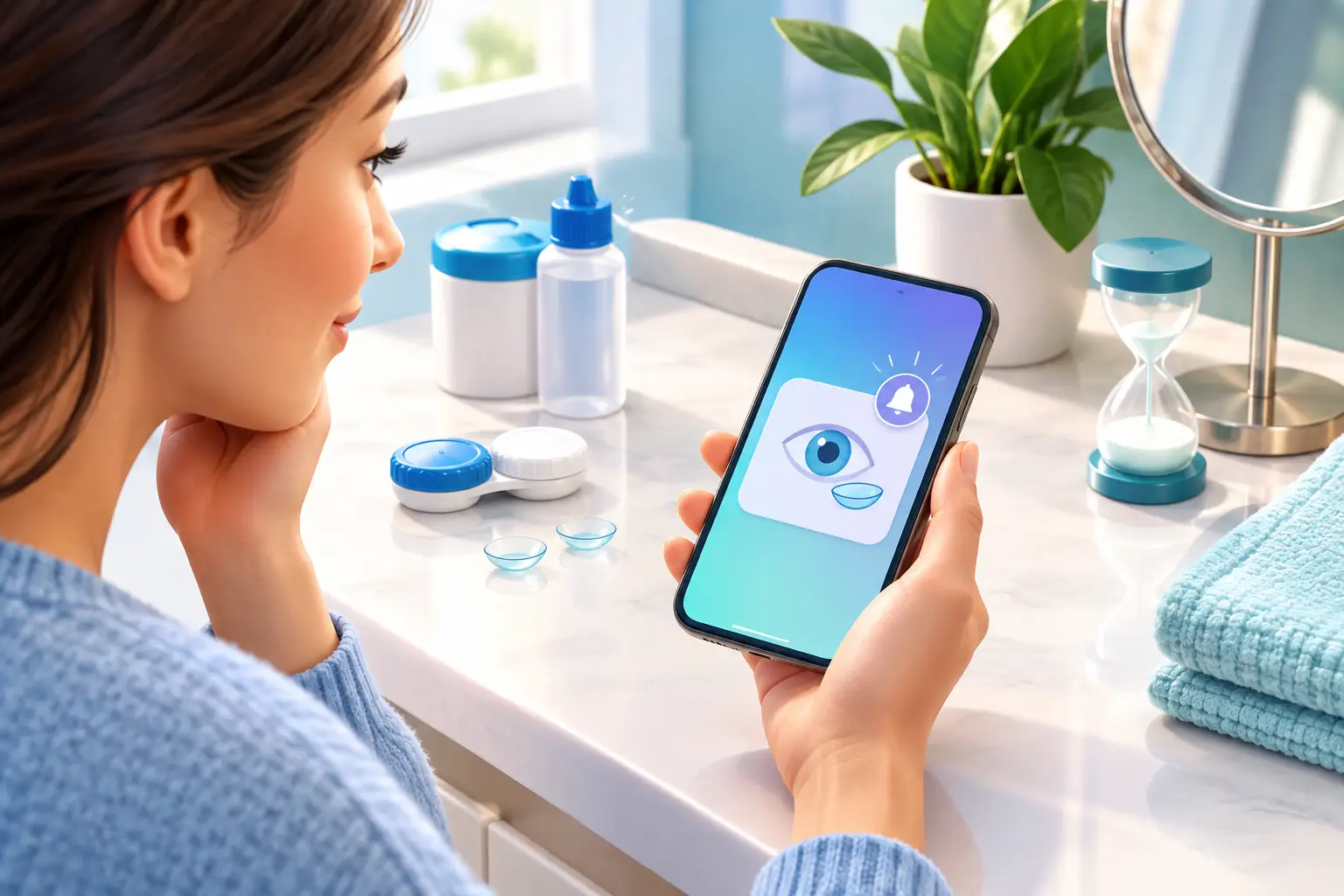
A quick monthly check can keep the whole system current. Look for lenses approaching their replacement date, expired unopened boxes, and cases that no longer match the details in your records. It takes only a few minutes and prevents a pileup of confusing, outdated supplies.
Build a routine that prevents contact lens mixups
Organization works when it fits into what you already do. You do not need to add a long checklist to your lens-care routine. Add a few small actions at the moments when mixups are most likely to happen.
When you open a new pair, record the details before discarding any packaging. When you remove lenses, return them to their assigned case and location. When you replace a pair, remove the old record or clearly mark it as finished. These three habits keep old information from mixing with current lenses.
If you share a bathroom or storage area, this routine becomes even more valuable. Your lenses should have a clearly designated space rather than sitting among household items or another person’s lens supplies. Shared counters are convenient, but they are not a system.
Do not mix case parts between pairs
A frequent source of confusion is using one case base with another case lid, especially when several cases are the same style. Keep each case together as a set. If a lid breaks, cracks, or becomes difficult to identify, replace the case instead of improvising with mismatched pieces.
Also, do not transfer lenses into a case unless you know exactly which pair they are and why they are being moved. If you lose track of a lens’s identity, do not guess. Put safety before convenience and ask your eye care professional for guidance.
A cleaner system protects your time and your investment
Contact lenses are small, but the details behind them are not. Every pair represents a specific prescription, a specific look, a replacement schedule, and money you spent to see clearly or feel like yourself. Keeping those details organized means fewer repeat purchases, fewer rushed searches, and fewer mornings spent comparing nearly identical cases.
The best system is visible, simple, and easy to maintain. Give every pair a home, keep its information beside it, and update the record when something changes. Once you can identify each lens pair in seconds, your routine feels less like a guessing game and more like it should: clean, clear, and under control.