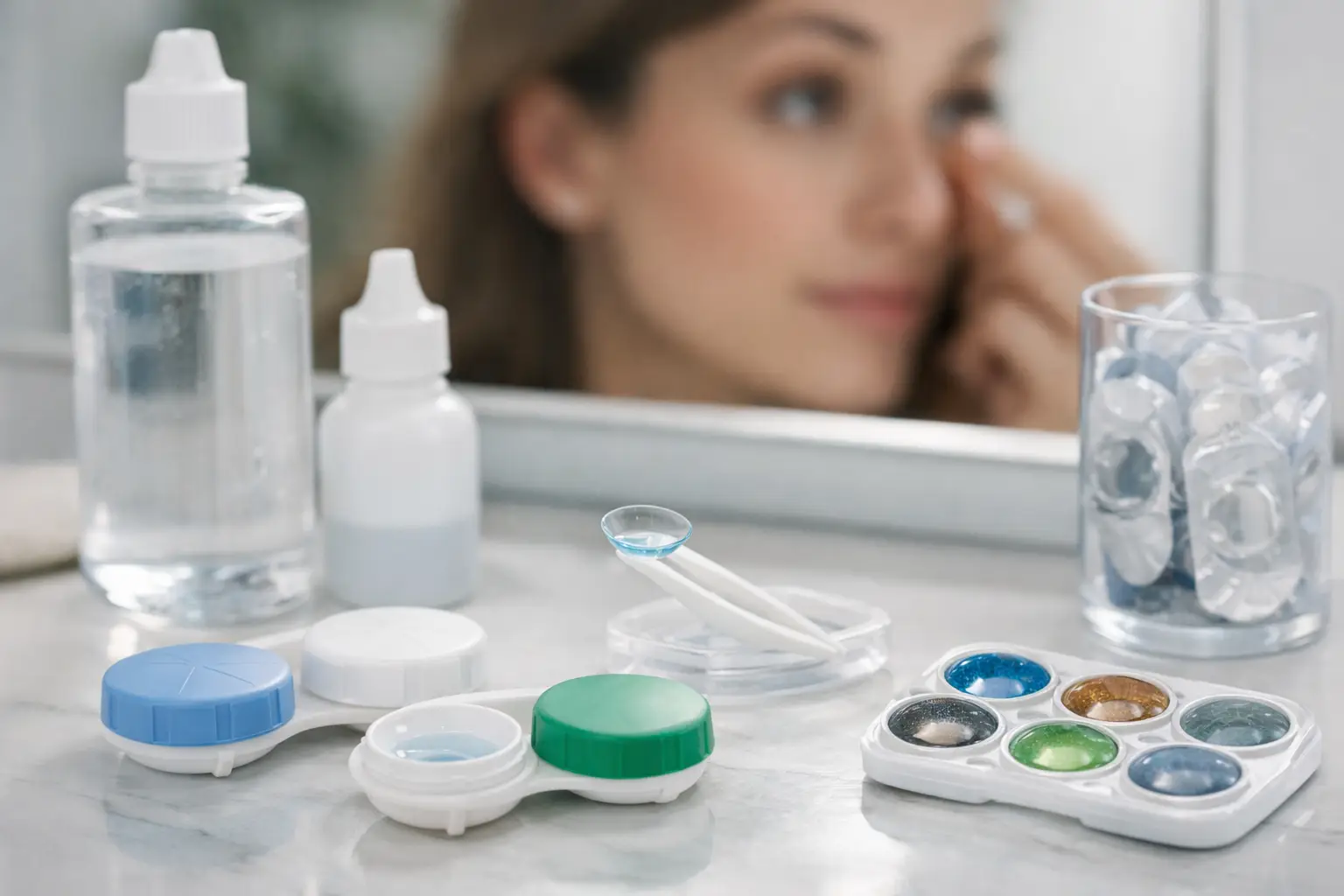
A contact lens case can look identical to every other case in your bathroom drawer – until you need the right pair at 6:30 in the morning. Then the missing prescription information, mystery color lenses, and forgotten expiration date become a real problem. The best ways to store contacts do more than keep cases off the counter. They help you know exactly what you are wearing, when you opened it, and when it is time to replace it.
The best ways to store contacts start with a system
Loose lens cases, discarded boxes, and handwritten notes in different places create unnecessary guesswork. That is especially true if you wear daily, weekly, monthly, prescription, or colored lenses at different times. A storage system should keep the lens case and its details together, so you are not relying on memory when you are tired or in a hurry.
Start by choosing one consistent home for every active pair. A clean bathroom drawer, medicine cabinet shelf, or dedicated personal-care area can work well. The location matters less than the routine: every lens case returns to the same place after cleaning and every new pair is added with its identifying information.
Physical organization and lens care are two separate jobs. Your storage area can make your routine easier, but it does not replace the cleaning, disinfection, and replacement instructions provided by your eye care professional and lens manufacturer.
1. Keep each lens pair with its details
The original packaging contains information most people need later: prescription strength, base curve, diameter, color or brand, expiration date, and purchase details. Throwing it away immediately can make reordering harder and can leave you unsure which pair is which.
Before you discard packaging, record the important details in one dedicated place. A purpose-built organizer, a labeled card, or a simple log can work. The key is to keep the record beside or directly with the correct lens case, not on a random phone note that gets buried under everything else.
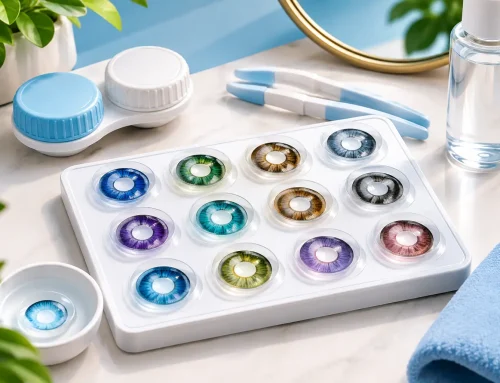
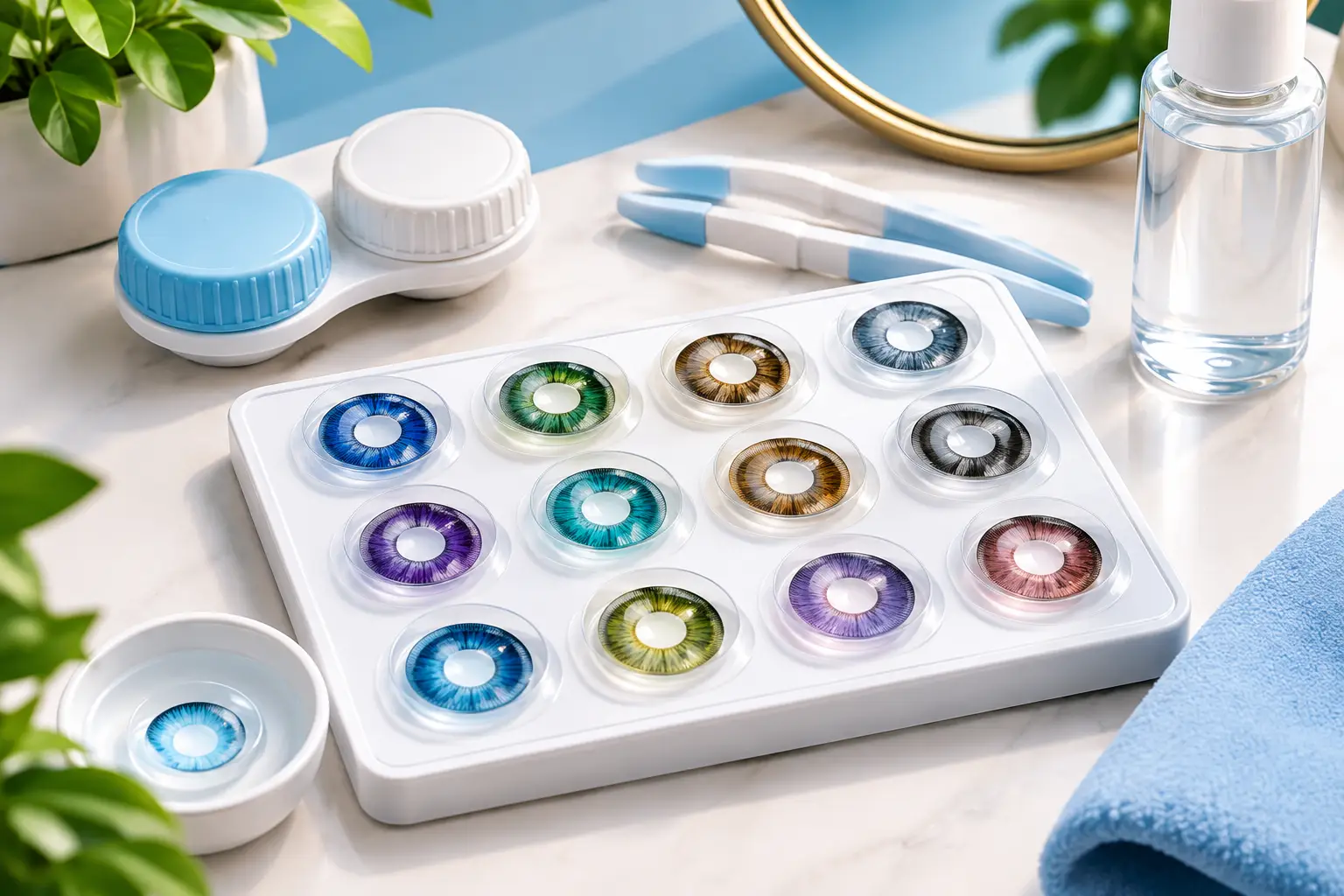
For colored contacts, write down the exact color name rather than relying on what the lenses look like in the case. Similar shades can be difficult to distinguish, and the color in a case may not look the same once it is on your eye.
2. Label for the information you actually use
A label that says “contacts” does not solve much. Useful labels answer the questions you ask every day: Which prescription is this? Is it the right or left lens? When did I open it? When should I replace it?
Use a simple, repeatable format for every pair. Include the lens type or color, right and left prescription if applicable, the opening date, and the replacement date. If you buy several boxes at once, adding the purchase date or lot information can also make it easier to spot older inventory.
Avoid labels that are vague, overly small, or packed with details you will never read. You should be able to identify a pair at a glance without opening multiple cases or hunting for a box.
3. Separate active lenses from unopened inventory
One of the easiest ways to lose track of contacts is storing everything together. Active lenses need regular attention. Unopened boxes need a separate spot where you can see what you have left and check expiration dates before using them.
Create two clear sections: one for lenses currently in rotation and another for sealed replacement boxes. This prevents you from opening a new pair accidentally when you already have a usable pair, and it makes reordering less of a surprise.
For unopened boxes, place the earliest expiration dates toward the front. If you have more than one prescription or several cosmetic lens colors, group like items together. You do not need a complicated inventory system. You need enough visibility to avoid finding an expired box after you have run out of the lenses you actually need.
4. Store lens cases cleanly, not just neatly
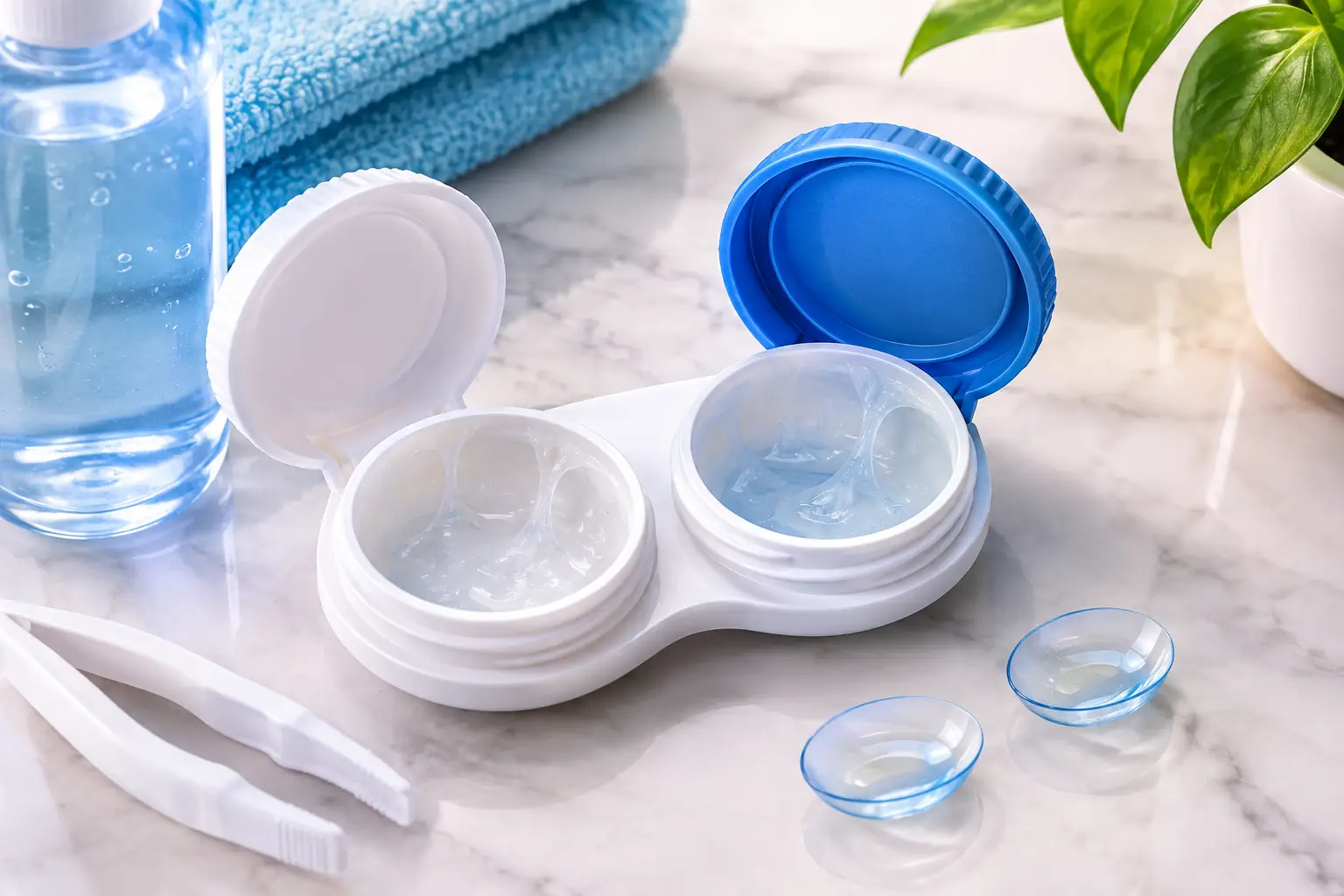
A tidy setup should also support good lens hygiene. Keep lens cases away from splashing water, cosmetics, hair products, and other bathroom clutter that can leave residue where you handle your lenses.
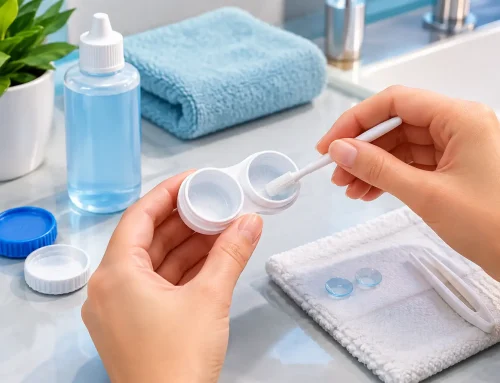
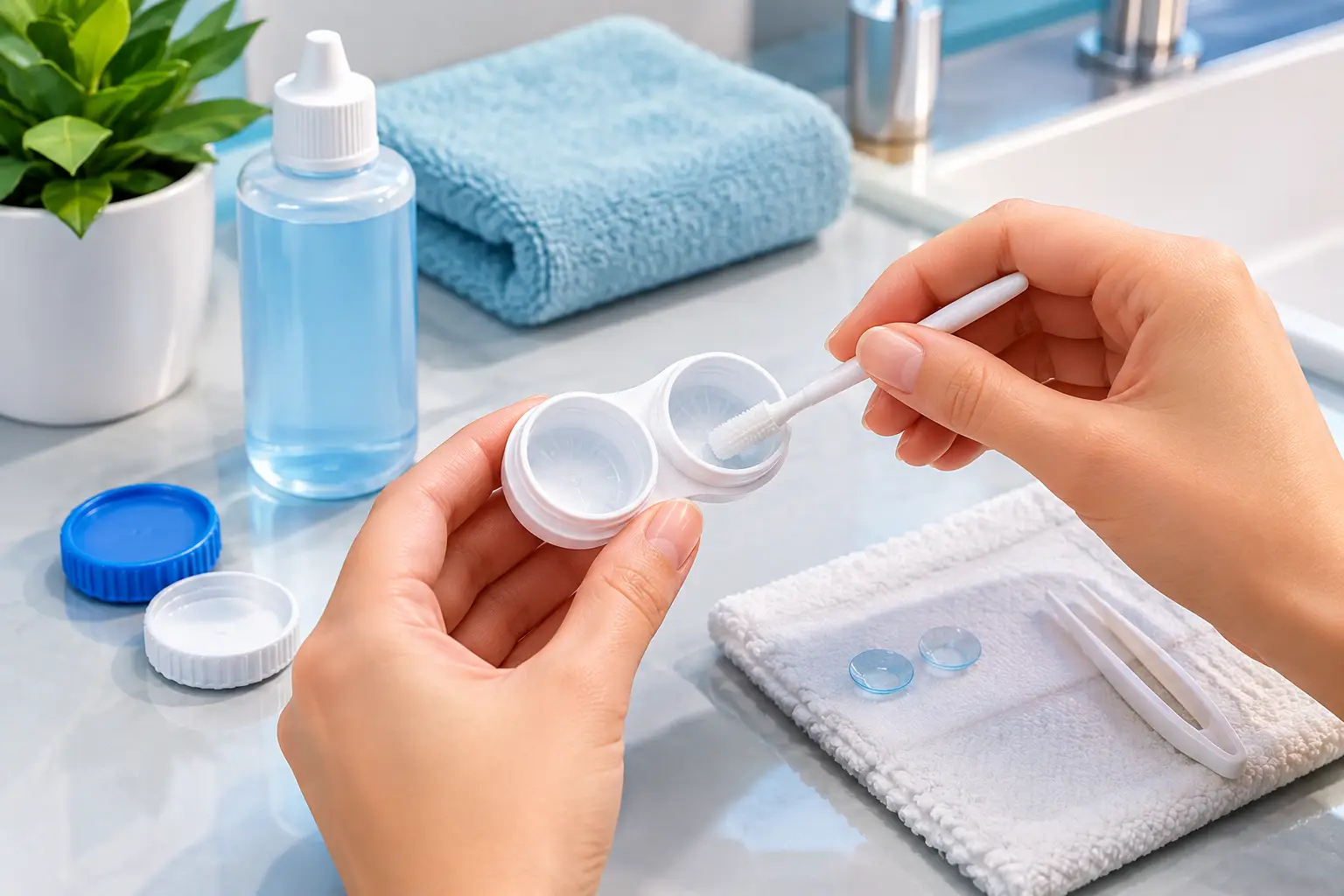
Never use tap water to rinse or store contact lenses, and do not top off old solution with new solution. Follow the care directions for your specific lenses and solution, emptying, rinsing, and air-drying the case as instructed. Replace lens cases on the schedule recommended by your eye care professional or product instructions.
It helps to give the case a designated upright position within your storage setup. That reduces the chance that it gets knocked behind other items, mixed with a similar case, or placed on a wet counter. Clean surroundings make the routine feel easier to maintain, which matters more than an elaborate setup you will not keep using.
5. Build expiration dates into your routine
Expiration dates are easy to overlook because they are often printed in small type on packaging you may no longer have. Replacement schedules are also easy to forget when life gets busy. Those are different dates, and both matter.
The packaging expiration date tells you how long an unopened lens product remains within its stated shelf life. Your replacement date is based on when you open and start using a lens pair. Record both when relevant, especially if you keep backup boxes or rotate several cosmetic lens colors.
Choose one regular checkpoint each month. Review what is open, what needs replacement soon, and what is nearing its package expiration date. A quick check can prevent a last-minute scramble and helps keep old lenses from lingering in the back of a drawer.
6. Use color coding with a clear purpose
Color coding is helpful when it creates a consistent visual cue. It is less helpful when every case, sticker, and note uses a different color without a pattern.
You might assign one color to a specific lens color, one category for prescription lenses, or a color that separates right and left when that is useful for your routine. Pick the system that makes sense to you and use it the same way every time. If you share a bathroom, clear color cues can also reduce the chance of another person moving or confusing your lens items.
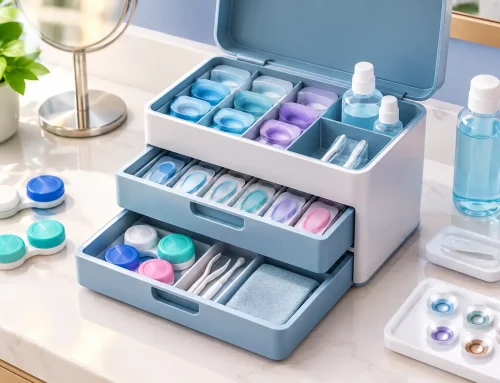
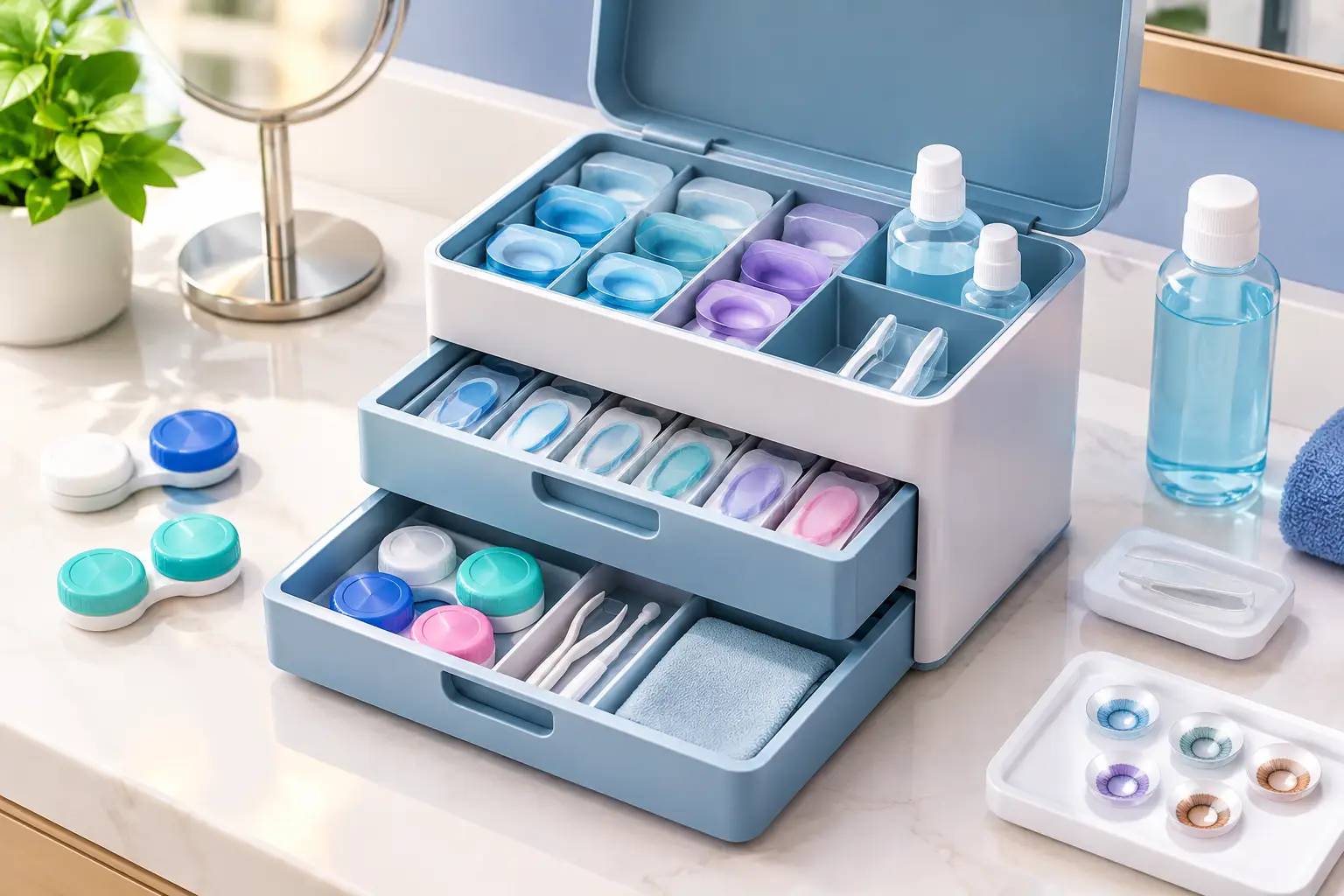
EYEBOX is designed around this practical need: it keeps contact lens cases and the key details that identify them together, with organized spaces and color-coded identification. Instead of collecting boxes, cases, and notes in separate places, you can create one easy-to-check home for the pairs you use.
7. Make reordering part of storage
Contact storage works best when it helps you stay ahead of your supply. Keep a visible note of how many unopened pairs or boxes remain. When you begin your last backup, that is your signal to reorder rather than waiting until the current pair needs replacement.
This is particularly useful for people with different prescriptions in each eye or for anyone who alternates between vision-correction and colored contacts. Reordering the wrong power, wrong color, or wrong replacement schedule is frustrating and avoidable when the details are stored clearly.
Best ways to store contacts when you have multiple pairs
If you manage several pairs, do not try to memorize the differences. Give each pair its own marked spot, record the details at the time you open it, and remove outdated information as soon as a pair is discarded. Keeping old records next to current lenses is one of the fastest ways to create a mix-up.
A simple system will always beat a perfect-looking drawer that does not tell you what is inside. When every lens pair has a place, a label, and a date, your daily routine becomes less about searching and more about putting in the right lenses with confidence.