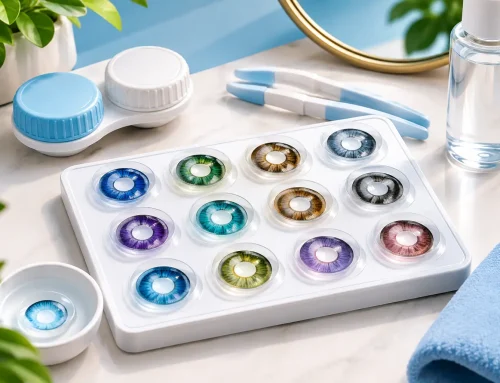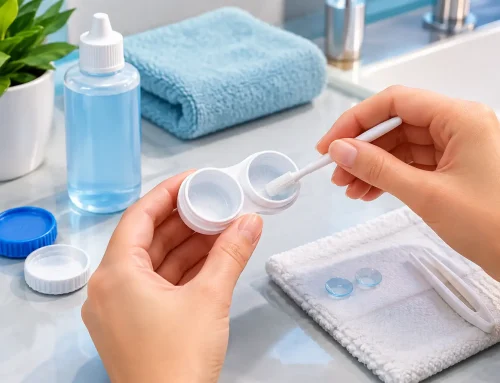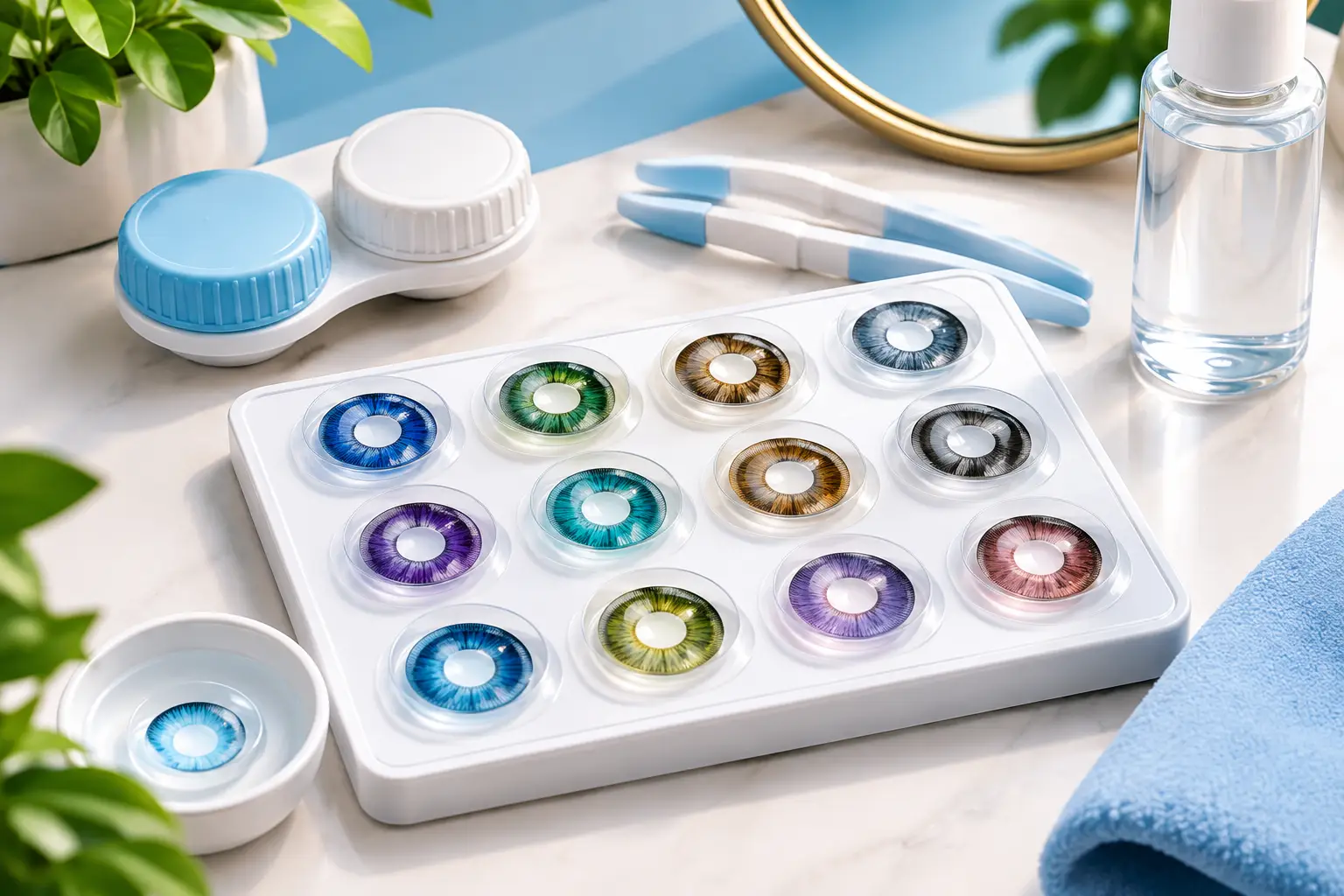
A drawer full of nearly identical lens cases can turn a fun cosmetic lens collection into a daily guessing game. Which pair is the hazel color? Which case holds the lenses with your current prescription? Did you open that monthly pair last week or last month? Organizing a cosmetic lens collection gives every pair a clear place and every important detail a record you can actually find.
The goal is not to create a picture-perfect bathroom cabinet. It is to make lens care easier, cleaner, and less stressful. When you can identify a pair in seconds, you are less likely to mix up colors, lose prescription information, or keep lenses past their recommended replacement date.
Start With a Full Collection Reset
Before you organize anything, gather every cosmetic lens case, unopened box, blister pack, spare case, and solution bottle from your bathroom, bedroom, purse, and makeup area. Most collections become confusing because they grow one pair at a time. A complete reset lets you see what you actually own.
Set aside a clean, dry surface and sort your lenses into three groups: unopened pairs, currently in-use pairs, and items that should be discarded. Empty boxes, dried-out lenses, cracked cases, and lenses with unclear history should not go back into your system. If you cannot confirm what a pair is, when it was opened, or whether it is still within its recommended use period, replacing it is the safer choice.
This is also a good moment to check the information on each package. Cosmetic lenses may be worn for style, but they are still medical devices. Follow the replacement schedule, cleaning instructions, and prescription guidance provided by your eye care professional and the lens manufacturer.
Give Every Pair an Identity
A lens case by itself does not tell you enough. Cases often look alike, especially when you own several shades of brown, gray, blue, or green. The most useful organizing system connects each case to the details you need before you put lenses in your eyes.
For each pair, record the lens color or style, prescription details if applicable, brand, purchase date, expiration date, and the date you first opened the pair. If the lenses have a specific replacement schedule, write that down too. For example, a monthly cosmetic lens pair needs a different reminder than a daily disposable lens.
Keep the original packaging until you have accurately transferred the information to your organizing system. The box or blister pack is often the only place where you can confirm the exact color name, power, base curve, diameter, lot number, and expiration date. Throwing it away too early is one of the main reasons lens details disappear.
Use Color Labels Carefully
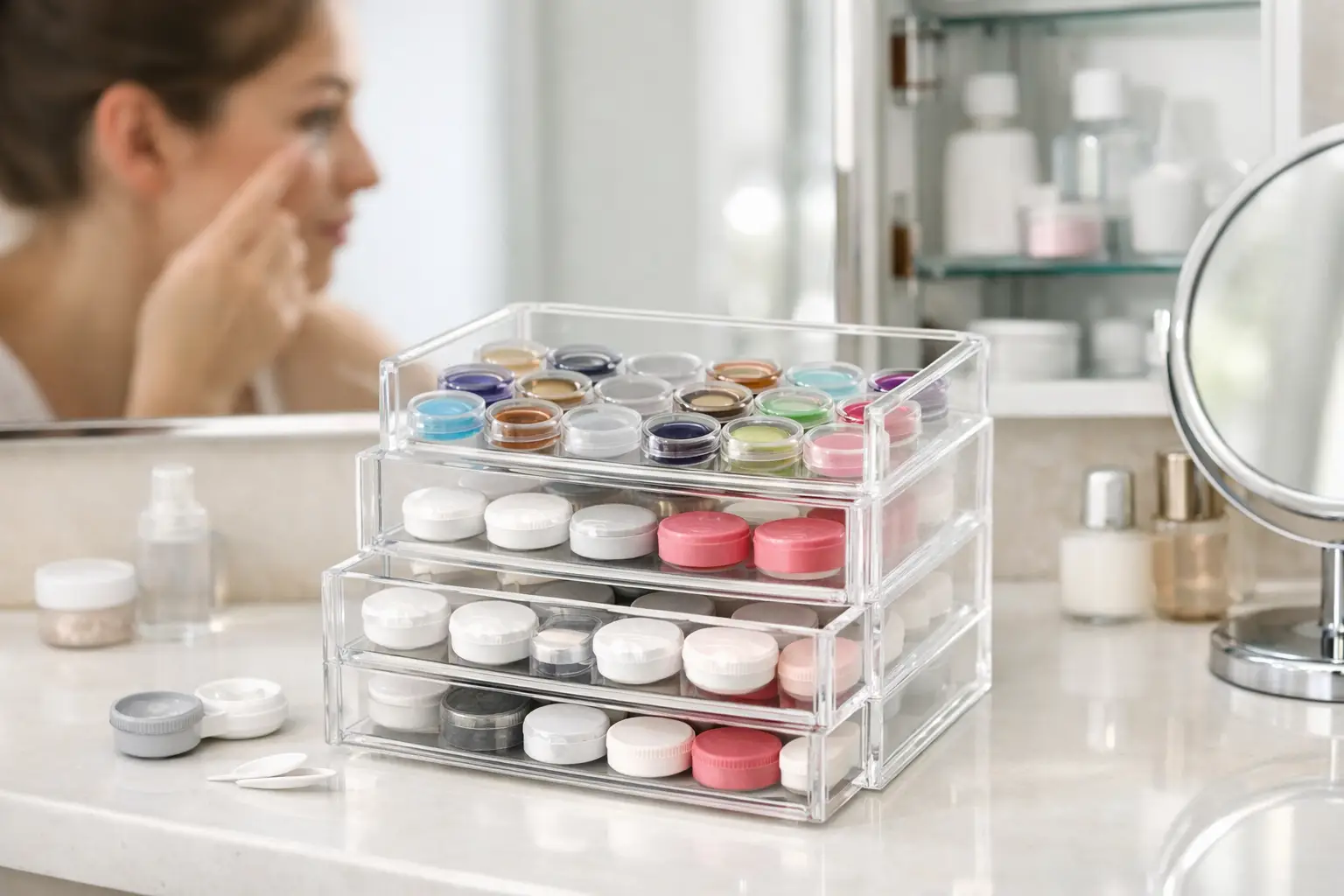
Color coding can make a collection much faster to use, but it works best when it supports written information instead of replacing it. A pink label may help you spot a rose-brown lens quickly, while a blue label can separate cool-toned shades. But color alone is not enough when two pairs are similar or when one pair has a different prescription.
Use a simple label that includes a short color name and a unique identifier, such as “Honey Brown – 0.00” or “Gray Mist – R -1.25.” Keep the wording consistent. If you call one pair “light brown” and another “brown light,” you create the same confusion you were trying to solve.
Separate Opened and Unopened Lenses
This one change prevents a surprising number of mistakes. Unopened lenses have their own manufacturer expiration date and should remain in their original packaging until you are ready to use them. Opened reusable lenses have a separate timeline based on when you first opened them.
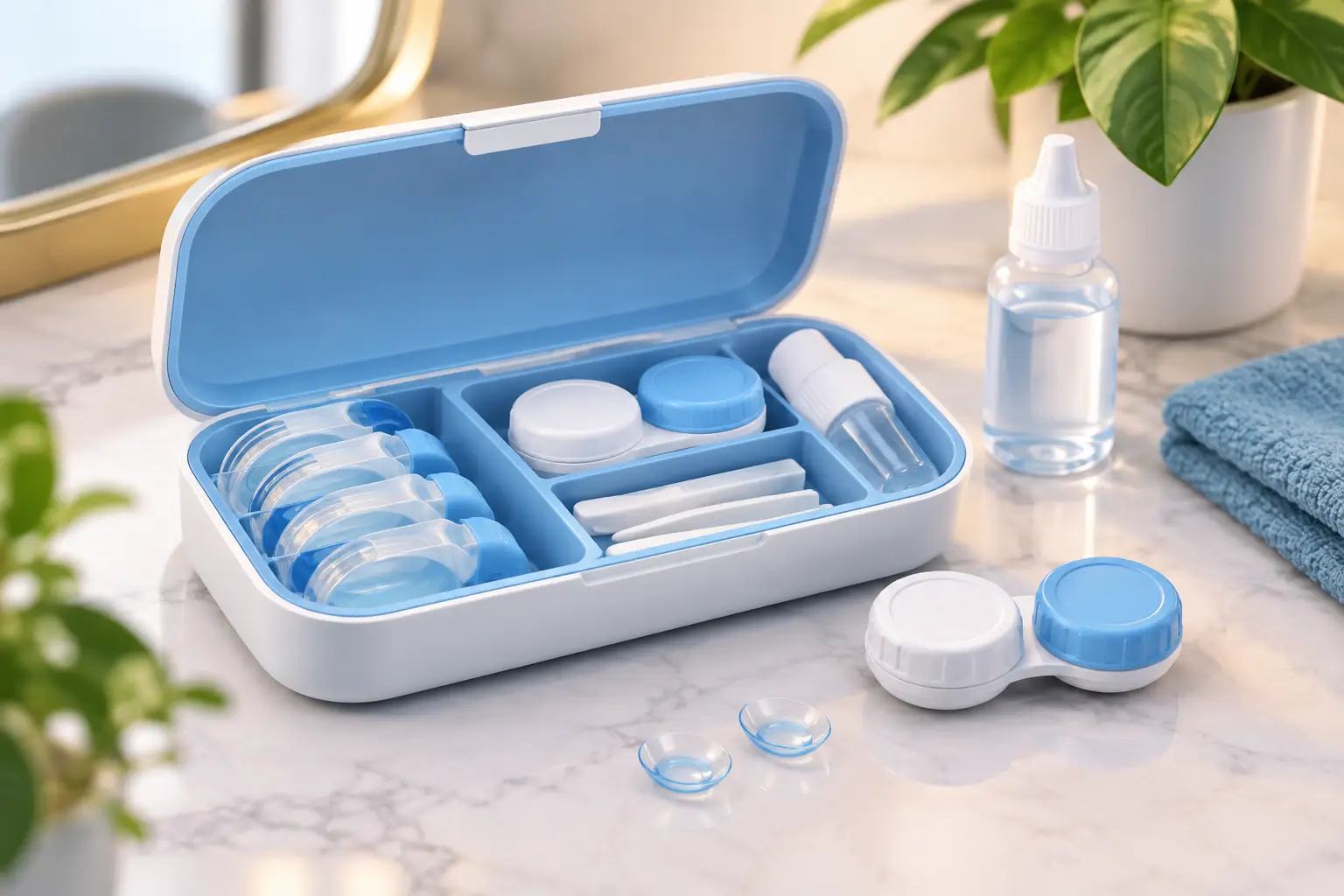
Store unopened boxes together in one clearly defined section. Arrange them by color, prescription, or expiration date, depending on what matters most for your collection. If you buy backup pairs of the same color, place the pair with the closest expiration date in front so it gets used first.
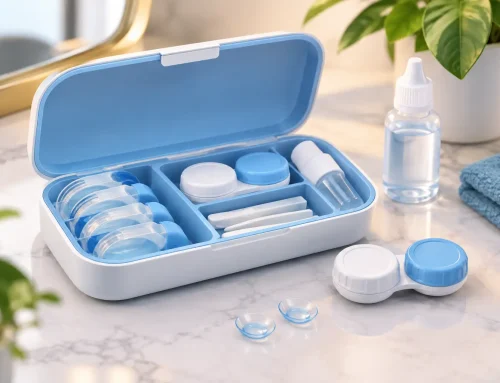
Keep currently worn pairs in individual cases in a separate section. Each case should be easy to match with its written record. Do not stack loose cases together and assume you will remember. A busy morning, a late night, or a rushed makeup routine is exactly when similar-looking cases get mixed up.
A purpose-built organizer such as EYEBOX keeps cases in designated spaces while preserving details like color, prescription, purchase information, and expiration dates in one place. That combination matters because storage without records still leaves you guessing.
Build a System You Will Actually Maintain
The best organization method is the one you can keep up with in under a minute. Avoid creating a complicated spreadsheet or labeling system if you know you will stop using it after two weeks. For most cosmetic lens wearers, a simple physical setup with a clear written record is enough.
Choose one permanent home for your collection. A clean drawer, cabinet shelf, or personal care station works well as long as it stays dry, away from direct heat, and separate from clutter. Lens cases should not compete for space with loose makeup, hair tools, or products that can leak.
Then create a small routine around every new pair. When you purchase lenses, record the purchase date and manufacturer expiration date before putting the box away. When you open a reusable pair, add the opening date immediately. When you discard a pair, remove its record and case from the active section. These tiny actions keep the system accurate without requiring a major reset every month.
Keep Left and Right Details Visible
If your prescriptions differ between eyes, left and right identification is not optional. It is easy to assume you will remember which lens is which, especially if the difference is small. But lens power, cylinder, axis, or other prescription details can vary, and guessing is not a good system.
Mark the right and left lens information exactly as it appears on your prescription or packaging. Keep the distinction visible on the case record, not buried in a note somewhere else. If both eyes use the same lens, still label the pair clearly so you do not confuse it with another color or style.
Watch the Dates That Matter
There are two dates that lens wearers commonly mix up: the manufacturer expiration date and the date a reusable pair was opened. The first applies to unopened lenses in their sealed packaging. The second determines when a reusable pair should be replaced after opening, based on its stated schedule.
A monthly lens is not necessarily good for 30 individual wears. In many cases, the replacement timeline begins once the package is opened. That means wearing a pair only a few times does not automatically extend its life. Always follow the instructions specific to your lenses and ask your eye care professional if anything is unclear.
Set a recurring check-in once a month. Look for pairs approaching their manufacturer expiration date, opened lenses due for replacement, and cases that need to be replaced. A clean case is part of lens care, not a permanent accessory. Replace cases regularly according to professional guidance and manufacturer recommendations.
Make Hygiene Part of the Setup
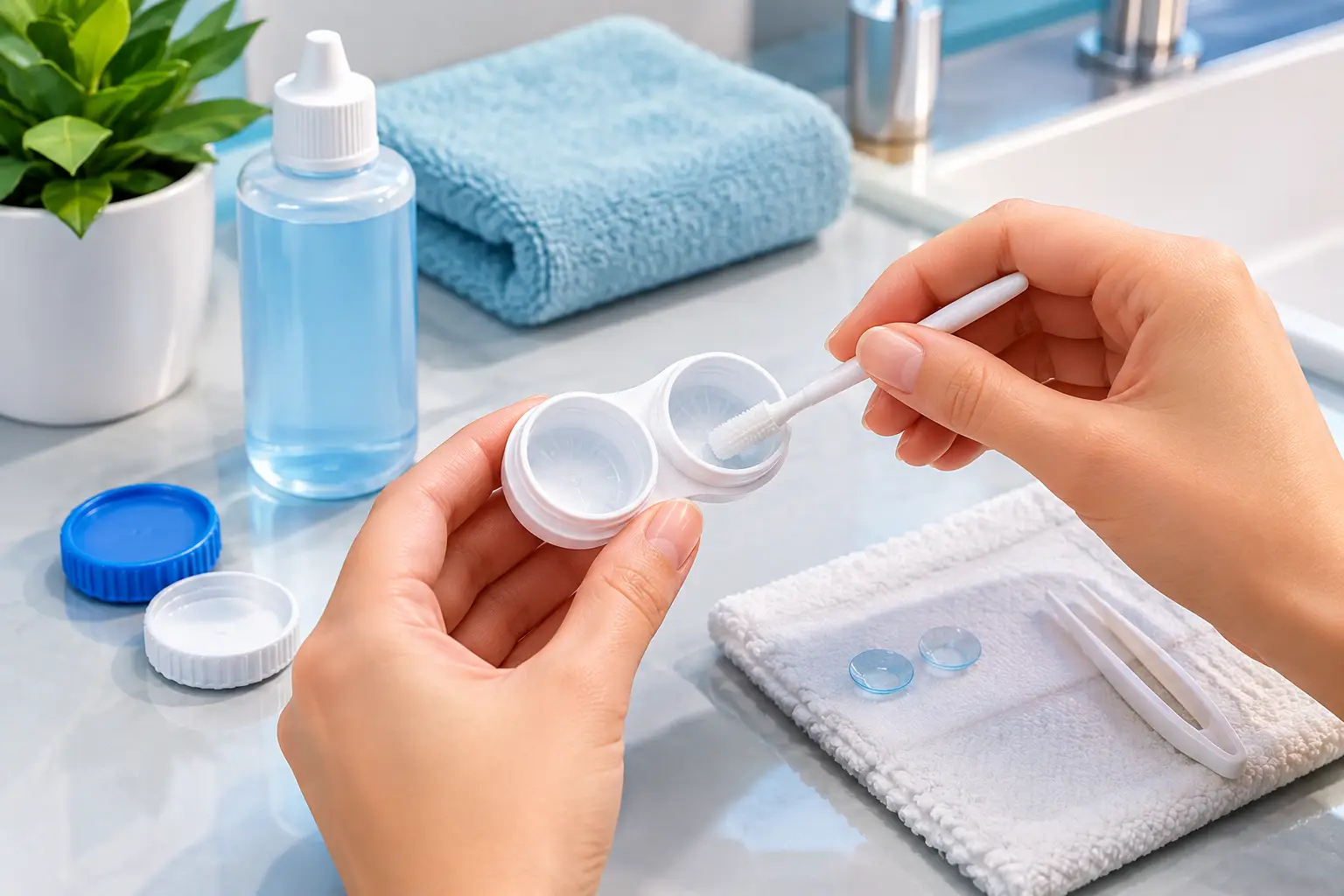
An organized collection should make good habits easier. Before handling lenses, wash and dry your hands thoroughly. Use fresh solution as directed, never top off old solution, and do not use water or saliva on lenses or cases. Keep lenses away from cosmetics, sprays, and countertop residue.
It also helps to keep your lens supplies together. Store the appropriate solution near your organizer so you are not searching for it with a lens already in your hand. If you wear makeup, insert lenses before applying makeup and remove them before taking makeup off. This reduces the chance of transferring product residue to the lenses.
If your eyes become red, painful, unusually sensitive to light, or your vision changes, remove the lenses and contact an eye care professional. Organization can prevent mix-ups, but it does not replace proper lens care or professional advice.
Let Your Collection Work for You
A cosmetic lens collection should make getting ready more enjoyable, not add another layer of uncertainty to your routine. Once each pair has a designated space, a clear label, and a date record, choosing a color becomes simple. You can see what you own, use the right pair with confidence, and avoid wasting money on lenses you forgot you had.
Start with one drawer, one record system, and one promise to label every new pair before the packaging disappears. A few minutes of order now can save you from a lot of avoidable guesswork later.