
A contact lens case can look like every other contact lens case in a drawer. That is exactly how a blue pair gets mistaken for a gray pair, a current prescription gets confused with an older one, or a replacement date slips by unnoticed. Learning how to manage lens inventory turns scattered cases, boxes, and notes into a routine you can trust.
The goal is not to create more work around your lenses. It is to keep the details you already need – prescription, color, purchase date, expiration date, and wear schedule – together with the correct pair. Once every lens has a clear place and record, getting ready becomes simpler and you spend less time second-guessing what is in each case.
Start With a Full Lens Inventory
Before organizing anything, collect every lens-related item you use at home. Check the bathroom counter, medicine cabinet, drawer, vanity, and any bag where a spare case may have landed. Include currently worn lenses, unopened boxes, backup lenses, cosmetic lenses, empty packaging, and written prescription information.
Lay everything out where you can see it. This first step often reveals the real issue: you may own more active pairs than you thought, have two similar shades with different prescriptions, or still be holding onto packaging from lenses you no longer wear.
For each pair, identify whether it is daily, biweekly, monthly, or another replacement schedule. If you cannot confirm what a pair is, do not guess based on its appearance. Check the original packaging or contact your eye care professional before wearing it.
Discard only items according to their instructions and local guidance, but separate anything that is expired, damaged, or no longer part of your current routine. Keeping inactive items mixed in with usable lenses is one of the fastest ways to create confusion later.
Record the Details That Prevent Mistakes
A lens inventory works when the information is practical enough to use every day. You do not need a complicated spreadsheet if a simple written record is easier to maintain. What matters is that each pair can be identified quickly and accurately.
For every active pair, record these details:
- Brand and lens type, such as daily disposable, monthly, prescription, or cosmetic lens
- Prescription information for the right and left eye, including any differences between them
- Color or style name for colored contacts
- Purchase date, opening date when applicable, and expiration date from the packaging
- Replacement schedule and the date the pair should be discarded or replaced
The right and left eye deserve special attention. A small prescription difference can be easy to overlook when cases look alike. Labeling each side clearly helps prevent a rushed morning from turning into a preventable mix-up.
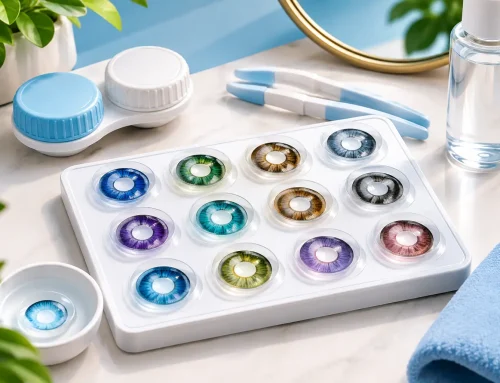
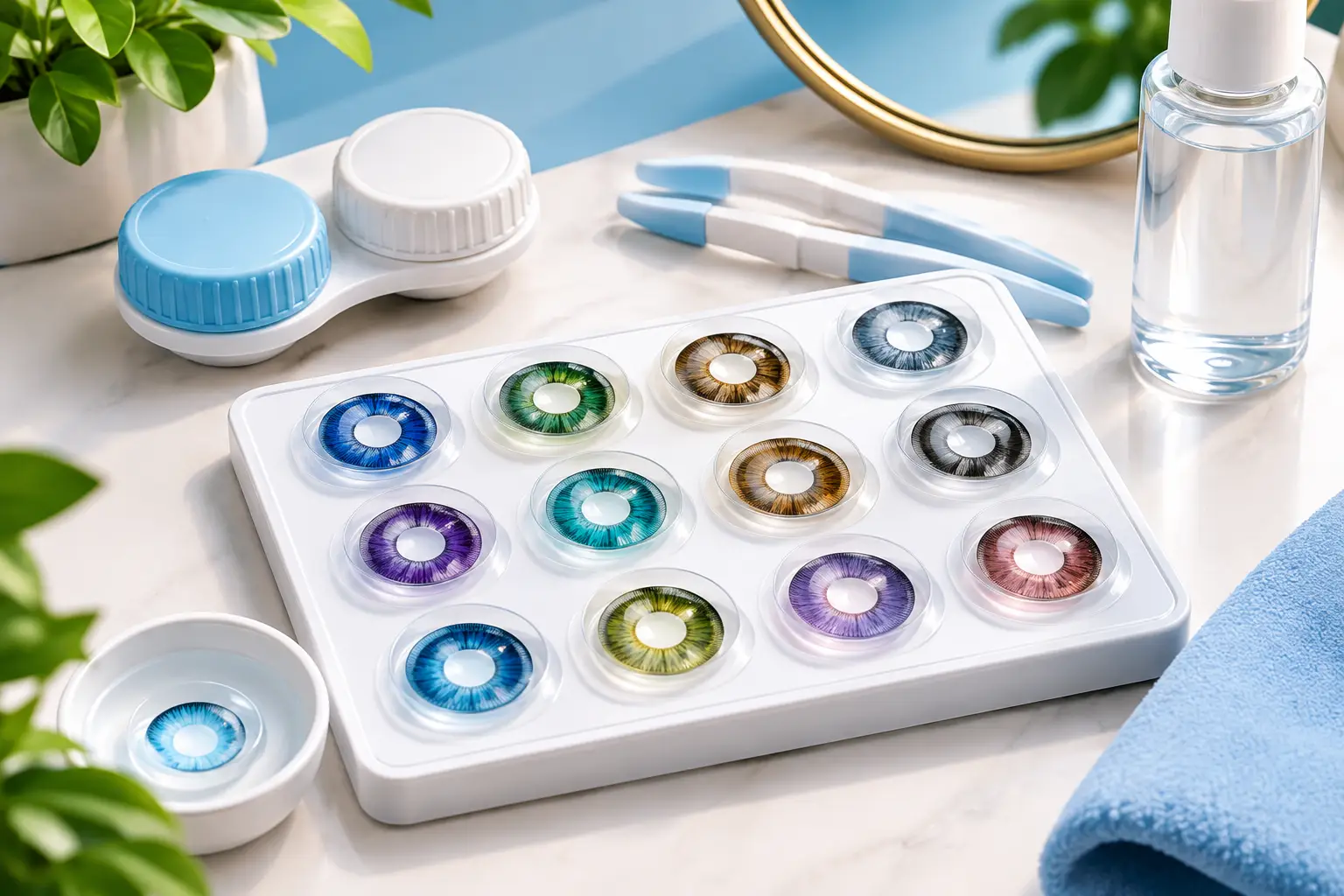
If you use colored contacts, write down the exact color name rather than relying on memory. “Brown” may sound clear until you have warm brown, hazel brown, and a natural brown pair stored together. The package name gives you a more reliable reference, especially when shades look different under bathroom lighting.
Keep purchase information, too. It helps you see which lenses are still in supply, what you need to reorder, and which product worked best for you. This is useful when you rotate between lenses for vision correction and cosmetic use.
Give Every Pair One Permanent Home
A record alone cannot fix a drawer full of loose cases. The physical storage system should match your inventory system, so the details and the lenses stay connected.
Choose one dedicated location for all active lens cases. It can be a shelf, drawer section, or countertop area that stays clean and dry. The key is consistency. When a case is moved from place to place, it is much easier to lose track of it or put it back in the wrong spot.
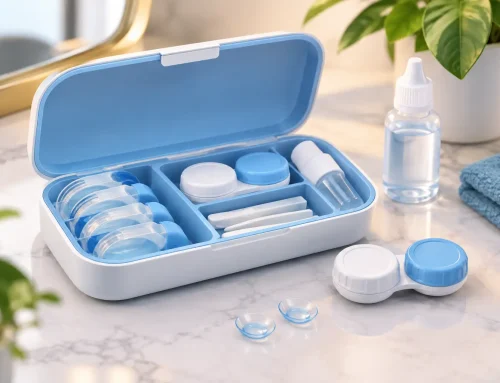
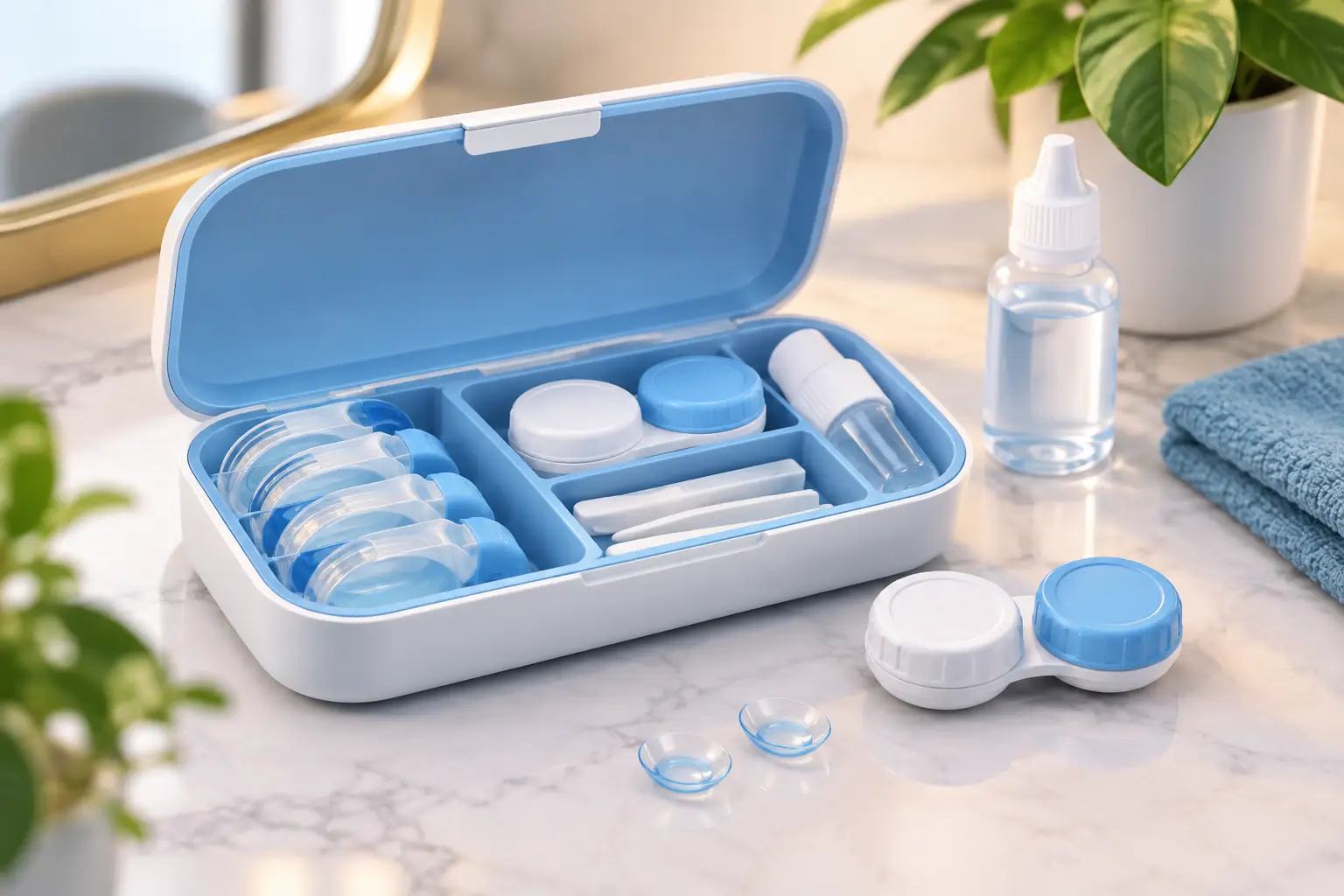
Store each pair in its own assigned position. Keep right and left lenses together, but make the pair distinct from every other pair. A purpose-built organizer such as the EYEBOX® can keep lens cases arranged while preserving the prescription, color, expiration date, and purchase details that belong to each pair.
Avoid relying on unmarked containers or a pile of contact lens boxes. Original boxes are useful for reference, but they are easy to discard, and they do not always stay with the case after opening. Your storage system should still make sense after the packaging is gone.
How to Manage Lens Inventory by Schedule
The best organization system accounts for time, not just location. A case may be properly labeled today but still become a problem if its replacement date is not visible when you need it.
For reusable lenses, record the day you opened the pair and calculate the replacement date based on the schedule prescribed for that lens. For example, a monthly lens should not remain in rotation simply because it still feels comfortable. Follow the replacement schedule from your eye care professional and the lens manufacturer.
Daily disposables need a different approach. Rather than tracking an opening date, track how many unopened lenses remain and the expiration date on the boxes. Keep your newest supply behind the older supply so you use older unopened boxes first, provided they are within date and their packaging is intact.
Set one recurring inventory check each month. It can take less than 10 minutes. Look for lenses nearing expiration, cases that need replacement, supplies running low, or records that no longer match what you actually use. This small check prevents the larger cleanup that happens when months of details pile up.
A calendar reminder can help, but it should support your system rather than become the system. Notifications are easy to dismiss. A visible label or record beside the lens case gives you a second reminder at the moment you are deciding what to wear.
Keep Lens Care Separate From Lens Tracking
Organization makes lens care easier, but it does not replace proper lens hygiene. Keep your inventory area clean, and follow the care instructions provided by your eye care professional and lens manufacturer.
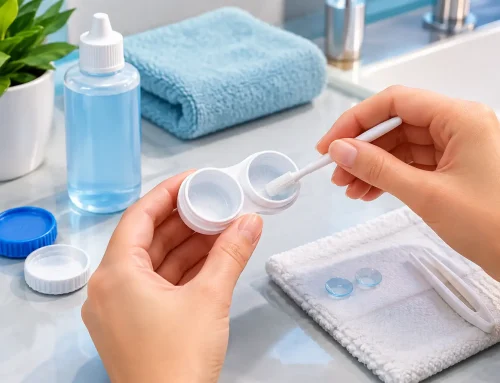
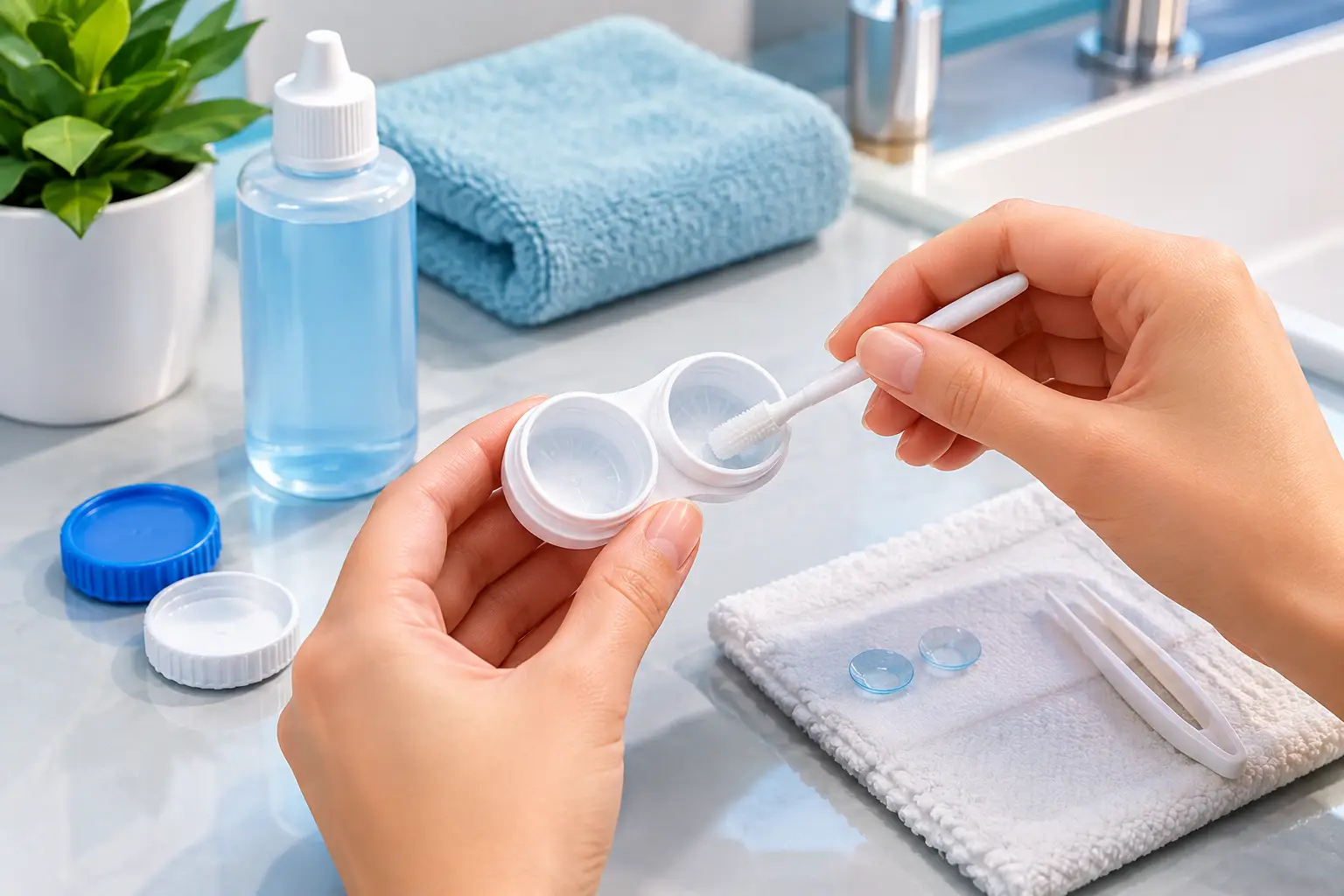
For reusable lenses, use fresh recommended solution as directed, keep cases clean, and replace cases on the schedule you have been given. Do not use water or saliva to rinse lenses, and do not top off old solution with new solution. These habits are separate from inventory management, yet they belong in the same routine because a well-organized setup makes shortcuts easier to spot.
It also helps to keep only the products you actively use near your lens storage. An overloaded counter invites clutter, and clutter makes it harder to see whether you picked up the correct case or returned it to its assigned place.
Make Updates Part of the Routine
Lens inventory only stays useful if it changes when your lens routine changes. Update your record immediately when you open a new pair, finish a box, change your prescription, or add a new color. Waiting until later is how small details disappear.
A practical rule is simple: no new lens enters storage without a record, and no lens case is put away without returning to its labeled spot. This takes seconds once the system is set up.
If someone shares your bathroom or storage space, keep your lenses clearly separate. Similar cases can be confusing even when the other person uses a different brand or prescription. Your lens inventory should be understandable at a glance, without requiring anyone to remember which case was moved last.
Know When to Reset Your System
Even a good setup needs an occasional reset. Start fresh when you receive a new prescription, switch brands, begin wearing colored contacts more often, or notice that your current storage is becoming crowded. A reset is also helpful after a move, a major bathroom cleanout, or a period when you stopped wearing lenses regularly.
Do not wait for a mix-up to prove that the system needs attention. If you find yourself checking multiple cases before choosing one, searching for old packaging, or wondering whether a pair is still current, your inventory needs clearer labels or a better home.
The most useful lens organization routine is the one you can follow on an ordinary busy morning. Give each pair a place, keep its details close, and make one small update whenever something changes. That kind of clarity protects your time, reduces avoidable confusion, and lets your lens routine feel like the easy part of the day.