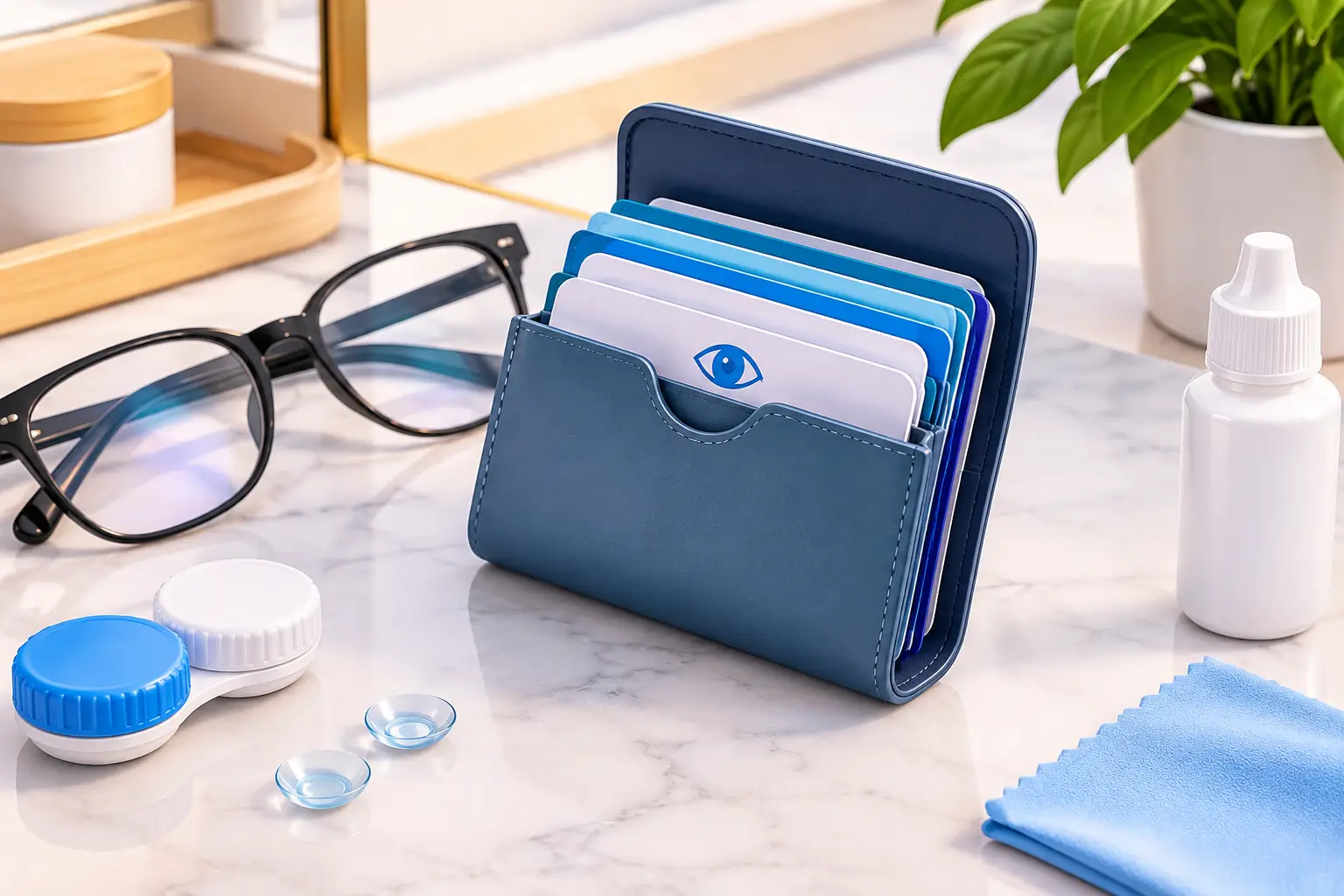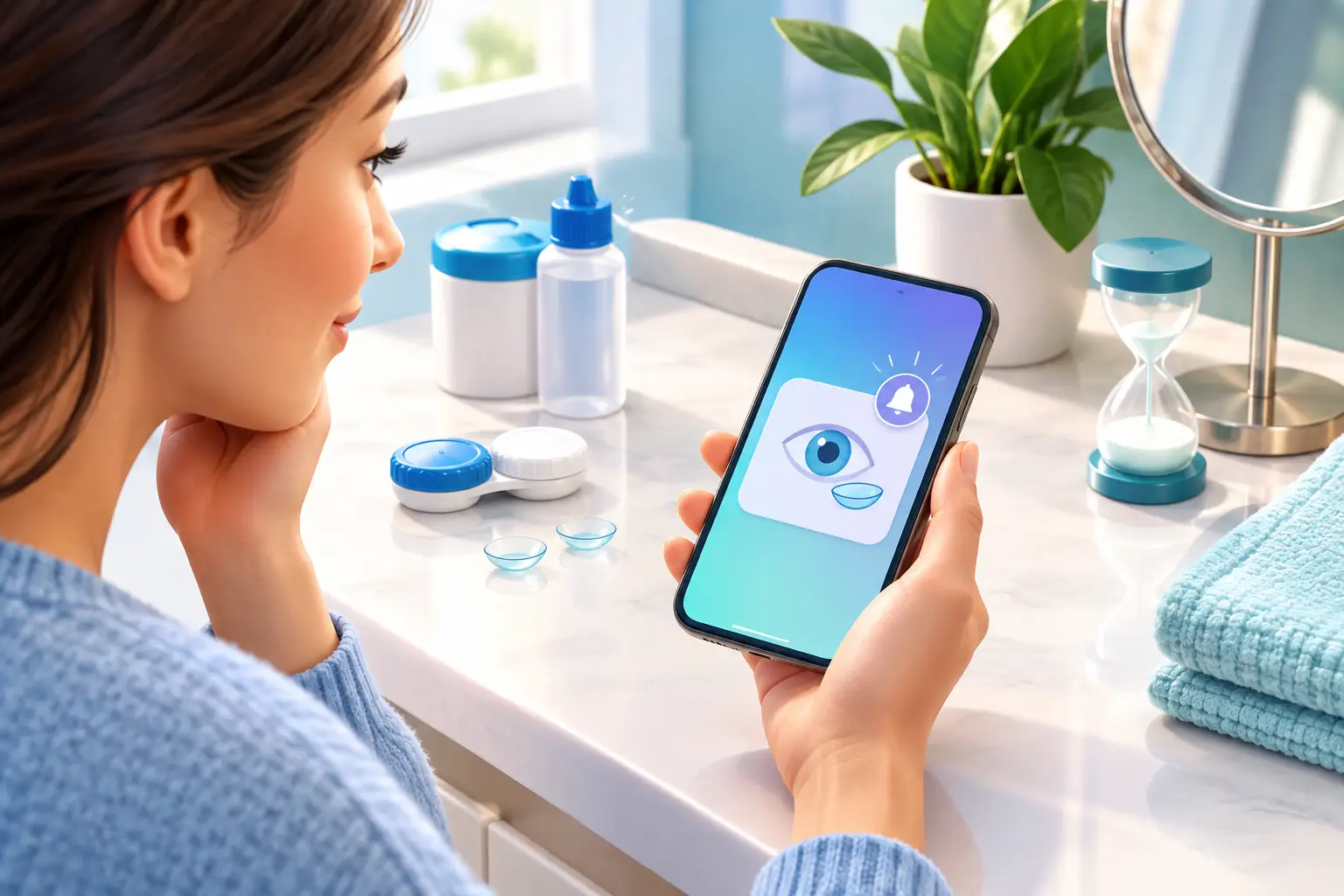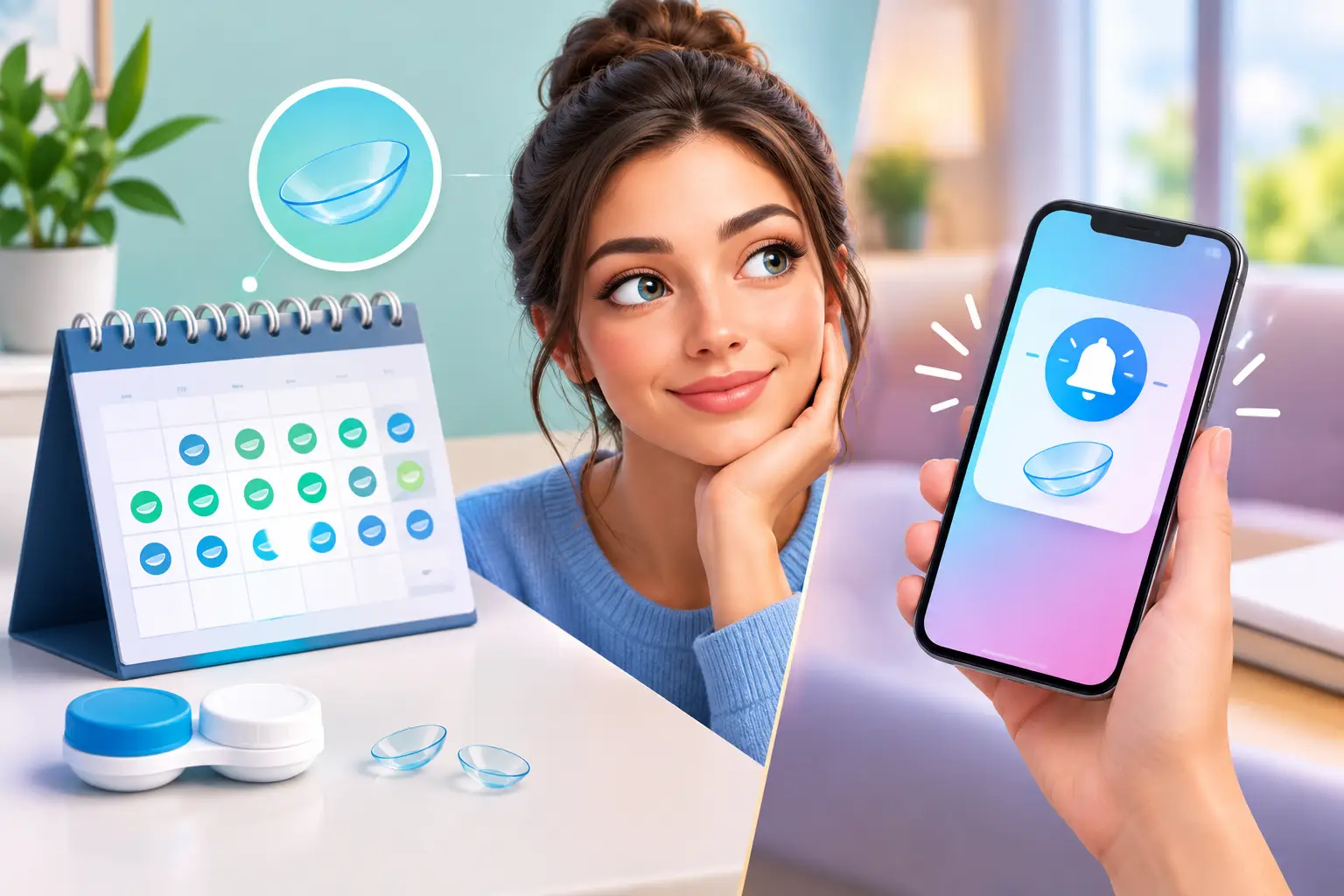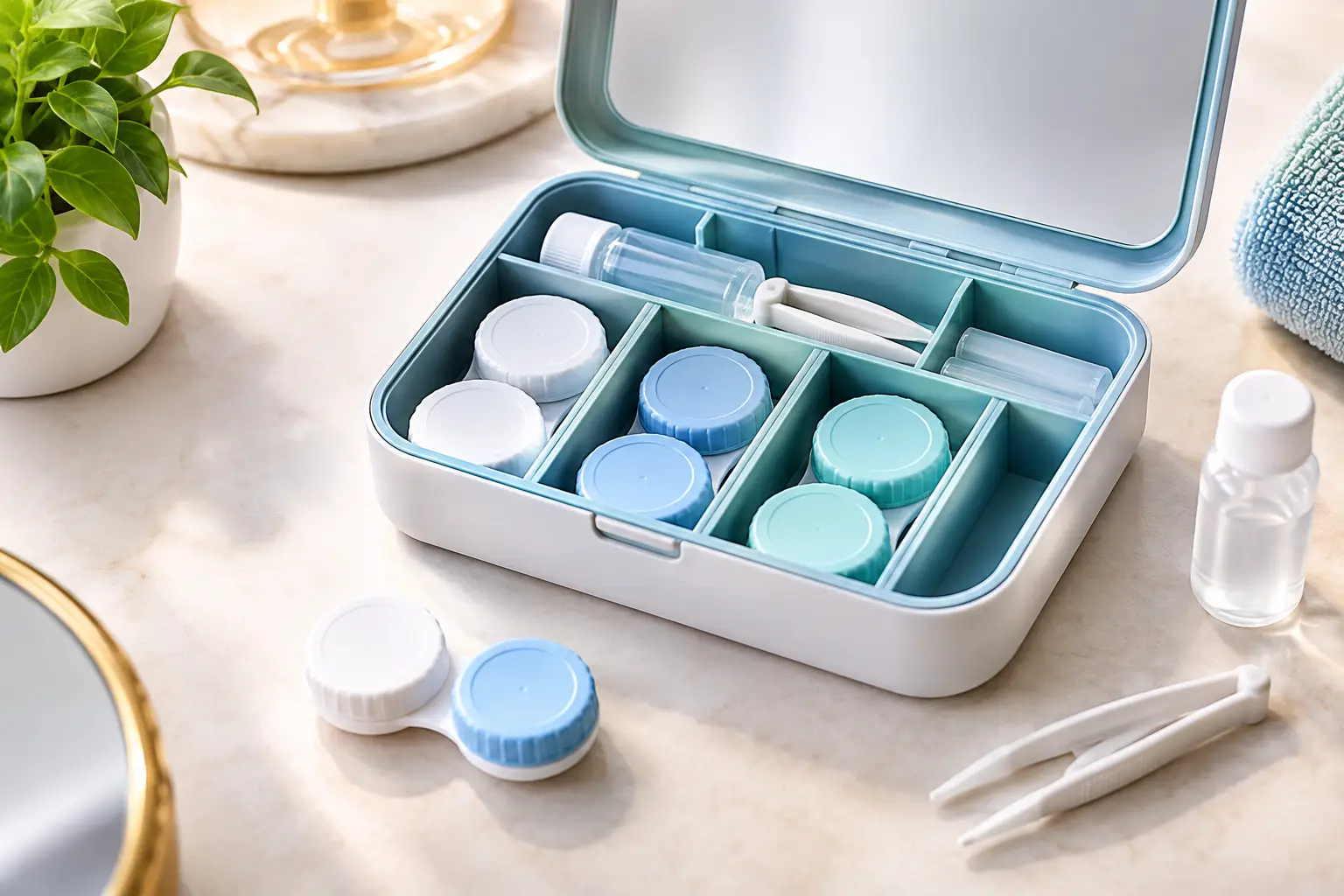
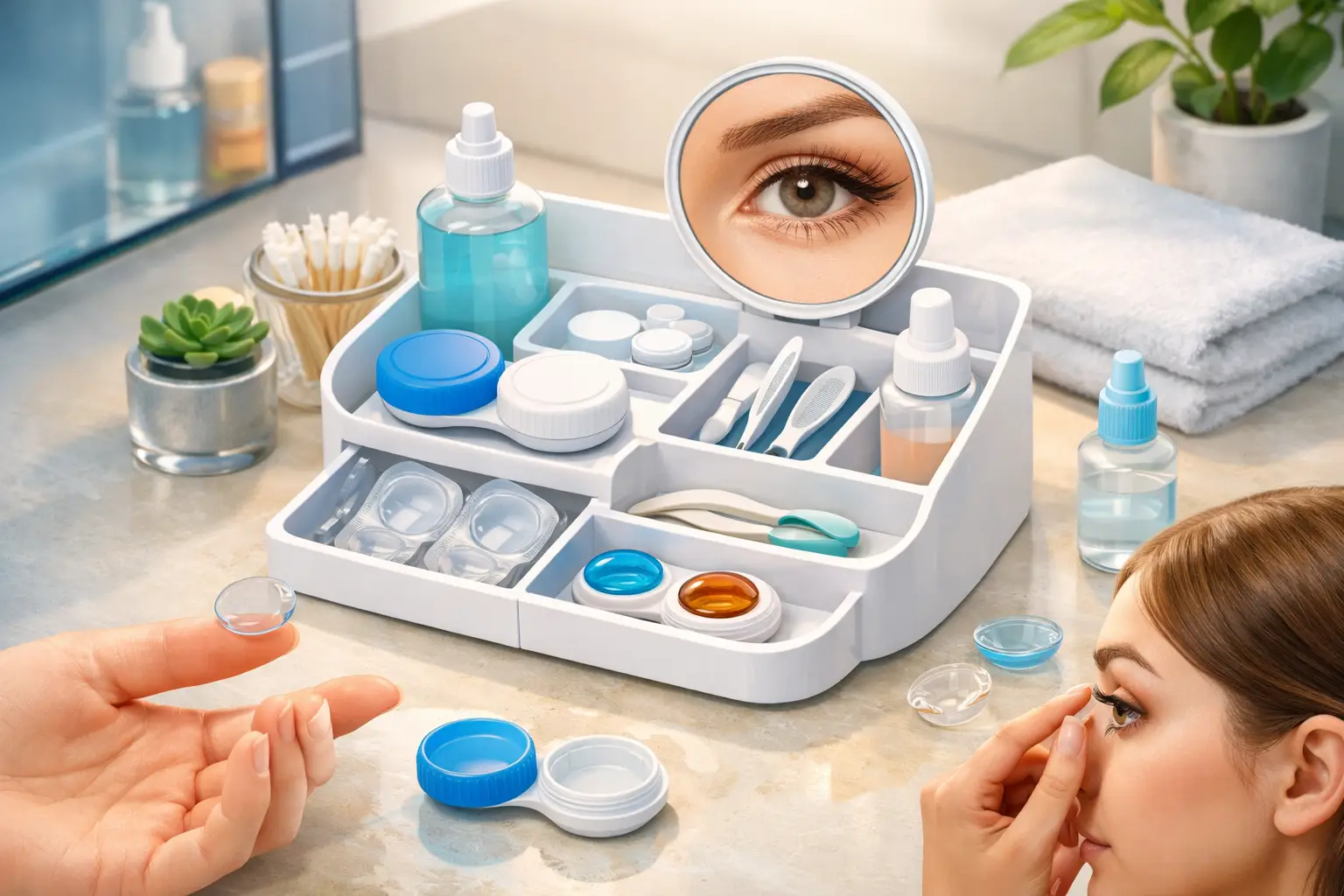
A contact lens accessories organizer solves a small problem that can create a lot of daily frustration: the moment you look at several identical lens cases and cannot remember which pair is which. Maybe one holds your current prescription lenses, another holds colored lenses for weekends, and a third is a backup pair. The cases look the same, the packaging is long gone, and the expiration date is somewhere you meant to write down.
Contact lenses are part of a routine, but they also come with details worth keeping straight. Prescription, color, purchase date, replacement schedule, and expiration date all matter. A purposeful organizer gives those details a home alongside the lens cases, so your bathroom drawer or medicine cabinet stops becoming a guessing game.
The Problem With Storing Lens Cases Alone
A standard lens case is designed to hold lenses in solution. It does not tell you what lenses are inside, when they were purchased, or whether they are still within their recommended use period. That is manageable when you wear one pair and replace it on a simple schedule. It becomes much harder when you rotate between multiple pairs.
Many people rely on memory, a photo of the box, a note in their phone, or the original packaging. Each option can work for a while. But packaging gets discarded during cleanup, phone notes get buried, and memory is not a dependable labeling system when several cases have the same shape and color.
The result is familiar: opening cases to check, second-guessing a pair before putting it in, or letting lenses sit unused because you are no longer sure of their details. An organizer turns scattered information into a visible system.
What a Contact Lens Accessories Organizer Should Keep Together
The best organization system does more than contain supplies. It helps you identify each pair quickly and preserve the information you need to use it confidently. For people who wear prescription lenses, colored contacts, or both, that means connecting each case to its specific details.
A useful setup should make room for the lens case and a clear record of the prescription, color, purchase information, and expiration date. Color-coded identification is especially helpful when you have more than one pair of cosmetic lenses or multiple similar prescriptions. Instead of relying on the case itself to tell the story, the organizer gives every pair a defined place and an easy-to-read identity.
This distinction matters. A drawer full of contact lens accessories may look neat at first, but neat is not always organized. If you still have to search for a box, scroll through old orders, or guess which case belongs to which lenses, the system is not doing enough.
Prescription details deserve a permanent spot
A prescription can be easy to confuse when you have lenses with different powers, different replacement schedules, or separate pairs for different needs. Keeping the lens information with the corresponding case reduces the chance of mixing up similar pairs.
This is not just about being extra organized. It is about removing an unnecessary decision from your routine. When the details are visible, you spend less time asking, “Are these the right ones?”
Colored lenses need clear identification too
Colored contacts can be particularly easy to mix up. Shades can look similar in a case, especially under bathroom lighting, and the original label may be the only place where the color name was recorded.
An organization system lets you label the pair in a way that makes sense to you. Whether you use a color name, a short description, or the information from the original package, the goal is simple: know what you are reaching for before you open the case.
How to Set Up Your Lens Organization System
A good system should be quick to maintain. If keeping it updated feels like a project, it will not last. Start by gathering every lens case, unopened box, spare pair, and piece of lens information you currently have.
First, match each lens case with its correct prescription and color details. If you have original packaging, use it to confirm the information. If you do not, check your order history or prescription records before labeling anything. It is better to leave a pair unconfirmed temporarily than to assign it the wrong information.
Next, record the purchase date and the expiration date shown on the lens packaging. These are not the same thing. The purchase date helps you remember when a pair entered your rotation, while the package expiration date tells you how long unopened lenses remain valid when stored according to their instructions. For opened lenses, follow the replacement schedule and care guidance provided by your eye care professional and the lens manufacturer.
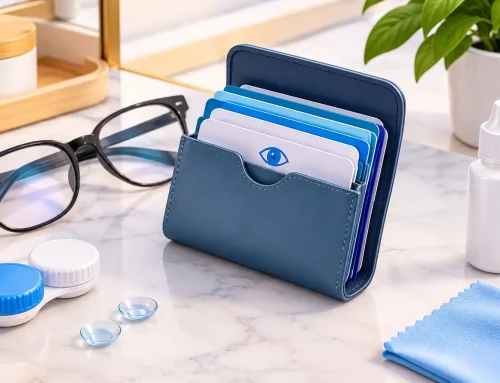
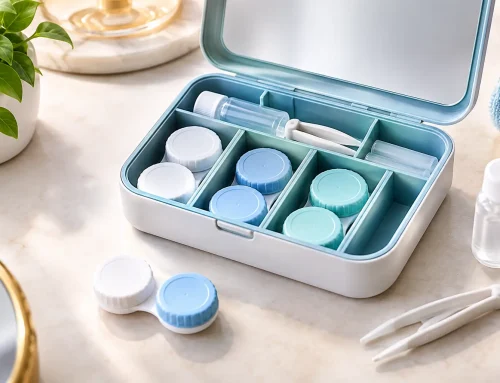
Then assign every pair a dedicated location. The EYEBOX® is designed for exactly this kind of at-home organization, bringing lens cases and their identifying information into one compact, easy-to-check system. Once each pair has a place, return it to that same place every time.
The final step is simple: update the record when something changes. If you open a new pair, replace a lens case, or finish a set of colored lenses, take a moment to adjust your organizer. That small habit keeps the system accurate.
A Better Routine Starts With Fewer Questions
The main benefit of a contact lens accessories organizer is not that it gives you another container. It gives you fewer loose ends. You no longer need to remember which case contains your backup lenses, where you saved the color name of a cosmetic pair, or whether a box was purchased months ago or much longer ago.
That clarity can make morning and evening routines feel calmer. Instead of handling each case as an isolated item, you see it as part of a complete record. You know what it is, why you have it, and what information goes with it.
For contact lens wearers who only keep one pair at a time, a detailed organizer may feel unnecessary. A labeled case and a simple reminder could be enough. But as soon as you add backup lenses, different prescriptions, colored contacts, or several replacement schedules, the value changes quickly. The more pairs you manage, the more useful a dedicated system becomes.
Keep Organization Separate From Lens Care
An organizer can make lens information easier to track, but it does not replace proper lens care. Always follow the instructions from your eye care professional and lens manufacturer for cleaning, disinfecting, storing, and replacing your lenses and cases. Use fresh solution as directed, keep hands clean before handling lenses, and do not use a lens pair if you are unsure about its condition or identity.
Think of organization as support for your care routine. When you can clearly identify a pair and see its relevant details, you are better positioned to follow the plan you were given. When the information is missing, it is easier to make assumptions that are not worth the risk.
Small Habits That Keep the System Useful
The most effective organization systems stay visible and simple. Place your lens organizer where you normally handle your lenses at home, rather than tucking it behind unrelated products. Keep it away from clutter that could hide labels or separate cases from their records.
It also helps to build one quick check into your routine. When you open a new pair, add the details before you throw away the box. When you replace a pair, remove the old record at the same time. Those two habits prevent most of the confusion that builds up over time.
Your lenses may be small, but the information attached to them is not. Giving every pair a clear home means less searching, less second-guessing, and a routine that feels easier to manage every day.