
That tiny printed label from your contact lens box is easy to toss – until you need to reorder lenses, identify a color, or check whether a pair is still within its recommended replacement schedule. Contact lens prescription storage gives those details a permanent home instead of leaving them scattered across empty boxes, pharmacy bags, photos, and memory.
For people who wear more than one type of lens, the problem grows quickly. A clear daily lens case can look exactly like another. A cosmetic lens color may be hard to remember by name. And a prescription that felt easy to recall six months ago can become a guessing game when it is time to buy again.
Why Contact Lens Prescription Storage Matters
A contact lens prescription includes more than a power number. Depending on your lenses, you may need to keep track of the brand, base curve, diameter, cylinder, axis, add power, color, and replacement schedule. You may also want the purchase date, expiration date, and the date you first opened a pair.
When that information is stored only on disposable packaging, it tends to disappear at the worst possible time. You may find a lens case in the bathroom drawer but have no idea whether it holds your everyday prescription, a backup pair, or colored contacts for a specific look. The case is still there. The context is gone.
Good organization removes that uncertainty. Instead of searching through old boxes or trying to match a case to a blurry phone photo, you can see what each pair is, when it was purchased, and what details belong with it.
This is especially useful if you:
- Wear different prescriptions for each eye
- Keep daily, weekly, monthly, or specialty lenses at home
- Use colored contacts alongside vision-correction lenses
- Buy backup lenses before the current supply runs out
- Share a bathroom or drawer where small items can get mixed up
The goal is not to make your routine more complicated. It is to stop relying on memory for information that should be clearly recorded.
What to Keep With Each Lens Case
The most useful storage system connects the physical lens case with the information that identifies it. Keeping a pile of cases in one place is better than losing them, but it does not solve the mix-up problem if every case looks the same.
Start with the details you will actually need again. For each pair, record the prescription information exactly as it appears on the original box or prescription. Include the lens brand and product line, since different brands can have different fit specifications even when the power is the same.
For colored contacts, add the exact color name or shade. “Brown contacts” may not be enough if you own several similar colors, such as hazel brown, honey brown, or dark brown. A written color label makes it easier to choose the pair you meant to wear and reorder the same one later.
Dates deserve their own space. There is a difference between the manufacturer’s expiration date, the date you bought the lenses, and the date you opened a reusable pair. Recording all three when relevant gives you a clearer view of what you have on hand. It also helps prevent the familiar moment of finding a lens product and wondering whether it is still usable.
Finally, note which eye the pair belongs to. Right and left prescriptions are not always identical. A simple label is far more reliable than trying to remember which side you used last.
Keep the Original Box Until the Details Are Recorded
Lens packaging is a useful reference, but it is not a long-term organization method. Once you have copied the details into a dedicated system, you can discard the box without losing the information that came with it.
This small habit makes reordering less stressful. You will have the information ready before you open a retailer’s site, call your eye care professional, or compare your remaining supply.
Build a Simple Contact Lens Prescription Storage Routine
The best system is one you can maintain in under a minute when a new pair arrives. Complicated spreadsheets and loose note cards may work for a while, but they often become another thing to update later. A simple physical setup is easier to use at the point where you handle your lenses.
When you bring home a new lens supply, place the lens case in its assigned space and record the details from the package right away. Do not wait until the box is empty or the first pair is opened. That delay is where details get lost.
Then use the same check-in routine each time you replace a pair. Update the opened date for reusable lenses, check the manufacturer’s expiration date, and make sure the case is returned to its labeled location. You are not creating a major chore. You are creating a reliable reset point for a recurring personal care task.
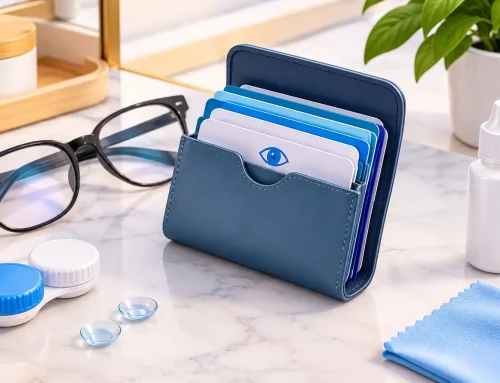
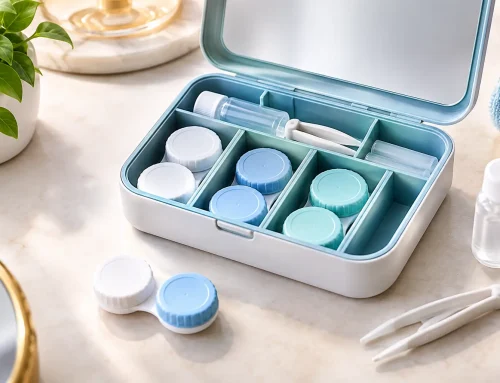
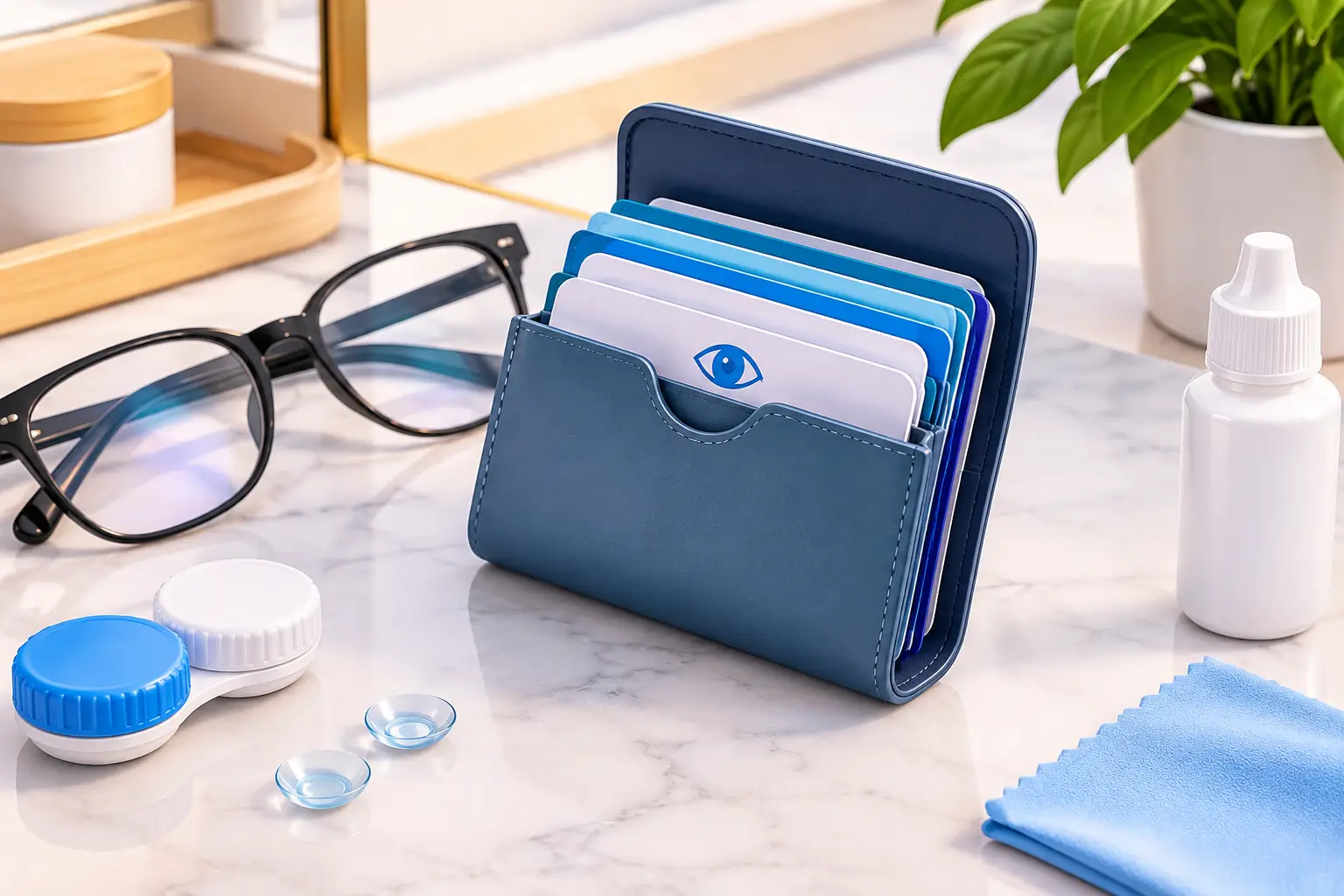
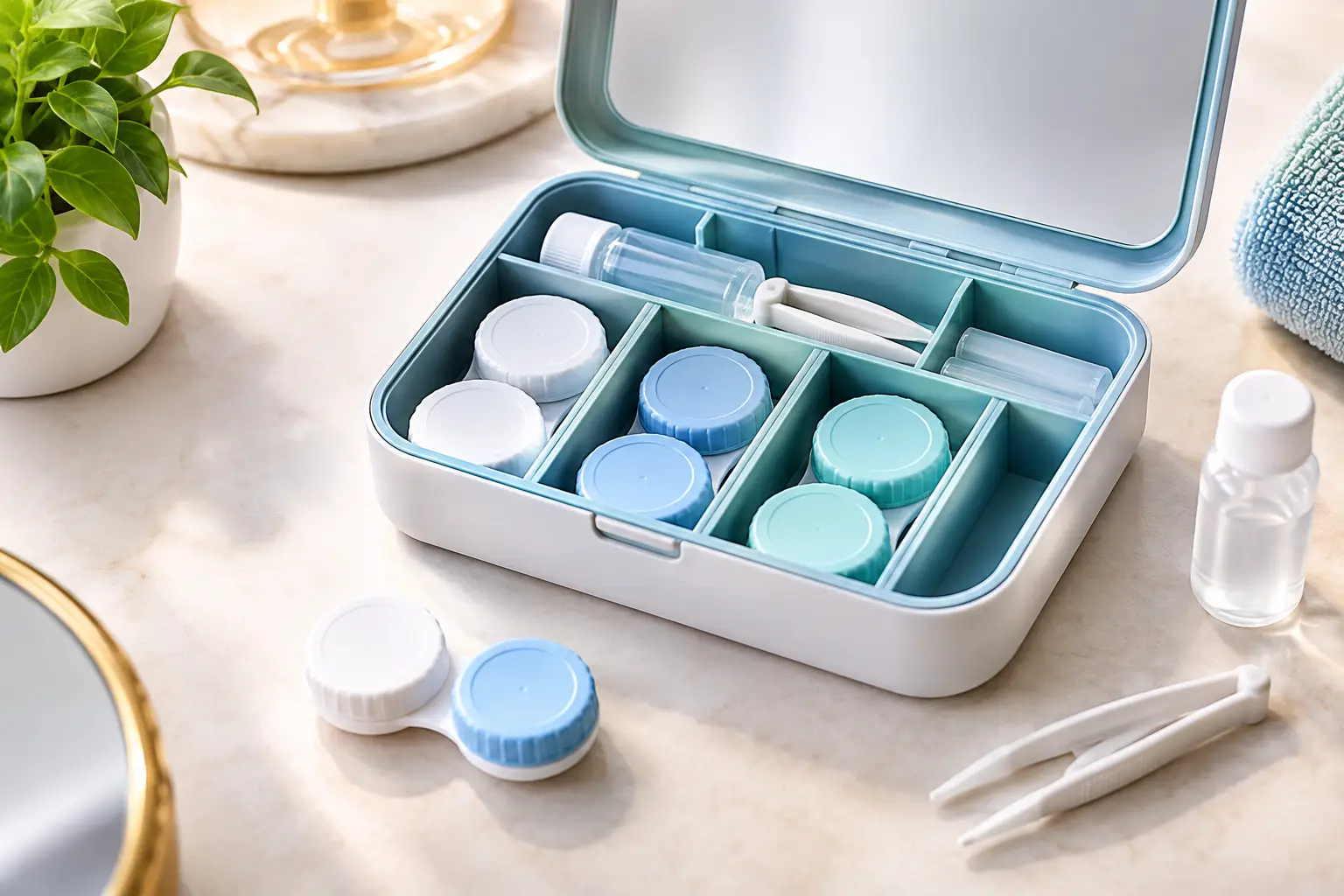
A purpose-built organizer such as EYEBOX® keeps lens cases and their identifying details together in one designated place. Its color-coded organization helps distinguish multiple pairs at a glance, which is particularly helpful when your prescription lenses and cosmetic lenses use similar-looking cases.
Avoid the Storage Habits That Create Confusion
Many contact lens problems begin with small, familiar shortcuts. A case gets tucked behind skincare products. An empty box stays in a drawer “just in case.” A new pair is opened without noting the date. None of these actions seems serious alone, but together they make your lens routine harder to manage.
Avoid storing loose cases without labels. If you cannot identify a case instantly, it is not fully organized. Also avoid relying on packaging alone. Boxes are easily thrown away, separated from their contents, or confused with another order.
Phone photos can be a helpful backup, but they are not always practical as the primary method. You may have dozens of similar photos, an unreadable label, or no easy way to connect the image to the case in front of you. Physical storage paired with a clear written record solves both sides of the problem.
It also helps to avoid placing contact lens supplies wherever there happens to be space. A dedicated location makes your routine more consistent. When every case has a known spot, you spend less time looking and less time second-guessing.
Storage Organization Is Not Lens Care
Keeping prescription details organized supports better decisions, but it does not replace proper contact lens care. Follow the instructions from your eye care professional and the lens manufacturer for cleaning, disinfecting, replacing, and wearing your lenses.
Your organizer should hold the information and keep lens cases easy to identify. It should not change the hygiene steps required for your specific lens type. If a lens feels uncomfortable, looks damaged, or has been used beyond its recommended schedule, do not let a neat storage system give you false confidence. Organization works best alongside the care instructions you already follow.
A Better Way to Manage Multiple Lens Types
The more lens options you own, the more valuable clear records become. Someone with one standard prescription may only need basic tracking. Someone who rotates between everyday lenses, backup lenses, colored lenses, and different replacement schedules needs a more deliberate system.
There is no need to over-organize every detail. Focus on the information that prevents mistakes: what the lenses are, which eye they are for, what color they are if applicable, when they were purchased or opened, and when they expire. That is enough to turn a cluttered drawer into a routine you can trust.
Give each new lens pair a place and a record before the original packaging disappears. The next time you need to find, replace, or reorder your lenses, the answer will be right where it belongs.