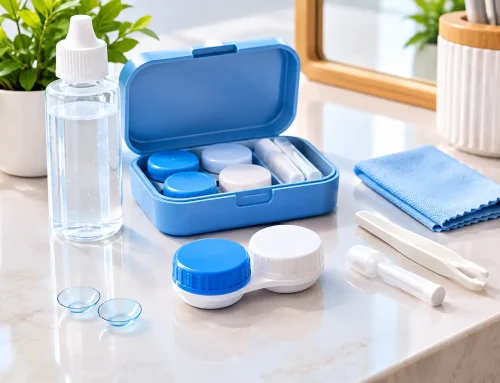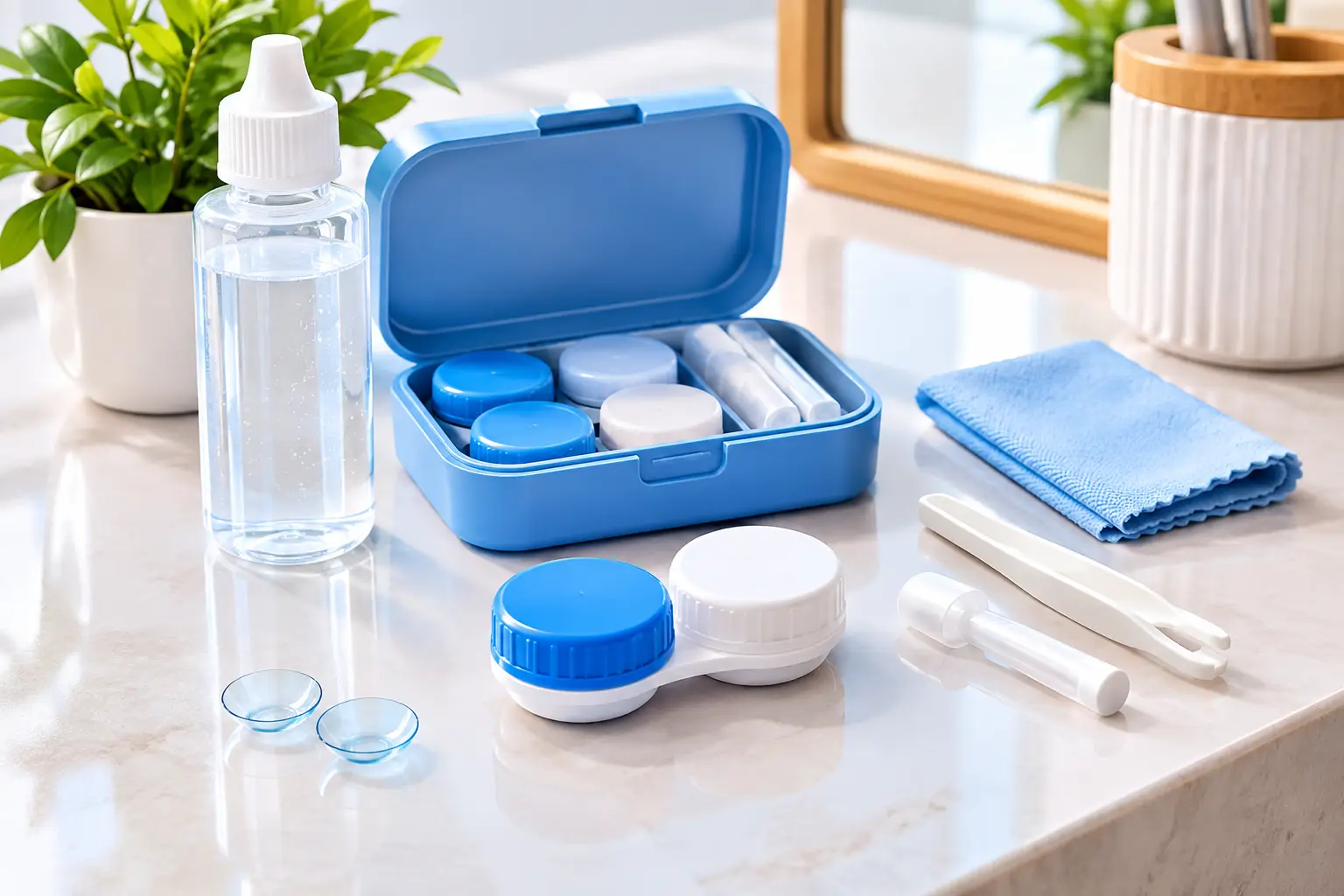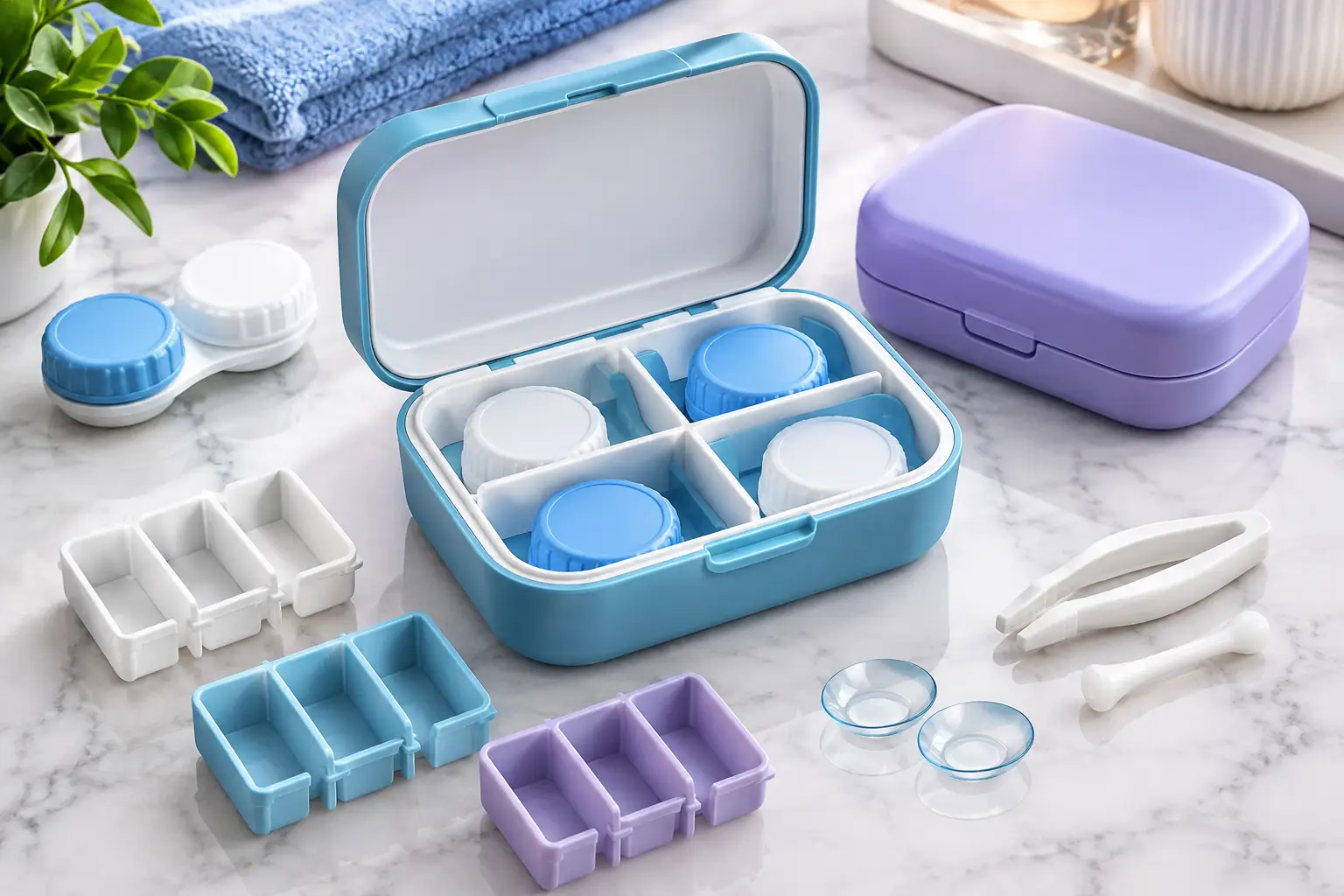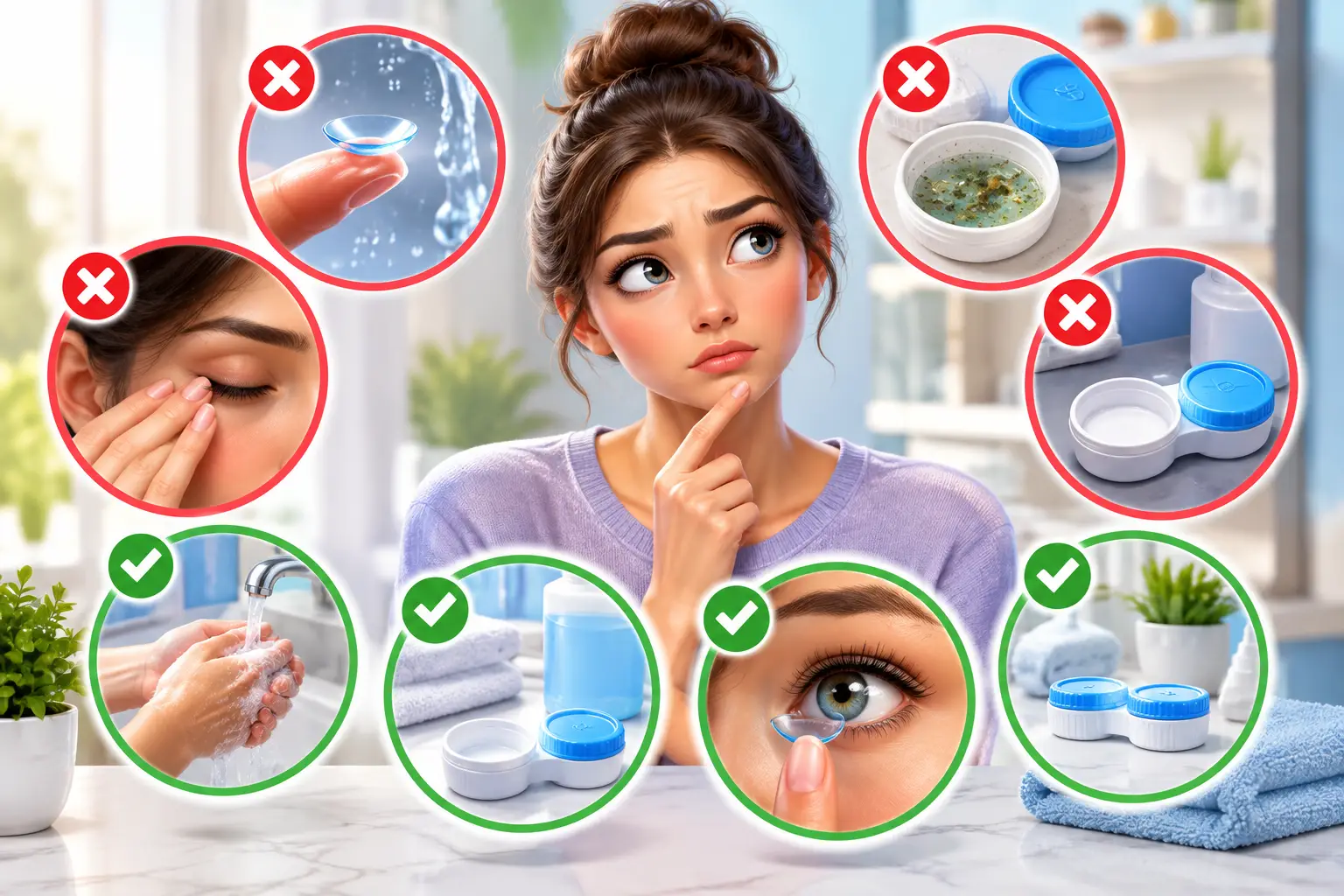
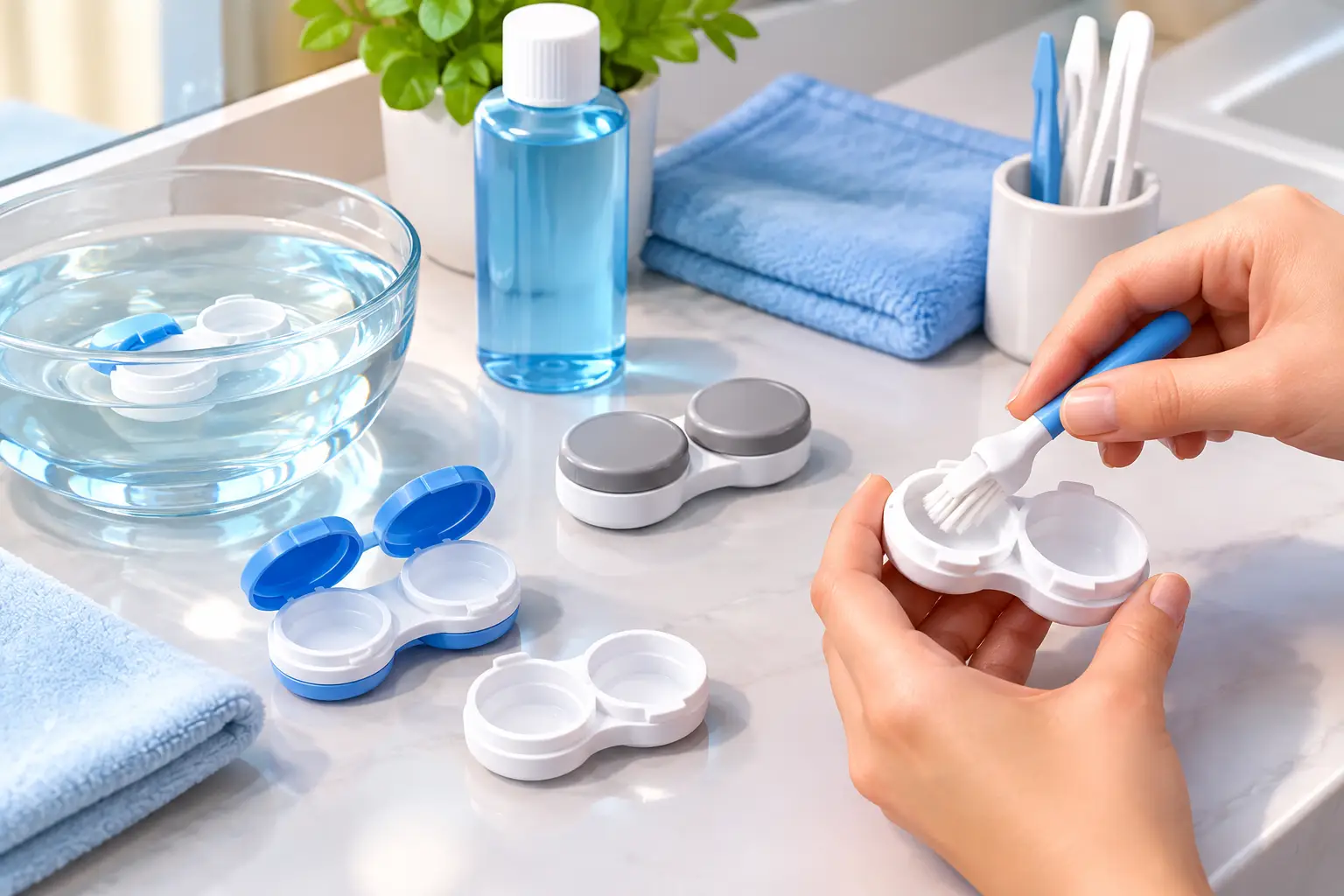
A contact lens case can look clean long after it has become part of the problem. Solution residue, bathroom moisture, makeup dust, and simple mix-ups can turn a small daily routine into an avoidable headache. Knowing how to sanitize lens holders helps protect your lenses, but it also gives you a better system for keeping the right pair, prescription, color, and replacement schedule together.
The first rule is simple: treat the holder that touches your contacts as part of your lens care routine, not as a container you clean whenever you remember. A quick, consistent habit is easier than trying to rescue a sticky, stained, or questionable case later.
First, Know What Needs Cleaning
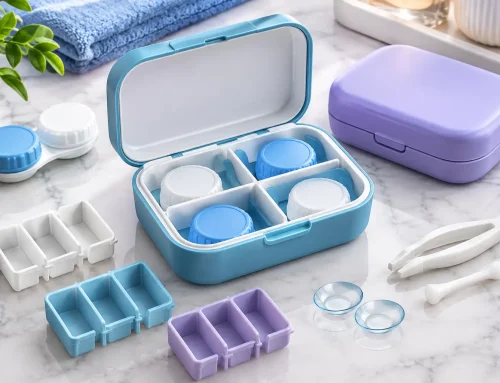
“Lens holder” can mean two different things. Your contact lens case is the small container with right and left wells that holds lenses in solution. A lens organizer or storage tray is the larger item that keeps multiple cases, boxes, and lens details in one place.
These items need different care. The lens case itself must be cleaned only according to the directions for your contact lens solution and your eye care provider’s recommendations. The outer organizer can usually be wiped or washed separately, as long as it is completely dry before clean lens cases go back inside.
This distinction matters. You do not want household cleaners, tap water, or moisture from a storage area getting into the case that holds your lenses.
How to Sanitize Lens Holders Safely
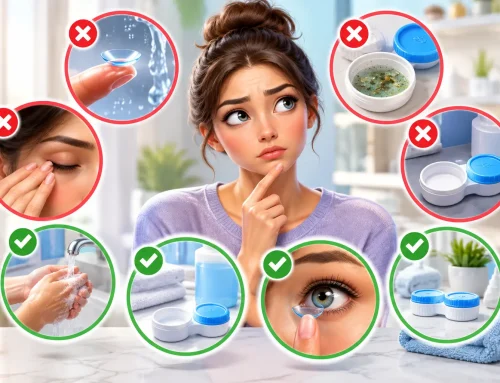
For most contact lens wearers, the safest approach is not to improvise with harsh disinfectants. Use fresh contact lens solution as directed on its label. “Topping off” yesterday’s solution with a little more is not cleaning. It leaves old solution and potential buildup behind.
Start after you put your lenses in. Empty the old solution from each side of the case. Do not pour it out and reuse it later. Then use fresh solution to rinse the inside of both wells and the caps, following the rub-and-rinse instructions for your specific solution if they apply.
Next, leave the case open to air-dry. Place it upside down on a clean, lint-free surface where it will not collect splashes or dust. Closing a damp case can trap moisture and make it harder for the case to dry fully.
Before storing lenses again, refill each well with fresh solution. Never use tap water, bottled water, saliva, or homemade saline. Water can carry microorganisms that are unsafe for contact lens care, even when it looks perfectly clear.
Your supplies can stay simple:
- Fresh contact lens solution approved for your lens type
- A clean, dry, lint-free surface for air-drying
- A clean cloth for wiping the outside of an organizer
- A replacement lens case on hand
If your eye care provider has given you different instructions, follow those first. Lens materials, solution systems, and prescribed care routines can vary.
What Not to Use on Contact Lens Cases
Alcohol, bleach, hydrogen peroxide from a household bottle, dish soap, and disinfecting wipes are not interchangeable with contact lens care products. They can leave residue, damage the case, or create a risk if residue reaches your eyes.
Hydrogen peroxide lens systems are a separate category. If you use one, follow the system’s directions exactly and use its designated case. Do not substitute a standard lens case, and do not use peroxide solution unless it has been properly neutralized according to the product instructions.
A case that smells odd, feels slimy, has visible cracks, or will not come clean should be replaced, not scrubbed harder.
Clean Your Lens Organizer Without Contaminating Cases
An organizer does not touch your lenses directly, but it still collects dust, powder, hair, and bathroom residue. Cleaning it regularly keeps those messes from transferring to the outside of your lens cases and cluttering your routine.
First, remove every lens case and set it on a clean, dry surface. Check that each cap is closed tightly. Wipe the organizer with a slightly damp cloth and mild soap if the material allows it. Then wipe again with a clean damp cloth to remove soap residue and dry it thoroughly.
Do not place cases back into a wet organizer. Moisture is the enemy of an orderly storage space, especially in a bathroom. Give the organizer time to dry completely, including corners, dividers, and label areas.
This is also the right moment to reset your information. Match every case to its lens box or written details: prescription, lens color, expiration date, purchase date, and replacement schedule. When several nearly identical cases are sitting together, this small check prevents the kind of mix-up that is easy to make when you are rushing in the morning.
An organization system such as EYEBOX can help keep these details next to each case, rather than on discarded packaging or in a note you cannot find when you need it.
Set a Cleaning Schedule You Will Actually Follow
Consistency matters more than an elaborate routine. Clean and air-dry your contact lens case after each use, using fresh solution and the instructions that came with it. Wipe out the organizer whenever you notice dust, spilled solution, makeup residue, or clutter.
For a more complete reset, choose one recurring day each month to inspect your setup. Look for cracked caps, faded labels, cases that no longer close securely, and lenses approaching their expiration date. If you wear multiple prescription or cosmetic lenses, this monthly check is especially useful because the wrong color or prescription can otherwise sit unnoticed in a drawer.
Replace your lens case regularly. Many eye care professionals and solution manufacturers recommend replacing cases at least every one to three months, but your product instructions may specify a different timeline. Replace it sooner if it is damaged, dirty, or has been exposed to water.
A practical system is to write the case replacement date where you keep your lens information. That way, you do not have to rely on memory or guess whether a case is “probably still fine.”
Keep Right, Left, Color, and Prescription Separate
Cleaning is only one part of safe lens holder care. A spotless case can still create trouble if you put the wrong lenses into it. This is common for people who keep backup pairs, colored contacts, different prescriptions, or lenses with similar packaging.
Always keep the right and left sides consistent. If your case uses an R and L marking, follow it every time, even if your prescriptions happen to be the same. If you use several pairs, assign each case a clear identity based on the information you actually need: a color name, prescription strength, replacement date, or pair number.
Avoid relying on memory alone. Lens boxes get tossed, handwriting fades, and multiple blue or gray cases can start to look identical. A visible record beside each case reduces the chance of wearing an expired lens or opening a case without knowing what is inside.
When Cleaning Is Not Enough
Sanitizing a lens holder will not solve every lens-care issue. If your eyes are red, painful, unusually dry, sensitive to light, or producing discharge, remove your lenses and contact an eye care professional promptly. Do not try to fix eye discomfort by cleaning a case and putting the same lenses back in.
The same goes for lenses that are torn, dried out, discolored, or past their recommended replacement date. A clean case cannot make an old or damaged lens safe to wear.
Keeping lens holders clean is a small task, but it works best when paired with clear organization. When every case is dry, labeled, and matched to its details, you spend less time guessing and more time feeling confident about what you are putting in your eyes.