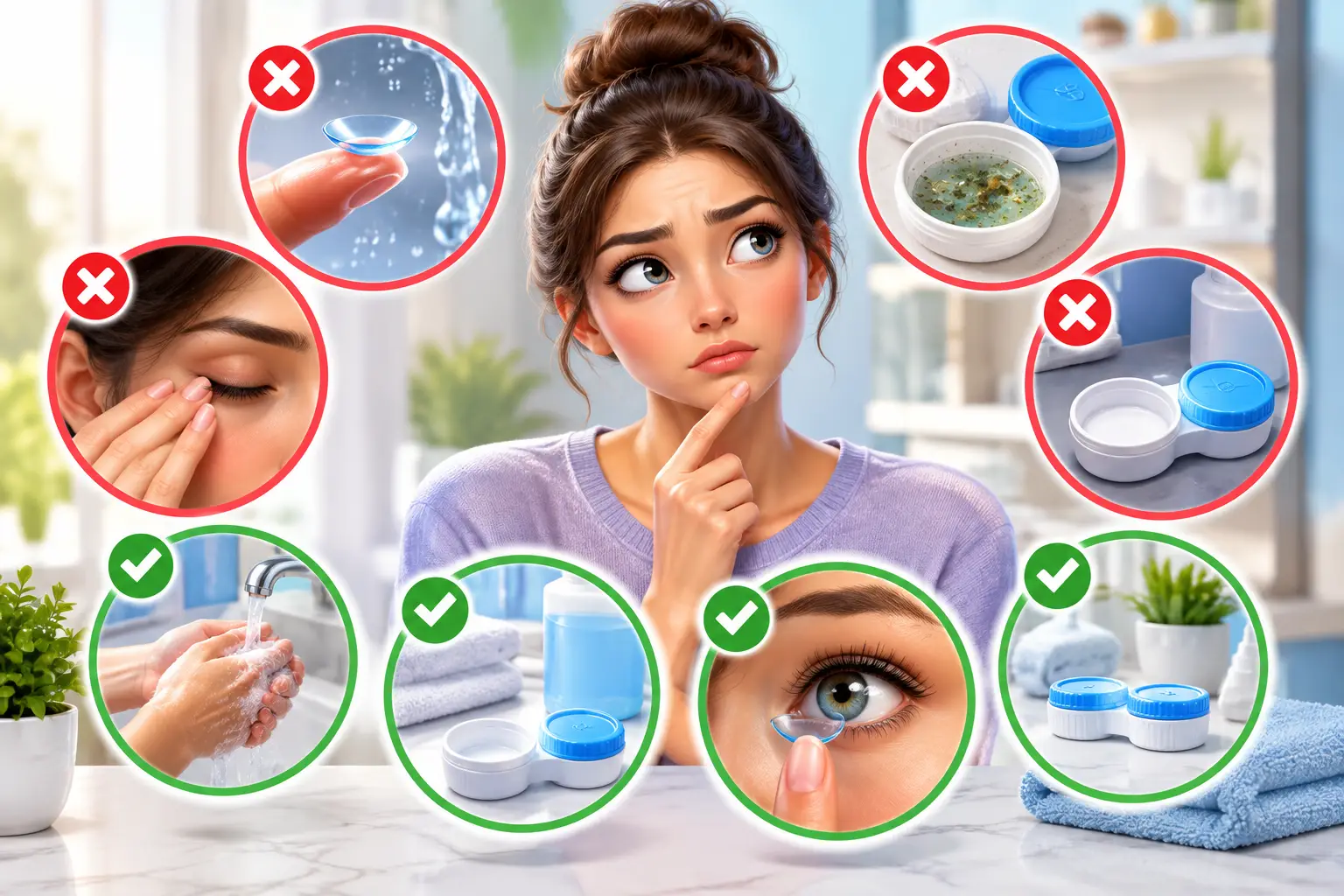
That mystery lens case at the back of the bathroom drawer can create more than clutter. When you cannot quickly tell which pair is current, which one is expired, or when the case was last cleaned, small shortcuts become easy to make. The top contact lens hygiene mistakes usually happen in ordinary moments: a rushed morning, a late night, or the assumption that clear solution means a clean case.
Good lens hygiene is not about making your routine complicated. It is about giving every pair, case, and bottle a clear place in the routine so you can make the right choice without guessing. Use the lens instructions and schedule provided by your eye care professional as your primary guide, especially if you have dry eyes, allergies, or a history of irritation.
1. Skipping handwashing before handling lenses
Your hands touch phones, door handles, makeup, hair products, food, and bathroom surfaces all day. Putting lenses in before washing and drying your hands can transfer residue and germs directly to your eyes.
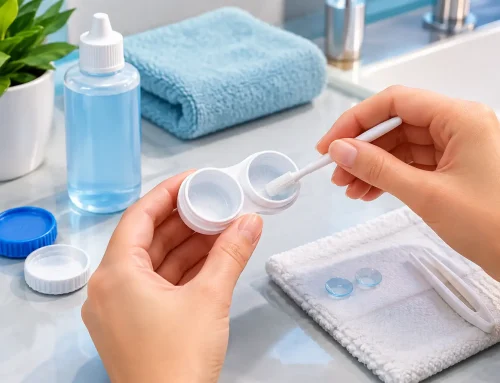
Wash with soap and water every time before inserting or removing lenses. Choose a mild soap that does not leave heavy fragrance, lotion, or oils behind, then dry your hands with a clean, lint-free towel. Wet fingers can dilute solution or make lenses harder to handle. A quick rinse alone is not the same as washing.
This matters even when you are only taking lenses out for a few minutes. The habit should be automatic: wash, dry, handle lenses.
2. Topping off old solution
Adding fresh solution to yesterday’s liquid feels efficient, but it is one of the most common contact lens hygiene mistakes. Old solution may contain deposits and microorganisms from the previous wear. Diluting it with new solution does not give your lenses a truly fresh disinfecting environment.
Empty the case completely after each use. Then use fresh, recommended contact lens solution for the next storage cycle. Never use water, homemade saline, saliva, or rewetting drops as a substitute for disinfecting solution. Water can expose lenses to organisms that can cause serious eye infections, even if the water looks clean.
A simple way to avoid topping off is to keep your solution where you remove your lenses, rather than in a separate cabinet where it is easy to forget.
3. Treating the lens case as an afterthought
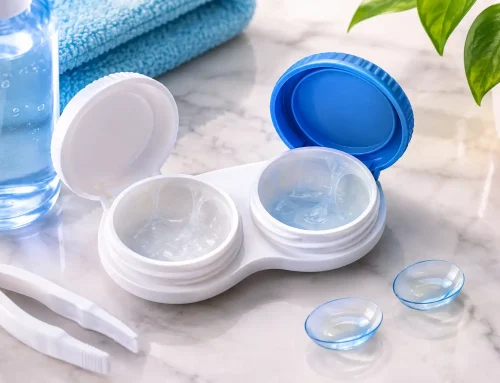
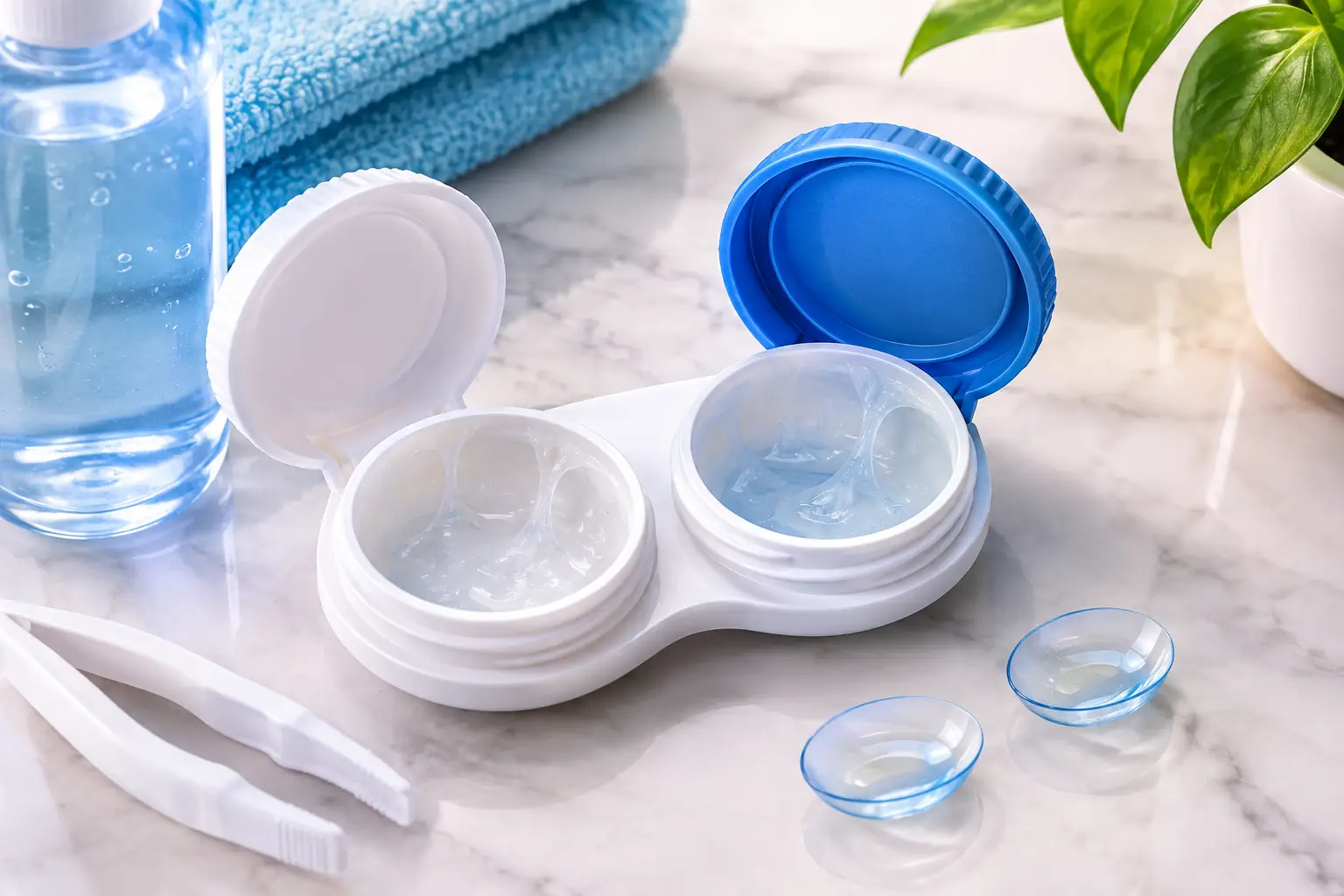
A lens case is not just a container. It is part of the care system. Cases can collect biofilm, residue, and microbes over time, particularly when they are repeatedly rinsed, refilled, and closed while still damp.
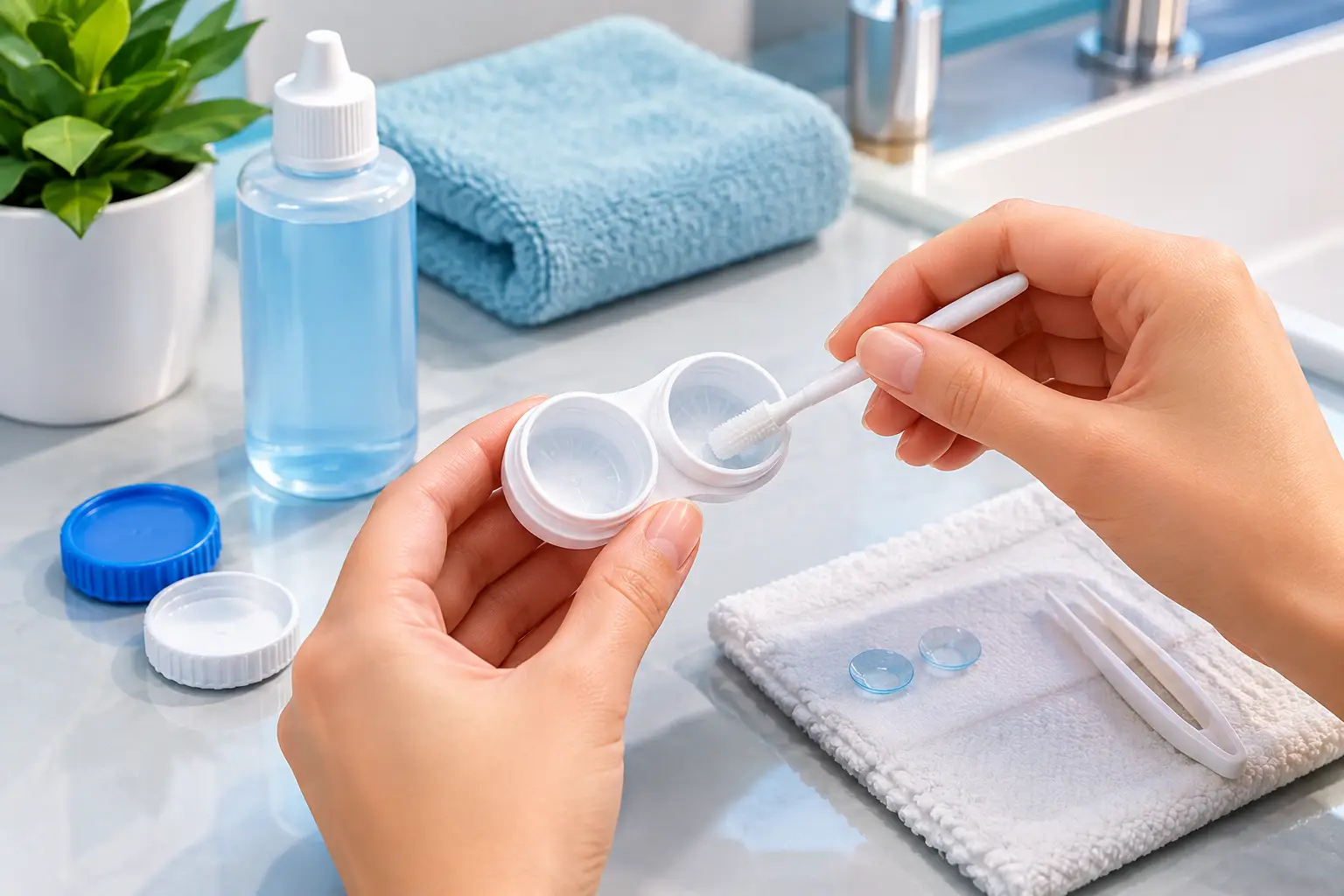
After putting your lenses in, empty the old solution. Rub and rinse the case with fresh contact lens solution, not tap water, and leave it open to air-dry upside down on a clean surface. Replace the case regularly according to your eye care professional’s advice and the case or solution manufacturer guidance. Many people use the same case far longer than they realize because there is no visible reminder that it is due for replacement.
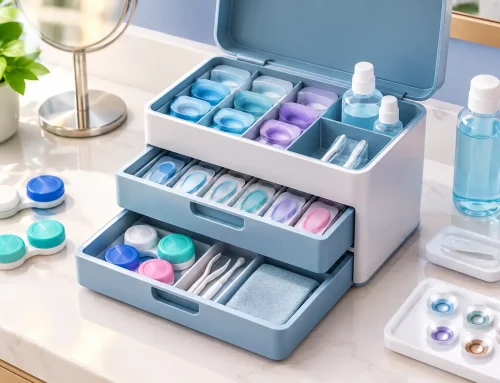
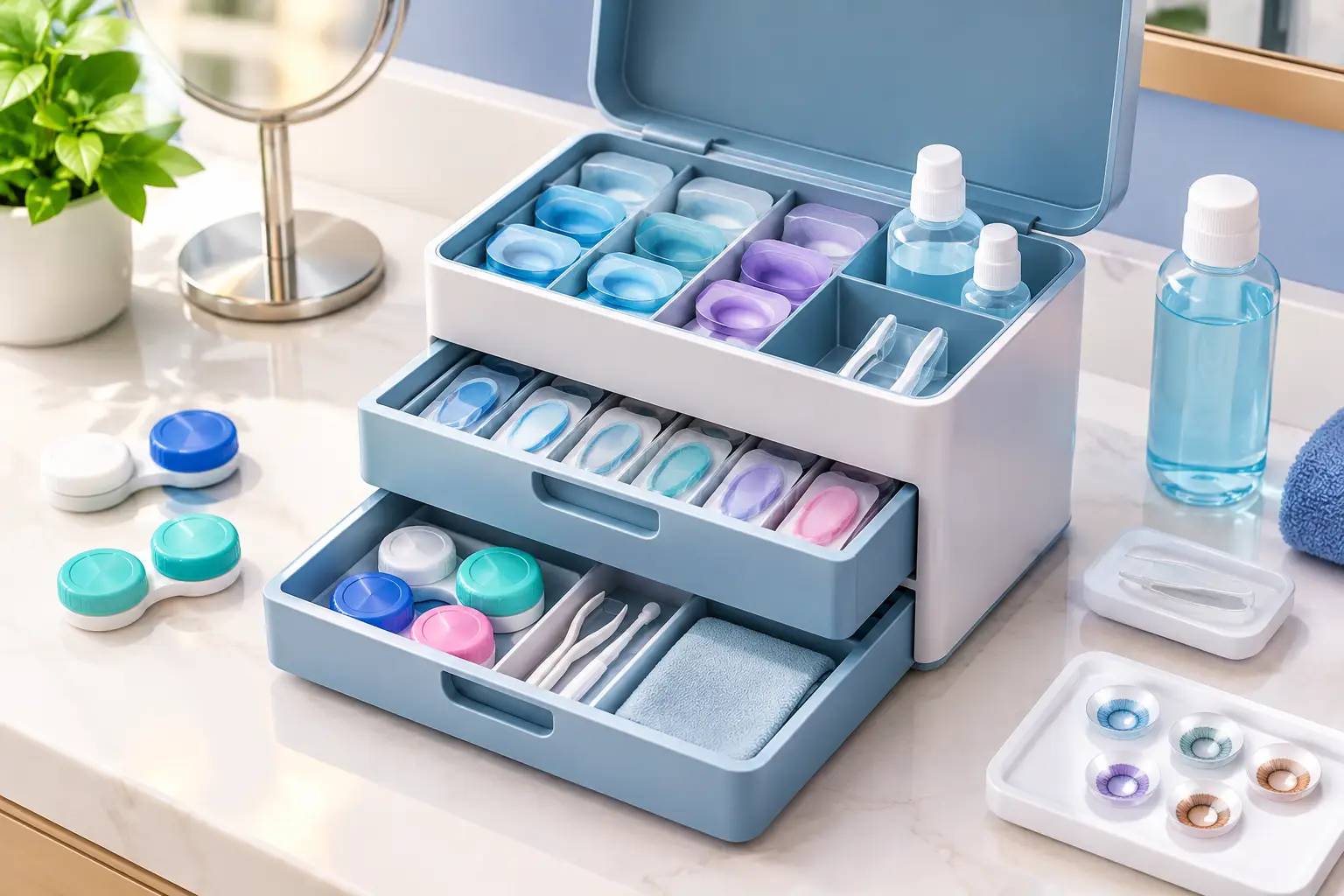
If you keep several pairs of lenses, use a clear identification system. Labeling or organizing each case by prescription, color, and replacement schedule helps prevent mix-ups and makes neglected cases easier to spot.
4. Wearing lenses past their replacement date
Daily, biweekly, monthly, and extended-wear lenses are not interchangeable schedules. Wearing a lens beyond its intended replacement date can increase buildup, reduce comfort, and raise the chance of irritation. A lens may still look fine, but that does not mean it is still appropriate to wear.
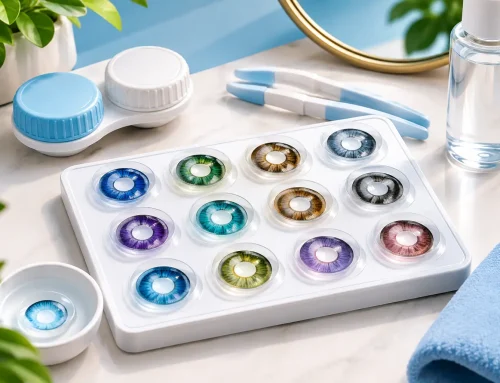
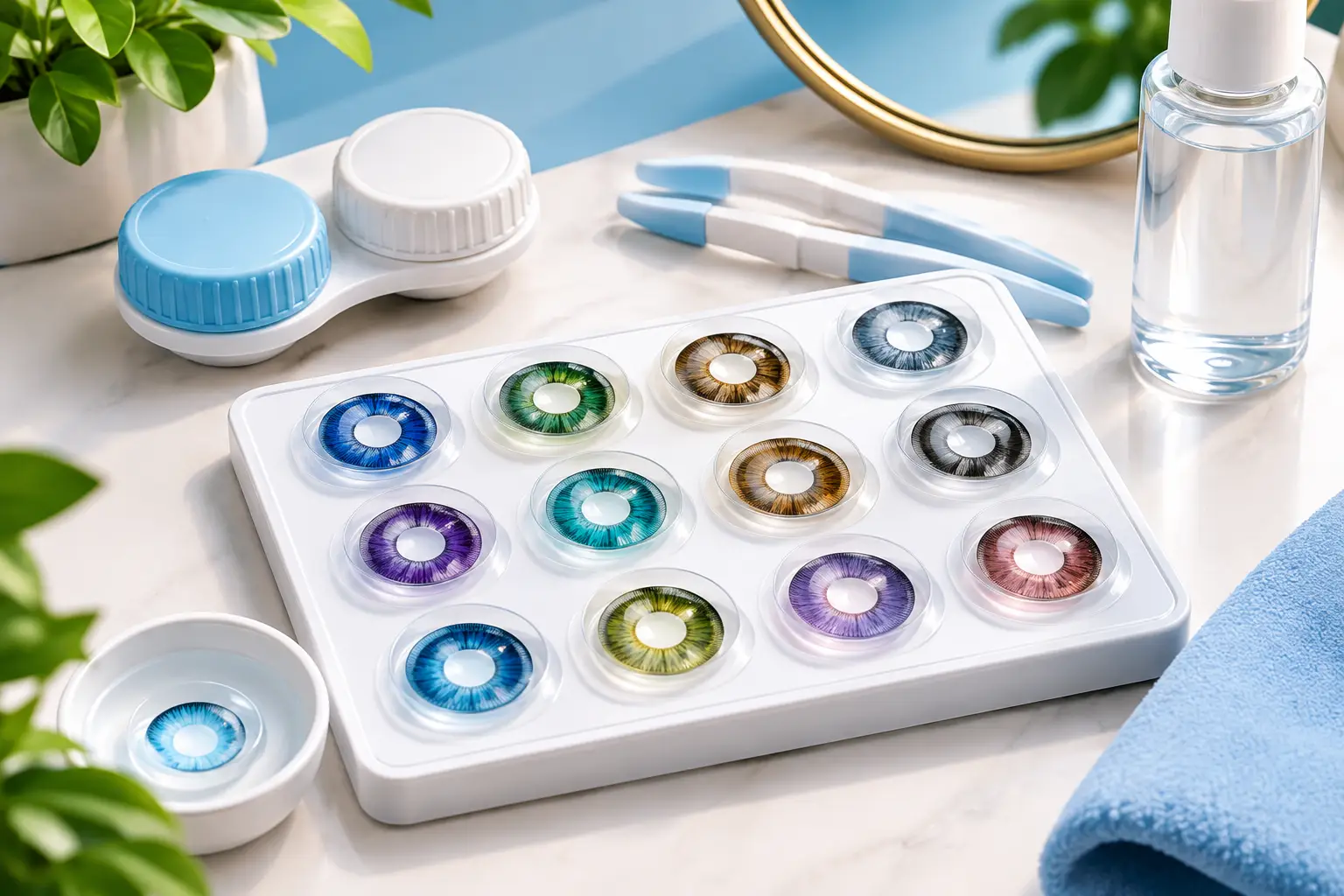
The tricky part is that replacement dates are easy to lose when packaging gets thrown away. You may remember that a pair is “monthly” but not remember when you opened it. Colored lenses can make this even more confusing when several similar cases are stored together.
Write down the opening date and scheduled replacement date when you begin a new pair. Keep those details beside the case rather than relying on memory. An organizer such as EYEBOX can keep lens cases with the prescription, color, purchase information, and expiration details that often disappear with the original box.
5. Sleeping in lenses that are not approved for overnight wear
Falling asleep on the couch happens. Making it a regular habit is different. Unless your eye care professional has specifically prescribed lenses for overnight wear and given you instructions to follow, remove them before sleeping.
Closed eyes create a lower-oxygen environment, and lenses can make that environment more stressful for the cornea. Sleeping in lenses can lead to dryness, redness, discomfort, and a higher risk of infection. Even lenses approved for extended wear come with trade-offs, and some people are not good candidates for overnight use.
If you wake up with lenses in and they feel stuck or dry, do not pull them out forcefully. Use lubricating drops approved for contact lens wearers, wait until the lens moves freely, and remove it gently. If pain, significant redness, light sensitivity, blurred vision, or discharge develops, remove the lens and contact an eye care professional promptly.
6. Wearing lenses in water
Showering, swimming, using a hot tub, or rinsing your face while wearing lenses can bring them into contact with water. This is easy to dismiss because the lens may stay in place and your eyes may feel normal afterward. But water is not sterile, and it can carry microorganisms that should not be trapped against the eye.
The safest choice is to remove lenses before swimming or getting into a hot tub. If you need vision correction around water, ask your eye care professional about the best option for your situation. If lenses get splashed, follow the care instructions for your lens type and avoid assuming that a quick rinse makes them safe again.
7. Ignoring discomfort because the lens is expensive
A lens can feel slightly off for many reasons: dryness, a tiny tear, a flipped lens, makeup residue, a damaged edge, or an eye that simply needs a break. Trying to power through discomfort is not a good bargain, even if the lens is new or you do not have a spare pair nearby.
Remove the lens if it hurts, burns, causes redness, or makes vision blurry. Inspect it for damage and follow your eye care professional’s guidance before reinserting it. Do not use a damaged lens. If discomfort continues after removal, or if you have eye pain, sensitivity to light, swelling, discharge, or a change in vision, seek professional care quickly.
Keeping an up-to-date record of your prescription and current lens supply helps here, too. When you know exactly which lenses you have and when they were opened, replacing a questionable pair becomes a practical decision instead of a frustrating guess.
8. Mixing up right and left lenses or confusing similar pairs
For people with different prescriptions in each eye, switching right and left lenses can cause immediate blur and headaches. The problem gets bigger when you also wear cosmetic lenses, keep backup pairs, or have multiple prescriptions. Similar-looking cases offer very little protection against an honest mix-up.
Make identification part of hygiene. Keep right and left sides consistent, store each pair in its assigned location, and record the lens color, prescription, start date, and expiration date. If a case has been sitting around and you cannot identify the pair with confidence, do not guess. It is better to start with a verified pair than place an unknown lens in your eye.
A cleaner routine starts with less guessing
The best lens-care routine is one you can repeat when you are tired, busy, or running late. Fresh solution, clean hands, a maintained case, and clear lens records remove the guesswork that leads to avoidable mistakes. Set up your space so the information and supplies you need are visible, and your eyes will not have to pay for a disorganized drawer.