
A contact lens box can look like a string of tiny codes until you need to reorder, replace a lost lens, or figure out which case belongs to which pair. This contact lens prescription guide breaks down what those details mean, what must match exactly, and why keeping the information with each lens case can prevent frustrating and expensive mix-ups.
Your prescription is more than a power number. It is a set of measurements chosen for your eyes and the specific contact lens design you wear. A quick photo of the box can help, but a clear system for keeping the box details, cases, and expiration information together is even better when you manage more than one pair.
What a Contact Lens Prescription Includes
Most contact lens prescriptions list the same core details: which eye the lens is for, the lens power, base curve, diameter, brand, and replacement schedule. If you wear toric lenses for astigmatism, multifocal lenses, or specialty lenses, you may see additional measurements.
Start with the eye labels. OD means right eye, and OS means left eye. OU means both eyes. These abbreviations are easy to overlook when both lenses look alike, especially if your right and left prescriptions are close but not identical.
Power: SPH, PWR, or Sphere
The power, often labeled SPH or PWR, corrects nearsightedness or farsightedness. A minus sign (-) typically indicates nearsightedness, while a plus sign (+) typically indicates farsightedness. The number may be small, such as -1.25, or much stronger.
Do not assume a lens with a similar number is close enough. Even a small difference can affect how clearly and comfortably you see. Keep the sign with the number when recording your prescription. Leaving off a plus or minus sign can completely change the meaning.
Base Curve: BC
The base curve, or BC, describes the curvature of the back of the contact lens. It helps the lens sit properly on the surface of your eye. Common values include 8.4, 8.6, and 8.7, but the correct number depends on the lens and your fitting.
A base curve is not just a technical detail to ignore because the power is right. Two lenses can have the same power but fit differently. A lens that does not fit as intended can move too much, feel uncomfortable, or affect vision.
Diameter: DIA
DIA means diameter, measured in millimeters. It tells you the width of the lens. Many soft lenses have a diameter around 14.0 to 14.5 mm, though values vary by design.
Like base curve, diameter is part of the lens fit. It should be recorded with your prescription information, particularly when you use different lenses for different needs.
Cylinder and Axis for Astigmatism
Toric contact lenses add two important numbers: CYL for cylinder and AX for axis. Cylinder measures the amount of astigmatism correction. Axis, shown from 001 to 180, tells the lens how to orient that correction on the eye.
These values are not interchangeable. A lens with the correct sphere power but the wrong cylinder or axis may leave vision blurry or distorted. Toric lenses can also look nearly identical to standard lenses once they are out of the packaging, making accurate labeling especially useful.
Add Power for Multifocal Lenses
Multifocal prescriptions may show ADD, sometimes written as low, medium, or high. This is the added near-vision support for reading and close work. The exact format depends on the brand.
If your multifocal lens box uses a category instead of a number, write down the category exactly as shown. “Medium” is not a detail to guess at later.
A Contact Lens Prescription Is Not a Glasses Prescription
One of the most common ordering mistakes is using a glasses prescription to buy contact lenses. The two prescriptions may share some numbers, but they are not automatically the same.
Contact lenses sit directly on the eye, while glasses sit a short distance away. Contact lens prescriptions also include fit details such as base curve and diameter, plus the specific lens brand or material selected by your eye care professional. For stronger prescriptions, the power itself may differ between glasses and contacts.
Use a current contact lens prescription from your eye care professional when ordering replacement lenses. If your prescription has expired, your vision has changed, or lenses have become uncomfortable, schedule an exam rather than trying to fill in the gaps from old boxes.
Brand and Replacement Schedule Matter
A prescription often identifies a specific lens brand. That is because lens materials, moisture levels, designs, and fit can vary from one product to another. A different brand with similar numbers is not necessarily an equivalent substitute.
Your replacement schedule matters too. Daily disposables are discarded after one day of wear. Two-week and monthly lenses require cleaning, disinfecting, and replacement on schedule. Cosmetic lenses, including colored contacts with or without vision correction, also require a valid prescription and proper care.
Keep these details with every pair:
- Right or left eye
- Lens brand and exact product line
- Power, base curve, and diameter
- Cylinder, axis, or add power when applicable
- Lens color, if applicable
- Opening date and planned replacement date
- Prescription expiration date
This is not paperwork for paperwork’s sake. It is what keeps a black cosmetic lens from being confused with a dark brown one, a monthly pair from being worn past its replacement date, or a right-eye lens from ending up in the left-eye case.
How to Read Your Box Without Losing the Details
The outside carton is usually the easiest place to find your complete lens information. It may also include the lot number and expiration date. Once the carton is discarded, you may still have a foil blister pack, but it is much harder to use as an everyday reference.
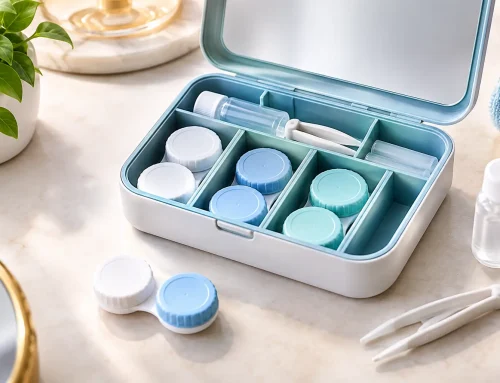
A better routine is to record the information when you open a new box. Match the record to the lens case before the packaging goes in the trash. If you wear multiple colors, multiple brands, or different prescriptions for different situations, give each case a clear visual identity.
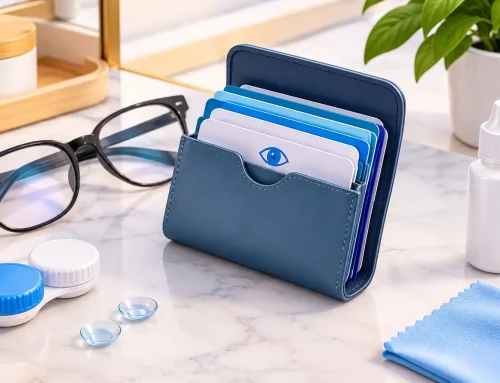
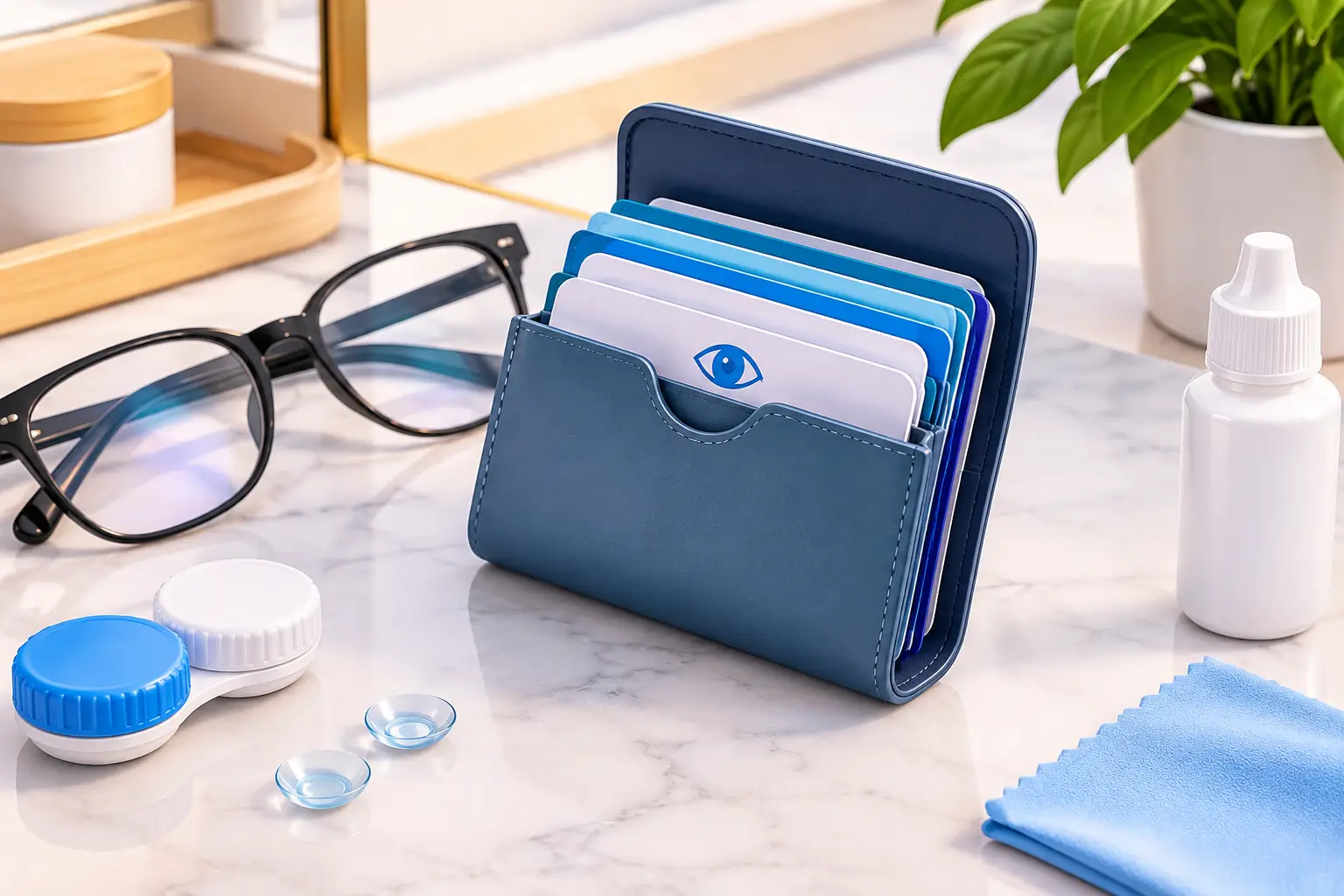
EYEBOX is designed for this exact problem: keeping lens cases together with the prescription, color, purchase, and expiration details that tend to disappear after the box is gone. Instead of relying on memory or a drawer full of similar cases, you can see what each pair is at a glance.
Create a Simple Lens Tracking Routine
The best organization system is the one you will actually use. It does not need to take more than a minute when you start a new pair.
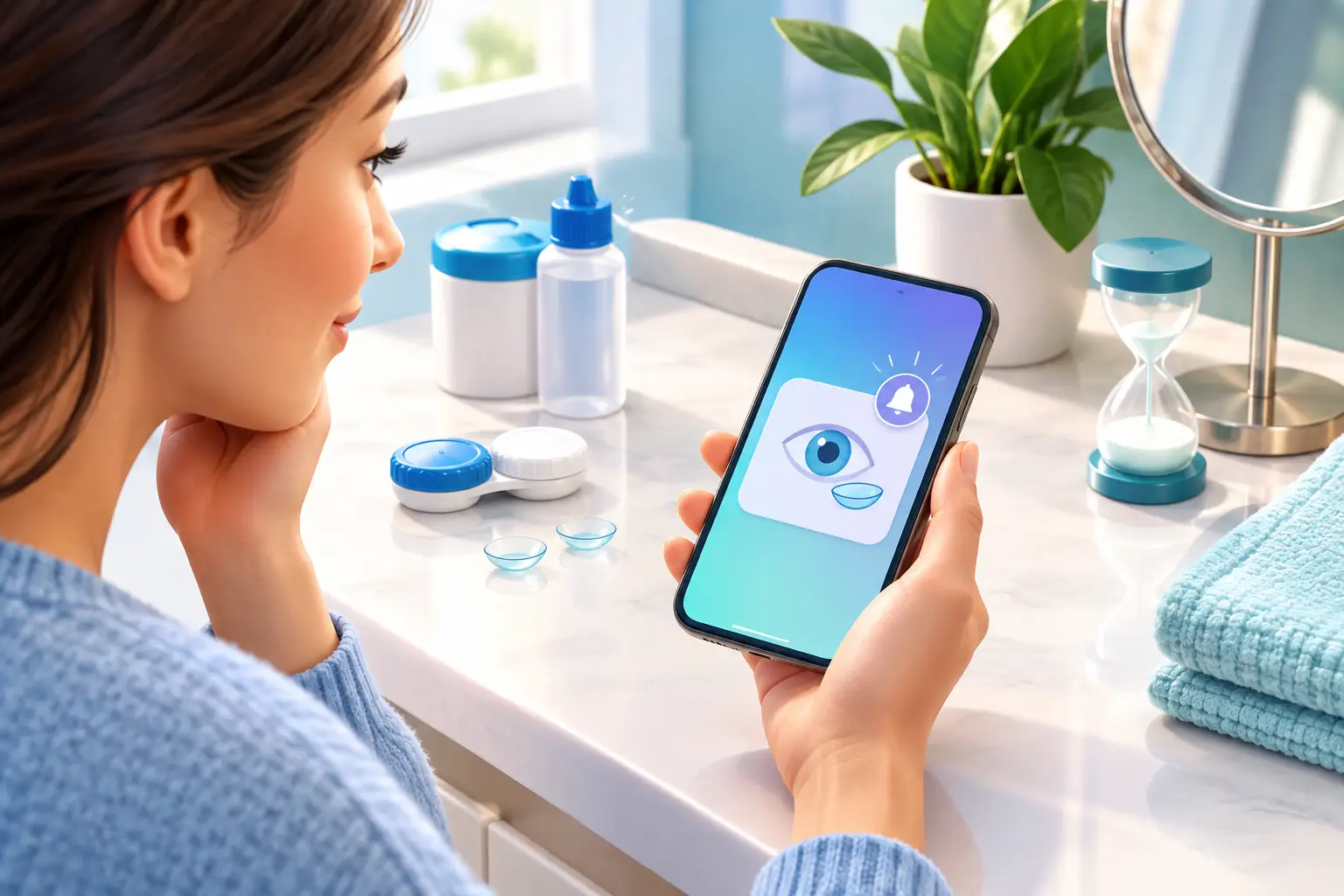
First, read the box and confirm the eye label, power, brand, and replacement schedule. Next, write or store the details alongside the correct case, including the date you opened the lenses. Finally, set the replacement date based on your eye care professional’s instructions and the lens manufacturer’s schedule.
For reusable lenses, clean and disinfect them only with the solution recommended for your lens type. Never top off old solution, and do not use water or saliva to rinse lenses or cases. Empty, rinse, and air-dry the case as directed, then replace the case according to your provider’s guidance or the manufacturer’s recommendations.
Organization supports lens care, but it does not replace it. A perfectly labeled case still needs fresh solution, clean hands, and lenses replaced on time.
When Prescription Details Do Not Match
If the numbers on a new box do not match your current record, pause before opening it. Check whether you are comparing the correct eye and whether the lens type is the same. A toric, multifocal, colored, or trial lens may use a different format than the lenses you usually wear.
If you received something different from what you expected, contact the seller or your eye care professional for clarification. Do not wear a lens simply because it looks similar to your usual pair. The same applies when a case has been separated from its label and you cannot identify the lenses with confidence.
Eye redness, pain, light sensitivity, sudden blurred vision, discharge, or the feeling that something is stuck in your eye are reasons to remove the lenses and contact an eye care professional promptly. Do not try to solve a painful lens problem by changing solutions or wearing the lens longer to “get used to it.”
Keep the Information as Carefully as the Lenses
Contact lenses are small, but the details behind them are not. Knowing your right and left powers is helpful. Knowing the brand, fit measurements, color, opening date, replacement schedule, and prescription expiration date is what makes your routine easier to manage day after day.
The next time you open a fresh box, save the information before you discard the packaging. That one small habit can turn a cluttered lens routine into a clear, dependable system.