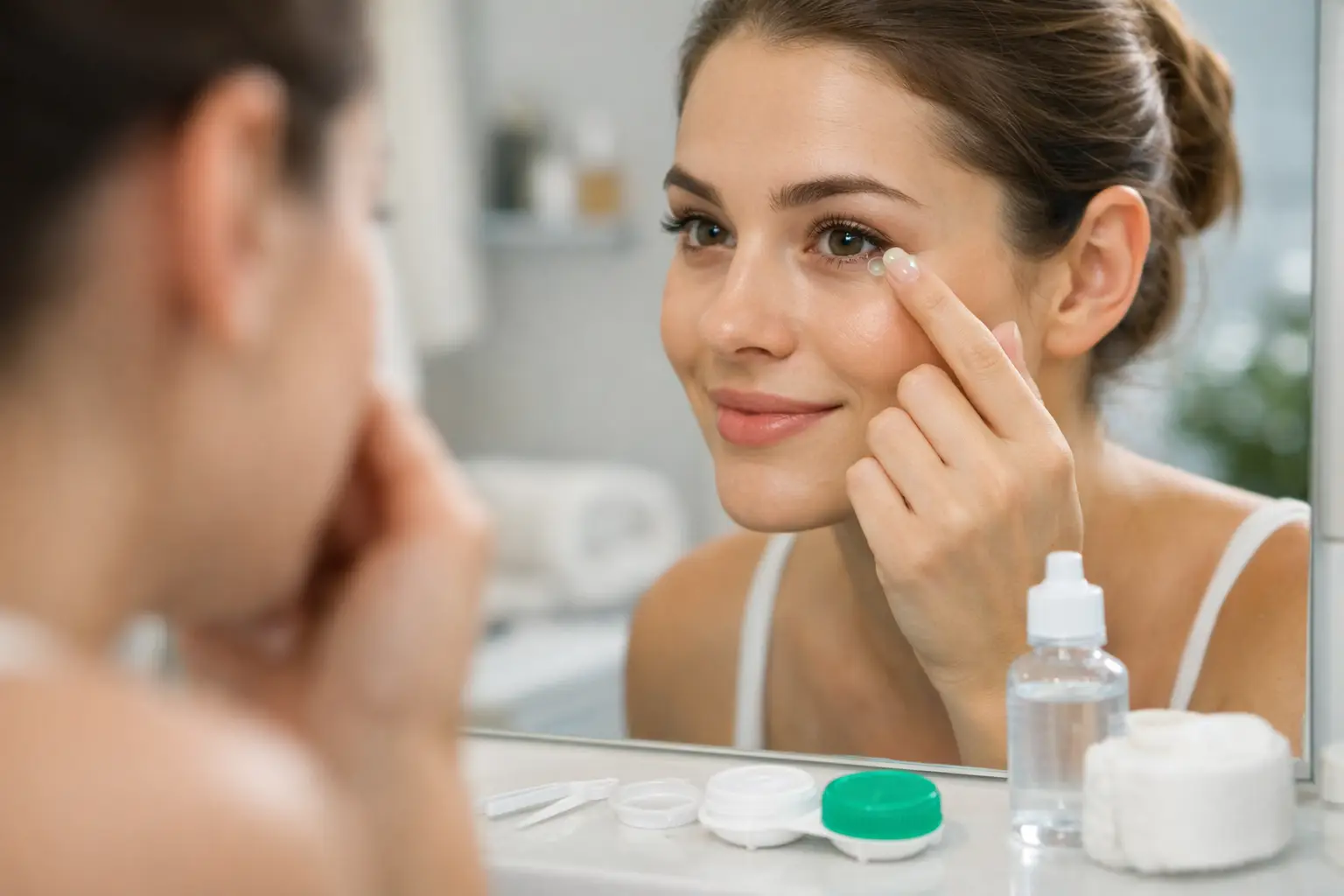
A contact lens hygiene checklist is more than a reminder to wash your hands. It is the small daily system that keeps lenses, cases, solution, and wear details from turning into a cluttered counter and a risky guess. When you wear more than one pair – especially colored contacts alongside prescription lenses – clear routines help you know exactly what belongs where and when it needs to be replaced.
Your Daily Contact Lens Hygiene Checklist
Start with clean, dry hands every time you touch your lenses or lens case. Wash with soap and water, then dry thoroughly with a clean, lint-free towel. Oils, lotion, makeup, and debris can transfer from your fingers to the lens, making it less comfortable to wear.
Before putting lenses in, take a quick look at each one. A lens should be moist, clean-looking, and free from tears, chips, or visible particles. If it has dried out, looks damaged, or feels unusual after cleaning, do not put it back in your eye. Use a fresh lens if you have one, or contact your eye care professional for guidance.
At the end of the day, follow this simple sequence:
- Remove one lens at a time so right and left lenses do not get mixed up.
- Clean reusable lenses using the method and multipurpose solution recommended for that lens type.
- Empty old solution from the case completely. Never add new solution on top of yesterday’s solution.
- Rinse the empty case with fresh contact lens solution, not tap water.
- Fill each well with fresh solution before storing the lenses.
- Close the caps securely and let the case air-dry between uses as directed by your eye care professional or solution label.
That last part matters. A case can look clean while still holding residue or germs from old solution. Fresh solution each time is a simple habit with a big payoff.
What Never Belongs in Your Lens Routine
Some shortcuts are easy to make when you are tired, in a hurry, or out of solution. They are still not safe substitutes. Never rinse, store, or wet contact lenses with tap water, bottled water, saline made at home, or saliva. Water can carry microorganisms that are not safe for contact lenses, while saliva adds bacteria directly from your mouth.
Do not use rewetting drops, eye drops, or saline as disinfecting solution unless your eye care professional has specifically told you to do so. They have different jobs. Saline can rinse in certain systems, but it does not disinfect lenses. Rewetting drops may improve comfort during wear, but they do not clean or store a lens.
Avoid sleeping in lenses unless your eye care professional has prescribed a lens approved for overnight wear and has told you it is appropriate for you. Even then, follow the exact wear schedule you were given. If your eyes become red, painful, sensitive to light, blurry, or unusually watery, remove the lenses and call your eye care professional promptly.
Clean Lenses According to Their Replacement Schedule
The right routine depends on the lenses you wear. Daily disposable lenses are designed to be worn once and thrown away after removal. They do not need a case or cleaning solution. Reusing them can make a simple routine needlessly complicated.
Two-week, monthly, and other reusable lenses need cleaning and disinfection after every use. Check the instructions that came with your lenses and solution because some care systems require a specific soak time or a neutralizing case. Do not assume every solution works with every lens type.
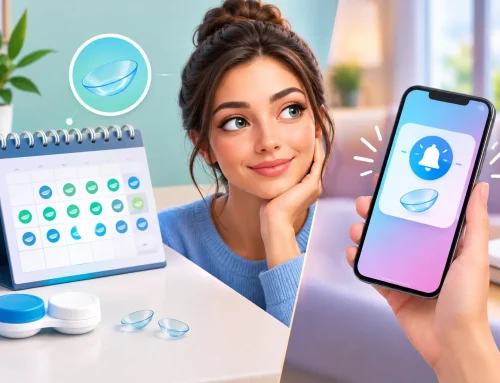
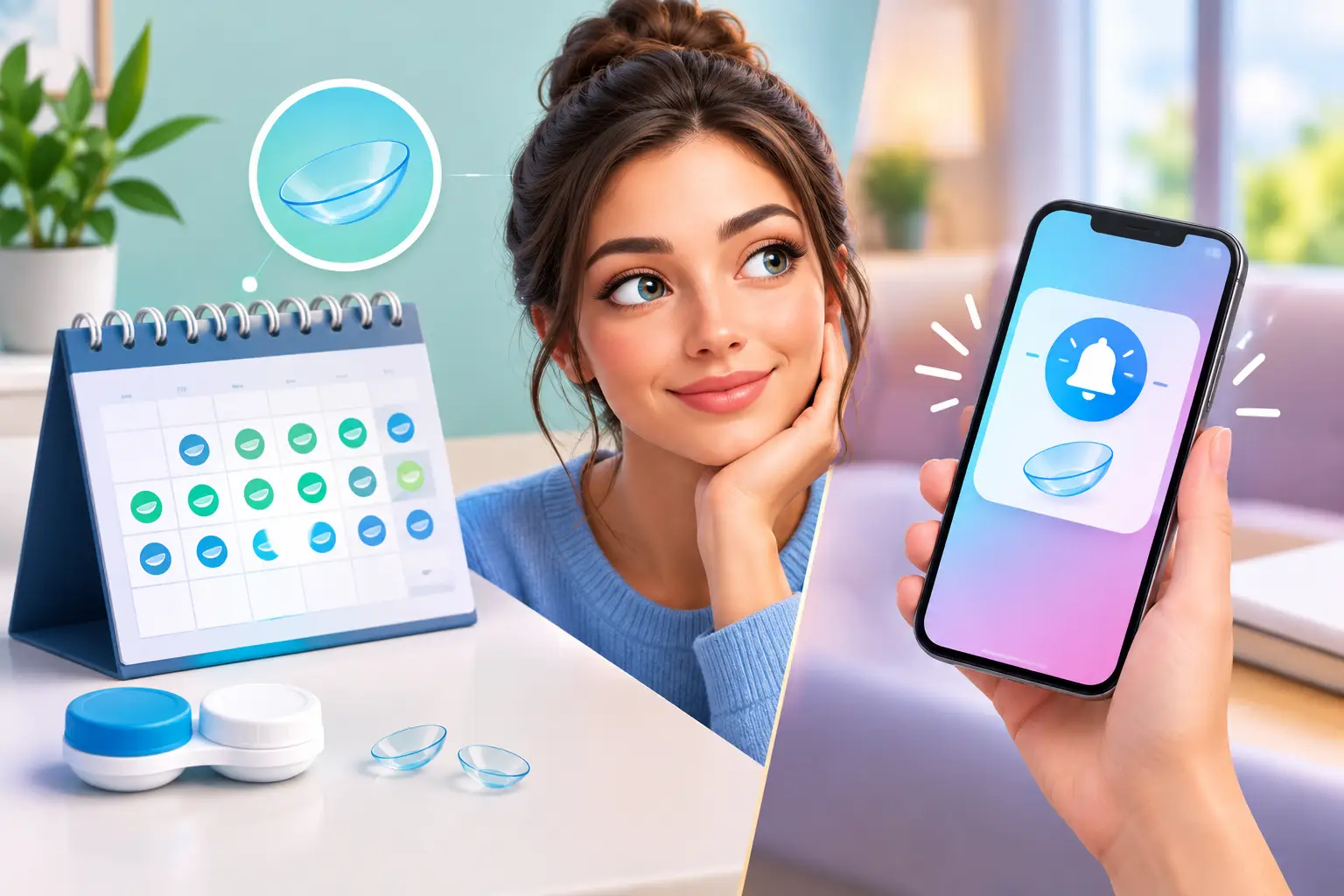
Replacement dates deserve the same attention as cleaning. A monthly lens is not necessarily good for 30 individual wears. In most cases, its replacement timeline starts when you open the package. Write down the opening date, the discard date, and which pair is in use. That way, you are not relying on memory when several similar cases are sitting in the same bathroom drawer.
Keep Prescription, Color, and Expiration Details Together
Lens hygiene includes knowing what you are putting in your eyes. Packaging holds useful details: prescription strength, base curve, diameter, brand, color, lot information, expiration date, and purchase date. Once the box is tossed, those details are easy to lose.
Create one clear record for every pair you own. Label the pair by its purpose, such as everyday prescription, backup, hazel color, or special-occasion gray. Record the prescription and the date you opened it. If you use cosmetic lenses, keep color names with the correct case so similar shades do not become a guessing game.
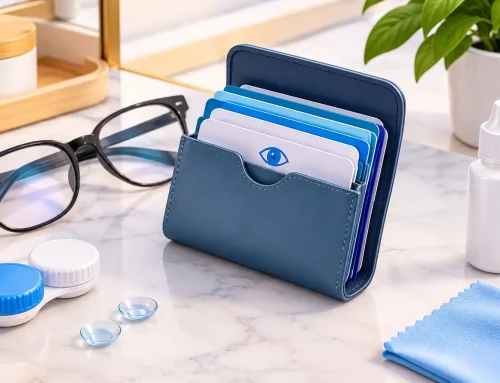
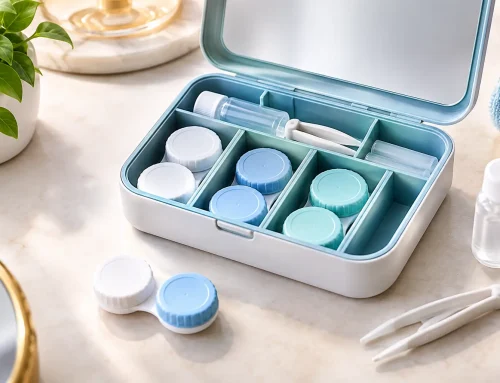
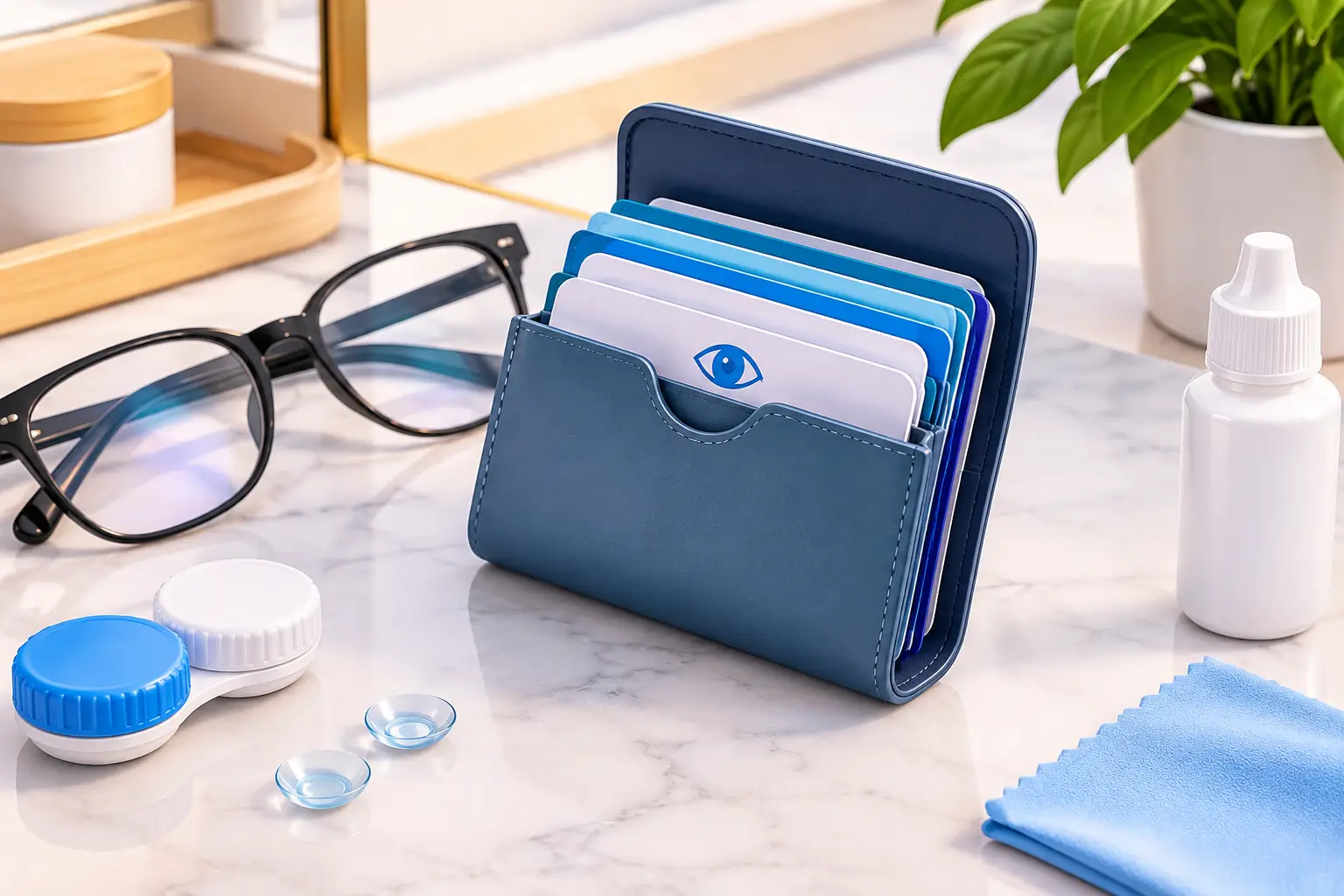
An organization system such as EYEBOX can keep lens cases and their essential details in one designated place. The goal is not to make your routine more complicated. It is to eliminate the little questions that lead to mix-ups: Which case is current? Which color is this? When did I open this pair? Is this lens still within its use period?
Replace Your Case Before It Becomes a Problem
Lens cases are not meant to last forever. Replace your contact lens case at least every three months, or sooner if it is cracked, stained, dirty, or no longer closes properly. If your solution comes with a new case, use it instead of saving it for later.
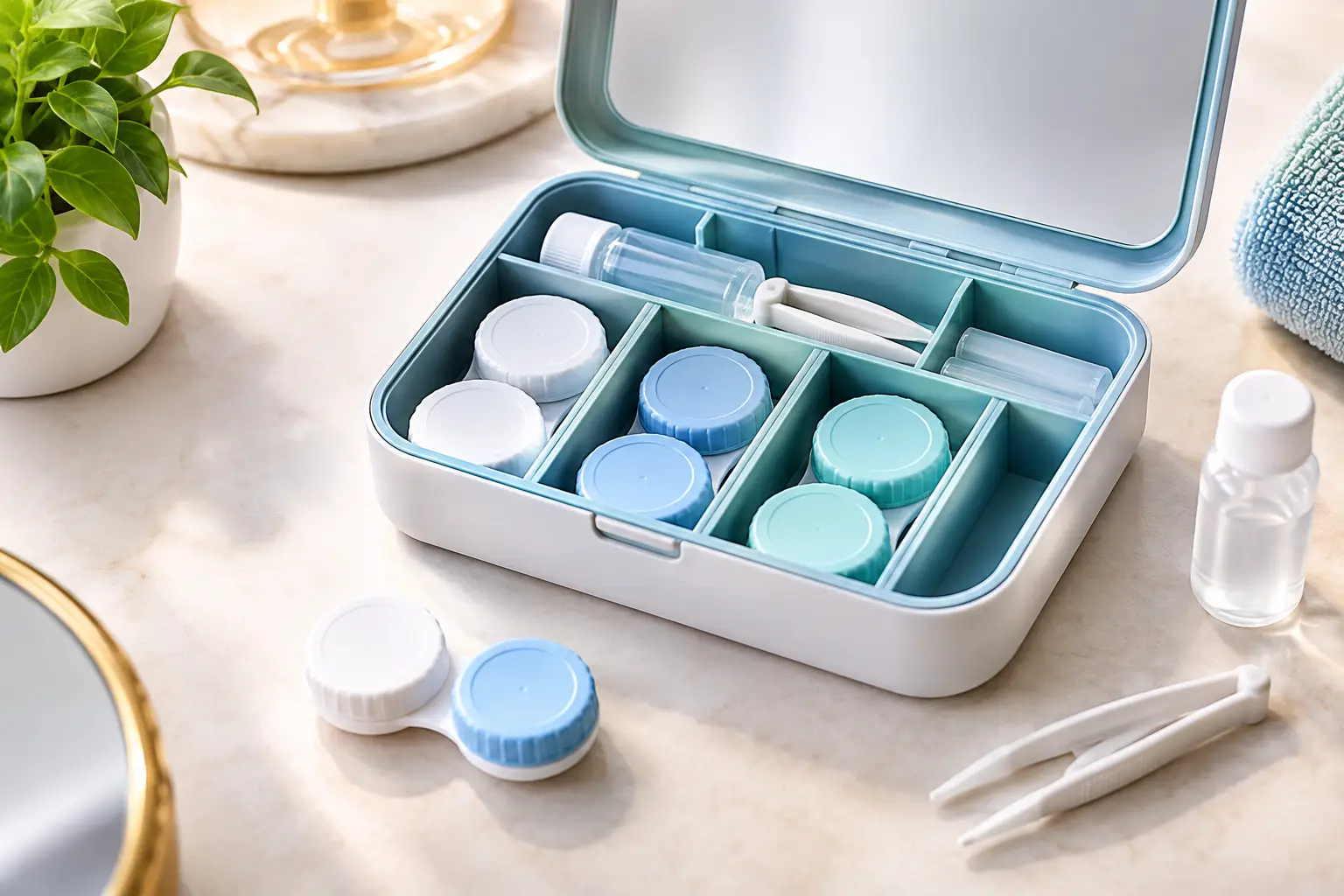
Keep cases away from splashes and moisture around the sink. A designated shelf, cabinet area, or organizer helps prevent a case from getting buried under cosmetics, medications, and other bathroom items. It also makes it easier to spot when a cap is missing or when a pair has been sitting longer than expected.
Do not share a lens case, solution bottle, or contacts with anyone else. This applies to cosmetic contacts too. Colored lenses are medical devices, even when they do not correct vision, and they need the same careful handling as prescription lenses.
A Weekly Reset Makes Daily Care Easier
Once a week, take two minutes to check your lens setup. Wipe down the area where you handle lenses, confirm that your solution is not expired, and look at the condition of each case. Check whether any reusable pair is approaching its discard date.
This is also a good time to match cases to their records. If you rotate between multiple prescriptions or colors, make sure every case is clearly identified and every pair still has its original details recorded. A simple color-coded or labeled system reduces the chance of placing the wrong lens in the wrong eye.
If you wear makeup, put lenses in before applying it and remove them before taking makeup off. This reduces the chance that mascara, powder, or makeup remover will get on your lenses. Keep lens solution bottles tightly capped when not in use, and do not let the bottle tip touch your fingers, the lens, or the case.
When Your Routine Needs a Closer Look
Comfort should not require constant troubleshooting. If lenses regularly feel dry, gritty, or uncomfortable, do not just keep switching products at random. Check the basics first: Was the lens replaced on time? Was it cleaned and stored correctly? Is the solution compatible with the lens? Has the case been replaced recently?
Sometimes the issue is a smudged lens or a mix-up between right and left prescriptions. Other times, it may be related to fit, allergies, dry eye, or an eye health concern that needs professional care. An annual eye exam is a useful checkpoint even if your prescription has not changed, particularly if you wear contacts frequently.
A good contact lens routine should feel calm and repeatable, not like a daily search for missing boxes and uncertain dates. Give every pair a clean case, fresh solution, a clear label, and a place that makes sense. Those small decisions make it easier to protect your eyes and enjoy the lenses you chose to wear.