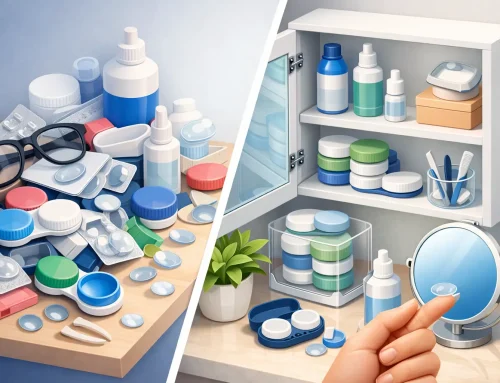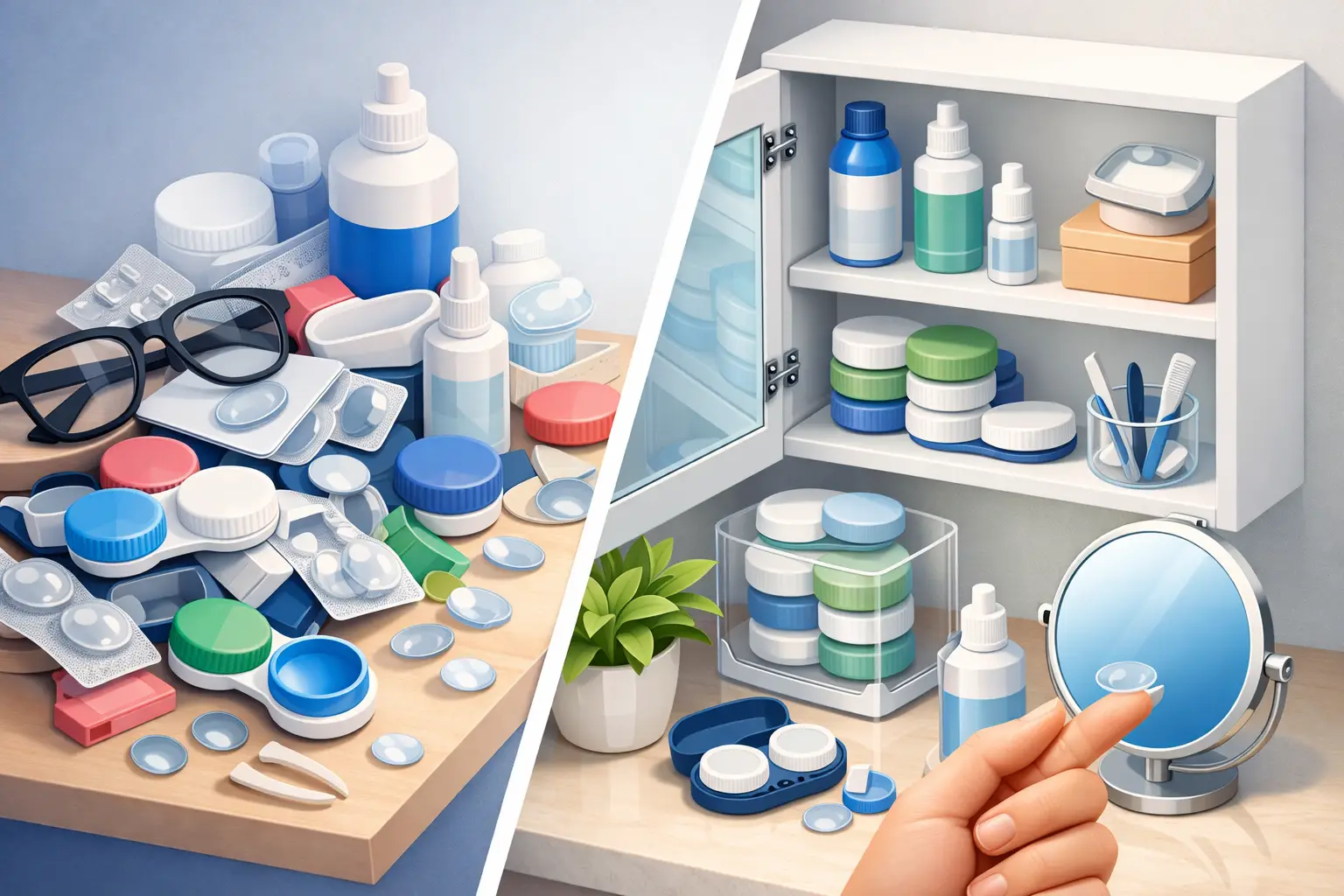
A contact lens drawer can look organized right up until you need one specific pair. Cases roll behind bottles, similar lids get mixed up, and the box with the prescription or expiration date is long gone. In the lens organizer vs drawer storage decision, the real question is not where cases fit. It is whether you can identify every pair confidently when it is time to use, replace, or reorder it.
Lens Organizer vs Drawer Storage: The Core Difference
Drawer storage gives contact lens cases a place to sit. A purpose-built lens organizer gives every pair a place, plus the information that makes the pair usable. That distinction matters most for anyone managing more than one lens type, prescription, color, or replacement schedule.
A drawer is flexible because it can hold nearly anything. It is also easy to treat as a catch-all for eye drops, solution, unopened lenses, makeup, and spare cases. That flexibility can quickly become the problem. Once several small items share the same space, it takes more effort to confirm what belongs to which pair.
A lens organizer is more structured by design. Instead of relying on memory or loose packaging, it keeps the lens case associated with key details such as prescription, color, expiration date, and purchase information. You spend less time searching and less time second-guessing what you are about to put in your eyes.
When Drawer Storage Makes Sense
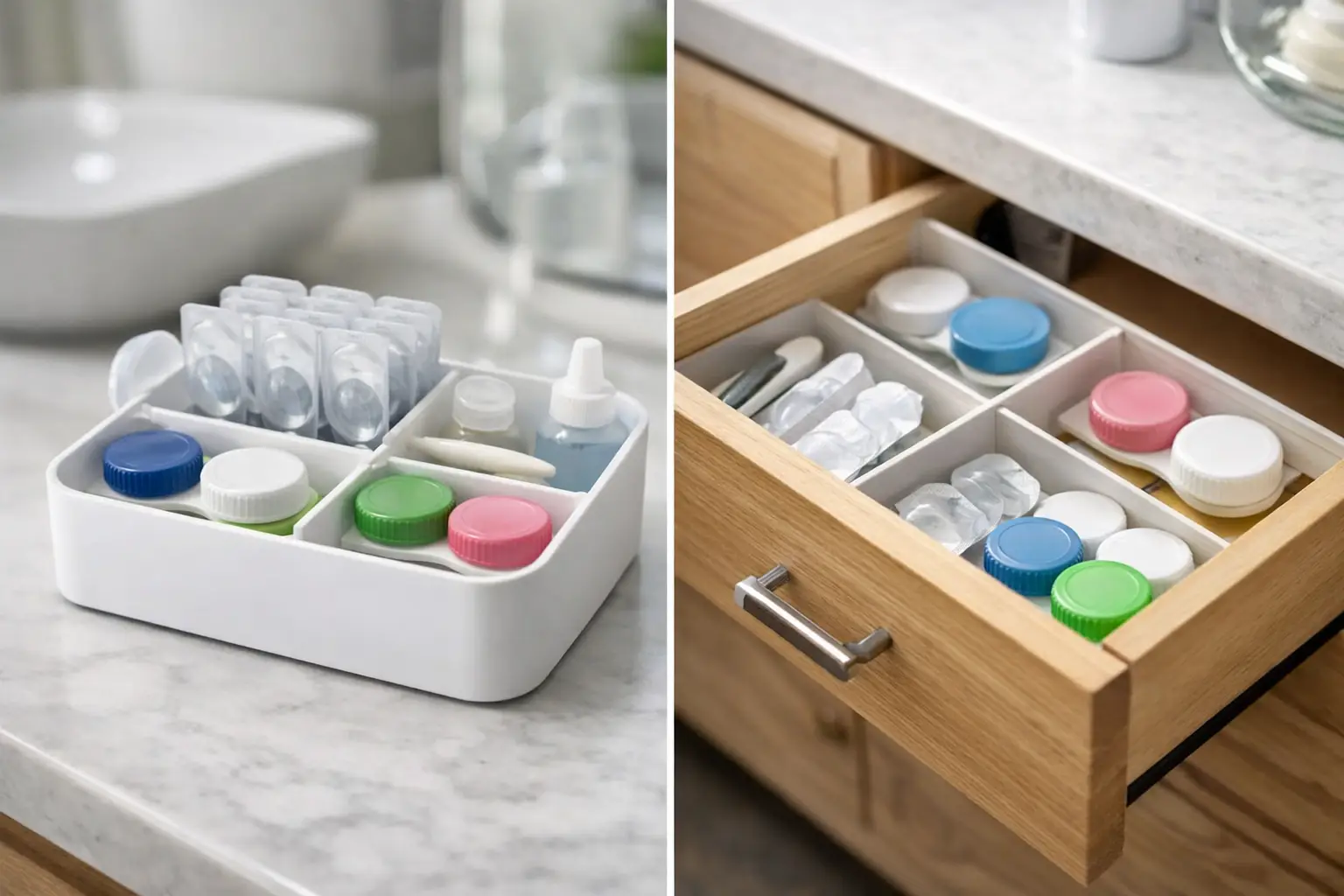
Drawer storage can work well for a simple routine. If you wear one type of contact lens, replace it on a predictable schedule, and have a dedicated clean drawer with very few other products, a small bin or drawer divider may be enough.
It is also a low-cost option because you may already have the space. A shallow drawer can keep cases out of sight and off the bathroom counter, which is better than leaving them scattered near the sink.
The limitation is that a drawer does not create a tracking system. You still need another method for remembering which case holds which lenses, when a pair was purchased, and when it expires. Some people write notes on a label or keep information in their phone. Those workarounds can help, but they add steps that are easy to skip during a busy routine.
Drawer storage tends to break down when you add just one more variable: a backup pair, colored contacts, different prescriptions, seasonal colors, or lenses purchased at different times. What started as a tidy spot becomes a collection of nearly identical cases.
Where Drawer Storage Creates Everyday Friction
The biggest issue with drawer storage is not mess alone. It is missing context. A contact lens case does not show your prescription, lens color, replacement date, or where it came from. If the original packaging was discarded, that information may be difficult to recover later.
This can lead to familiar frustrations. You may open several cases before finding the right pair. You may hold two similar colors under the bathroom light and try to remember which one is which. Or you may find a pair you forgot you owned without knowing whether it is still within its recommended use period.
A drawer can also make it easier for items to shift around. Opening and closing the drawer, reaching for solution, or adding a new purchase can rearrange small cases without you noticing. Dividers reduce some of that movement, but they do not label or document what is inside.
For contact lens wearers who value cleanliness and control, the issue is practical: a storage space should make the right choice easier, not turn a simple eye-care step into a guessing game.
What a Lens Organizer Solves
A dedicated lens organizer creates a repeatable home system for every pair. Rather than putting cases wherever there is space, you assign each pair a consistent position and record the details you may need later.
With an organizer such as EYEBOX, the case and its identifying information stay together. That means you can see which lenses are prescription lenses, which are cosmetic lenses, what color each pair is, and when the lenses expire or were purchased. The result is less dependence on memory and fewer loose boxes cluttering drawers or medicine cabinets.
This approach is especially helpful if your collection includes several pairs that look similar. Brown, hazel, gray, and blue lenses can be hard to tell apart in their cases. A clear system lets you identify a pair before you open it, rather than after you have already started your routine.
A lens organizer also supports better replacement habits. When purchase and expiration information are visible, it is easier to notice what needs attention. You do not have to search through old receipts, scroll through emails, or rely on a vague memory of when you opened a pair.
The benefit is clarity, not just neatness
A neat drawer can still be confusing. An effective lens system makes the details easy to find. That is the difference between arranging items and organizing them.
For people with a single pair of lenses, this may feel like a small improvement. For people managing multiple prescriptions, colors, or backups, it can remove a repeated source of stress from the day. The more pairs you own, the more valuable that visibility becomes.
Compare the Two Options by Your Routine
The best choice depends on how many lens cases you manage and how much information you need to keep straight. Use drawer storage if your setup is truly simple and you can identify every pair without hesitation. Choose a lens organizer if you regularly pause to ask, Which pair is this? When did I buy it? Is this the right color? Is it still current?
Here is how the two approaches differ in daily use:
- Identification: Drawer storage separates cases physically, but a lens organizer connects each case with prescription, color, and purchase details.
- Expiration awareness: A drawer requires you to track dates elsewhere. An organizer keeps those dates part of the storage routine.
- Multiple pairs: Drawers become harder to manage as pairs accumulate. Organizers are built for clear, individual placement.
- Counter and cabinet clutter: Both can reduce visible clutter, but an organizer reduces the need to save loose lens boxes for reference.
- Routine confidence: Drawers rely more heavily on memory. Organizers create a reliable visual reference.
There is no need to replace a working system just because it is not complicated. But if your drawer system depends on remembering details that are no longer written down, it is not doing all the work you need it to do.
A Better Setup for Multiple Lens Types
If you have more than one pair, start by gathering every lens case and any remaining packaging. Check the prescription, lens color, expiration date, and purchase information for each pair. This is the information people most often lose when boxes are thrown away.
Next, decide on one consistent rule for placement. You might group prescription lenses separately from cosmetic lenses, or arrange pairs by color. The specific method matters less than keeping it consistent. Once a pair has an assigned place, return it to that place every time.
Finally, make date checks part of your regular routine. When you open a new pair or buy another color, record its details right away. Waiting until later is how packaging disappears and dates become unclear.
This is where a purpose-built organizer earns its space. It turns those separate actions – storing, identifying, and tracking – into one simple habit.
The Right Storage Should Reduce Guesswork
Contact lens storage should support a clean, clear routine. A drawer may be enough for one straightforward pair, especially when it stays dedicated and uncluttered. But it cannot tell you what a case contains or remind you of details that were discarded with the original box.
If your lenses represent different prescriptions, colors, purchases, or replacement timelines, a lens organizer offers a more useful kind of order. It keeps the small details from becoming small problems. Set up a system you can understand at a glance, and your next lens choice will feel much simpler.