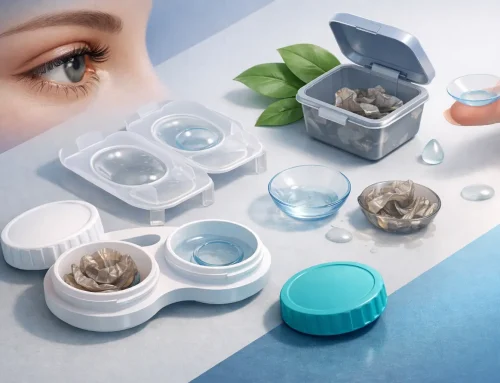
A contact lens case can look identical to every other case in your drawer, even when the lenses inside have different prescriptions, colors, replacement schedules, or expiration dates. That is why practical contact lens boxes storage ideas do more than clear counter space. They give every pair a clear identity, so you know what you are using before you put it in your eyes.
The best setup is not necessarily the largest organizer or the prettiest bathroom container. It is the one that makes your lens details easy to see, keeps cases together with their information, and fits the way you actually use your lenses at home.
Start With What Needs to Stay Together
Before choosing a storage method, separate the items that belong with each pair of lenses. A lens case alone is not enough to identify what is inside. You may also need the prescription, lens brand, color name, purchase date, expiration date, and replacement schedule.
If you wear only one type of corrective lens, a simple labeled spot may be all you need. If you switch between prescription lenses and colored contacts, or keep backup pairs on hand, you need a system that prevents mix-ups at a glance.
A useful rule is simple: do not store lens cases separately from the information that tells you what they are. Once a box, sticker, or package insert is thrown away, it becomes much harder to confirm details later.
1. Give Each Pair Its Own Labeled Compartment
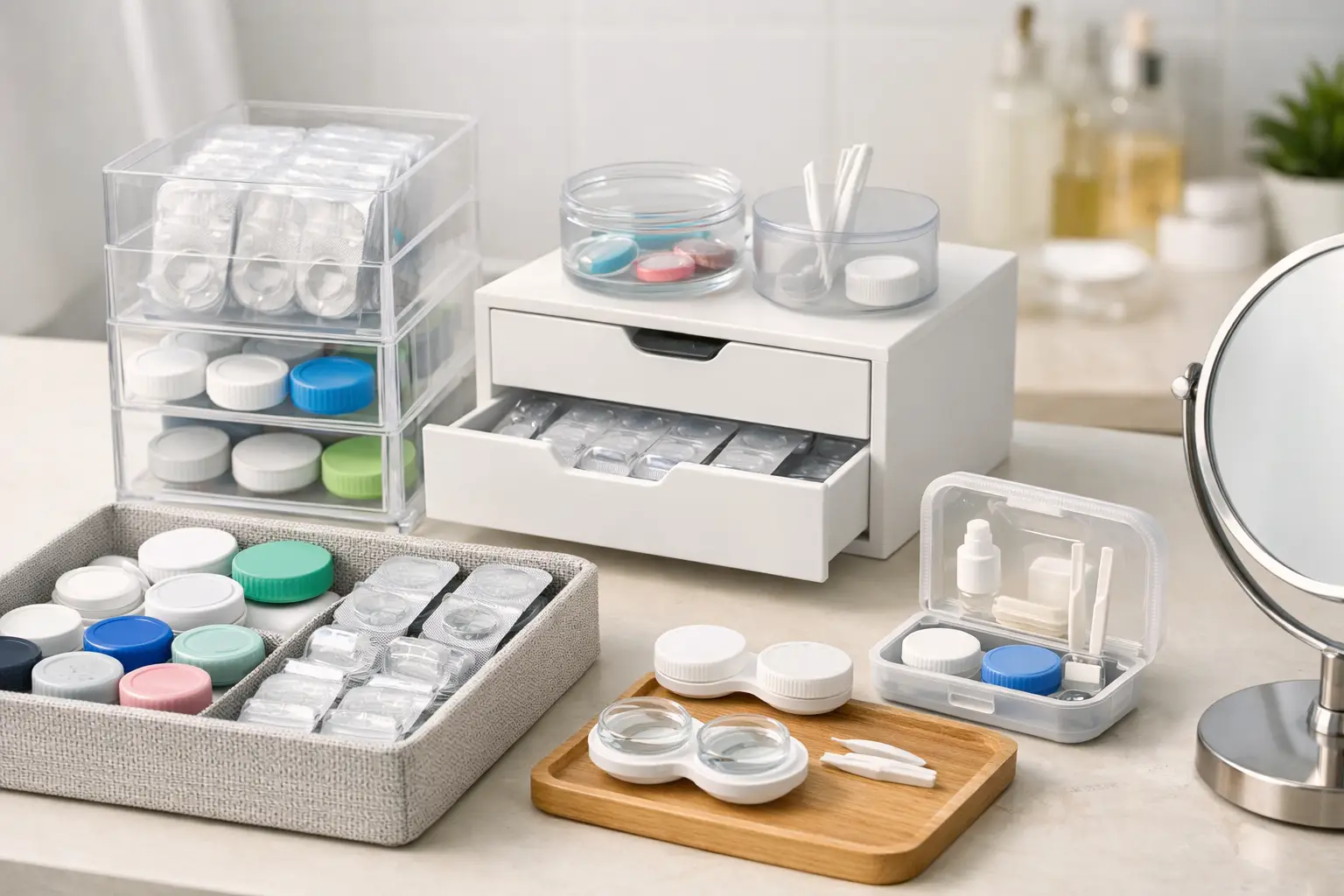
Small divided organizers are a strong starting point because they stop cases from rolling together in a drawer or medicine cabinet. Assign one compartment to one pair and label the outside with the most useful identifier, such as the lens color, prescription strength, or intended use.
For example, labels like “Daily Clear,” “Brown -2.50,” or “Backup Left/Right” are more helpful than vague labels such as “Contacts 1” and “Contacts 2.” The goal is instant recognition.
This approach works well for a small collection, but it has one limitation: a tiny compartment may hold the case without holding the original details. Keep a written record or trimmed package label in the same section whenever possible.
2. Use Color Coding, But Do Not Rely on It Alone
Color coding makes a multi-pair routine faster. You can assign one color to each lens type, or use matching colored labels on the storage compartment and lens case. This is especially useful when several cases look nearly identical.
However, color should support your system, not replace the details. A blue label might tell you which pair is your blue cosmetic lens, but it will not tell you its expiration date or whether it is the correct prescription. Pair color coding with a short written label.
For people who wear colored contacts regularly, record both the color name and brand. “Green” may not be specific enough when you own more than one shade or style.
3. Store the Case With a Quick Lens Record
One of the most effective contact lens boxes storage ideas is creating a simple record for every pair. This can be a small card, a printed label, or the portion of the original box that contains the key information. Keep it directly behind, beneath, or beside the matching lens case.
Your record should include the details you are most likely to forget:
- Prescription and any difference between the right and left eye
- Lens color, style, or brand name
- Purchase date and expiration date
- Replacement schedule, such as daily, monthly, or yearly
- Where you purchased the lenses, if that helps with reordering
This one step changes storage from a place to put cases into a reliable reference system. Instead of searching through old emails, packaging, or multiple drawers, you can check the information where the lenses live.
4. Create a Dedicated Lens Zone in Your Bathroom
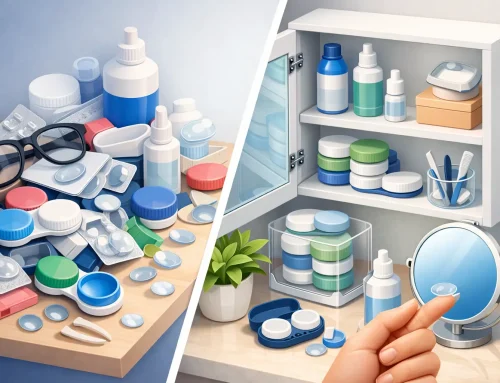
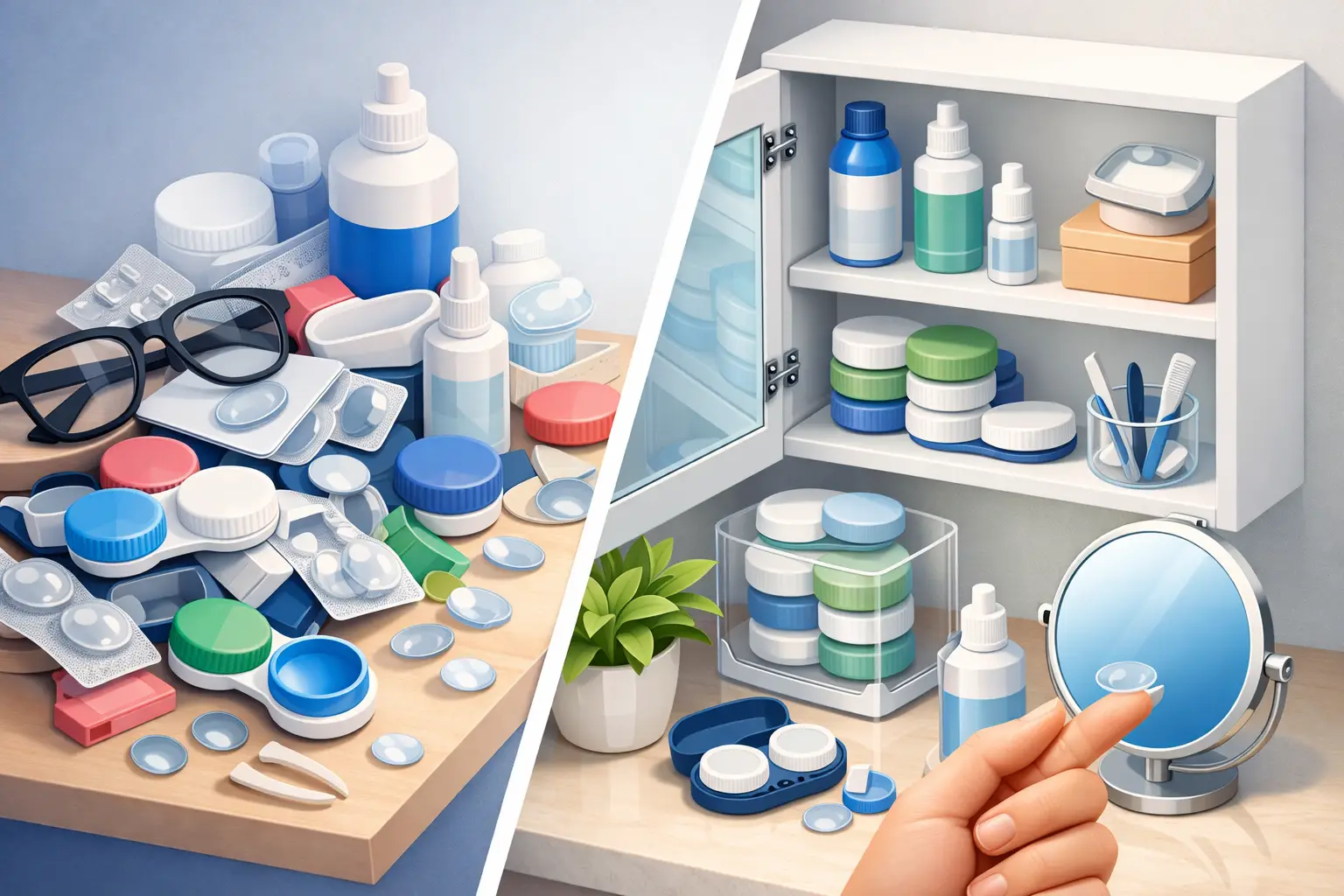
A contact lens routine gets messy when supplies are scattered between the counter, a vanity drawer, and a medicine cabinet. Choose one clean, dry zone for your lenses and related supplies. It should be easy to access during your normal morning or evening routine, without competing with unrelated items.
Keep lens cases, solution, approved care supplies, and your lens records together. Avoid placing cases loose near makeup, hair accessories, or old skincare containers. Those areas collect clutter quickly, and clutter makes it easier to grab the wrong item or overlook an expired pair.
A drawer organizer is useful if you prefer a clean counter. A shelf or cabinet bin can work if your bathroom storage is limited. The container matters less than the habit: every lens item returns to the same designated spot.
5. Separate Active Pairs From Backups
Not every pair needs equal access. The lenses you are currently using should be in the front or top section of your organizer. Backup lenses, unopened packages, and pairs you wear only occasionally can stay in a separate section behind them.
This simple division helps prevent an easy mistake: opening a backup pair because the active pair was not clearly separated. It also makes inventory easier. When the backup section starts looking thin, you know it is time to reorder rather than discovering it when you have no lenses left.
For cosmetic lenses, consider separating occasional-use pairs from the ones you wear most often. That reduces the chance of reaching for an old pair simply because it was closest.
6. Make Expiration Dates Visible First
Expiration dates are too important to hide on the bottom of a box or in small package print. Write each date in a format that is easy to scan, such as “Expires 08/2027,” and place it where you will see it before opening the compartment.
If several pairs are stored together, arrange them so the earliest expiration dates are closest to the front. This is the same practical logic used for pantry storage: use what expires first before opening something newer.
It also helps to check your organizer once a month. This takes only a few minutes and gives you a chance to remove outdated packaging, confirm what is active, and spot pairs that need replacement. If a lens seems questionable or you are unsure of its status, do not guess. Follow the instructions from your eye care professional and the lens manufacturer.
7. Avoid the Loose-Box Drawer
A drawer full of original contact lens boxes can feel organized because the packaging is still there. In practice, it often creates a different kind of confusion. Boxes shift, labels face different directions, and several nearly identical packages become hard to sort through.
Original packaging still has value because it contains your lens information. The better option is to keep only the useful details in a format that works with your storage system. You may save the relevant label or record the information on a card, then discard unnecessary outer packaging once you have confirmed what you need to retain.
This is particularly helpful for people who buy multiple boxes at once. You can keep your details without turning a bathroom drawer into a stockroom.
8. Choose a Purpose-Built System for Multiple Pairs
If you manage several lens cases, prescriptions, or colors, a general-purpose bin can only do so much. A purpose-built organizer gives each case a home while keeping the associated information visible and easy to review.
EYEBOX® is designed for that exact problem: storing lens cases alongside prescription details, color information, expiration dates, and purchase records in one organized system. Instead of relying on memory or saving a pile of boxes, you can see what each pair is and decide what you need quickly.
The right system should feel simple enough to maintain. If organizing your lenses requires a long spreadsheet, complicated coding, or constant rearranging, it probably will not last. Clear compartments, readable labels, and a repeatable routine are usually more valuable than an elaborate setup.
A Small Routine That Prevents Big Mix-Ups
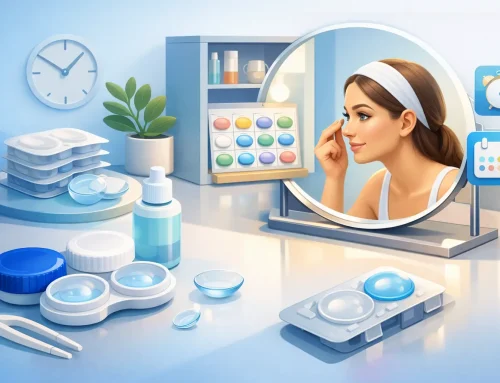
Once your storage is set up, protect it with a few consistent habits. Return each case to its assigned space after use. Update the record when you open a new pair. Remove expired or no-longer-used items during a monthly check.
These actions are small, but they solve the frustrating moments that lead to uncertainty: wondering which case is which, searching for a prescription, or realizing too late that a pair has expired. A well-organized lens box gives you one less thing to keep in your head and a much clearer routine every time you reach for your contacts.