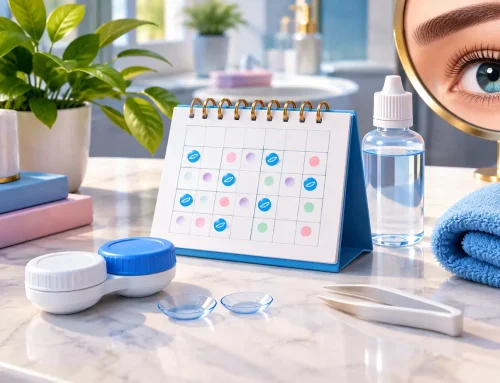
That tiny lens box can answer the questions you always seem to have at the worst moment: What is my prescription? Which color did I buy? When do these lenses expire? Learning how to store lens boxes gives you one dependable place for those details instead of relying on memory, old emails, or a bathroom drawer full of look-alike cases.
For contact lens wearers who use more than one pair, the packaging is not just clutter. It is the label for what you are wearing. A simple storage routine helps you keep prescription and cosmetic lenses separate, avoid replacing the wrong pair, and know when it is time to reorder.
Why lens boxes are worth keeping
Most lens packaging is discarded because it feels disposable. The problem is that the box often holds information you may need later: lens power, base curve, diameter, brand, color or pattern name, lot information, expiration date, and purchase details.
This matters even more when you wear colored contacts or switch between multiple prescriptions. Two lens cases may look identical once they are out of their original packaging. Without a label, it is easy to forget whether a pair is your everyday lens, a backup, or a cosmetic pair you only wear occasionally.
Keeping the box does not mean saving every piece of cardboard forever. It means preserving the information that helps you use and replace your lenses correctly. Think of it as creating a simple reference system for a personal care routine that can otherwise become confusing fast.
Start with a clean, dry storage area
Lens boxes should be stored away from splashes, humidity, and loose bathroom products. A cabinet, drawer, or shelf can work well if it stays dry and is easy for you to access during your regular lens routine.
Avoid leaving boxes on a counter beside the sink. Water can soften cardboard, blur printed details, and create a messy pile that is harder to sort through. Do not store them where they can be crushed beneath towels, cosmetics, or hair tools, either. If the details are no longer readable, the box cannot do its job.
Before organizing, clear out packaging from lenses you no longer own or use. Keep only boxes that match active lenses, unopened lenses, or a recent purchase you may need to reference. This small reset keeps the system useful instead of turning it into a collection of outdated information.
Match each lens box to its case
The most helpful rule is simple: a lens case should never be separated from the information that identifies it. If you have one active pair, this may be easy. If you rotate several pairs, create a clear match between each case and its corresponding box.
Place the lens case with its box whenever possible, or store it in a designated spot directly beside the labeled package. If you use separate right and left lens powers, make sure the box information remains visible rather than buried underneath other items.
For colored lenses, write a brief identifier on a removable label if the product packaging does not make the color easy to spot at a glance. Use the exact color name from the box, such as Hazel Brown or Gray, rather than a vague note like brown. Similar shades can look very different once you are trying to reorder.
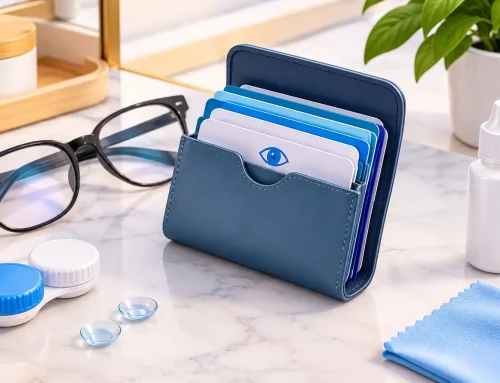
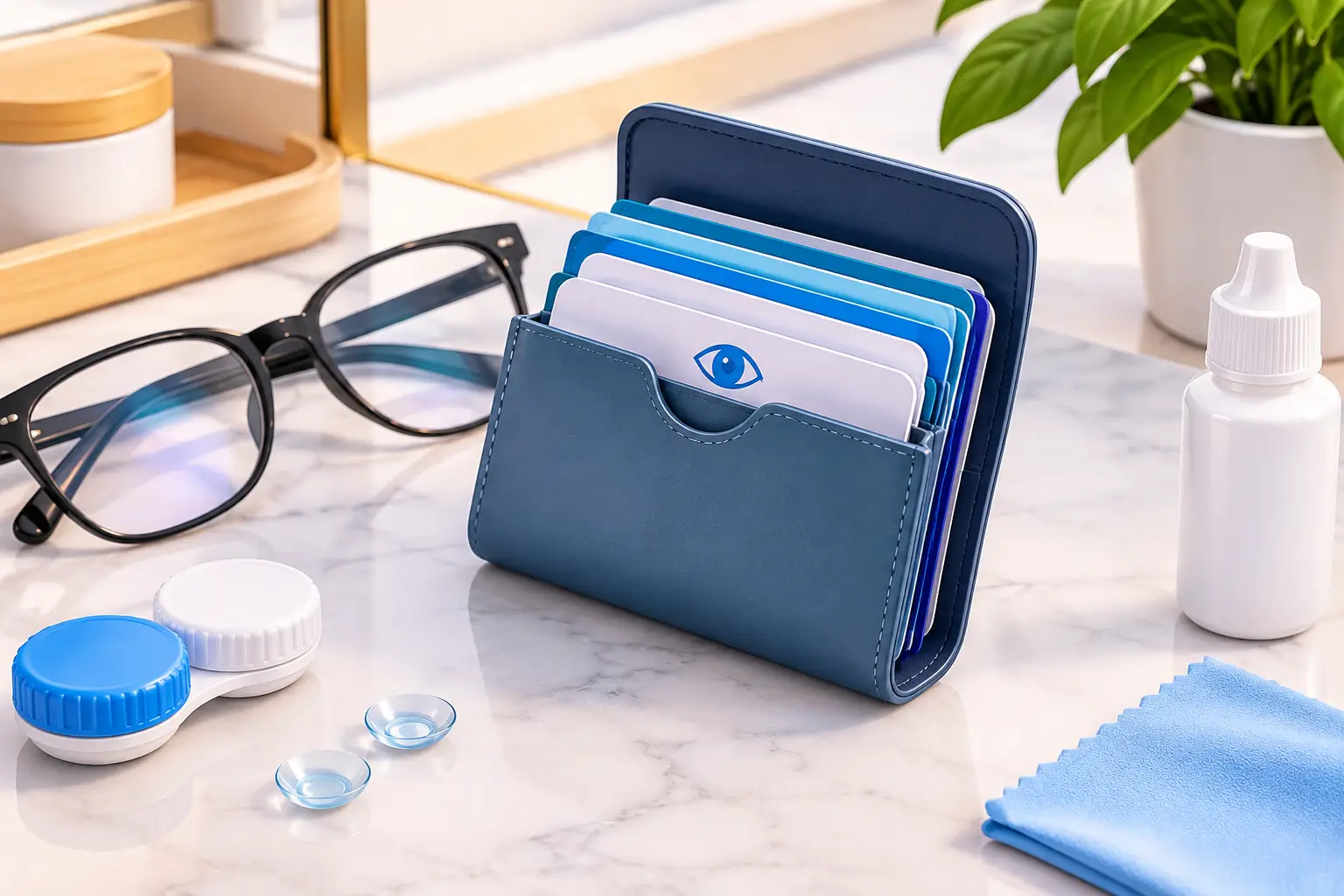
A purpose-built organizer such as EYEBOX can keep cases together while preserving the prescription, color, expiration, and purchase details that usually get lost when packaging is tossed aside. The goal is not to create a complicated filing system. It is to make the right information visible when you need it.
Sort boxes by how you use your lenses
There is no single perfect arrangement. The best setup depends on how many lens types you own and how often you use them. Choose one category that makes immediate sense to you, then use it consistently.
If you wear one prescription lens type every day and occasionally wear cosmetic lenses, separate everyday lenses from occasional lenses. This prevents a special-use pair from getting mixed into your daily routine. If you regularly rotate colors, sorting by color may be more useful. If you have different powers or lens types, sorting by prescription or purpose may be the clearest choice.
For a larger collection, use these four categories:
- Everyday prescription lenses
- Backup or unopened lenses
- Colored or cosmetic lenses
- Expired, discontinued, or no-longer-used lenses
The last category should be temporary. Expired or discontinued lens packaging can be useful for checking a past order, but it should not sit beside active products where it can cause confusion. Once you have recorded the information you need, remove it from your main storage area.
Keep the details visible, not just saved
A box tucked into a crowded drawer is technically stored, but it is not necessarily useful. Position packages so the most relevant panel can be read without pulling everything out. This is especially helpful for expiration dates and prescription values.
If you remove an inner tray, cut up a box, or transfer lenses into another container, write down the original details first. Keep the brand name, lens name, power, base curve, diameter, color, expiration date, and the date you purchased or opened the lenses. You may not need every detail daily, but having it in one place can save you from guessing later.
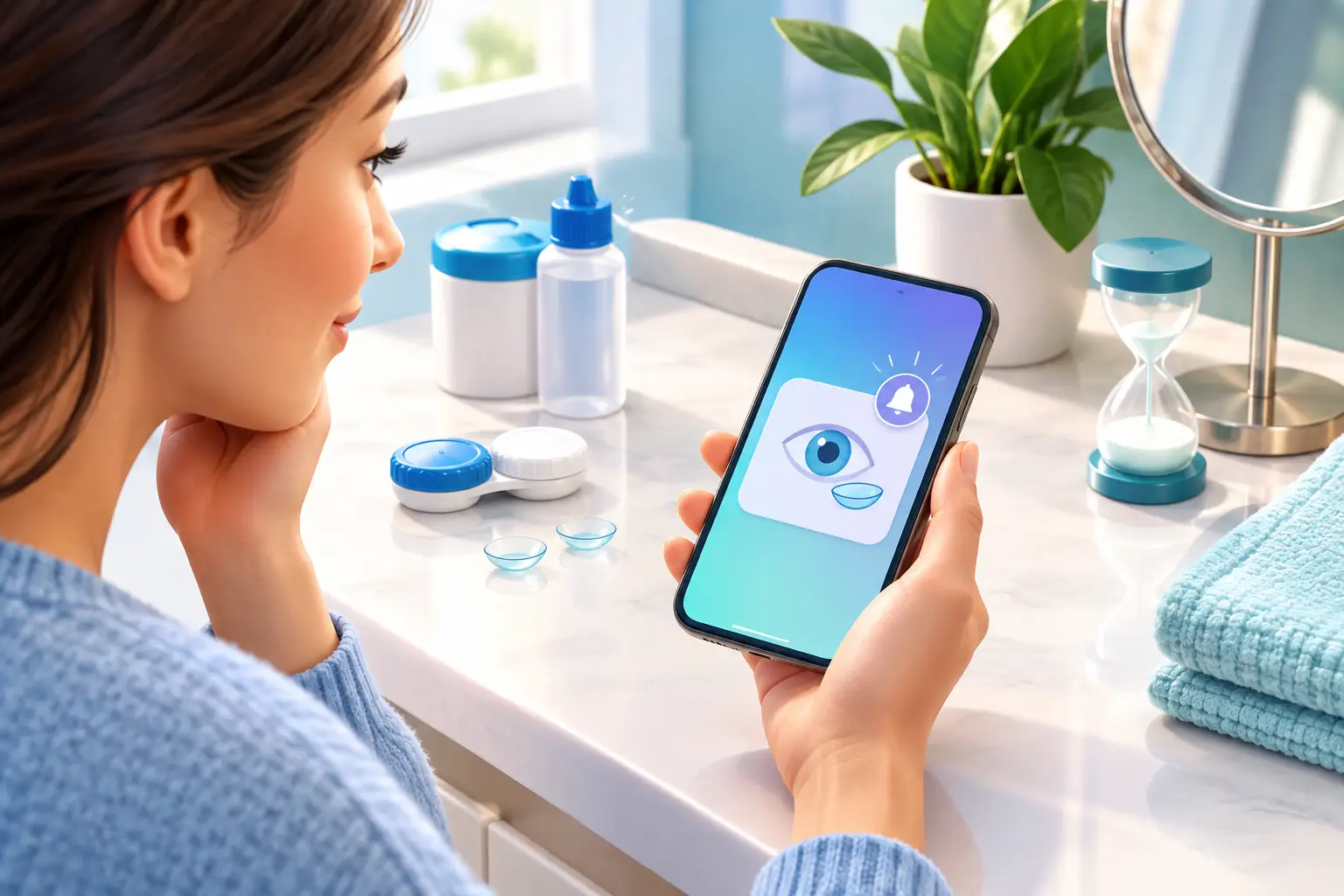
A quick check once a month is usually enough. Look for boxes with expiration dates approaching, packaging that has become damaged, or lens cases that no longer match the information beside them. This takes only a few minutes and prevents the slow buildup of mystery cases.
Separate unopened lenses from lenses in use
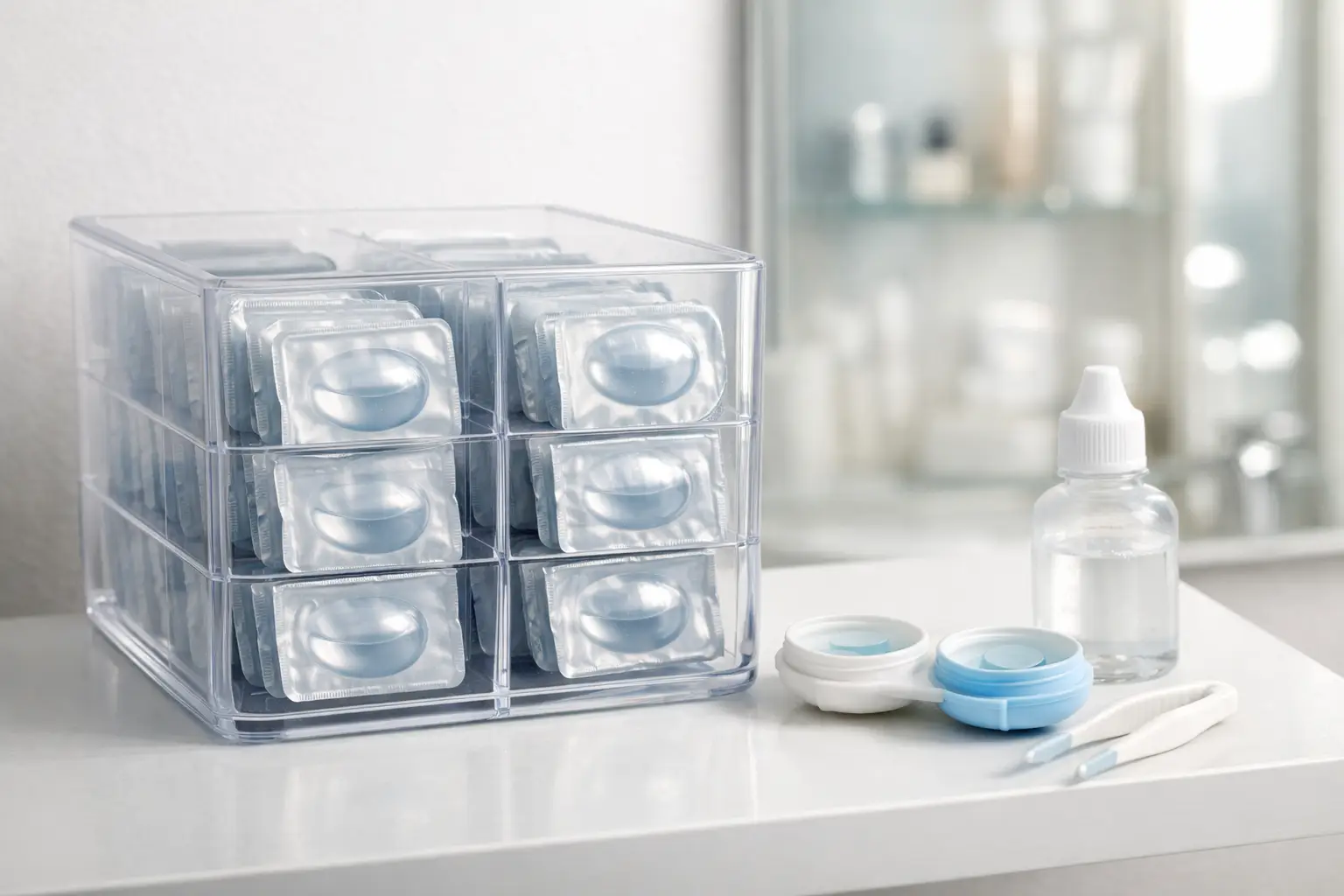
Unopened blister packs and active lens cases have different needs. Unopened lenses should remain in their original packaging until you are ready to use them. Their box helps you identify the product and confirm the expiration date before opening a pack.
Lenses currently in use need a clear connection to their box, but the box itself should stay clean and dry. Keep it adjacent to the case rather than using it as a surface for wet cases or solution bottles. If a case leaks or is replaced, you still have the package details available.
This separation also helps with reordering. When your active pair is nearing the end of its recommended replacement schedule, you can quickly check whether you have unopened lenses available and confirm you are ordering the same prescription, color, and product.
Avoid these common storage mistakes
The most common mistake is throwing out the box before recording the information on it. A close second is placing every case into one container with no labels. That setup may look tidy at first, but it creates uncertainty as soon as you add a second pair.
Another issue is keeping boxes long after the lenses are gone. Old packaging can make it harder to tell what is current, especially if your prescription has changed. Keep a record of past products if you find it helpful, but store it separately from your active lens information.
Finally, do not rely on the color of a lens case alone. Cases are easy to replace, and different brands often use similar colors. The printed product details are the more reliable reference.
Make storage part of your lens routine
The easiest system is one you maintain while the information is still in your hand. When new lenses arrive, place the box in its assigned spot before you open anything. Match the active case to the package, check the expiration date, and remove any old box that no longer applies.
When your eye care professional updates your prescription, move prior packaging out of the active section right away. This creates a clean before-and-after line: the lenses you are using now stay front and center, while older details cannot accidentally guide your next purchase.
A well-stored lens box is a small thing, but it removes a lot of everyday uncertainty. Give each pair a clear home, keep the printed details readable, and your lens routine becomes easier to manage every time you reach for a case.