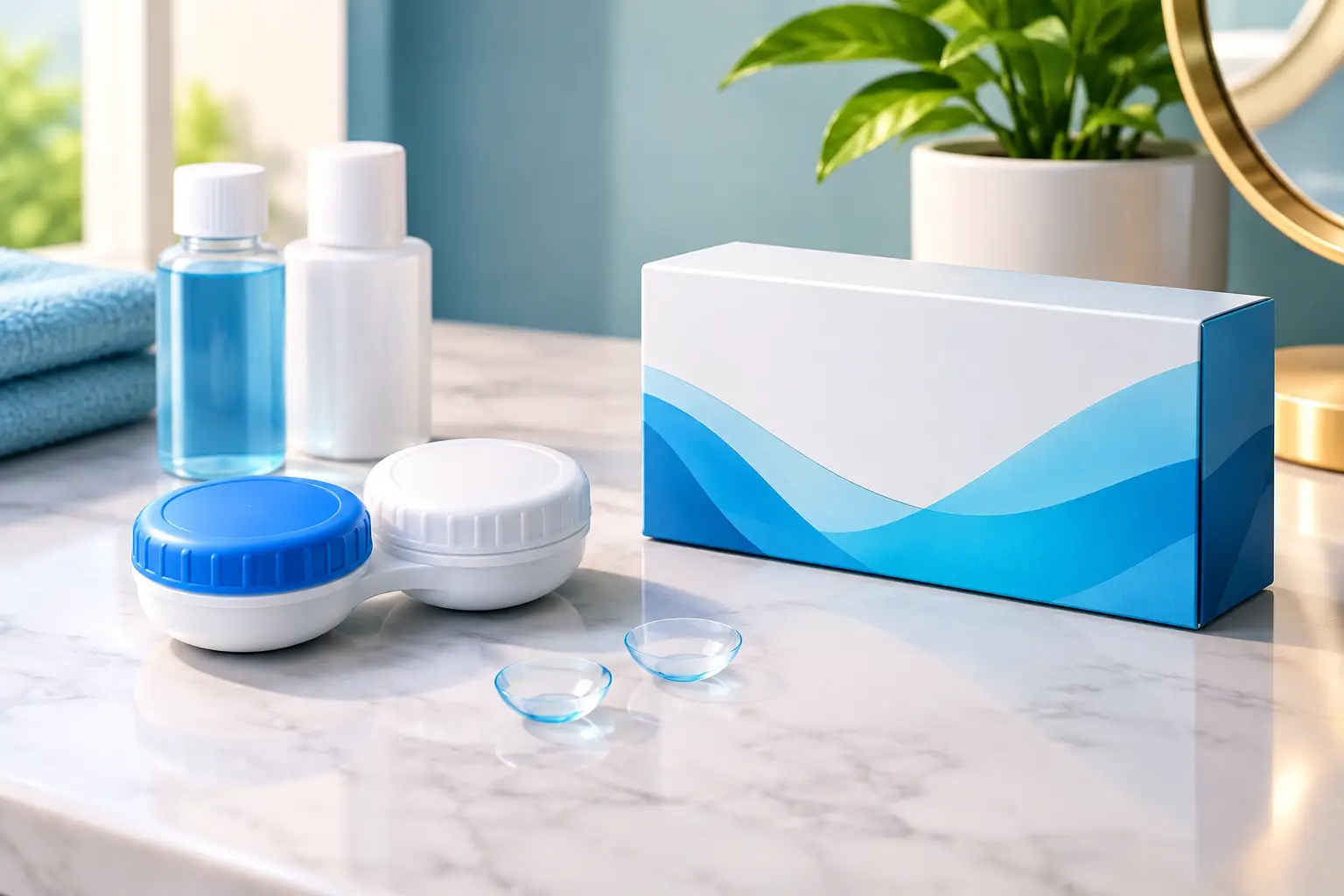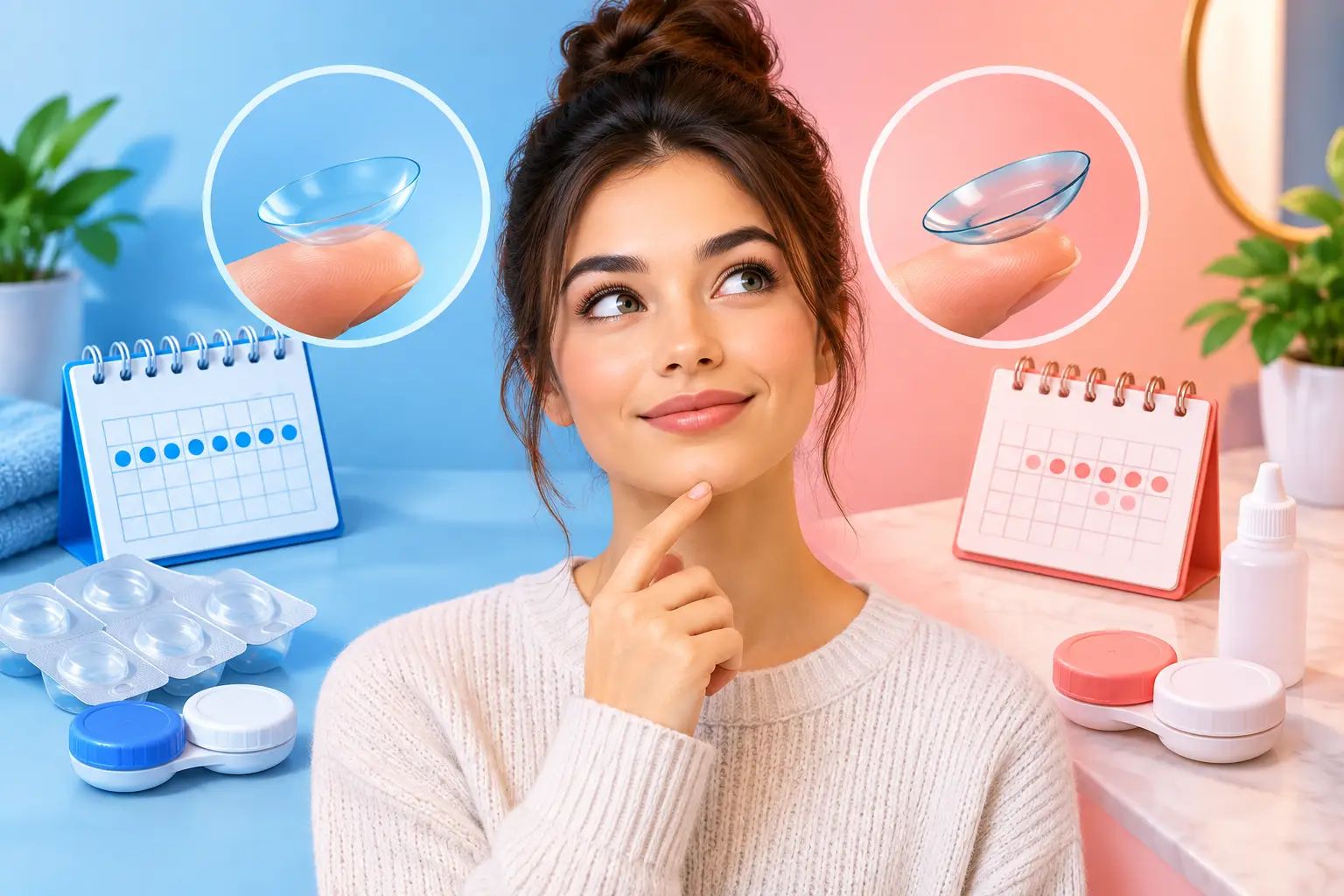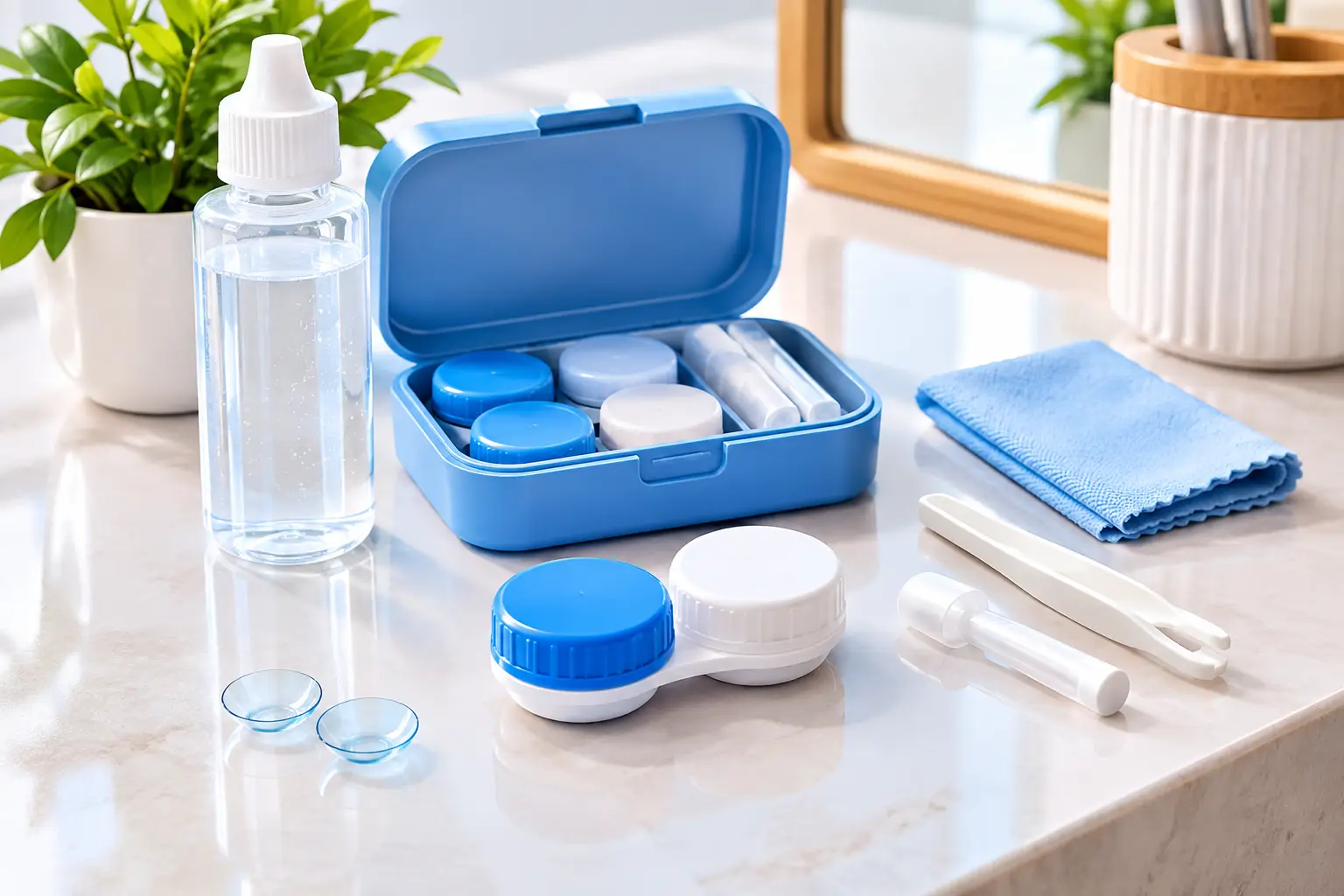
If your contact lens cases keep ending up on the bathroom counter, in random drawers, or mixed in with old packaging, you already know the real issue behind where to store contact lens cases. It is not just about finding an empty spot. It is about keeping your lenses clean, easy to identify, and tied to the details you actually need later, like prescription, color, purchase date, and expiration.
For people who wear more than one pair, this gets messy fast. A plain lens case might hold daily vision lenses, colored contacts for weekends, or a backup pair you opened last month and barely remember buying. When every case looks the same, storage stops being a small chore and starts creating avoidable mistakes.
Where to store contact lens cases for daily use
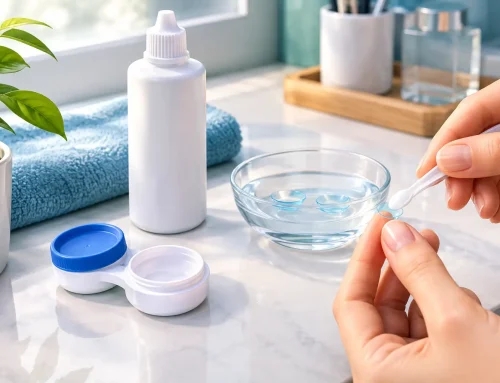
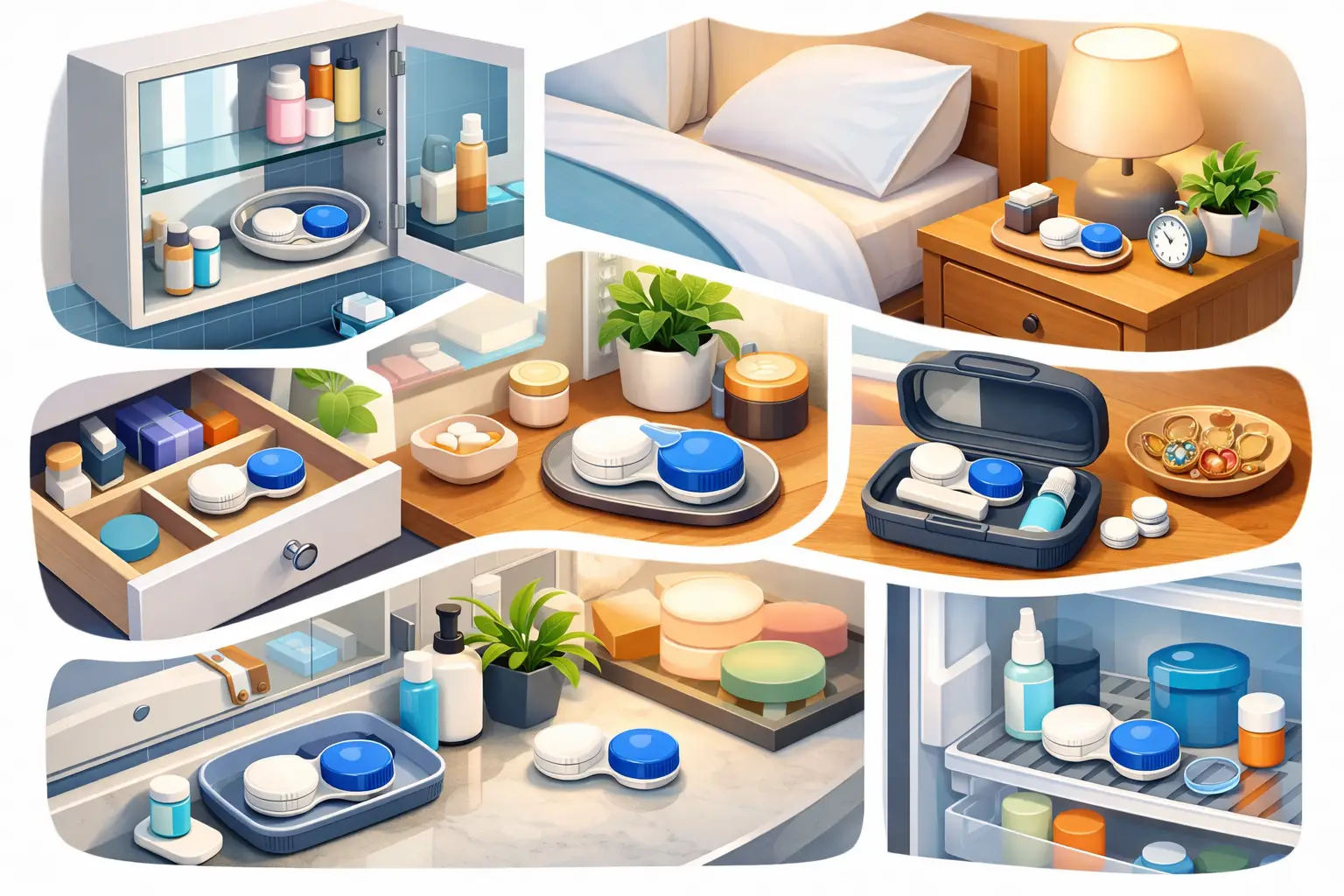
The best place to store contact lens cases is a clean, dry, dedicated space that stays consistent. For most people, that means near the sink but not directly on the sink, not on an open counter, and not shoved into a crowded bathroom drawer where cases get lost under clips, makeup, and cotton swabs.
A good storage spot should do three things well. It should keep the case easy to reach during your routine, protect it from moisture and clutter, and help you remember which pair is which. If a storage area only solves one of those, it usually fails after a week.
Bathroom counters are convenient, but they are also one of the worst long-term options. They collect splashes, product residue, and general clutter. That matters because lens care works best when the items you use stay clean and intentionally placed, not exposed to everything happening around the sink.
Medicine cabinets can work better, but only if they are organized. If your cabinet already holds skincare, medications, and dental supplies, your lens cases can disappear into the shuffle. The cabinet itself is not the problem. The lack of a system is.
Bedroom vanities and dresser drawers are another common choice, especially for people who wear cosmetic lenses while getting ready. This can be a smart setup if the area stays dry and the cases are stored upright in a clearly assigned section. It becomes a bad setup when lens cases get tossed in beside beauty tools and old receipts.
The best storage spot is dedicated, not shared
The simplest answer to where to store contact lens cases is this: give them their own space.
That sounds obvious, but most lens users do the opposite. They borrow space from other routines instead of creating a routine for their lenses. The result is predictable. Cases get separated from their packaging. Expiration dates are forgotten. Similar pairs get mixed up. You find yourself opening multiple cases just to figure out which is which.
A dedicated storage system fixes more than clutter. It helps you keep the practical information attached to each pair so you do not have to rely on memory. That is especially useful if you rotate between prescription lenses, colored contacts, and occasional-use pairs.
Instead of asking which drawer has room, it helps to ask a better question: can this storage spot keep the case, the lens identity, and the timeline together? If not, it may be convenient today but frustrating later.
What to avoid when deciding where to store contact lens cases
Some storage locations seem harmless but create recurring problems.
Avoid storing contact lens cases directly beside the sink where they are exposed to water splashes and toothpaste residue. Avoid open shelving in humid bathrooms if the space collects steam and dust. Avoid loose storage in overcrowded drawers where cases slide around and labels disappear. And avoid separating the case from the information that came with the lenses, because that is usually how people lose track of replacement schedules and lens specifics.
Another common mistake is keeping only the active pair nearby and tossing unopened or backup pairs somewhere else. That split system sounds manageable until you need to confirm which pair is expired, which color you bought last time, or which prescription belongs to which case. Once the details are disconnected, every pair starts requiring guesswork.
There is also a hygiene trade-off with decorative storage. Small trays and containers can look neat, but if they are not designed to keep contact lens items sorted clearly, they turn into one more place where accessories pile up. Pretty storage is not useful if it still makes you stop and double-check every case.
A better setup for people with multiple pairs
If you only ever use one pair of lenses at a time, almost any clean and dry storage area can work. But if you use multiple pairs, the storage question changes. Now you need visibility, separation, and tracking.
That is where a purpose-built organizer makes more sense than a random household container. The goal is not just to hold cases. The goal is to know what each case contains without digging, guessing, or relying on memory.
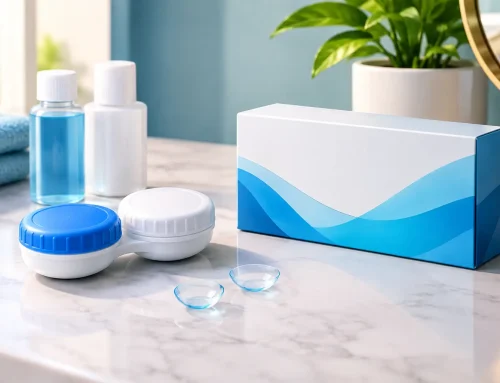
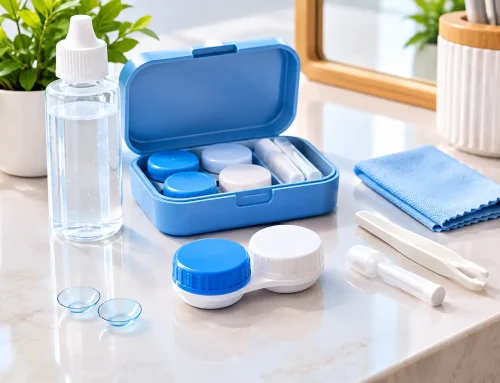
A specialized organizer like EYEBOX gives each lens case a defined place while also preserving the information users usually lose once the original packaging is thrown away. That includes prescription details, color, expiration date, and purchase information. For someone managing several similar-looking pairs, that kind of setup removes a lot of low-level frustration from the routine.
The difference is simple. Without a system, storage is passive. You put the case somewhere and hope you remember the details later. With a system, storage becomes active. Each pair has a place, an identity, and a timeline.
How to organize the space you already have
You do not need a full bathroom overhaul to improve lens case storage. You need one consistent zone and a few decisions made in advance.
Start by choosing a dry area you already use during your lens routine. That might be one shelf in a medicine cabinet, one section of a vanity, or one drawer compartment that is not shared with unrelated items. The key is consistency. If your case lives in a different place every few days, the routine will always feel scattered.
Next, separate current-use pairs from extras in a way that still keeps all information visible. If your lenses differ by prescription, color, or wear schedule, those differences need to be obvious at a glance. This is where most improvised setups break down. They store the physical case but not the context around it.
It also helps to remove expired or discontinued pairs right away. Contact lens storage gets confusing when old cases stay mixed in with active ones. A clean system is easier to maintain than a crowded one.
Finally, think beyond neatness. A storage solution should make your routine easier tomorrow, not just make the shelf look better today. If it takes extra effort to remember what you stored and why, the setup is incomplete.
The real goal is less guesswork
When people search for where to store contact lens cases, they are often trying to solve a bigger problem without naming it. They want less clutter, yes, but they also want fewer mistakes. They want to stop wondering whether a case is the blue pair or the gray pair, whether those lenses are still within their wear period, or whether the prescription in that unlabeled case is even current.
Good storage reduces that uncertainty. It keeps your routine cleaner and more controlled. It also respects the fact that contact lenses are not throwaway accessories. They are part of your personal care routine, and for many people, they are a real investment.
That is why the best storage spot is rarely just a spot. It is a system that keeps the case protected, the details attached, and the routine easy to follow.
If your current setup makes you pause, search, or second-guess, it is probably not working as well as it should. The right place for your contact lens cases is the one that keeps everything clear the moment you need it.