A fresh pair of colored contacts can look almost identical to the last pair you opened. The difference may be a slightly warmer brown, a different replacement schedule, or a prescription that belongs in the other eye. When you decode colored lens packaging before you discard the box, those details stay clear instead of becoming a bathroom-drawer mystery.
Colored contact lens packaging is more than a wrapper. It is the record of what you bought, how it should be used, and when it should no longer be worn. For anyone who keeps more than one color, prescription, or lens schedule at home, reading and saving those details prevents mix-ups that are easy to make and frustrating to fix.
What colored lens packaging tells you
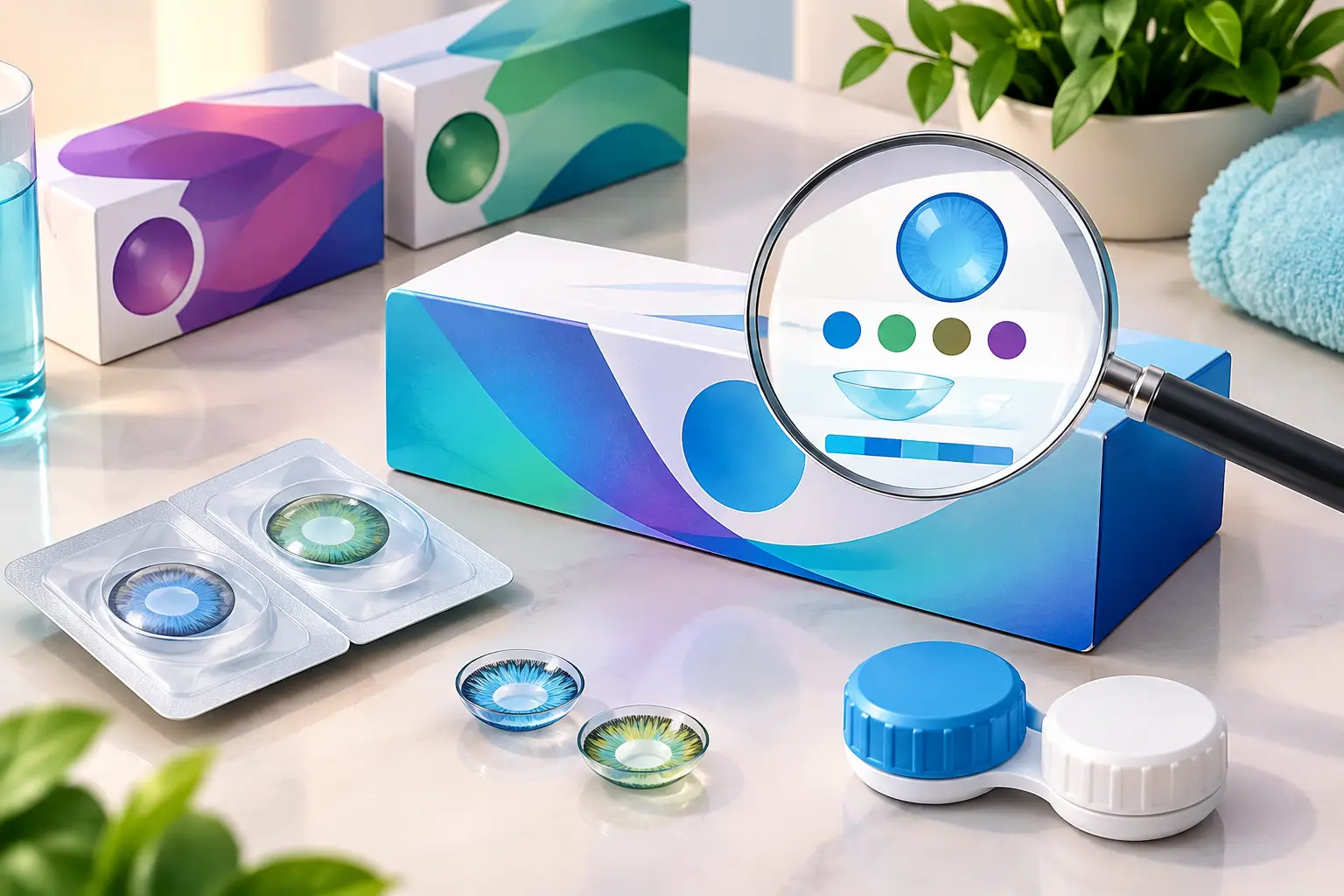
Most contact lens boxes and blister packs include the same core information, although the layout and product names vary by brand. The front may spotlight the lens color or collection name. The side panel or back label usually carries the prescription and manufacturing details that matter most once the lenses are out of the box.
Start by separating product information from medical and usage information. A shade name such as Honey, Gray, or Jade helps identify the look you intended to wear. It does not tell you which eye the lens belongs in, how long it can be used, or whether it matches your current prescription.
The details worth preserving are usually the lens brand, color name, power for each eye, base curve, diameter, lot number, expiration date, and replacement schedule. If your box includes a product code or purchase date, keep that too. It makes reordering and tracing a specific pair much simpler.
How to decode colored lens packaging line by line
Brand, collection, and color name
This is the easiest information to spot and often the first thing people remember. But color names can be surprisingly similar across collections. “Hazel” in one lens line may look very different from “Hazel” in another, especially when the lenses have different limbal rings, patterns, or opacity.
Write down the full brand and collection name with the shade. “Brown” alone is not enough if you own multiple brown lenses. A complete record helps you buy the same look again and avoid opening a pair you meant to save.
PWR, SPH, or power
PWR and SPH both refer to lens power, measured in diopters. A minus sign indicates correction for nearsightedness, while a plus sign indicates correction for farsightedness. If the values differ between your right and left eyes, label them separately right away.
Do not assume a colored lens with no obvious power is interchangeable with your prescription lenses. Some cosmetic lenses are plano, meaning they have zero corrective power, but they still need to be properly fitted and prescribed. Even lenses worn only for appearance sit directly on your eye and require the same care as corrective contacts.
BC and DIA
BC means base curve, the curvature of the lens. DIA means diameter, or the width of the lens in millimeters. These numbers can look minor, but they help describe how the lens is designed to fit.
A lens that worked well in one color line may not be the right match in another simply because the fit specifications differ. If you are unsure whether a new lens matches your prescription, follow your eye care professional’s guidance instead of relying on the color or a familiar brand name.
Right eye and left eye details
Packaging may use OD for the right eye and OS for the left eye. Some brands print each eye’s prescription on separate boxes, while others use a sticker or handwritten notation from the seller. This is where similar-looking cases cause the most trouble.
If both eyes have the same power, you still need to track the color, schedule, and expiration date. If they have different powers, keeping the original box information with each lens case is especially helpful. A quick label now is better than trying to compare tiny numbers later.
Replacement schedule
Look for wording such as daily disposable, weekly, biweekly, monthly, or yearly. This tells you how long a lens is intended to be used after opening, not just how long the unopened box can sit on a shelf.
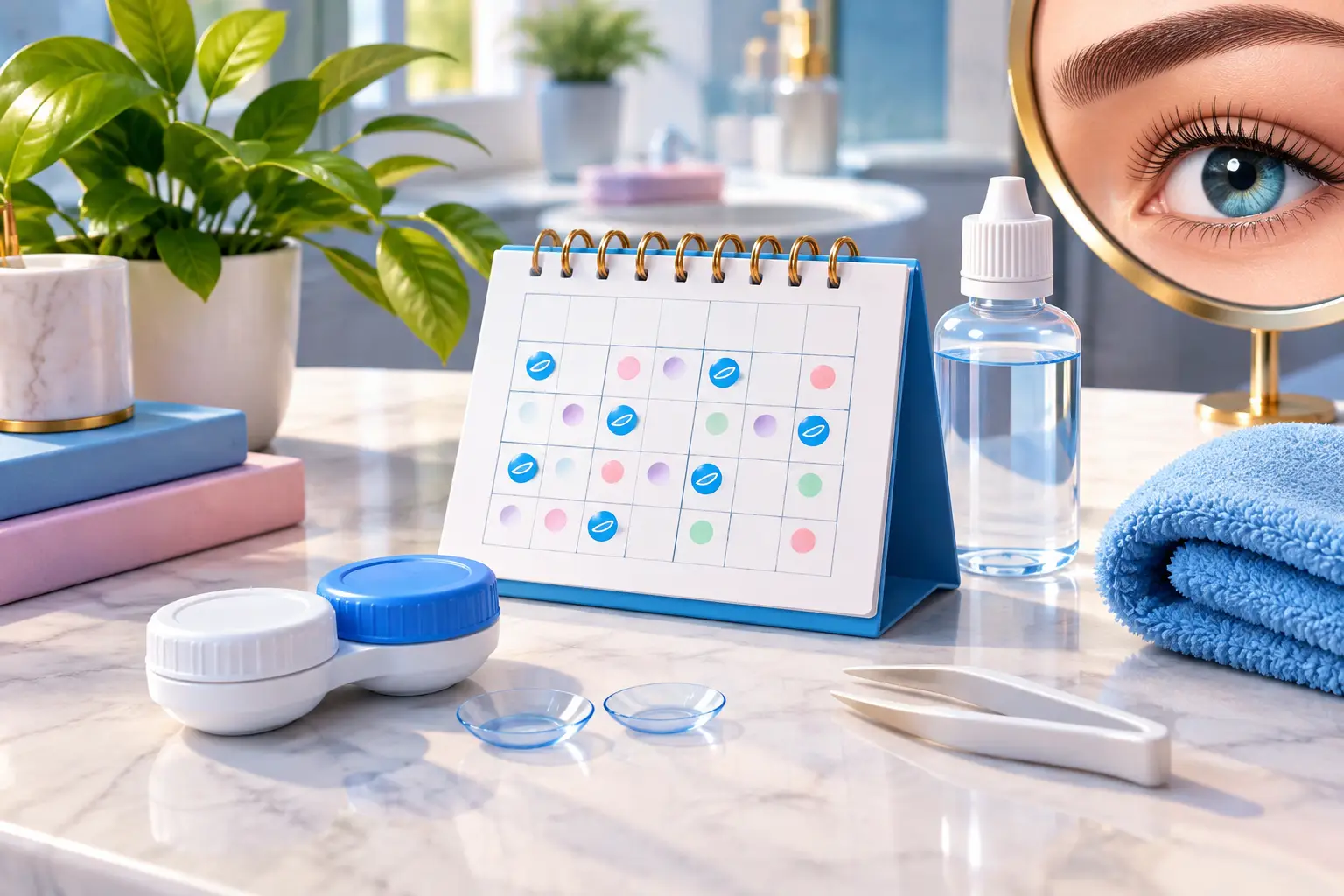
The replacement schedule is one of the most commonly lost details when packaging gets tossed. A lens can look clean and still be past its intended replacement period. Record the date you opened a reusable pair and the date it should be replaced. For daily disposable lenses, discard them after one use rather than storing them for another day.
Expiration date and lot number
The printed expiration date applies to the sealed, unopened lens package. Do not use a blister pack that is past its expiration date or has damaged packaging. The lot number identifies the manufacturing batch and can be useful if your seller, manufacturer, or eye care provider needs to identify the product.
These numbers are small, easy to overlook, and difficult to recover once the packaging is gone. A photo can work as a backup, but a clear physical record near your lens cases is easier to check during your everyday routine.
Why color names are not enough
Colored contacts invite a specific kind of clutter. You may have a natural everyday shade, a brighter pair for special occasions, and a backup box in the same color family. Once their outer packaging disappears, lens cases rarely provide enough space to identify every detail.
That creates three common problems: you forget which shade is in which case, you lose the prescription information needed to reorder, and you cannot remember when the lens was opened. None of those issues are solved by guessing based on the lens color in solution. Lighting, lens patterns, and even the color of the case can make visual identification unreliable.
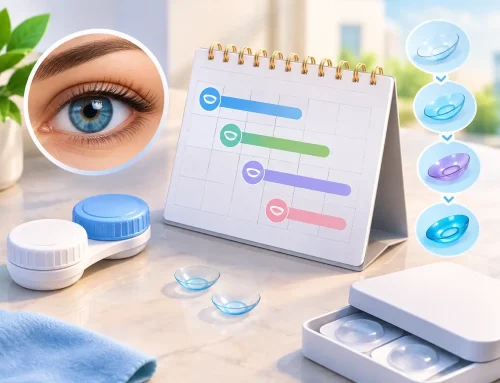
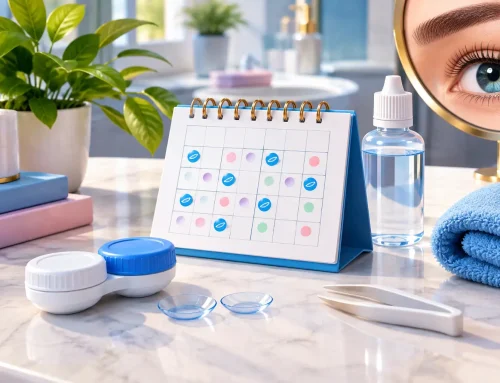
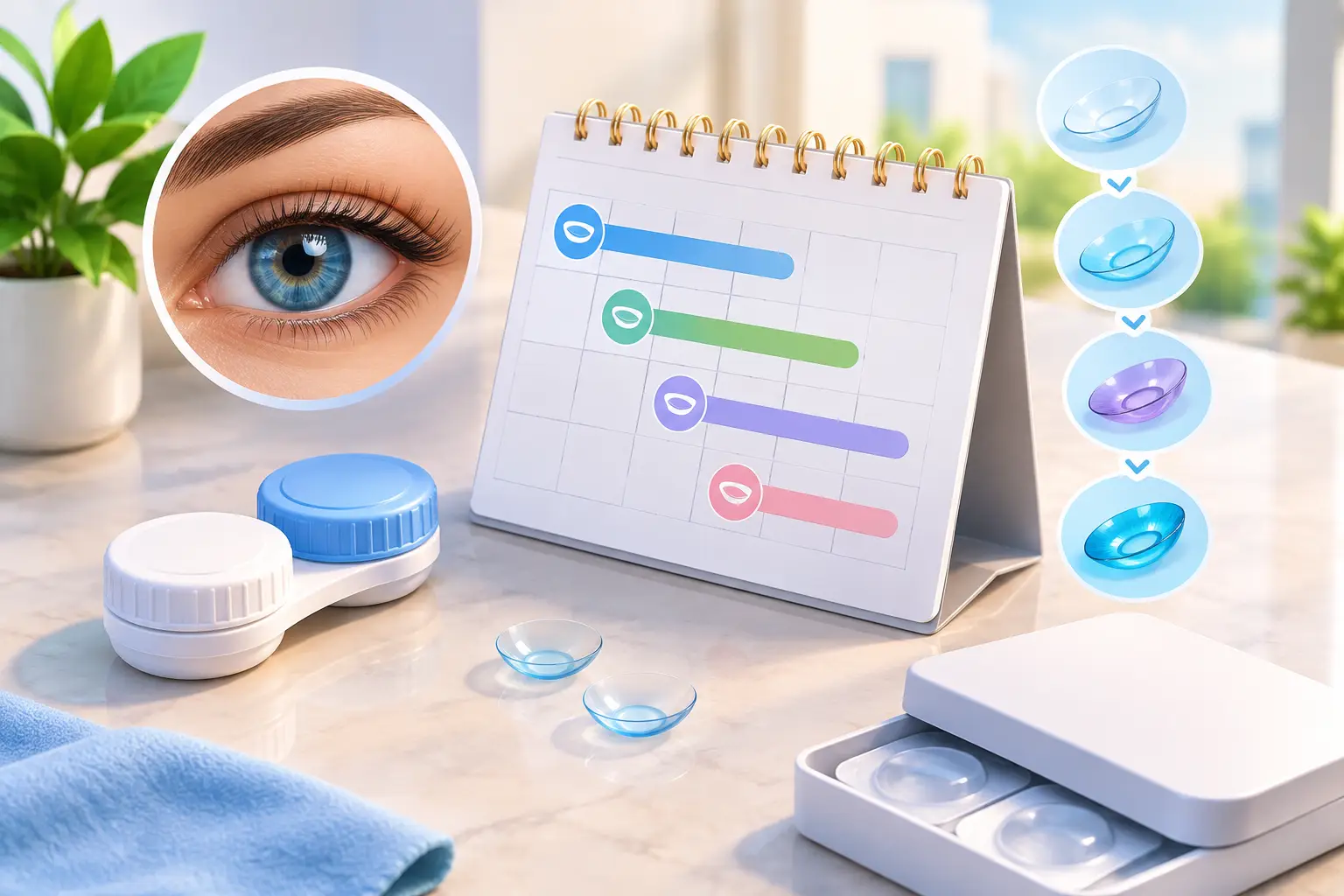
A simple labeling habit gives each pair a clear identity. Keep the color name next to the brand, prescription, and opening date. If you rotate pairs, add a short note about when you last wore them. The goal is not to create paperwork. It is to make the information available in seconds.
Build a simple system for multiple lens pairs
The most useful system is the one you will maintain. Before throwing away a new colored lens box, transfer its key details to the place where you store the lens case. Keep one record per pair, not one record per color category.
For each pair, capture:
- Brand, collection, and exact color name
- Right-eye and left-eye power, plus BC and DIA when shown
- Replacement schedule and the date the pair was opened
- Unopened-package expiration date and lot number
- Purchase date or reorder details if you want an easier buying record
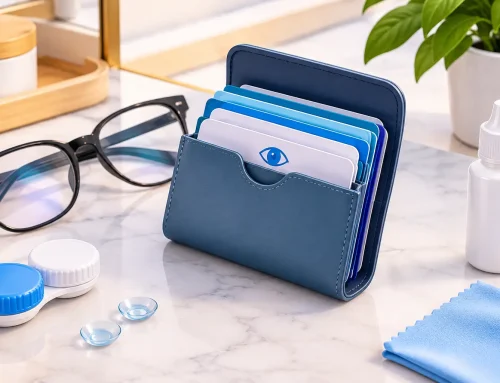
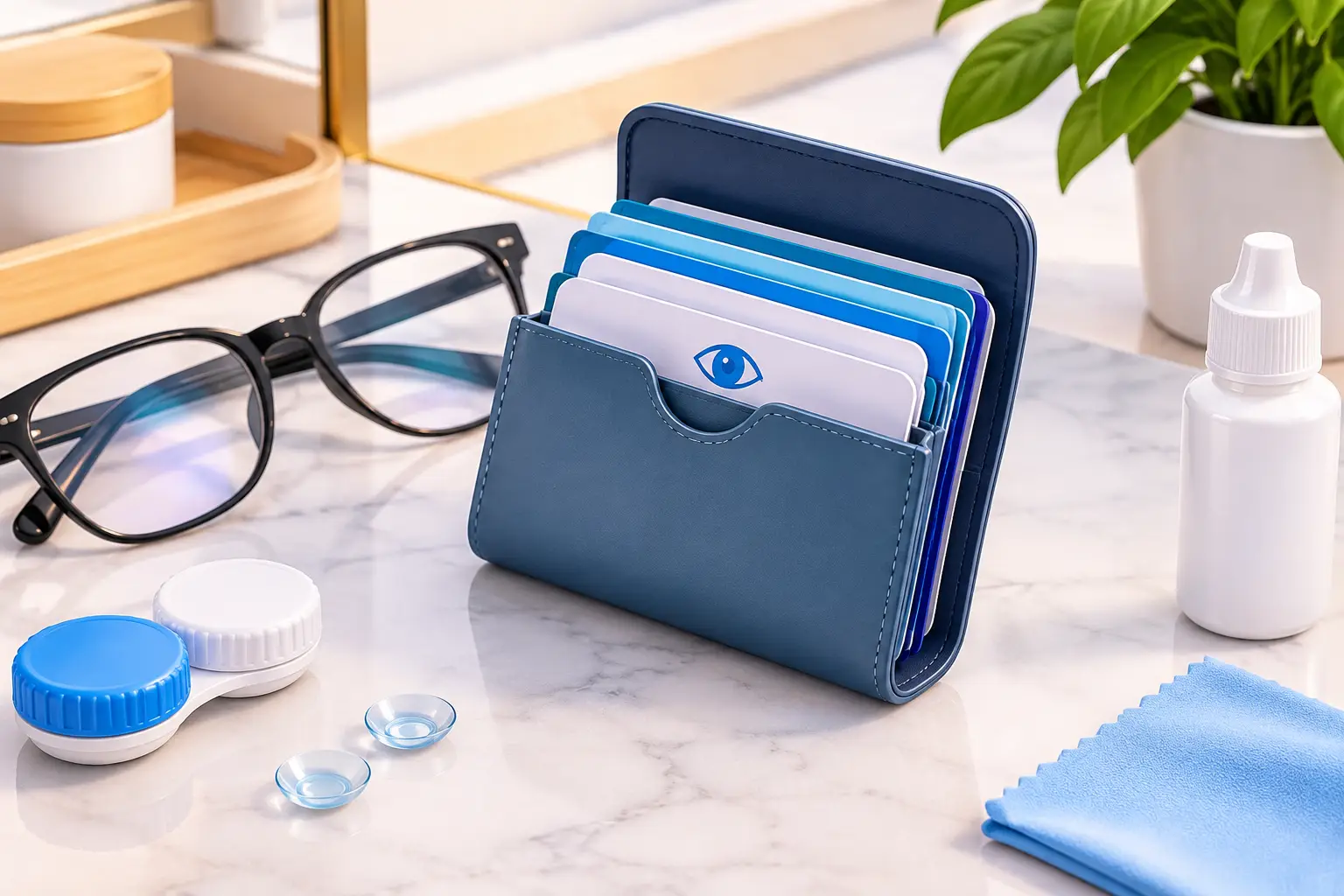
If you wear only one pair at a time, a labeled case area may be enough. If you own several pairs, a dedicated organizer makes the routine much easier to manage. EYEBOX is designed to keep lens cases and their essential records together, so the details do not get separated from the lenses they describe.
Set up your system when the lenses are new and the label is still in front of you. Trying to rebuild details weeks later often means searching old emails, comparing cases, or guessing at dates. The few minutes spent recording the information can save a lot of daily second-guessing.
Check packaging before opening a new pair
Reading the label is only part of the routine. Inspect the box and individual blister packs before opening them. The packaging should be sealed, intact, and within its printed expiration date. The lens should be stored in its original solution until you are ready to use it.
If a blister pack is leaking, punctured, cloudy, or otherwise damaged, do not wear that lens. If your eyes become red, painful, light-sensitive, or your vision changes while wearing contacts, remove the lenses and contact an eye care professional promptly. Organization helps prevent avoidable mix-ups, but it does not replace proper lens care or professional advice.
Make the label work after the box is gone
The best time to decode colored lens packaging is before the packaging enters the trash. Read it once, record what matters, and place that record with the correct lens case. From then on, choosing a pair becomes a simple decision instead of a search for missing information.
A clear label protects more than your favorite color. It gives you a calmer routine, a cleaner storage area, and the confidence of knowing exactly what you are putting in your eyes.