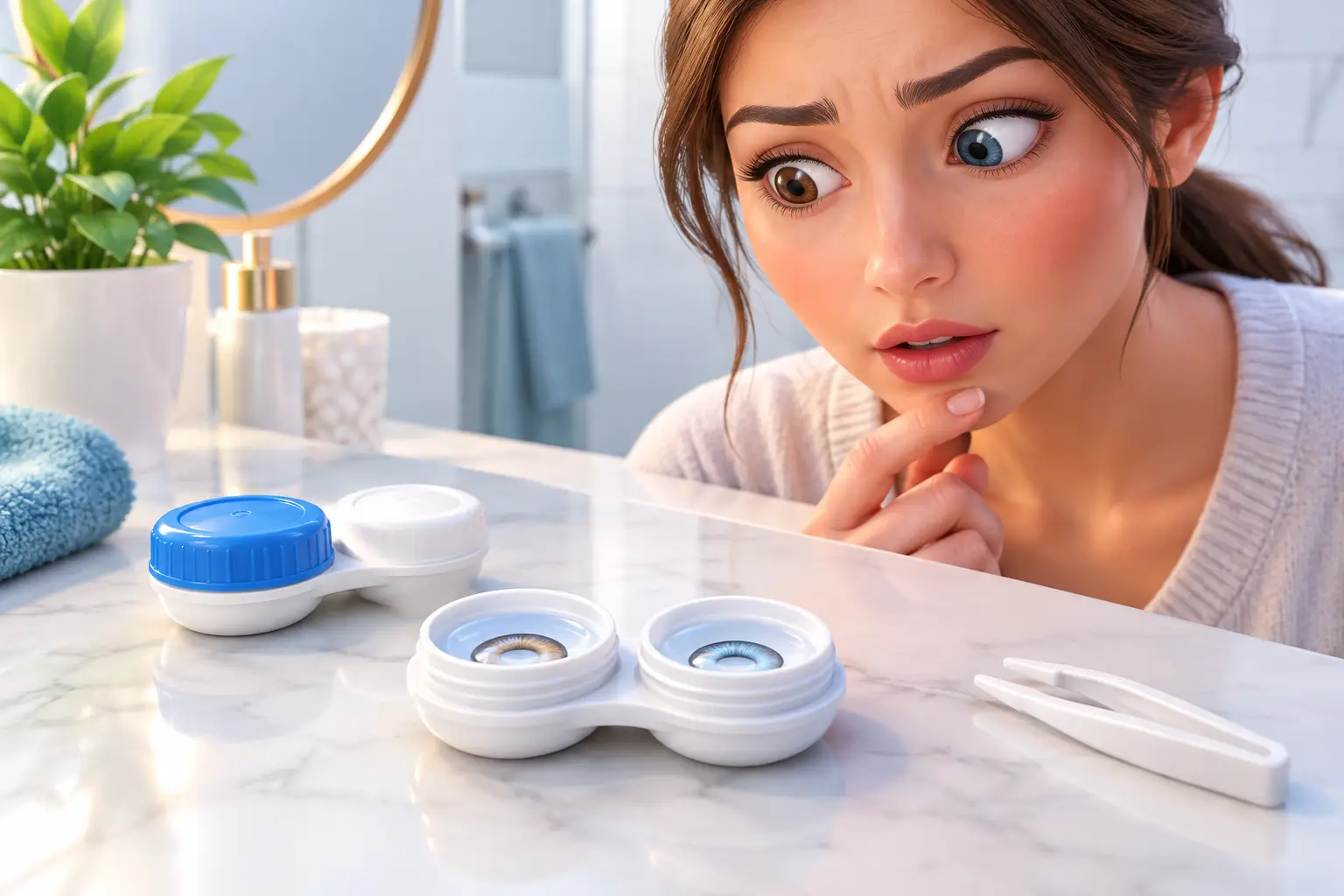
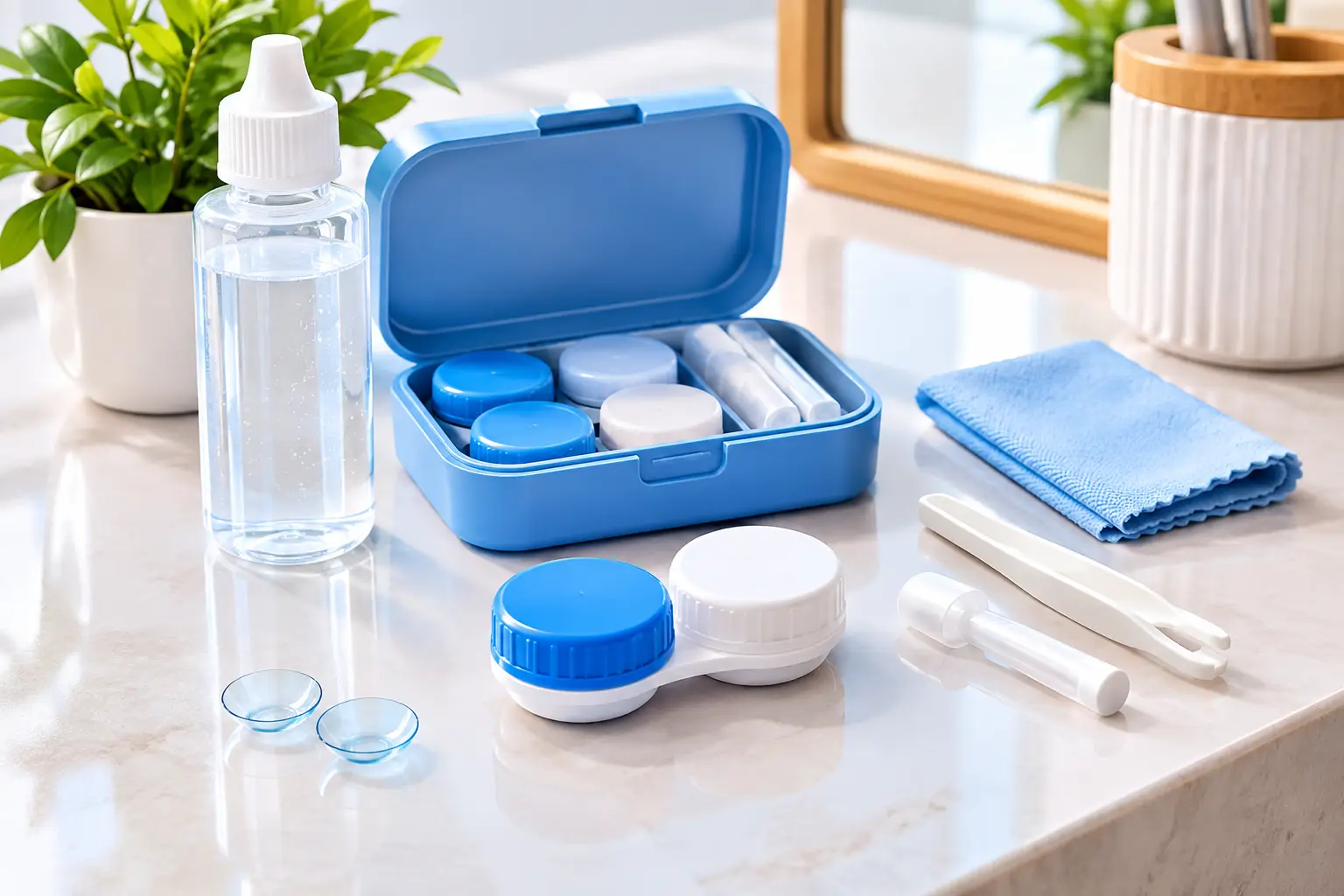
A contact lens case at the back of a bathroom drawer should not make you wonder, “Which pair is this?” Yet that is exactly how many contact lens routines start to break down. Similar-looking cases pile up, solution bottles get separated from their caps, and the box with the prescription, color, and replacement schedule gets tossed before the lenses are finished. The right contact lens supplies help you care for your lenses, but an organized system helps you use the right pair with confidence.
Whether you wear one pair of prescription lenses or rotate through several prescription and cosmetic options, the goal is simple: keep every item clean, clearly identified, and easy to find when you need it.
The Contact Lens Supplies Worth Keeping Together
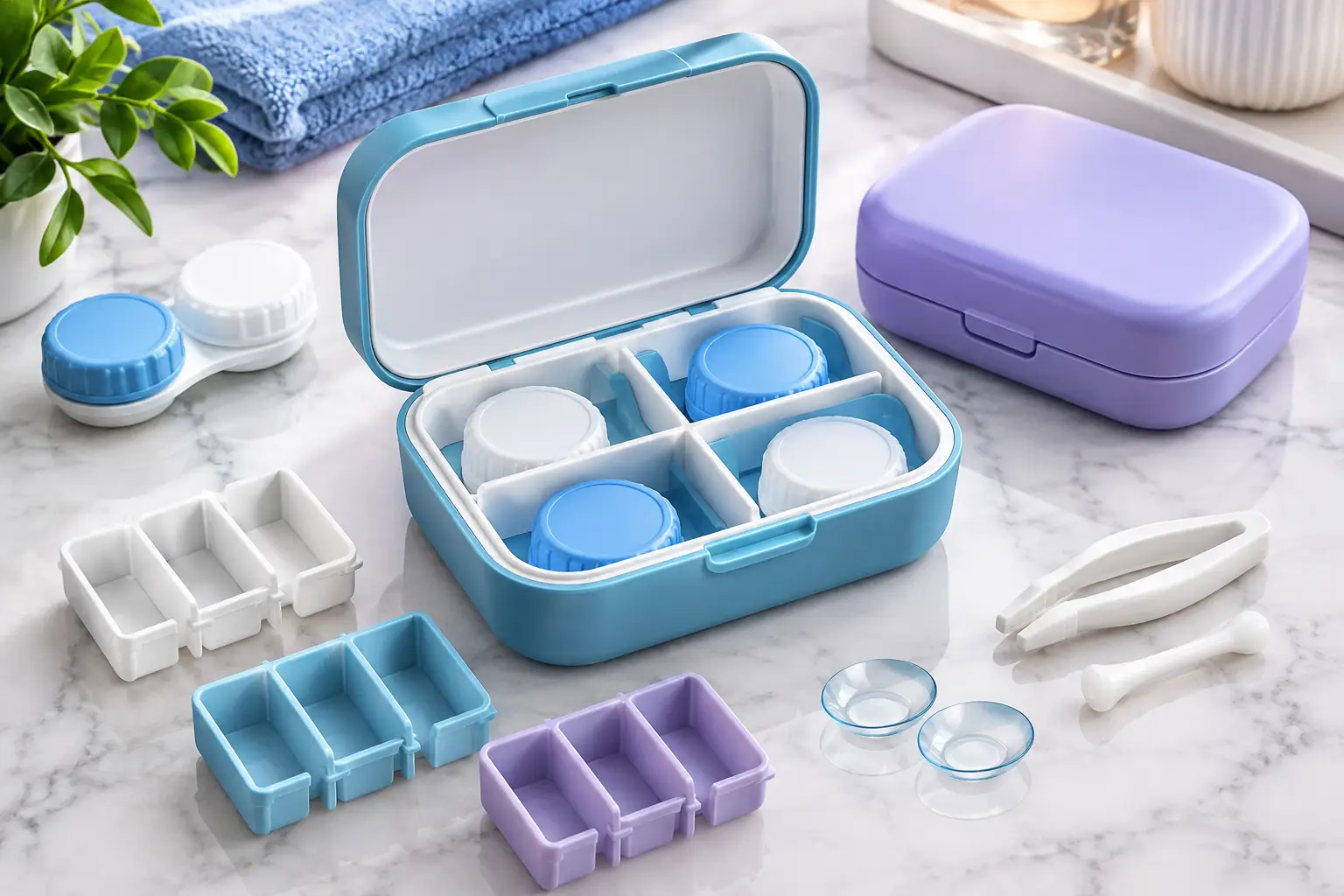
Contact lens care does not require a crowded cabinet. It requires a few essentials that are current, clean, and matched to the lenses you actually wear. Start by creating one designated home area for your supplies. A shelf, drawer section, or medicine cabinet zone works well when it stays dry and is not cluttered with unrelated personal-care products.
The basics include:
- A current contact lens case for each active pair of reusable lenses
- The lens care solution recommended for your lens type
- Original lens boxes or a written record of prescription, brand, color, purchase date, and expiration date
- A backup supply of cases and solution, so you are not forced to use something old or nearly empty
That last item matters more than it seems. Many people keep a case long past its useful life because they do not have a clean replacement nearby. Others open a new solution bottle, throw away the packaging, and later cannot remember when it was first opened. Keeping a small, visible backup prevents those rushed decisions.
If you wear daily disposable lenses, your setup may be simpler. You will not need a storage case for the lenses themselves, but you still need a dependable place for unopened boxes and the information that identifies each prescription. If you have different strengths for each eye, multiple brands, or colored contacts for different looks, clear labeling becomes even more valuable.
Why Lens Details Get Lost So Easily
Contact lens boxes are small, easy to discard, and usually treated like temporary packaging. But they hold information you may need long after the lenses are opened: power, base curve, diameter, brand, color, lot details, and expiration date. When more than one pair is involved, memory is not a reliable organization system.
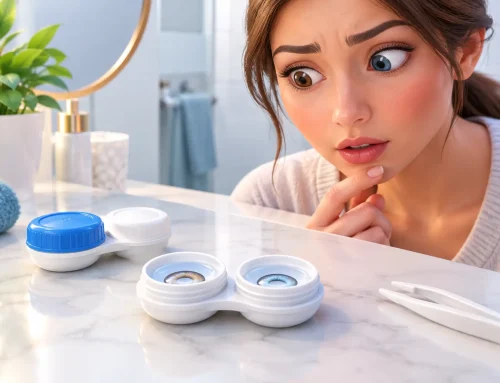
The risk is not just inconvenience. Mixing up lenses can mean wearing the wrong prescription or opening a pair you thought was new but has already been in use. For cosmetic lenses, it can also mean reaching for a color that looks nearly identical in its case but is not the color you intended.
A better approach is to keep the lens details with the case, rather than relying on an old box in a separate drawer. Write down the information before recycling the packaging, then keep the record in the same place as the lens case. That way, the details stay connected to the lenses throughout their use.
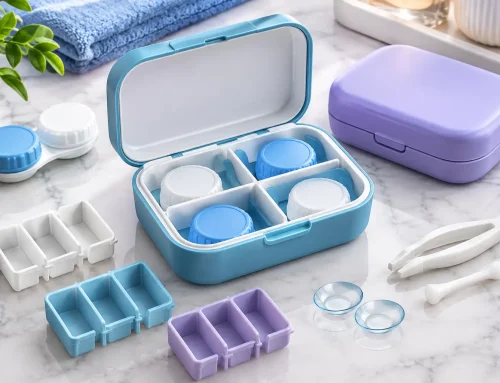
This is the practical idea behind EYEBOX®: one organized place for lens cases and the essential details that are usually lost, mixed up, or forgotten.
Build a Simple System That Works Every Day
The best organization system is not the one with the most labels. It is the one you will follow when you are tired, in a hurry, or getting ready in a dim bathroom. Keep it visual and repeatable.
Give every active pair a clear identity
Start with one identifier that makes sense at a glance. For prescription lenses, that may be the prescription strength or a right-eye and left-eye label. For cosmetic lenses, color is usually the clearest identifier. If you own more than one pair in similar shades, add a second detail such as brand or the month you opened them.
Avoid vague labels like “new,” “blue,” or “extras.” Those labels stop helping as soon as you buy another box or another shade. A label such as “Hazel – opened May 8” gives you a useful answer immediately.
Keep use dates where you can see them
Some lenses are designed for daily, biweekly, monthly, or another replacement schedule. The exact timing depends on the lens and the directions from your eye care professional. The easiest way to stay on track is to record the date you opened each pair and the date it should be replaced.
Do not confuse a lens replacement schedule with the expiration date printed on unopened packaging. The expiration date applies before the lens is opened. Once you start wearing a reusable pair, its replacement timeline begins, even if the printed package expiration date is much later.
Separate active supplies from backup supplies
Your active supplies are what you use this week: the current lens case, the open solution bottle, and the details for the lenses you are wearing now. Backup supplies are unopened solution, fresh cases, and unopened lens boxes. Keeping them separate prevents you from accidentally opening a new product too early or using a case that should have been replaced.
This also makes it easier to spot what needs restocking. When the backup area is down to one case or one bottle, add it to your next order before it becomes a last-minute problem.
Clean Care Is Part of Staying Organized
Organization cannot replace lens hygiene, but it can make good habits easier to maintain. A clean, correctly labeled case is more useful than a drawer full of mystery cases.
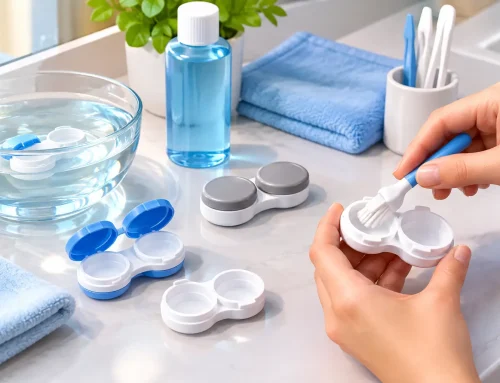
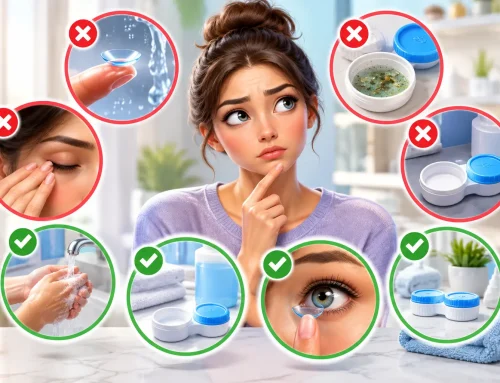
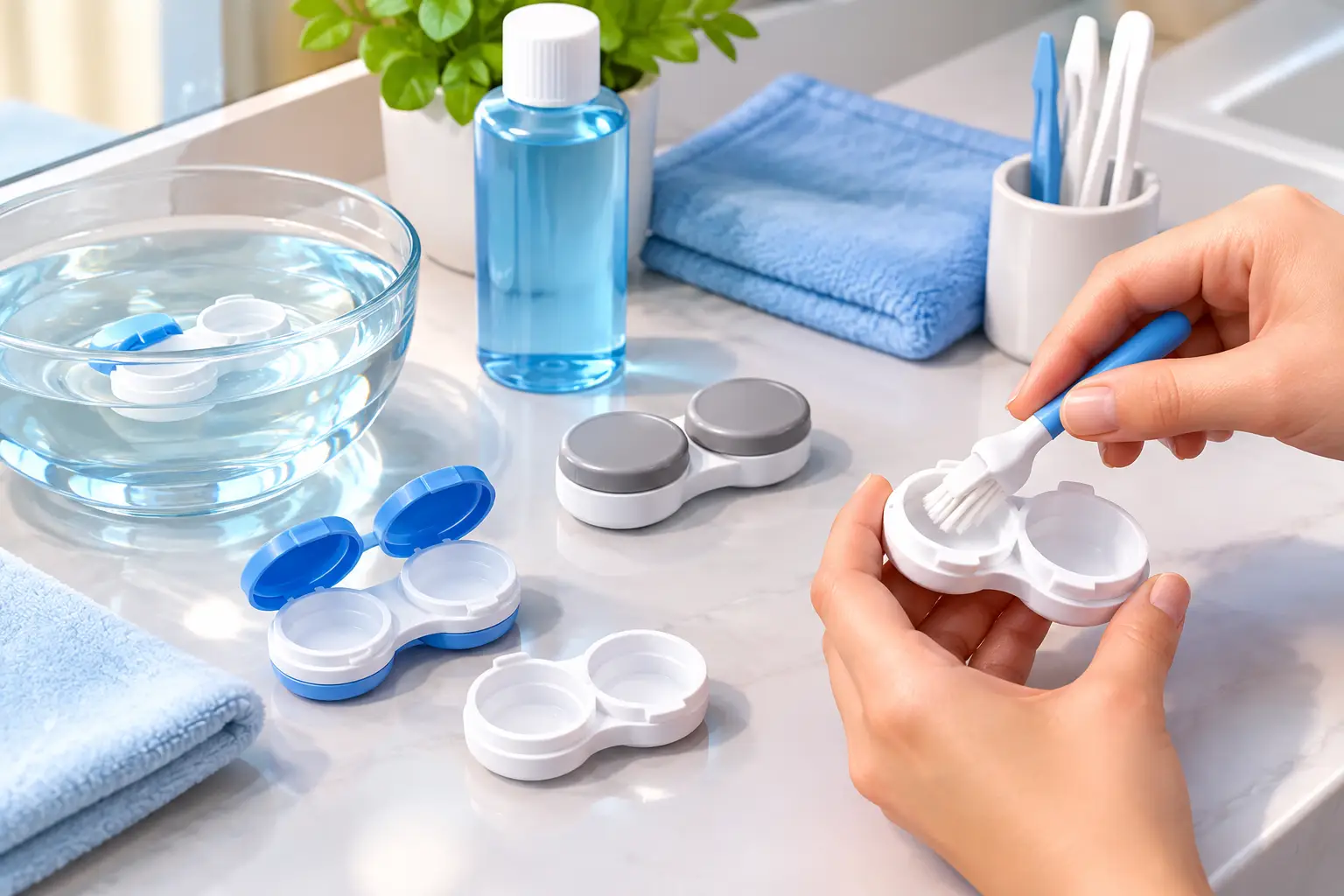
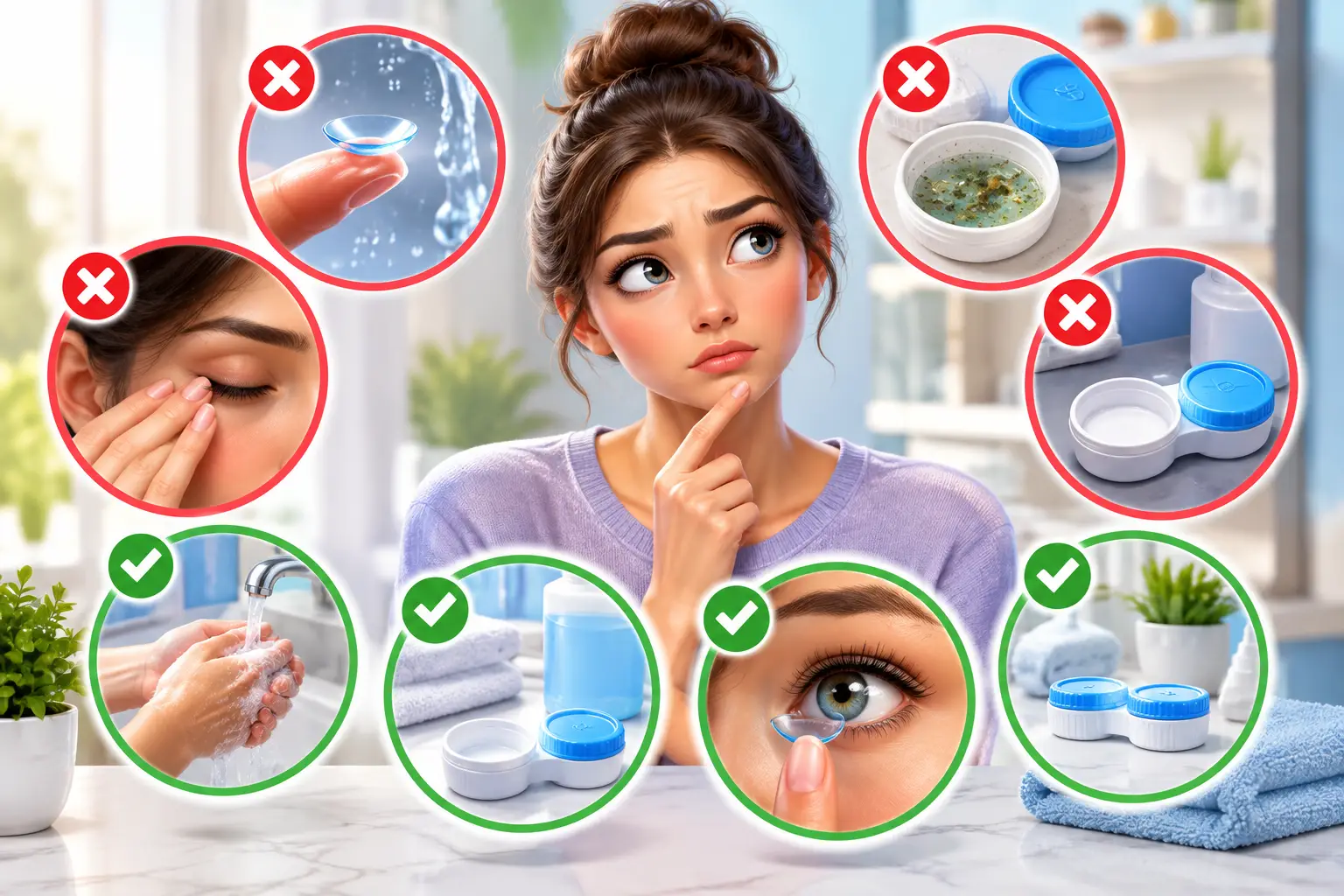
For reusable lenses, follow the care instructions provided for your specific lenses and solution. In general, use fresh recommended solution each time you store your lenses. Do not top off old solution, and do not use tap water or saliva to rinse lenses or cases. Water can contain microorganisms that are unsafe for contact lens use.
After inserting your lenses, empty the old solution from the case, rinse the case with fresh recommended solution if directed, and leave it open to air-dry. Replace lens cases regularly according to the case and solution directions or your eye care professional’s guidance. If a case is cracked, discolored, damaged, or difficult to clean, replace it sooner.
It may feel easier to keep several spare cases scattered around the house. The trade-off is that scattered cases are much harder to identify and maintain. One dedicated supply area creates a clear routine: use, clean, dry, return.
Know When to Toss, Replace, or Reorder
A simple check-in can prevent the most common supply problems. Once a month, look through your contact lens area and ask four questions: Is this pair still within its replacement schedule? Is the case clean and in good condition? Is the solution within its labeled use period? Do I still know exactly what these lenses are?
If the answer to the last question is no, do not guess. Set the unidentified pair aside until you can confirm its details from your records or original packaging. If you cannot identify it with confidence, replacing it is safer than making an assumption.
The same rule applies to lenses that feel uncomfortable, look damaged, or have been stored improperly. Remove them and follow the guidance of your eye care professional. Redness, pain, unusual discharge, light sensitivity, or blurred vision are not problems to solve by switching solution or wearing the lenses less often. Stop wearing the lenses and contact an eye care professional promptly.
For cosmetic lenses, the standard is the same. They are not just beauty accessories. In the United States, all contact lenses, including decorative lenses without vision correction, require a prescription and proper fitting.
Make Your Routine Easier to Repeat
The real value of organized contact lens supplies is not a neater drawer by itself. It is the relief of knowing which lenses you are wearing, when you opened them, what color or prescription they are, and what needs to be replaced next.
Set up your system once, then give it a quick check whenever you open a new pair. That small habit keeps the details from disappearing and turns a frustrating daily question into an easy answer.