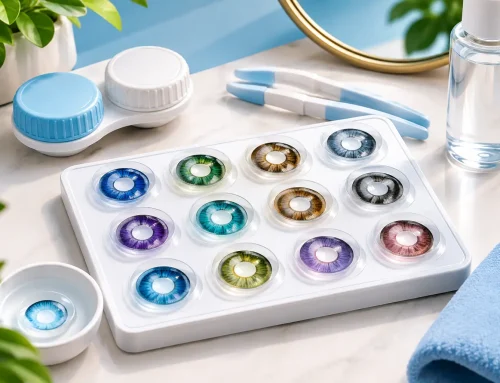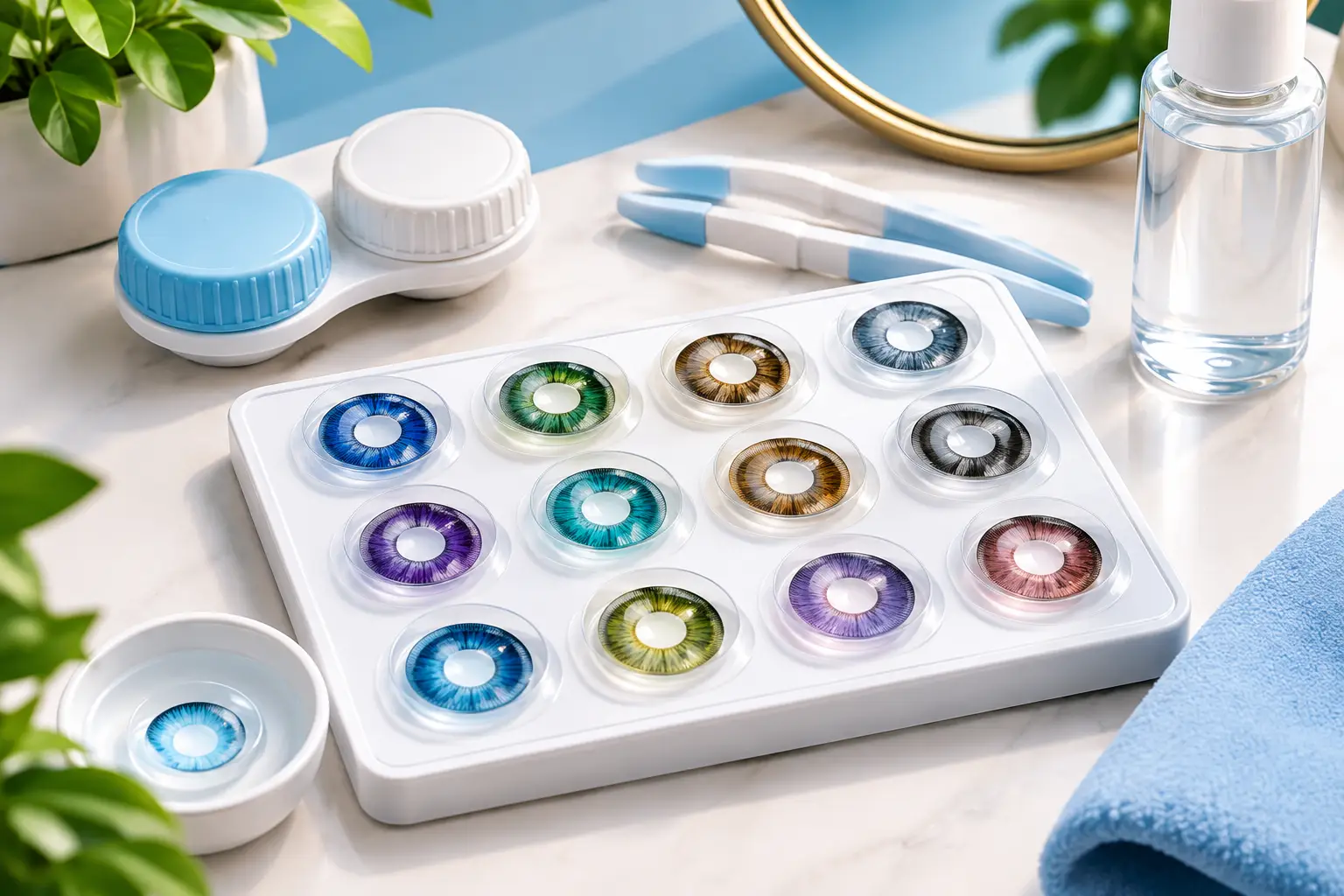

A colored contact lens can change your look in seconds, but the small details behind it are easy to lose. Which pair is hazel? Which one is prescription? When did you open the violet lenses? A reliable guide to colored contact care starts with keeping lenses clean, but it also means keeping every pair correctly identified. When you wear more than one color, organization is part of caring for your eyes.
Colored contacts are medical devices, whether you wear them for vision correction, a special event, or everyday style. That means the same basics apply to every pair: get a valid prescription, follow the replacement schedule, use approved lens solution, and never share lenses with anyone else. The color may be cosmetic. The care routine is not.
Start With Clean Hands and a Clean Surface
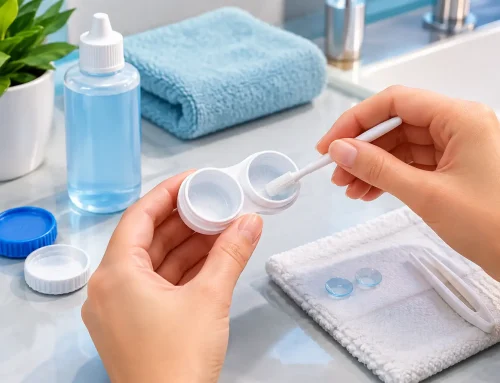
Your hands touch your lenses before they touch your eyes. Wash them with soap and water, then dry them thoroughly with a lint-free towel before handling a lens. Moisturizers, fragrances, oils, and makeup residue can transfer to the lens surface and cause irritation, blurry vision, or buildup.
Set up a consistent spot for your routine, such as a clear section of the bathroom counter. Avoid placing lenses directly on the counter, even for a moment. A clean case and fresh solution should be ready before you remove your lenses, so you are not searching through a drawer with a lens balanced on your fingertip.
If your eyes are red, painful, unusually watery, or sensitive to light, do not put lenses in and hope the feeling passes. Remove the lenses if you are wearing them and contact your eye care professional. Colored contacts should never be used to cover up an eye problem.
Clean Every Reusable Pair the Right Way
If your colored lenses are reusable, clean and disinfect them exactly as directed by your eye care professional and the lens and solution instructions. Daily disposable lenses are different: wear a fresh pair once, then discard them. Never clean and reuse a daily disposable lens.
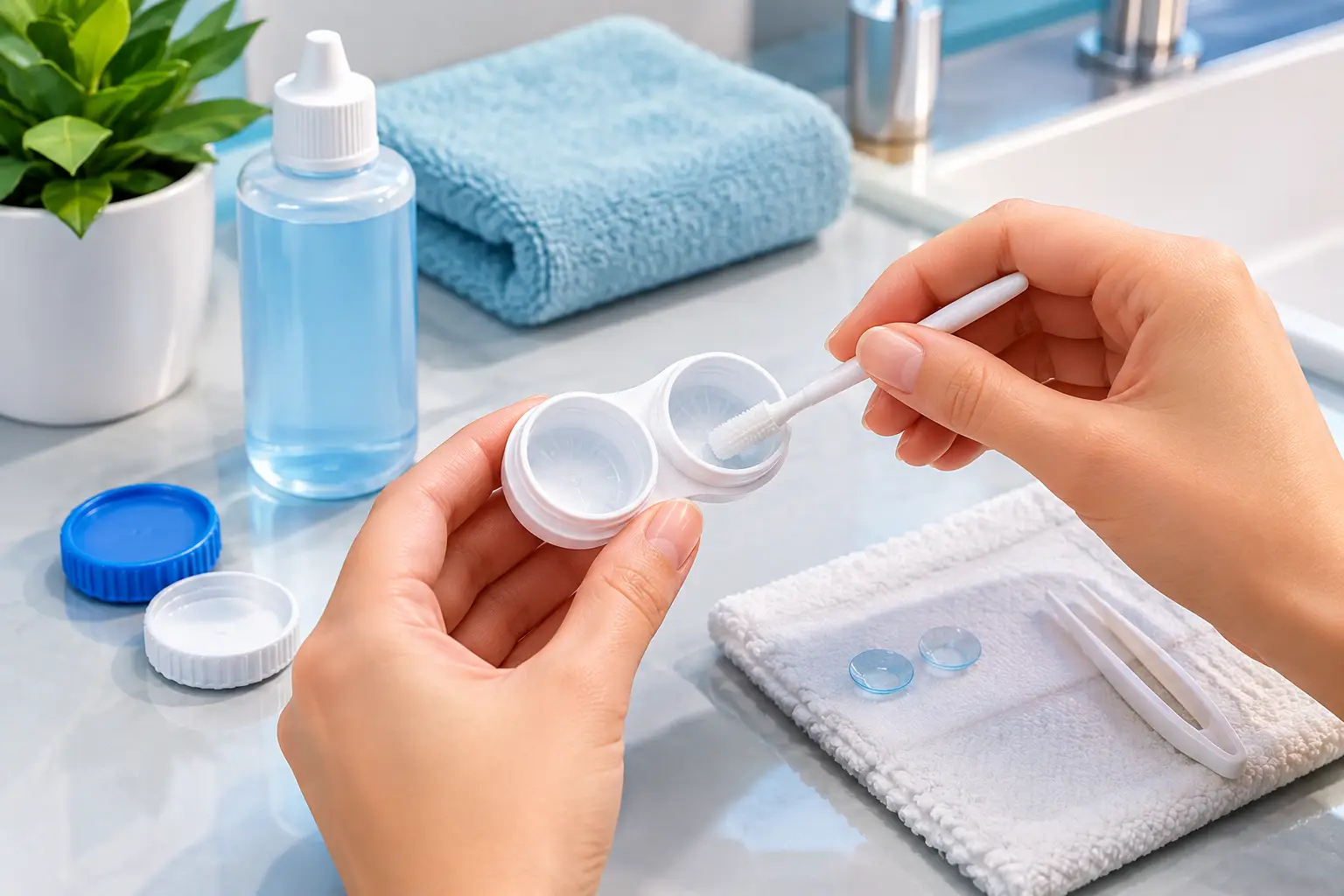
For reusable lenses, most multipurpose-solution routines involve placing a lens in your palm, adding fresh solution, and gently rubbing it for the recommended time before rinsing and storing it. Even if your solution says “no-rub,” your eye care professional may still recommend rubbing as part of your routine. Follow their guidance rather than mixing advice from social media, friends, or a package you no longer have.
Never use tap water, bottled water, saliva, homemade saline, or rewetting drops to clean or store contacts. Water can carry microorganisms that may lead to serious eye infections. Saliva and non-sterile liquids introduce bacteria and other contaminants. Contact lens solution is made for the job. Nothing else is an equivalent substitute.
Use fresh solution every time you store your lenses. Do not top off yesterday’s liquid, and do not pour used solution back into the bottle. Old solution can leave behind deposits and germs that fresh solution cannot magically cancel out.
Store Lenses So Colors and Prescriptions Do Not Get Mixed Up
The more pairs you own, the easier it is to confuse them. A gray pair and a blue-gray pair can look similar in a case. Two prescriptions may differ by only a small number. And if you throw away the original packaging, key details can disappear with it.
Each lens case should hold only one matching pair. Keep the right and left lens in their correct wells every time, especially if the prescriptions differ. If you switch colors often, avoid relying on memory alone. “I think these are the green ones” is not a system, particularly when several cases look alike.
Label or record the details for each pair as soon as you open it. Useful information includes:
- Lens color and brand
- Right-eye and left-eye prescription
- Date opened
- Replacement date or expiration date
- Purchase date and any remaining supply details
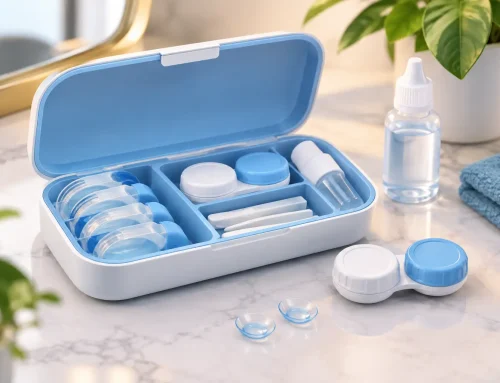
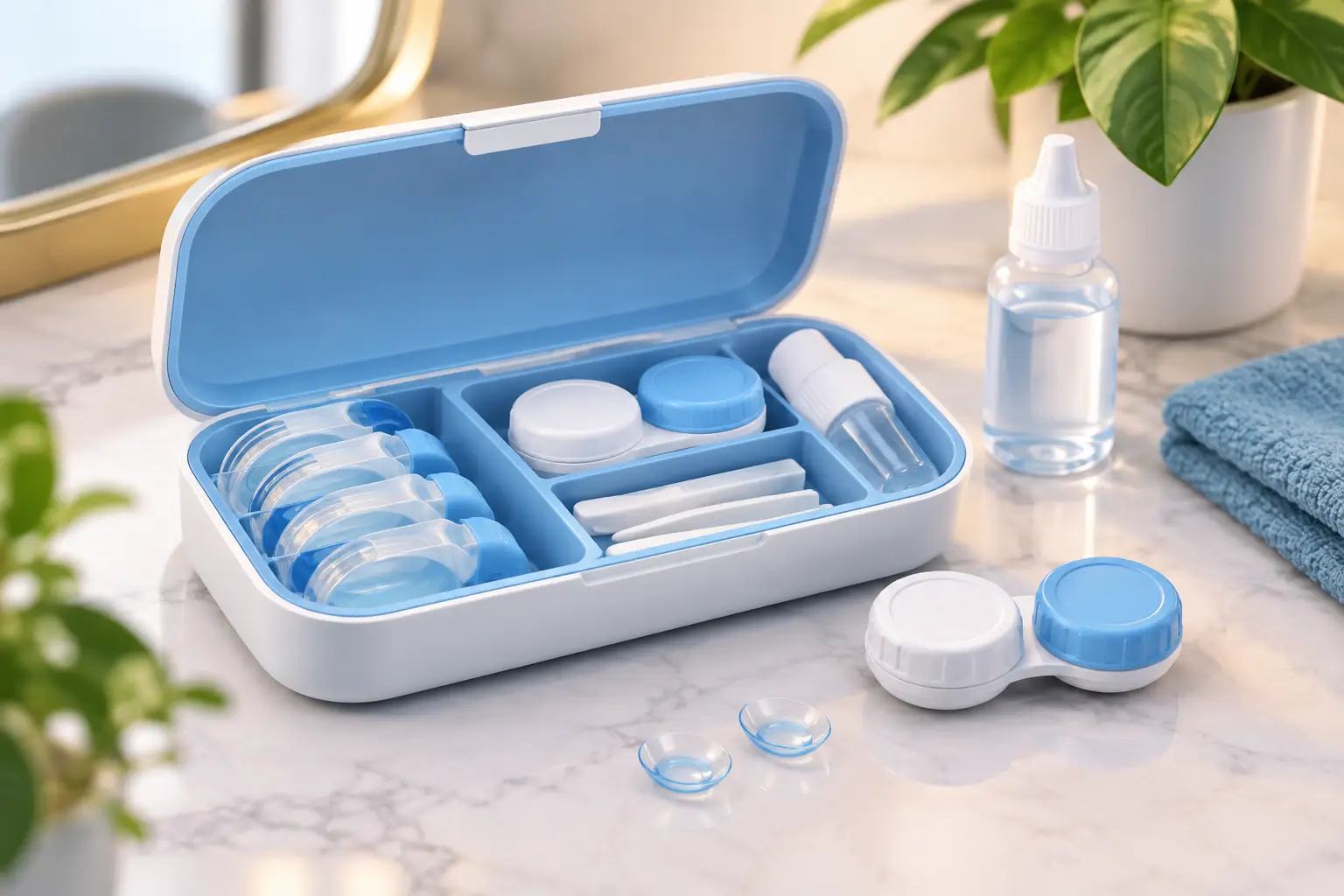
A purpose-built organizer such as EYEBOX® can keep cases together with the details that usually get separated from them. Instead of loose cases, discarded boxes, and notes scattered between a drawer and your phone, each pair has a clear home and an easy-to-check record.
Follow the Replacement Schedule, Not Just How Lenses Look
A lens can look clean and still be past its recommended replacement date. Deposits build up over time, and the lens material changes with repeated wear and cleaning. Stretching a two-week or monthly lens because it “still feels fine” can increase the chance of discomfort and complications.
Write down the open date the same day you start a new pair. Then calculate the replacement date based on the schedule prescribed for that lens. This is especially useful for colored contacts that are worn occasionally. A monthly lens does not become a three-month lens simply because you wore it only a few times.
Also check the manufacturer expiration date before opening a new package. Unopened lenses still have a shelf life. If a blister pack is torn, leaking, dried out, or appears damaged, do not wear that lens. Start with a fresh, intact package instead.
Put Makeup and Eye Health First
If you wear makeup with colored contacts, insert lenses before applying eye makeup and remove them before taking makeup off. This reduces the chance of transferring mascara, eyeliner, powder, or remover onto the lens.
Choose products that are less likely to flake or shed around the eyes, and keep eyeliner away from the inner rim of your eyelid. That area contains glands that help maintain your tear film. Blocking them with makeup can contribute to dryness and lens discomfort.
Hairspray, aerosol products, and face mist can also settle on lenses. Put lenses in after using sprays when possible, and close your eyes tightly if you must use a product near your face while wearing contacts. If a lens feels gritty after makeup application, remove it, clean it as directed, and assess whether it is safe and comfortable to reinsert.
Replace the Lens Case on Schedule
The lens case matters as much as the lens. After putting your lenses in, empty the old solution, rinse the case with fresh contact lens solution, and leave it open to air-dry in a clean location. Do not rinse a case with water.
Replace the case at least every three months, or sooner if it becomes cracked, discolored, slimy, or difficult to clean. Many people keep wearing lenses on schedule but forget that an old case can collect buildup and contamination. Tie case replacement to a simple routine, such as the start of a new season or the day you open a new supply of lenses.
Know When to Take Colored Contacts Out
Take contacts out before sleeping unless your eye care professional specifically prescribed lenses approved for overnight wear. Sleeping in lenses reduces oxygen reaching the eye and raises the risk of infection, even when it only happens “just this once.” Also remove them before swimming, using a hot tub, or showering. Water and contacts are a poor combination.
Do not wear a colored lens that is torn, chipped, inside out, dried out, or persistently uncomfortable. If one eye feels fine but the other does not, do not assume the issue is normal because the lenses are cosmetic. Remove the problem lens and use glasses until you can identify the cause or speak with your eye care professional.
Make Colored Contact Care Easy to Repeat
The best routine is the one you can follow when you are tired, rushed, or getting ready for an event. Keep solution where you use it. Record lens details before the packaging gets tossed. Give every case a designated place. Small systems prevent the familiar scramble of trying to identify an unlabeled case days or weeks later.
Colored contacts should add confidence to your routine, not uncertainty. When every pair is clean, correctly stored, clearly labeled, and replaced on time, you can choose the look you want without guessing what is in the case.