
A blue lid for one lens and a white lid for the other sounds simple – until you have two prescriptions, a spare pair, colored contacts, and several nearly identical cases in the bathroom drawer. Contact lens case color coding can help prevent everyday mix-ups, but only when the colors are part of a system you can trust.
The key is to use color as a quick visual cue, not as the only record of what is inside. A case lid can tell you where a lens belongs at a glance. Your organized lens record should still tell you the prescription, lens color, replacement schedule, expiration date, and purchase details that matter when it is time to replace a pair.
Why Contact Lens Cases Get Confusing So Fast
Most contact lens cases are designed for one job: holding the right and left lenses in fresh disinfecting solution. They are not designed to help you remember which case holds your backup lenses, which pair is for cosmetic wear, or whether the lenses inside are still within their recommended replacement period.
That gap becomes obvious when you use more than one pair. Maybe you have daily vision lenses and colored contacts for special occasions. Maybe your prescription changed, but an older pair is still sitting in a drawer. Or perhaps your right and left prescriptions are close enough that a mix-up is hard to notice until your vision feels off.
Color-coded lids help with the first moment of decision: which side do I open? But the colors themselves are not universal. One manufacturer may use blue for the right lens and white for the left. Another may use green and pink, two different shades of gray, or no consistent pattern at all. Relying on memory alone is where confusion starts.
What Contact Lens Case Color Coding Usually Means
In many lens cases, two lid colors are used to distinguish the right and left compartments. A common setup is blue or green for the right eye and white, clear, or another contrasting color for the left eye. Some cases are marked with R and L, while others use colored rings, caps, or printed symbols.
There is no single industry-wide color rule you should assume applies to every case. That means the blue lid on one case may not represent the same eye as the blue lid on another. Before placing lenses into a new case, check the molded R and L markings if they are present. If there are no markings, choose a consistent personal rule and write it down where you store your lens details.
This matters most when your prescriptions differ. If one eye has stronger correction, astigmatism correction, or a different lens type, swapping lenses can leave you with blurry or uncomfortable vision. Color coding reduces the chance of an error, but the prescription information on the original packaging or your own record is what confirms you have the correct pair.
Color Is a Cue, Not a Prescription Label
A colored lid cannot tell you the lens power, base curve, diameter, brand, or expiration date. It also cannot tell you how long the lenses have been in use. Those details are easy to lose when you throw away the box or peel-off label after opening a new pair.
Think of case colors as the first layer of organization. They make your daily routine faster. The second layer is a clear label or record that identifies the pair as a whole. Together, those two layers are far more useful than either one alone.
Build a Color System That Works for Multiple Pairs
The best color system is the one you can follow without stopping to think. Start by keeping the right and left designation consistent within every individual case. If a case is marked R and L, follow those markings. If it is not, decide which side is right and which is left before the lenses go in, then keep that rule unchanged for that case.
Next, identify each pair outside of the case. This is especially helpful if you store several cases that look alike. Use a simple label, tray position, or organizer slot to distinguish pairs by purpose. For example, you might identify one pair as everyday clear lenses, another as brown cosmetic lenses, and another as your backup pair.
Your identifier should include the information you would otherwise have to search for later: lens color or style, right-eye and left-eye prescription, date opened, replacement timing, and package expiration date. If you buy multiple boxes at once, purchase date and quantity can also make reordering easier.
Avoid using color alone to identify separate pairs. If all your cases have blue and white lids, calling one “the blue case” will not help much. Instead, let the case colors identify the two sides, and let a separate label identify the pair.
A Simple Setup for Clear and Colored Contacts
If you wear only one type of lens, your system may be as simple as confirming which lid is R and which is L, then keeping your prescription details in one consistent place. The more pairs you manage, the more helpful it becomes to assign each pair a clear identity.
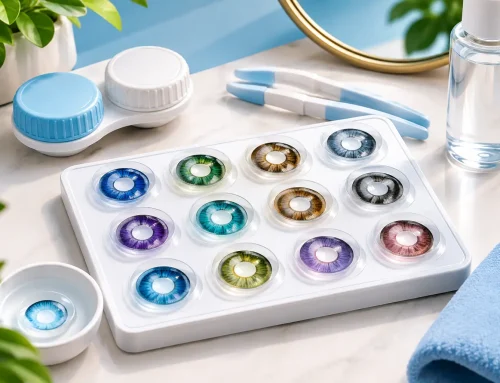
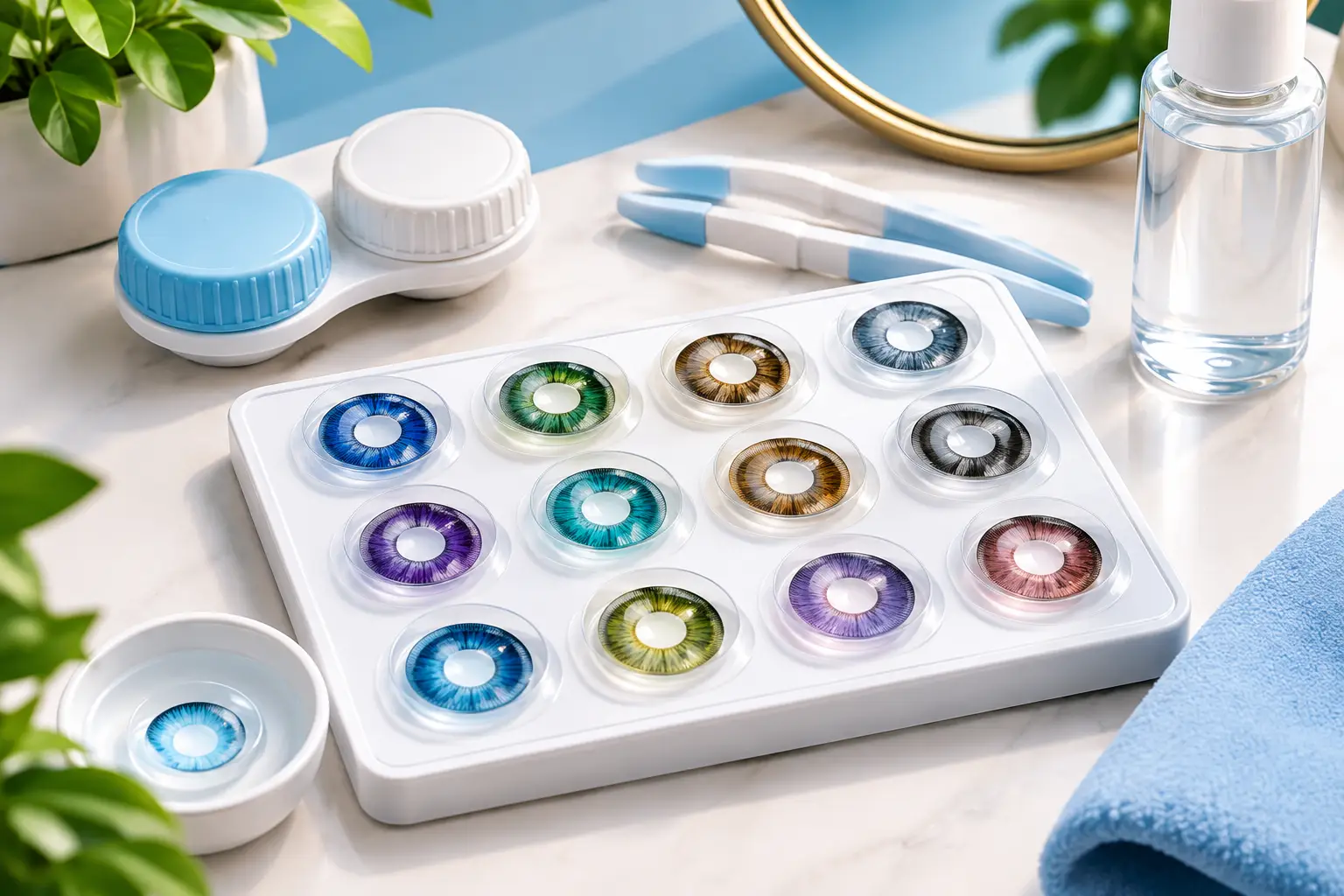
For colored contact lens wearers, record the cosmetic color exactly as you would want to find it later: hazel, gray, blue, honey, or the product’s specific shade name. Two brown-toned lenses may look similar in a case, especially under bathroom lighting. A written color label prevents you from opening a pair only to realize it is not the look you intended to wear.
If your colored contacts have prescription correction, record both details together. “Gray, right -2.50, left -2.00” is more useful than “gray lenses.” If they are plano, or non-corrective, record that too. The goal is not to create paperwork. It is to eliminate the little moments of uncertainty that slow down your routine.
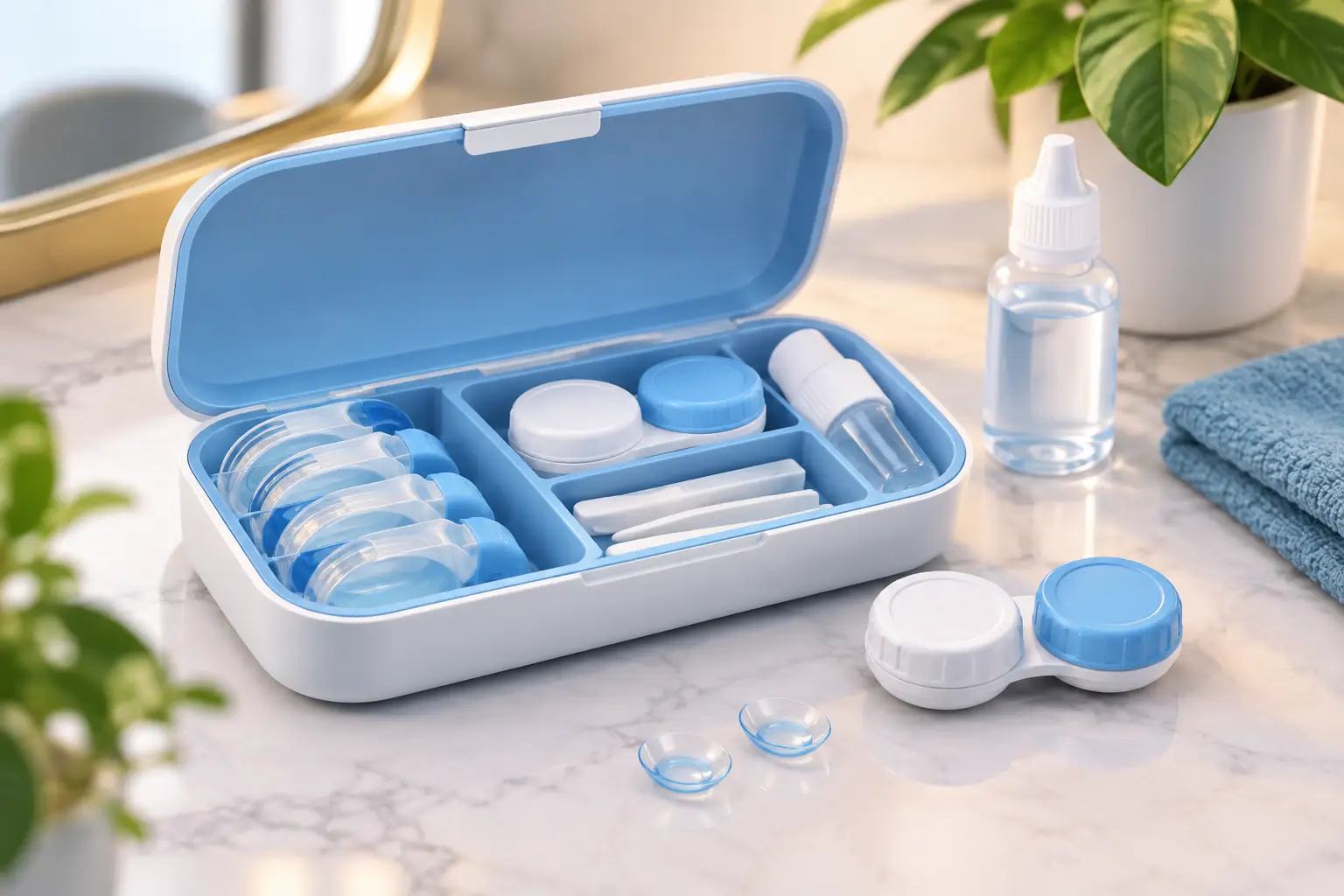
An organizer such as EYEBOX can keep each case with its lens information in one dedicated place, so the case is no longer separated from the details that explain what is inside.
Keep Color Coding Clean and Reliable
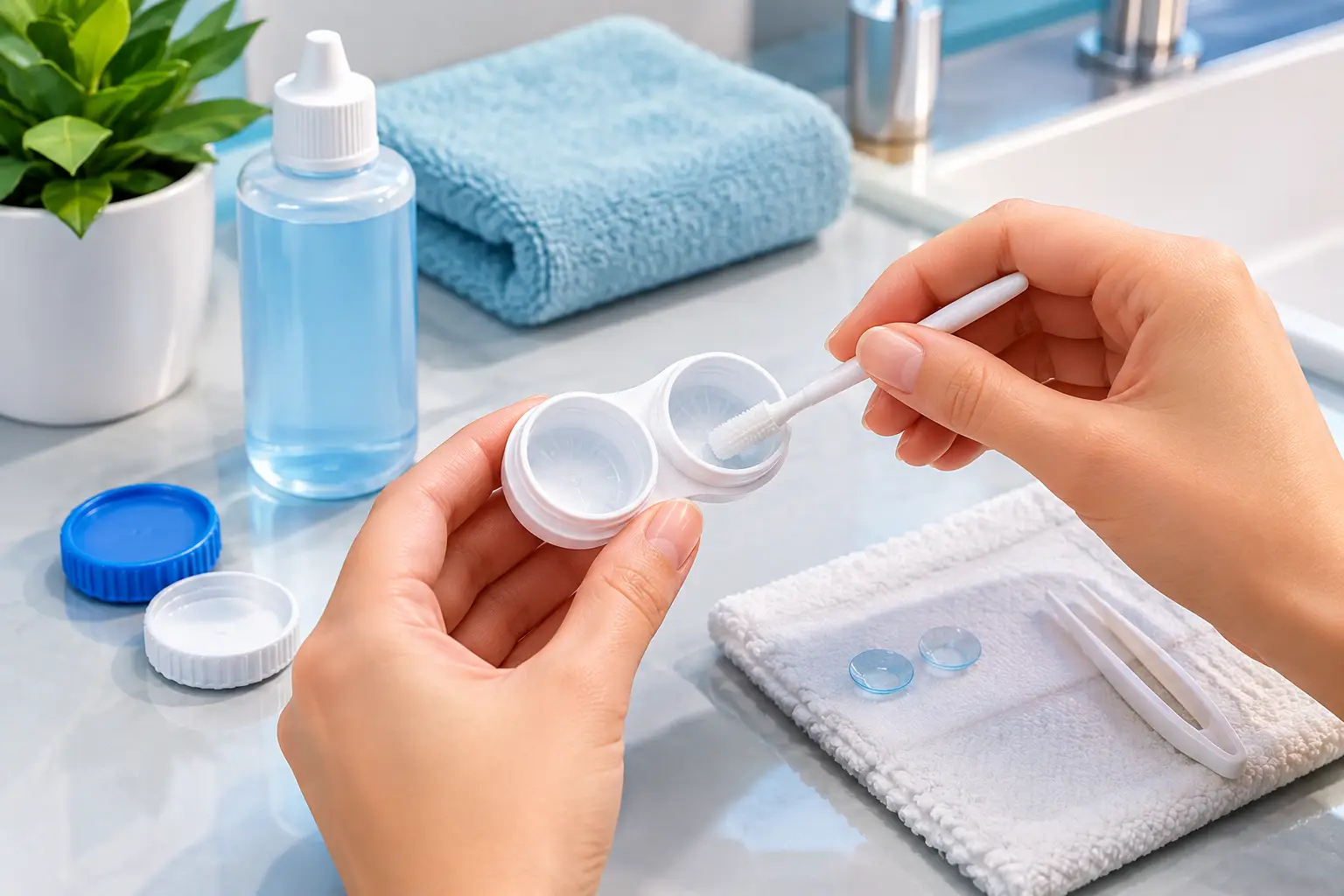
A neat system only works if the cases themselves are clean and in good condition. Lens cases should be emptied, rinsed with fresh recommended contact lens solution, and left open to air-dry after use. Do not rinse them with tap water, and do not “top off” old solution with new solution.
Replace cases on the schedule recommended by your eye care professional or lens-solution instructions. A faded, cracked, sticky, or hard-to-read case is not worth keeping just because you remember what it used to hold. When you replace a case, transfer the lens details to the new storage spot right away so your system stays intact.
There is also a practical trade-off with decorative cases. They can make your routine feel more personal, but busy patterns or similar colors may make right-left cues harder to spot. If you choose a fun case, make sure its R and L markings remain easy to identify. Function should win when the two conflict.
When You Should Stop and Double-Check
Color coding is useful, but certain situations deserve a pause. Check the lens packaging, your prescription, or your recorded details when you open a new box, begin a new prescription, switch brands, or return to a pair you have not worn in a while.
You should also double-check if a lens feels uncomfortable, your vision seems unusually blurry, or you cannot confidently identify which lens belongs in which eye. Do not guess based on lid color if cases have been moved, mixed, or replaced. When in doubt, use the information from the lens package and follow guidance from your eye care professional.
The same rule applies to replacement dates. The color of a case cannot track whether lenses are daily, two-week, monthly, or another schedule. Record the date you opened reusable lenses, then use that date to decide when the pair should be discarded. Package expiration and wearing replacement schedules are different details, and both are worth keeping visible.
Make the Right Choice the Easy Choice
The goal of contact lens case color coding is not to create a complicated labeling project. It is to make the correct lens, correct eye, and correct pair obvious before a mix-up happens. Use the case’s colors and R/L markings for quick orientation. Keep the prescription, color, opening date, and expiration information alongside the case for certainty.
A few seconds of organization can remove a daily question from your routine: Which lenses are these, and are they still the ones I meant to wear? When the answer is always in the same place, caring for your contacts feels less like keeping track and more like simply being ready.