
That unopened box in the bathroom drawer may look harmless, but a missing date can turn a simple lens routine into a guessing game. Learning how to remember lens expiry is less about having a better memory and more about giving every pair of contacts a clear place and a clear record.
The problem gets bigger when you wear more than one type of lens. Maybe you have daily lenses for work, monthly lenses for everyday wear, and colored contacts for certain occasions. Once packaging is thrown away and lens cases start looking alike, important details can disappear fast.
First, know which date you are tracking
“Lens expiry” can mean two different things, and mixing them up is one reason people lose track.
The expiration date on the unopened lens package is set by the manufacturer. It applies to the sealed blister pack or box. Before that date, the sealed lens and its solution are intended to remain sterile when stored as directed. This is the date you should record when you buy or open a new box.
Your replacement schedule is different. It begins when you open and start wearing a lens. A two-week lens should be replaced two weeks after opening, even if you only wore it a few times. A monthly lens follows its own replacement timeline. Daily disposable lenses should be discarded after one use.
Both dates matter. One tells you whether an unopened lens is still within its labeled shelf life. The other tells you when a lens you have already started using needs to be replaced. A good tracking system makes room for both.
How to remember lens expiry with one home base
The easiest system is the one you can see and use every day. Instead of relying on a mental note, a phone reminder you dismiss, or a box you might throw away, create one home base for your contact lens information.
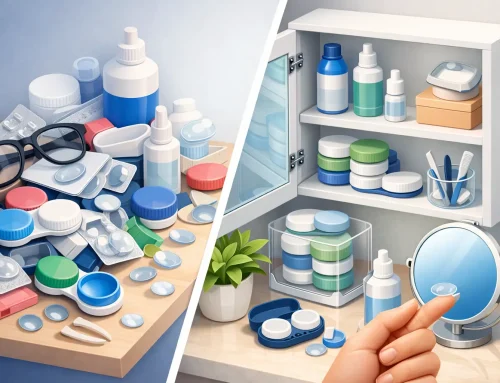
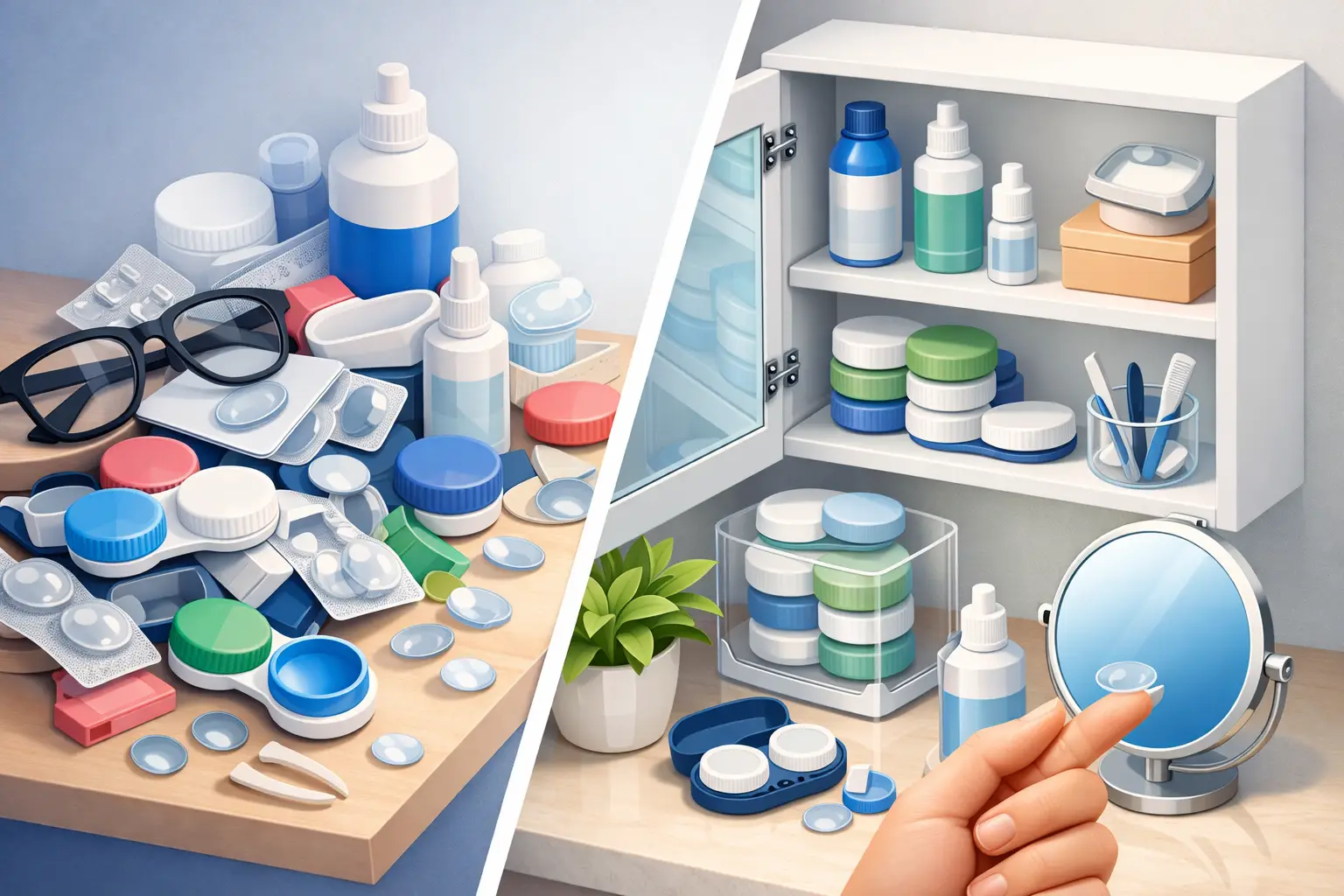
Keep the lens case, current box details, and replacement information together. When everything is stored in separate places – cases in a drawer, boxes under the sink, prescription details in an email – it is easy for one piece of information to go missing.
A purpose-built organizer such as EYEBOX® helps keep lens cases with the details that identify them, including prescription, color, purchase information, and expiration date. The benefit is simple: when you reach for a pair, you do not have to stop and wonder which lenses they are or whether the box has already expired.
Your home base should answer these questions at a glance:
- What type of lenses are these?
- What is the prescription for each eye?
- What color or brand are they?
- When does the unopened package expire?
- When did I open this pair, and when should I replace it?
You do not need a complicated spreadsheet to stay organized. You need a consistent location and a few details recorded in a way you will actually check.
Record the details before you discard the packaging
Lens boxes carry the information people need most, yet they are often the first thing to toss. Before recycling a box or separating blister packs, take one minute to record the details.
Write down the brand, lens type, power for the right and left eye, base curve or diameter if applicable, color, and the printed expiration date. If you bought multiple boxes with different expiration dates, record each box separately. It is common for similar boxes purchased at different times to have different dates.
This quick step is especially useful for colored contacts. Two shades can look nearly identical in their cases, while the box tells a very different story. Recording the color name along with the prescription helps prevent mix-ups and makes reordering easier later.
If you prefer a paper label, use clear month-and-year formatting such as “Expires 08/2027.” Avoid vague notes like “good until summer” or “new box.” Those notes make sense now, but they can become confusing months later.
Add an opening date to every reusable pair
The printed package expiration date is not your reminder to replace a lens you are already wearing. For reusable lenses, the opening date is the date that drives your replacement schedule.
As soon as you open a new pair, write down the date. Then calculate the replacement date based on the schedule prescribed for that lens. For example, if you open two-week lenses on March 3, your replacement date is March 17. If you open monthly lenses on March 3, set the replacement reminder for April 3.
This is where many routines break down. People remember buying a box, but not opening a specific pair. They may use a lens only occasionally and assume it lasts longer because it has had less wear. Replacement schedules are based on the lens type and instructions from your eye care professional, not just the number of hours it was in your eye.
For daily disposables, there is no opening-date calculation. Wear the lens once, then discard it. Still, tracking the expiration date of unopened blister packs is helpful so older inventory gets used first.
Use a backup reminder, not a reminder pile
A visible organizer is your everyday reference. A backup reminder makes it harder to overlook a replacement date when life gets busy.
Set one calendar reminder for the day your current reusable lenses should be replaced. Name it clearly: “Replace monthly lenses” works better than “Contacts.” If you start a new pair on a different day each month, update the reminder immediately rather than assuming you will remember later.
For unopened boxes, set a separate reminder one or two months before the printed expiration date. That gives you time to check what you have, use eligible lenses in order, and avoid discovering an expired box when you need a replacement.
Do not set a dozen alerts for every tiny detail if that makes you ignore your phone. For most people, two reminders are enough: one for the current pair’s replacement date and one for upcoming box expiration dates.
Keep similar lenses from becoming look-alikes
Contact lens cases can be nearly impossible to distinguish once they are separated from their boxes. That is frustrating with one pair and risky with several prescriptions, colors, or replacement schedules in rotation.
Give each pair a specific identity. Use the lens color, brand, or purpose as part of the label: “Hazel monthly,” “Clear work lenses,” or “Gray cosmetic lenses.” Pair that identifier with prescription information so you are not relying on appearance alone.
Color coding can help, but it should support written information rather than replace it. A blue marker may mean monthly lenses to you now, but six months from now you may not remember whether blue meant “opened in June” or “blue color contacts.” Clear labels prevent that kind of second guessing.
Keep right and left eye information accurate, too. If your prescriptions differ, make sure the lens case and record both reflect that difference. Never assume the stronger prescription is always on the same side without checking.
Check your system when you restock
The best time to prevent confusion is when you bring new lenses home. Before placing a new box in storage, compare its details with what you already have. Put the box with the earliest expiration date where you will use it first, as long as it remains sealed and has been stored according to the manufacturer’s instructions.
This small rotation habit keeps older eligible stock from getting buried behind newer purchases. It also shows you what you actually have on hand, which can prevent accidental duplicate orders or last-minute scrambling.
At the same time, remove empty boxes, old labels, and outdated records. Organization works best when it stays current. A drawer full of expired packaging is not a tracking system – it is more information to sort through later.
What to do when you are not sure
If you cannot confirm an unopened lens package’s expiration date, do not guess. Check the original box or blister-pack labeling. If the date is missing, unreadable, or the packaging is damaged, ask your eye care professional or the manufacturer for guidance before using the lens.
The same rule applies to reusable lenses with an unknown opening date. If you cannot tell whether the pair is beyond its replacement schedule, replacing it is the clearer choice than extending wear based on a guess. Follow your lens manufacturer’s instructions and your eye care professional’s recommendations for wear, cleaning, storage, and replacement.
A simple record may feel like one extra task at first. But once your lens details, expiration dates, and current pairs have a dependable place, checking them becomes part of the routine – not another thing you have to remember.