That unlabeled contact lens case in the bathroom drawer can create a surprising amount of doubt. Is it the right prescription? Is it the blue pair or the gray pair? When did you open it? Learning how to track contact lens prescription details gives you a simple way to stop guessing before you put lenses in your eyes.
A contact lens prescription is more than a box you throw away after opening a new pair. It is the reference point for your lens power, fit, brand, replacement schedule, and, for colored contacts, the exact color you purchased. Keeping those details together makes your daily routine cleaner, faster, and much less frustrating.
Start With the Details on Your Lens Box
Your contact lens box and prescription paperwork contain the information you need to record. The goal is not to memorize every abbreviation. It is to create a clear record you can check whenever you reorder lenses, replace a case, or sort through multiple pairs.
For most soft contact lenses, write down the brand, power, base curve, diameter, and expiration date. Your power may be listed as PWR, SPH, or sphere. If you have astigmatism, your prescription may also include CYL for cylinder and AXIS. Multifocal lens wearers may see ADD, which refers to additional reading power.
Keep the right-eye and left-eye details separate, even when they look similar. Many people have different powers in each eye, and mixing them up can mean blurry vision, headaches, or a lens that simply does not feel right.
If you wear colored contacts, add the color name exactly as it appears on the package. “Brown” is not always enough. One brand may offer several shades with similar names, and a record helps you reorder the color you actually liked.
How to Track Contact Lens Prescription Information
The easiest system is one that works at the moment you open a new box. Do not rely on a photo buried in your camera roll or an old order confirmation you may not be able to find later. Create one consistent place for your lens information and update it every time a new pair enters your routine.
Start by labeling each lens case or its storage spot with the basic identifiers: right or left eye, prescription power, lens color if applicable, and the date you opened the lenses. Then keep the full prescription details in the same organized location as your cases and unopened boxes.
A useful record for each pair includes:
- Lens brand and product name
- Right-eye and left-eye prescription details
- Lens color or style, if applicable
- Purchase date and place of purchase
- Date opened
- Replacement date
- Manufacturer expiration date
This may sound like extra work, but it takes less than a minute when you open a box. That minute can save you from replacing the wrong lenses, opening a new pair too early, or wearing a pair past its recommended replacement date.
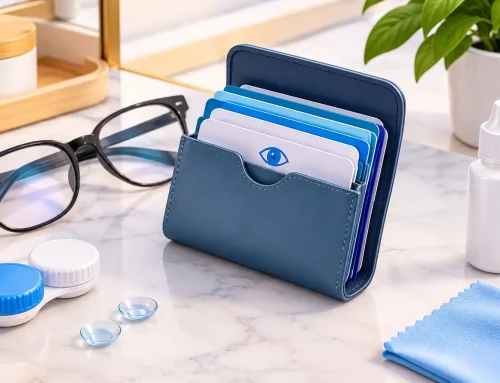
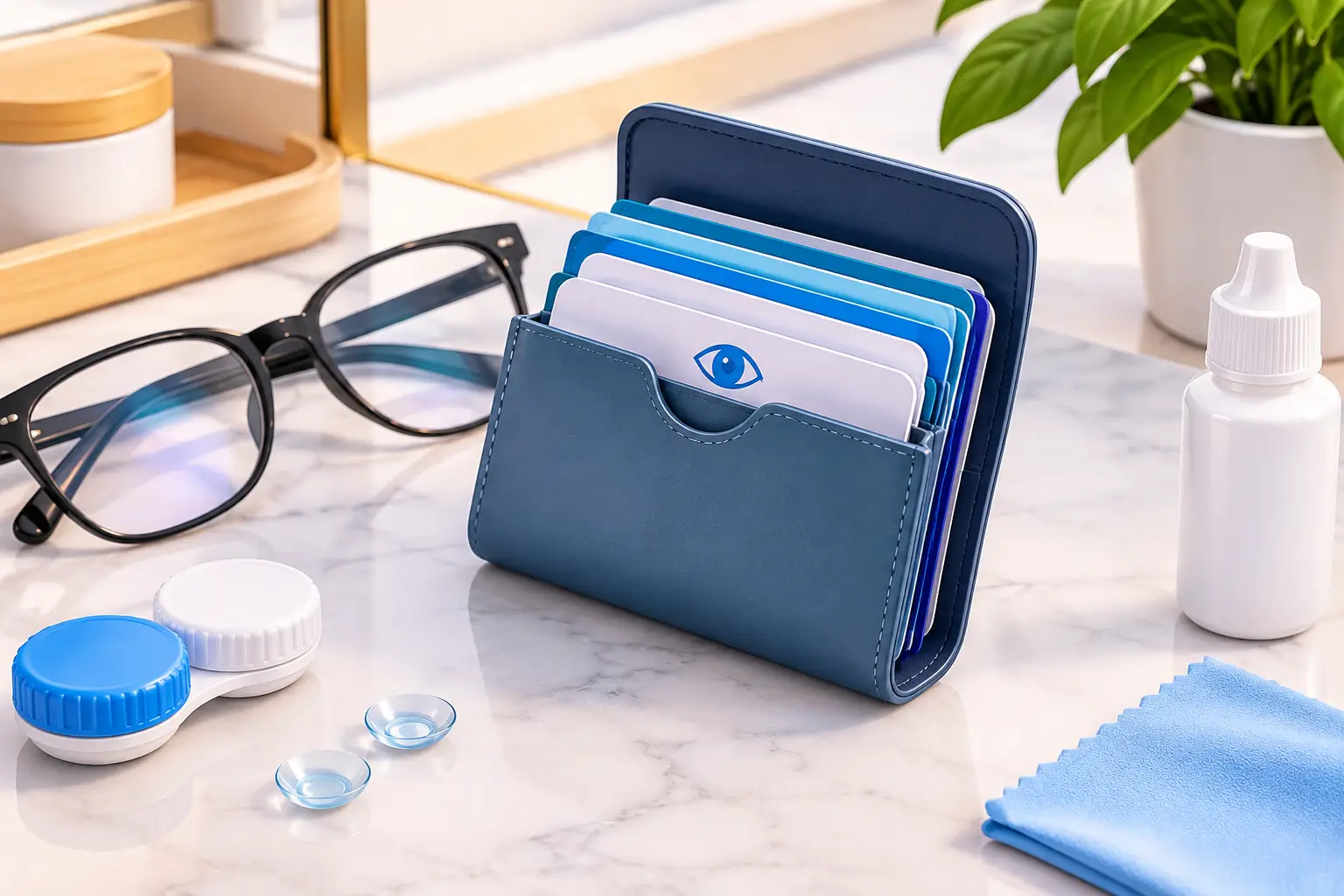
A dedicated organizer can make this process much easier because it keeps the physical lens cases beside the details that identify them. EYEBOX is designed for that exact problem: storing lens cases while keeping prescription, color, expiration, and purchase information organized in one place. Instead of sorting through loose cases and discarded packaging, you can see what each pair is and when it needs attention.
Track Three Different Dates
Contact lens dates are easy to confuse because they do not all mean the same thing. A lens may have a manufacturer expiration date, an opening date, and a replacement date. Each one matters for a different reason.
Manufacturer Expiration Date
This date is printed on the unopened lens package. It tells you how long the sealed lens remains sterile in its original packaging. Do not use lenses from an unopened package after the printed expiration date. Record this date when you buy a supply, especially if you stock up during a sale.
Date Opened
The date opened is the day you remove a lens from its sealed blister pack. This is the date that starts the clock for reusable lenses. A monthly lens opened on the 10th should generally be replaced around the 10th of the following month, even if you did not wear it every day. Follow the replacement schedule provided by your eye care professional and lens manufacturer.
Replacement Date
The replacement date is the date you plan to discard the current pair. For daily disposables, this is the same day you wear them. For biweekly, monthly, or other reusable lenses, calculate the replacement date as soon as you open the pair and write it where you will actually see it.
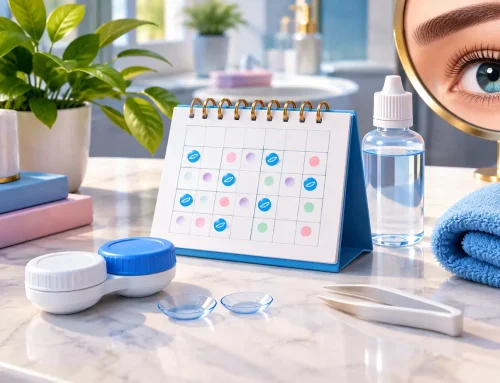
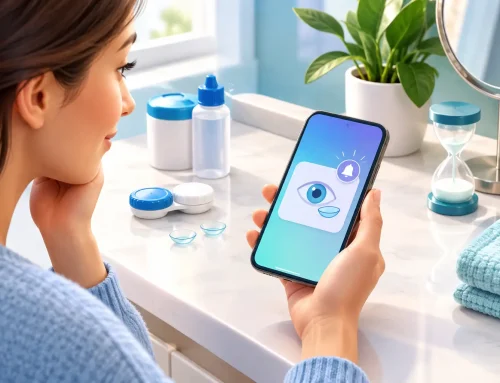
A reminder on your phone can help, but a physical label near your lens case offers a useful backup. It is especially helpful on rushed mornings, when you are less likely to search through apps or old texts for the answer.
Keep Prescription Records Separate From Medical Changes
Your personal tracking system is a record, not a substitute for an eye exam or updated prescription. Contact lens prescriptions can change, and your glasses prescription is not automatically the same as your contact lens prescription. Contacts sit directly on the eye, so their fit and specifications matter.
When your eye doctor gives you a new prescription, replace your old record right away. Mark the previous details as expired or remove them from your active storage area. Keeping old and current boxes together without clear labels is one of the fastest ways to reorder the wrong product.
If a lens feels uncomfortable, causes redness, gives you blurred vision, or does not seem to match the prescription you recorded, stop wearing it and contact your eye care professional. An organizer helps prevent mix-ups, but it cannot confirm whether a lens is safe or appropriate for your eyes.
Build a Routine That Prevents Mix-Ups
The best tracking method is repeatable. Give every new box the same setup routine: check the package, record the details, label the pair, calculate the replacement date, and place the case in its designated spot. Once this becomes a habit, you do not have to reconstruct your lens history later.
This is particularly valuable if you wear multiple types of lenses. You may use clear prescription lenses during the workweek and colored contacts for special occasions. You may also keep backup lenses in a different power or switch between daily and monthly lenses. Without a system, similar-looking cases become easy to confuse.
Color coding can add another layer of clarity. Use one color for the right eye and another for the left, or assign colors by lens type. The key is consistency. A label only works when you use the same meaning every time.
Keep unopened lens boxes, active lens cases, and expired packaging in separate areas. Once a box is empty, remove it instead of leaving it around “just in case.” Empty boxes can make it look like you still have lenses available, and old labels can create uncertainty about which prescription is current.
When You Need to Reorder Lenses
A well-kept record makes reordering much simpler. Before you place an order, compare the lens brand, prescription values, and color against your current prescription. Then check how many unopened lenses remain and whether any boxes are approaching their manufacturer expiration date.
Purchase information is worth tracking, too. Knowing where and when you bought your lenses helps you review your usual supply cycle and identify the correct product if you need to contact a seller or your eye care provider. It also helps you avoid opening a fresh box when an older, still-valid box should be used first.
For colored contacts, confirm the color name before reordering. Photos can look different under different lighting, and shade names can be confusingly close. Your written record removes that guesswork.
Make Your Lens Details Easy to See
The point of tracking is not to create more paperwork. It is to make the answer visible when you need it. If your prescription details are trapped in a drawer, your expiration date is only in a calendar notification, and your lens cases all look alike, the system is still doing too much work for you.
Keep the essential information with the lenses, update it when a new pair is opened, and clear out records that no longer apply. A small amount of organization turns a pile of contact lens boxes and cases into a routine you can trust – one where you always know what you are wearing, when it was opened, and when it is time for a fresh pair.