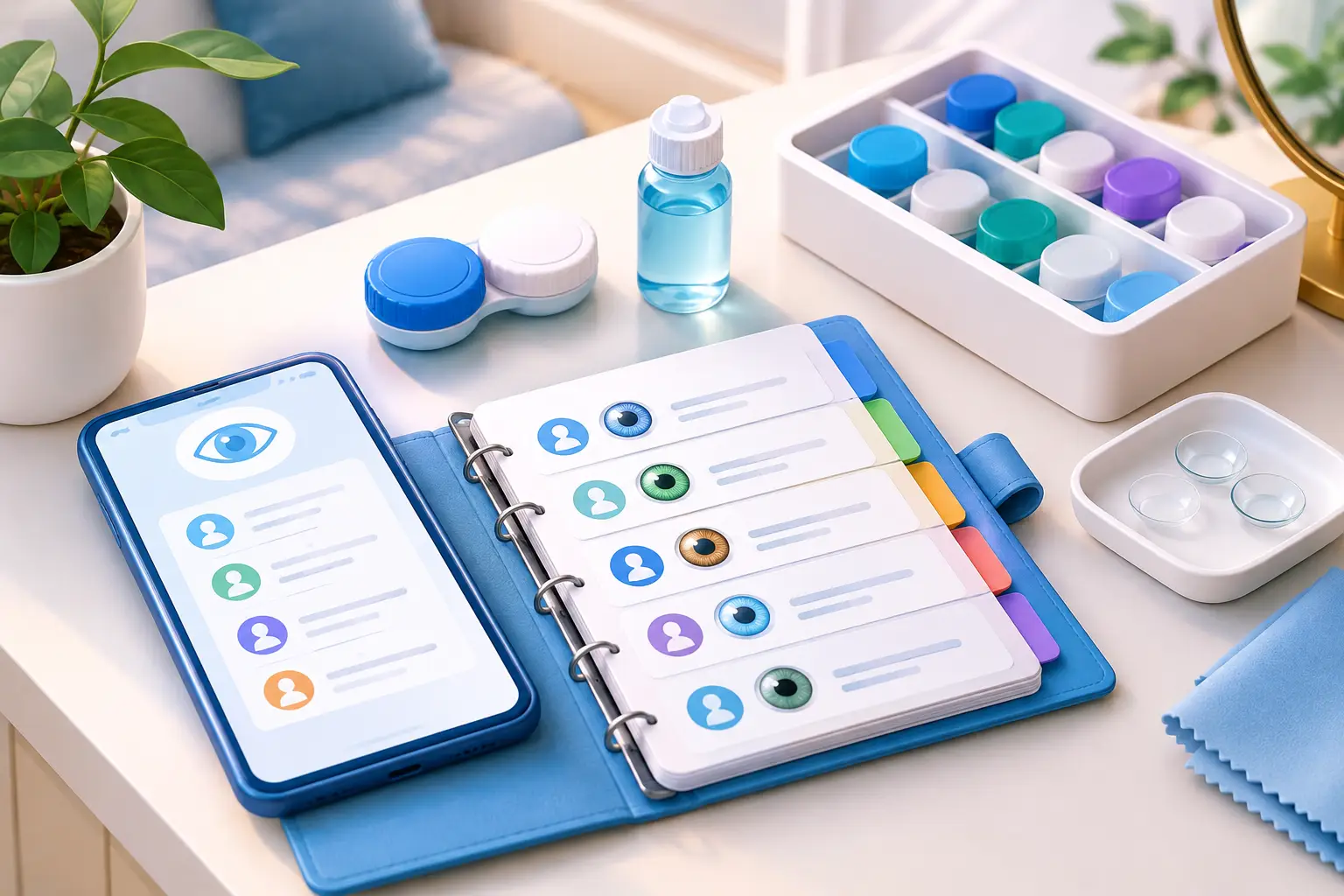
A contact lens box can be gone in seconds. You open a new pair, move the lenses into a case, throw away the packaging, and suddenly the prescription contact details you may need later are nowhere to be found. That becomes a problem when you reorder, switch cases, compare lens colors, or try to remember whether a pair is still safe to use.
For people who wear contacts every day, especially those who keep more than one pair, storing lens information is not an extra chore. It is the simplest way to avoid mix-ups and make your routine easier.
What counts as prescription contact details?
Prescription contact details are the identifying information connected to a specific pair of lenses. They help you confirm what is in a lens case before you put the lenses in your eyes or order another supply.
Your prescription may include the power, often shown as SPH or PWR, along with the base curve and diameter. Depending on the lens type, it can also include cylinder and axis for astigmatism, or an add power for multifocal lenses. These numbers matter because contact lenses are medical devices, not interchangeable accessories.
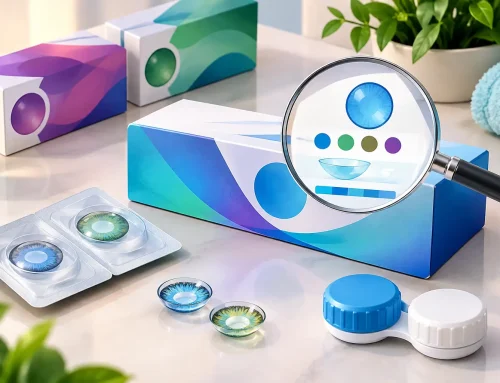
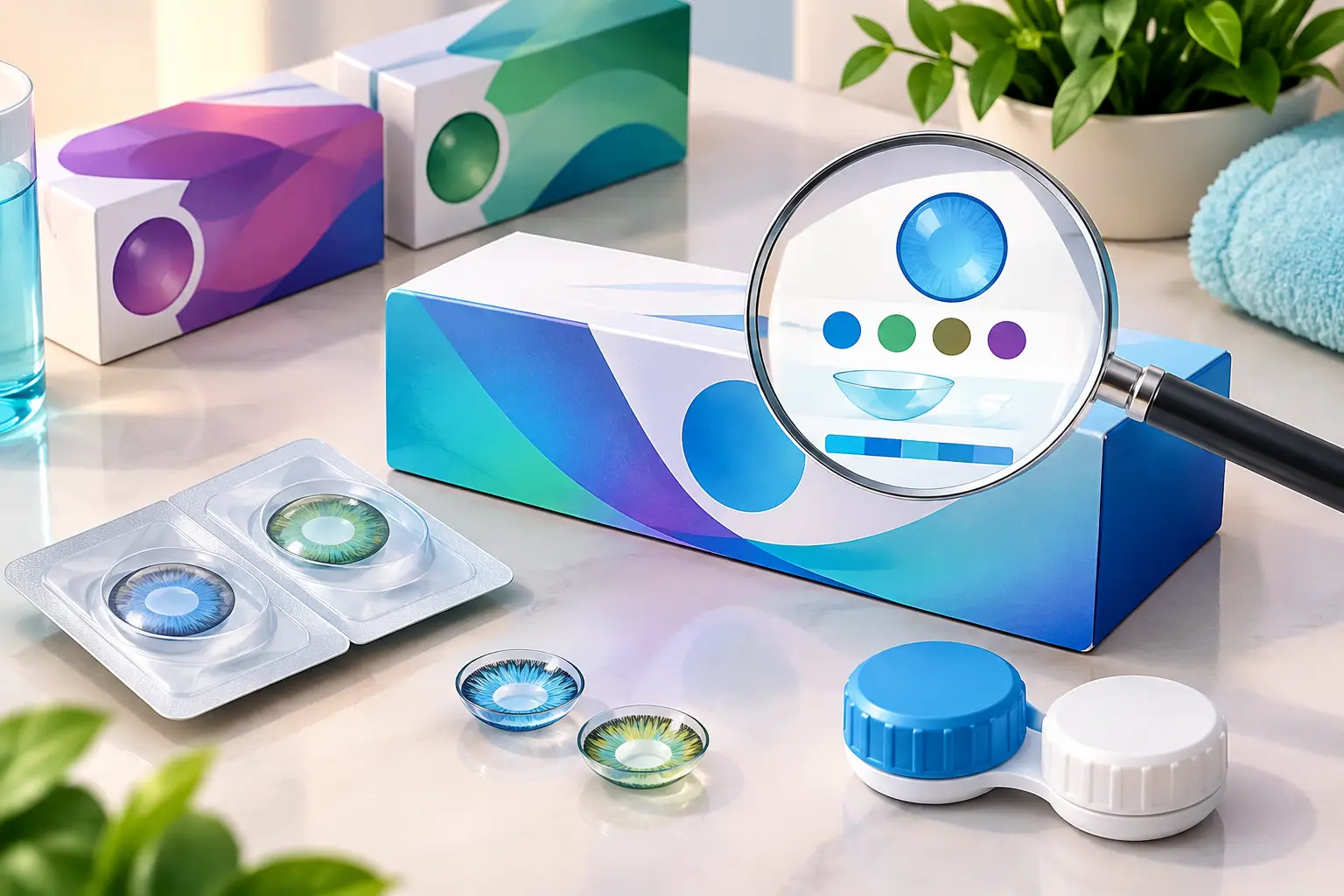
For colored contacts, the color name and brand matter too. A blue-gray pair, hazel pair, and clear prescription pair can all end up in nearly identical cases. If the case is unlabeled, relying on memory is an easy way to wear the wrong lenses or lose track of which pair you opened first.
The details worth keeping together are:
- Lens brand and style
- Right-eye and left-eye prescription values
- Base curve and diameter
- Lens color, if applicable
- Purchase date and replacement schedule
- Expiration date and, when useful, the lot number
You do not need to write down every number repeatedly if both eyes use the same lens. But if your right and left prescriptions differ, clear labeling is essential. “Left” and “right” are not enough if you have several cases open at once.
Why lens boxes are not a long-term system
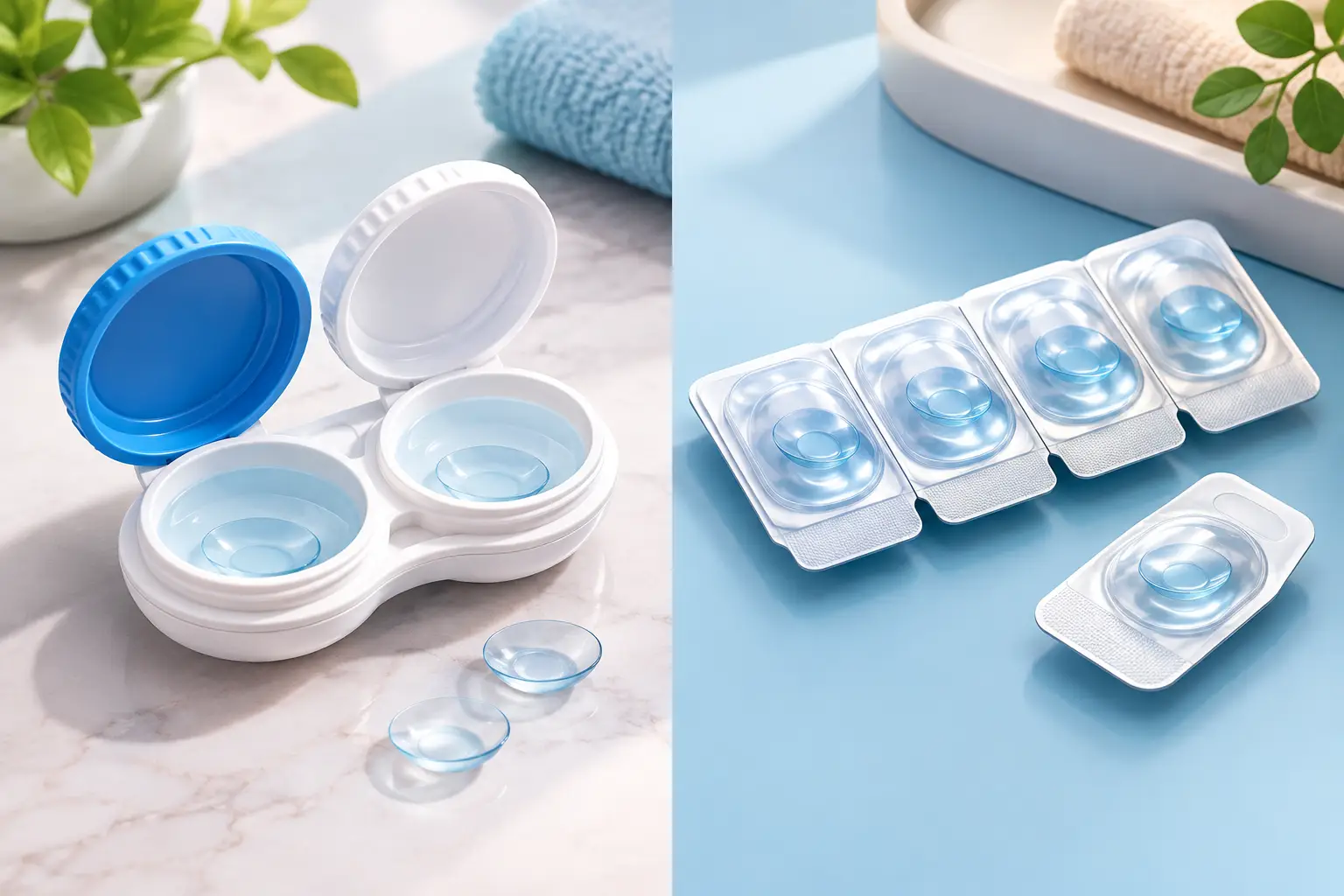
The original lens box has useful information, but it is not designed to stay organized in a bathroom drawer or medicine cabinet. Boxes get wet, flattened, separated from their lenses, or tossed out during a cleanup. The blister pack may have some details printed on it, but it is just as easy to discard.
Keeping empty boxes also creates clutter without solving the real issue. After a few months, you may have several packages with no clear connection to the cases currently holding your lenses. You still have to inspect every box, remember which one is current, and hope nothing got switched around.
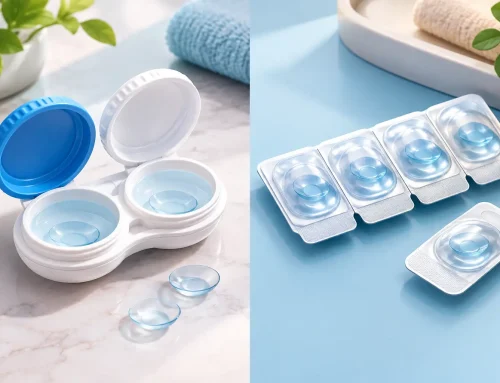
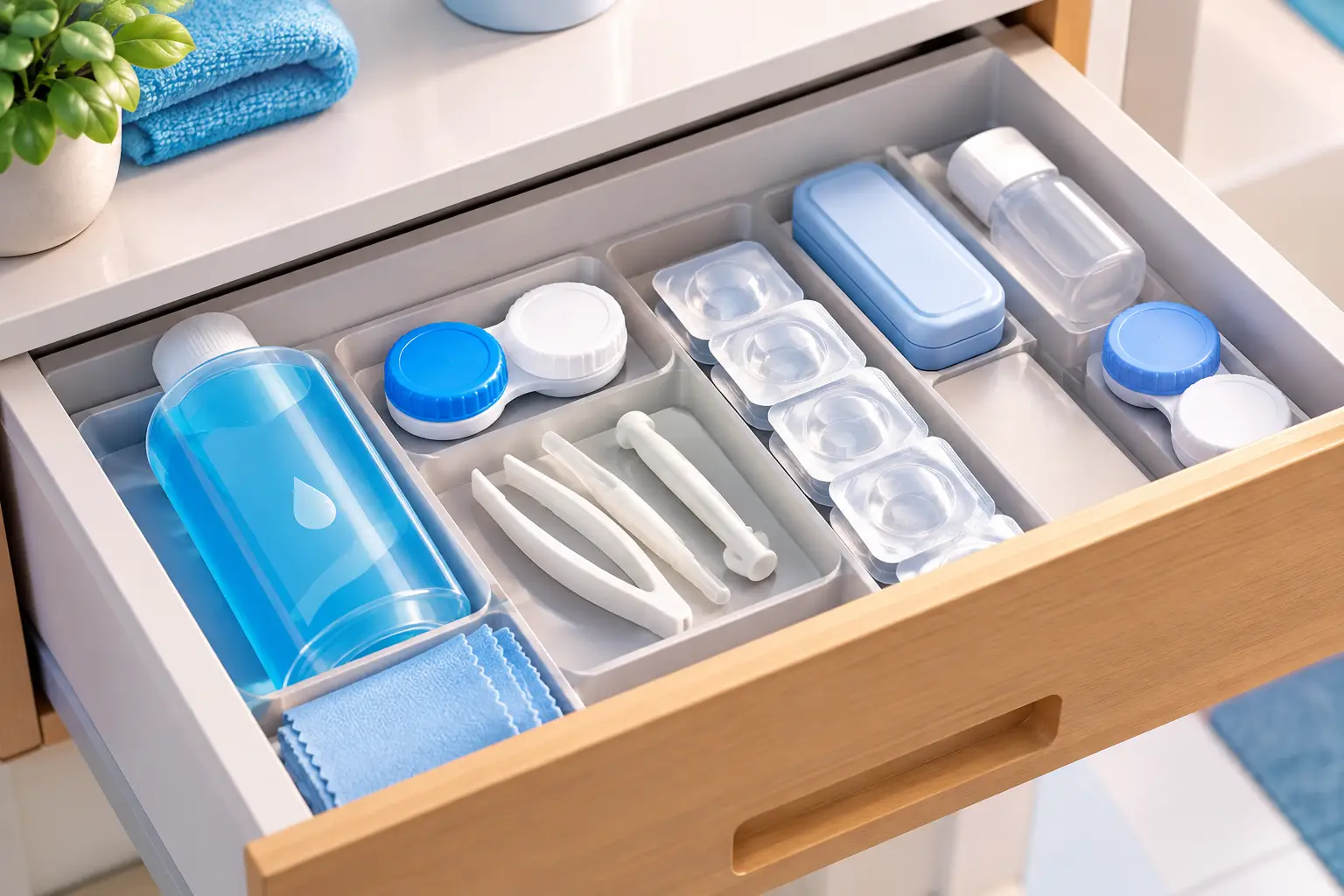
A better system keeps the information with the lens case, not in a separate pile of packaging. That small change creates a clear before-and-after routine: instead of opening a drawer full of mystery cases, you can identify each pair at a glance.
How to organize contact lens information at home
Start when you open a new pair. This is the moment when all the details are visible and easy to record. Waiting until later increases the chance that the box will disappear before you label the case.
Give every open pair its own identity
Assign each lens case a record that includes the brand, prescription, color, and date opened. If you wear clear lenses during the week and colored lenses on special occasions, label them separately. Do the same for backup pairs.
Be specific enough that another person could identify the lenses without asking you questions. “Brown contacts” may not be helpful if you own two different brown shades. “Monthly hazel lenses, -2.50 right / -2.00 left, opened March 3” is much clearer.
This does not need to look complicated. The goal is not to create a medical chart. The goal is to make the information easy to find during the ordinary moments when you need it most.
Keep replacement timing visible
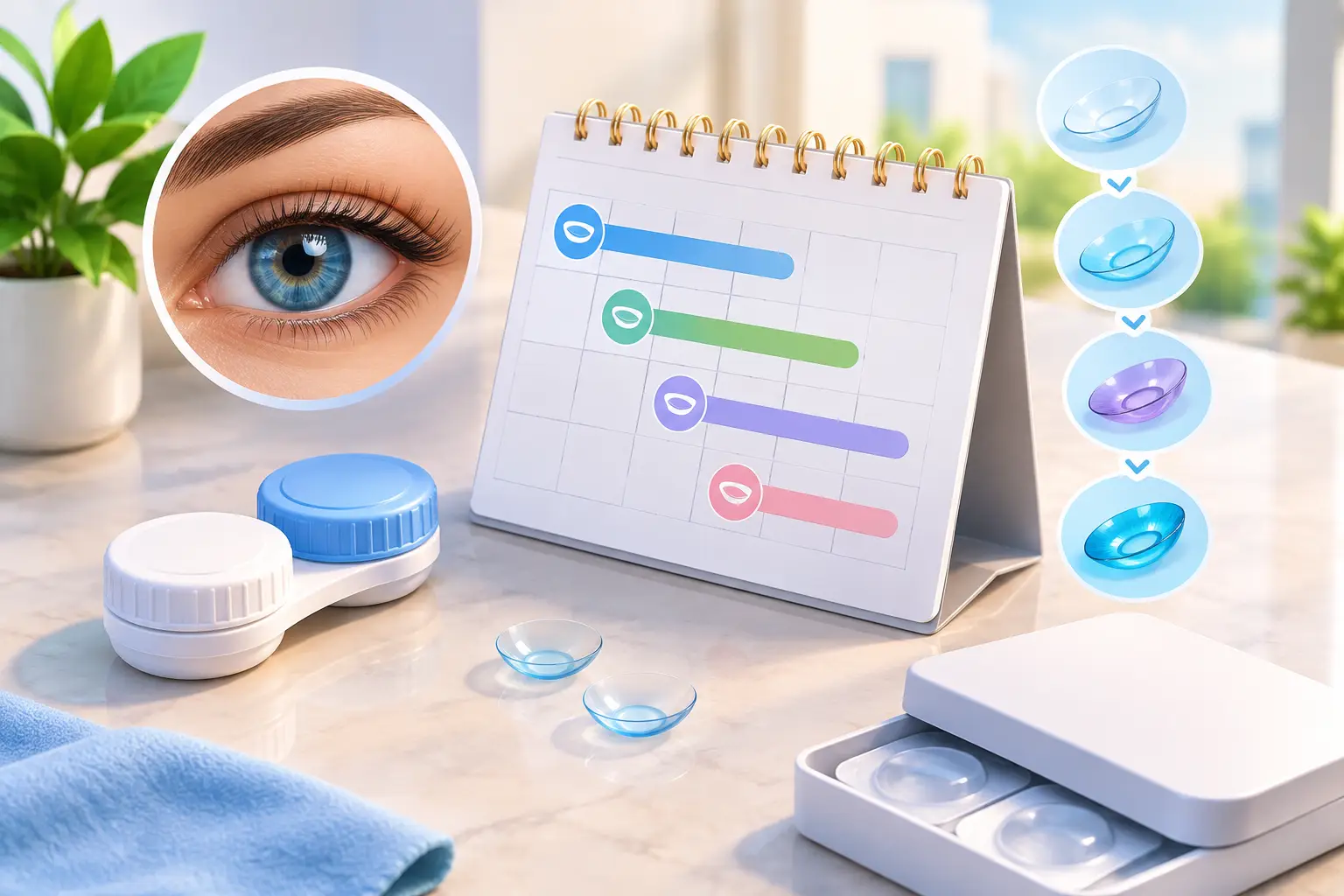
Replacement schedules are easy to forget because lenses can still look fine after their recommended wear period. Daily disposables, biweekly lenses, monthly lenses, and specialty lenses all have different instructions. The correct timeline comes from your eye care provider and the lens manufacturer.
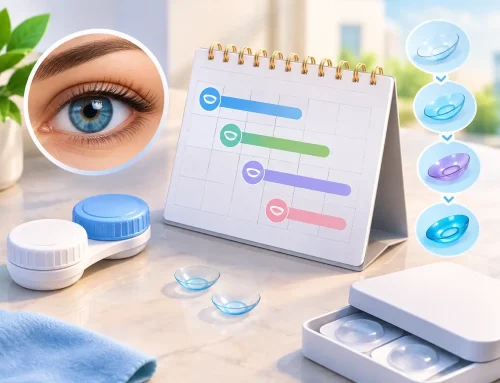
Record the date you opened reusable lenses and the date they should be replaced. Do not treat the expiration date on an unopened package as the same thing as the replacement date for an opened pair. One tells you how long the sealed lens can remain on the shelf; the other tells you how long you should use it after opening.
If you are unsure whether a pair is current, do not guess. Replace it with a fresh pair or check with your eye care professional. A simple tracking habit is much better than trying to reconstruct dates from memory.
Separate prescription lenses from cosmetic lenses
Colored contacts deserve the same careful tracking as clear lenses. Even if you wear them only occasionally, they still need an up-to-date prescription, proper cleaning, and a clear replacement timeline.
A separate label for color prevents a common frustration: opening a case and realizing you cannot tell whether the lenses are honey, green, gray, or clear until they are already on your finger. That is inconvenient at best and can lead to putting in the wrong pair when you are rushing.
Store cosmetic and prescription options in clearly marked spaces so you can choose the pair you intended to wear. This is especially useful for users who rotate between natural-looking colors, dramatic shades, and everyday corrective lenses.
A storage system should reduce decisions
The best organization system is one you will actually keep using. A random collection of cases, sticky notes, and old boxes usually adds more decisions to your routine. You have to search, compare, and remember what each item means.
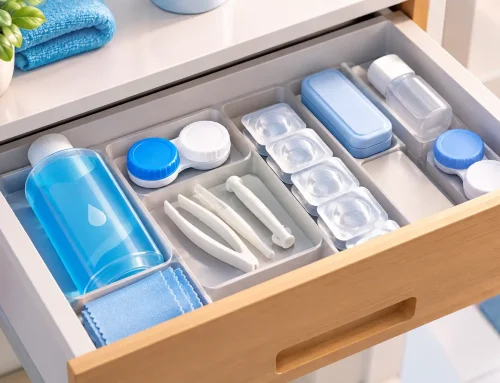
A purpose-built organizer keeps cases and their identifying details together in one designated place. With EYEBOX, users can store contact lens cases alongside key information such as prescription, color, expiration date, and purchase details. The benefit is practical: when you need to check a pair, the answer is where the lenses are, not buried in an old email or missing package.
This kind of setup is particularly helpful when you have similar cases. Color-coded identification can distinguish your right and left lenses, separate different prescriptions, or show which pair is next to be replaced. It turns a small daily task into a quick visual check.
Common mistakes that create lens mix-ups
Most confusion starts with a shortcut that seems harmless at the time. You may tell yourself you will remember the date, keep the box “for now,” or sort everything out later. Then a busy week passes, a new pair is opened, and the details blur together.
Avoid storing more than one pair in unlabeled cases. Do not move lenses into a new case without moving their information too. And do not assume that lenses with the same brand name share the same prescription, color, or replacement date.
It also helps to review your stored information whenever you open a new supply. Remove records for pairs you no longer use, update changes to your prescription, and check that each active case still has a clear label. A five-minute reset can prevent weeks of confusion.
When to confirm details with your eye care provider
Organization makes everyday lens management easier, but it does not replace professional guidance. If your vision changes, your lenses feel uncomfortable, your eyes become red or irritated, or you cannot confirm a lens prescription, stop wearing the questionable pair and contact your eye care provider.
The same applies if you find an old lens case with no date or no clear prescription record. It may feel wasteful to discard lenses you cannot identify, but guessing is not worth the risk. Your eyes deserve better than a mystery case.
A good contact lens routine should leave you with fewer questions, not more. Keep your prescription contact details where you can see them, give every open pair a clear label, and let your storage space make the next choice obvious.