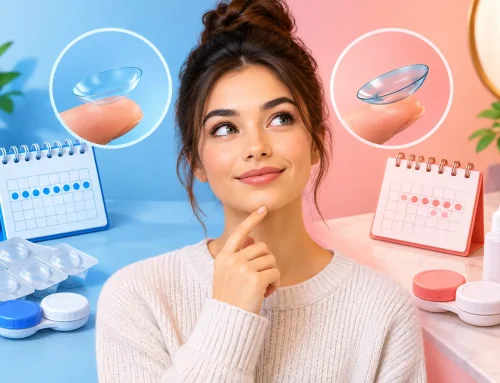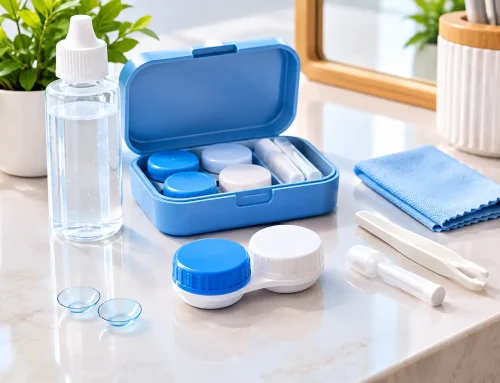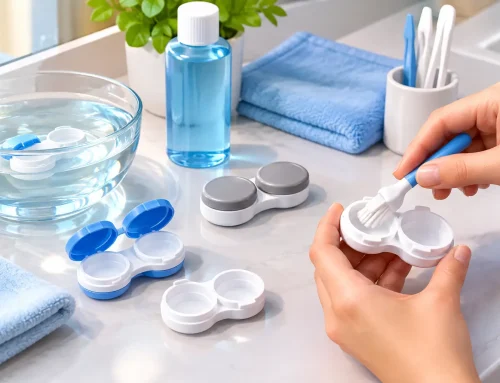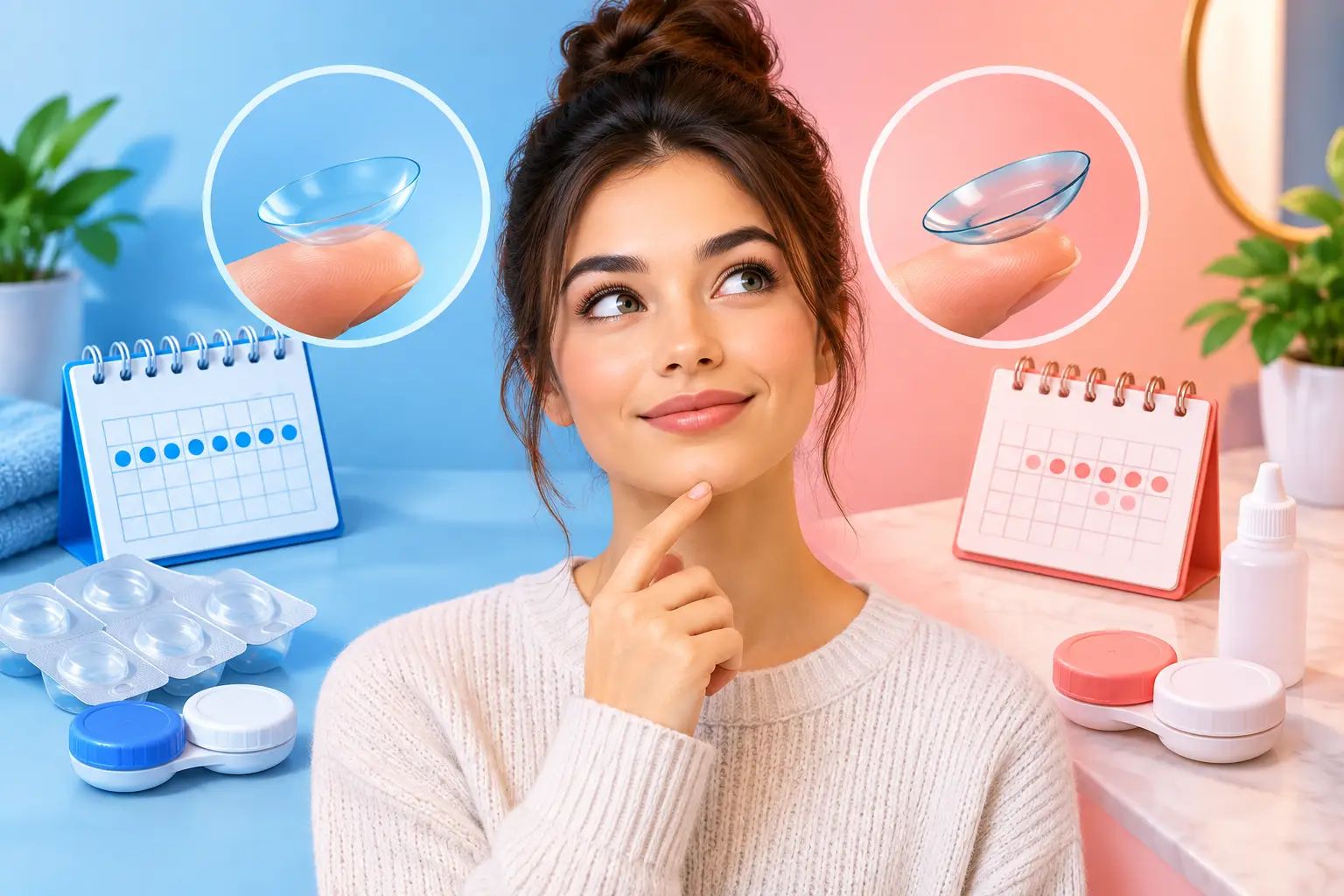
A contact lens case can keep your lenses hydrated between wears. It cannot tell you which prescription is inside, whether the lenses are gray or hazel, when they expire, or where they came from. That is the real issue behind lens cases vs original boxes: each serves a different purpose, but most routines leave a gap between the two.
If you wear more than one pair – perhaps clear prescription lenses during the week and colored lenses for special occasions – that gap can turn into daily guesswork. Similar-looking cases pile up in a drawer, the original box gets tossed, and details that mattered at purchase suddenly become impossible to confirm.
Lens cases vs original boxes: different jobs
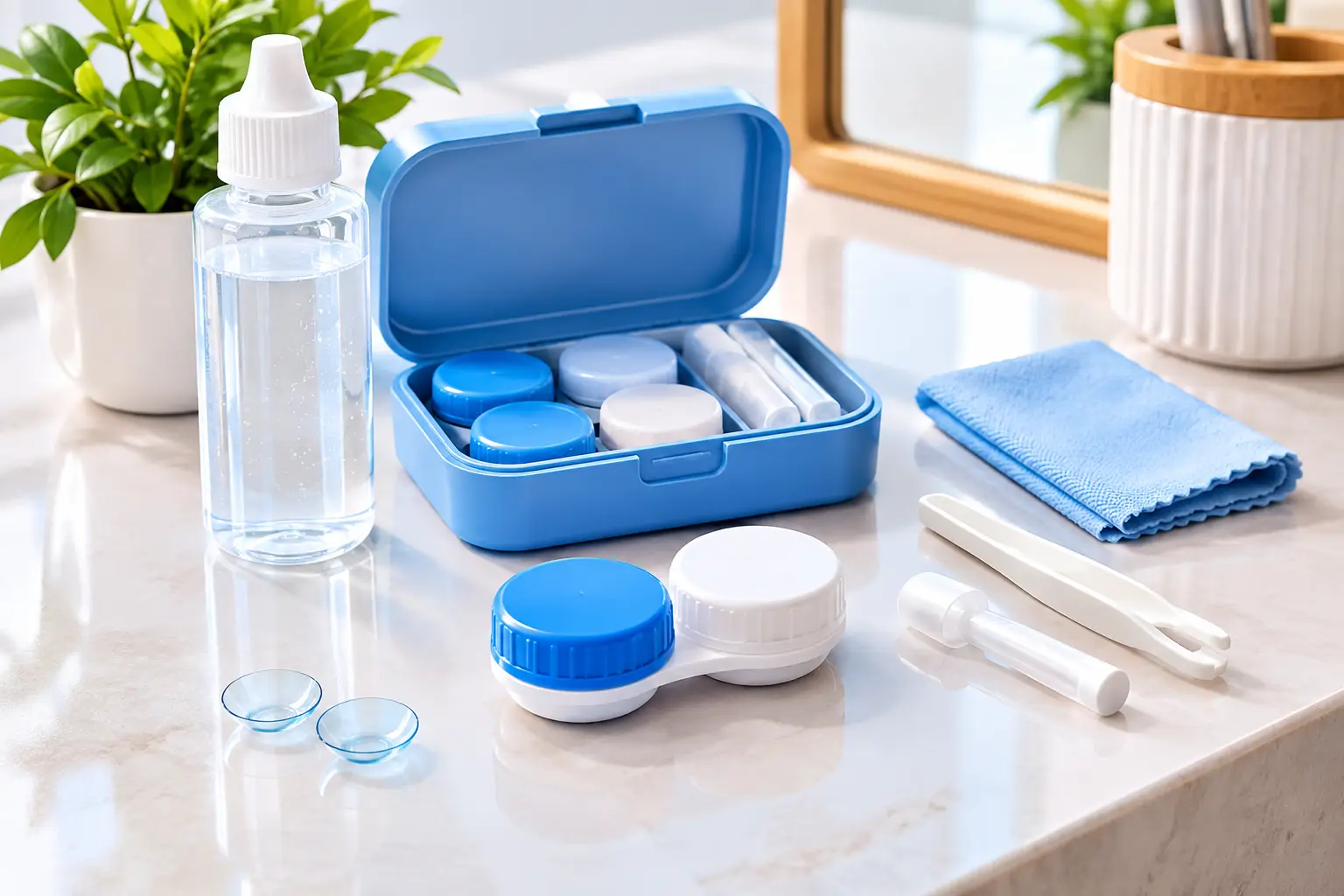
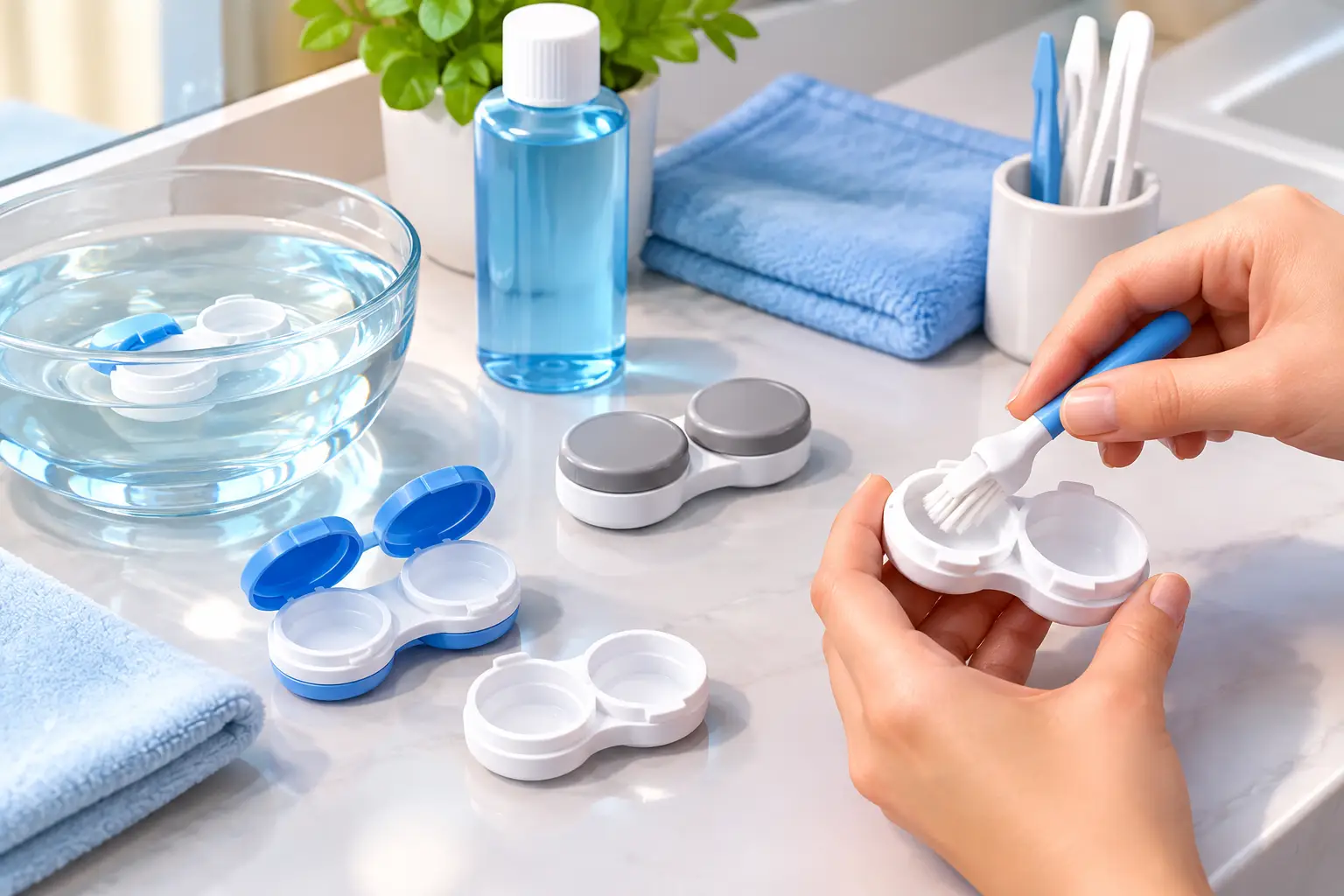
A lens case is for lens storage and care. It holds contact lenses in fresh solution as directed by your eye care professional and the lens manufacturer. It is part of your routine, so it needs to be clean, easy to identify, and replaced on schedule.
The original box is an information source. It typically lists the brand, lens power, base curve, diameter, color or style, expiration date, and often a lot number. For some lenses, it also helps you distinguish the right lens from the left lens when the powers are different.
The problem is not that one is better than the other. The problem is expecting either one to do both jobs. A case protects lenses temporarily. A box protects the details you may need later.
That distinction matters most after the packaging is gone. Without it, a perfectly good lens case can become a mystery container. You may remember that one pair was for distance and another was for reading, but not which case holds which. With cosmetic lenses, color names that seemed obvious at checkout can be hard to identify once the lenses are soaking in solution.
What original boxes tell you that cases do not
Original boxes are easy to dismiss because they can feel like clutter. Still, the information printed on them can be useful long after the lenses are opened.
Your prescription details are the biggest reason to keep a record. Contacts can have different powers for each eye, and your contact lens prescription includes more than the numbers on a glasses prescription. If you use toric, multifocal, colored, or specialty lenses, the identifying information can be even more specific.
Expiration dates also deserve more attention than they get. An unopened lens package has a manufacturer expiration date. Once lenses are opened, their replacement timeline is a separate issue and should follow the wearing schedule prescribed for that lens type. Keeping the box details visible helps prevent one common mistake: treating every lens in your drawer as if it has the same timeline.
The box may also include the exact color, a product code, and lot information. You may not need those details every day, but they are helpful when you want to reorder the same lenses, check what you bought, or respond to a manufacturer notice. If a lens feels uncomfortable or seems different from usual, knowing precisely what you opened is more useful than saying it came from “the blue case.”
Why keeping every box is not the best system
Keeping original boxes is better than throwing away every detail immediately. But a stack of bent cardboard boxes is not a complete organization method.
Boxes take up space, especially if you buy lenses in several colors or prescription strengths. They can get separated from their matching cases. In a bathroom or medicine cabinet, cardboard can also become worn, damp, or hard to read. And when you need a detail quickly, sorting through old packaging is not much better than guessing.
There is another limitation: the box usually describes the lenses as purchased, not how you are currently using them. It will not remind you when you opened a pair, whether a case was cleaned, or which pair is currently in rotation. A useful system needs to connect purchase information with your actual routine.
A practical approach is to keep the important details without keeping a confusing pile of packaging. Record the information before discarding a box, then keep the record directly associated with the matching lens case. If you prefer to retain original boxes until the lenses are used, store them in a dry, dedicated place rather than letting them drift into different drawers.
Build a system around the lenses you actually use
Start by gathering every active lens case, unopened box, and loose package you have. This is the moment to identify what is clear and what is uncertain. If you cannot confidently match a case to its lens details, do not make assumptions based on color alone. Check your order confirmation, prescription record, or contact lens provider before wearing the lenses.
For each pair, keep the details that answer the questions you are most likely to ask later: brand, prescription for each eye, color or style, expiration date, purchase date, and replacement schedule. If you use multiple pairs, add a simple identifier such as everyday clear, brown, green, backup, or special occasion. The best label is the one that makes sense to you at a glance.
Then give every active case one clear home. The point is not to create a complicated filing project. The point is to stop placing a lens case in a drawer and hoping you remember what it contains next week.
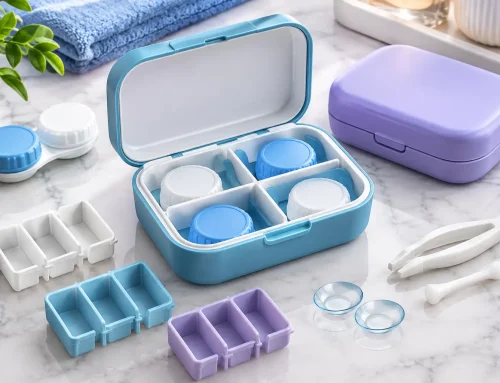
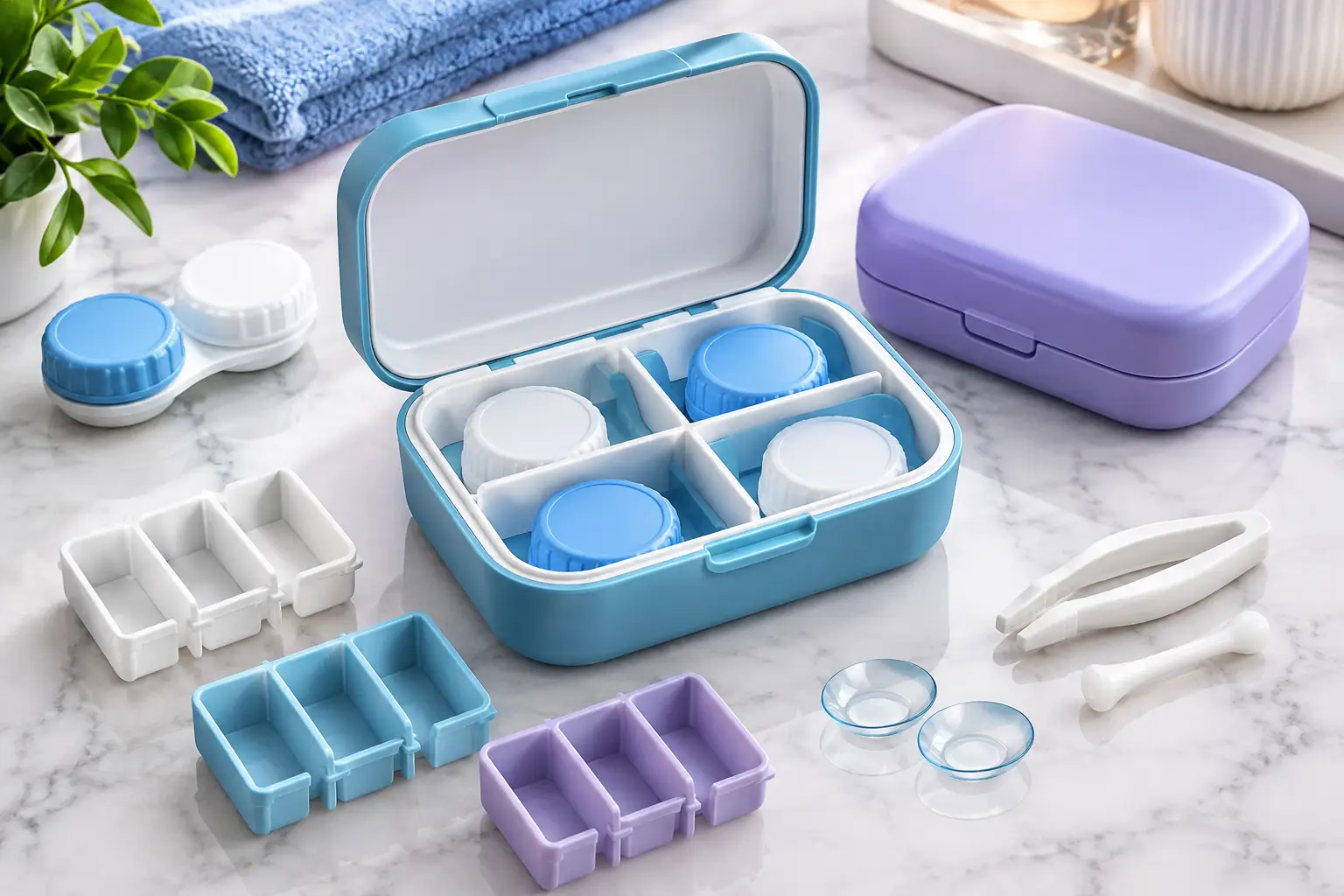
A purpose-built organizer such as the EYEBOX® keeps lens cases alongside the information that identifies them. Instead of choosing between storing the physical case or saving the original box details, you can keep both parts of the routine together. That makes it easier to see what you own, avoid mixing up pairs, and make a more informed choice before putting lenses in your eyes.
A simple decision rule for boxes
You do not have to keep every piece of contact lens packaging forever. Use a simple rule: keep the original box until its details have been accurately recorded and you can confidently match that record to the lenses or unopened packages it describes.
For unopened lenses, retaining the box can be useful because it keeps the manufacturer information with the product. For lenses already in use, the details matter more than the cardboard itself. Once the information is preserved in your organization system, you can decide whether the physical box is worth the space.
Do not transfer lenses from their original sealed packaging into a different container just to save room. Keep unopened lenses in their manufacturer packaging until you are ready to use them, and follow the instructions provided with your specific lenses. An organizer should bring clarity to your routine, not change how lenses are packaged or cared for.
The overlooked issue: similar cases, different lenses
Most mix-ups happen because contact lens cases look alike. Even when cases are different colors, that color often describes the case, not the lens inside. A pink case might hold blue lenses one month, clear lenses the next, and a different prescription after your next appointment.
This is especially frustrating for people who wear colored contacts. A lens can look darker in solution than it does on the eye, and shades with similar names may not be easy to tell apart. Relying on memory is not a system when you own several pairs.
Clear identification also helps when your prescription changes. Old and new lenses can coexist for a while, particularly if you have unopened backups. A labeled record lets you separate current lenses from lenses that should no longer be part of your regular rotation.
Make replacement dates easier to see
Original box expiration dates and lens replacement dates are related, but they are not interchangeable. The printed expiration date applies to the unopened product. Your replacement date starts according to the schedule for the lens once it is opened, whether that schedule is daily, biweekly, monthly, or another period recommended by your provider.
Write down or track the date you open reusable lenses. This small habit can reduce the chance of wearing a pair longer than intended because you simply cannot remember when you started. If you use daily disposables, tracking unopened box expiration dates and remaining supply may be more useful than tracking an open date.
When in doubt, follow your eye care professional’s guidance and the manufacturer instructions for the exact lenses you wear. Organization supports safe habits, but it does not replace professional care.
The best setup is the one that removes a question from your day. When every lens case has clear details nearby, you spend less time decoding containers and more time knowing exactly what you are wearing.