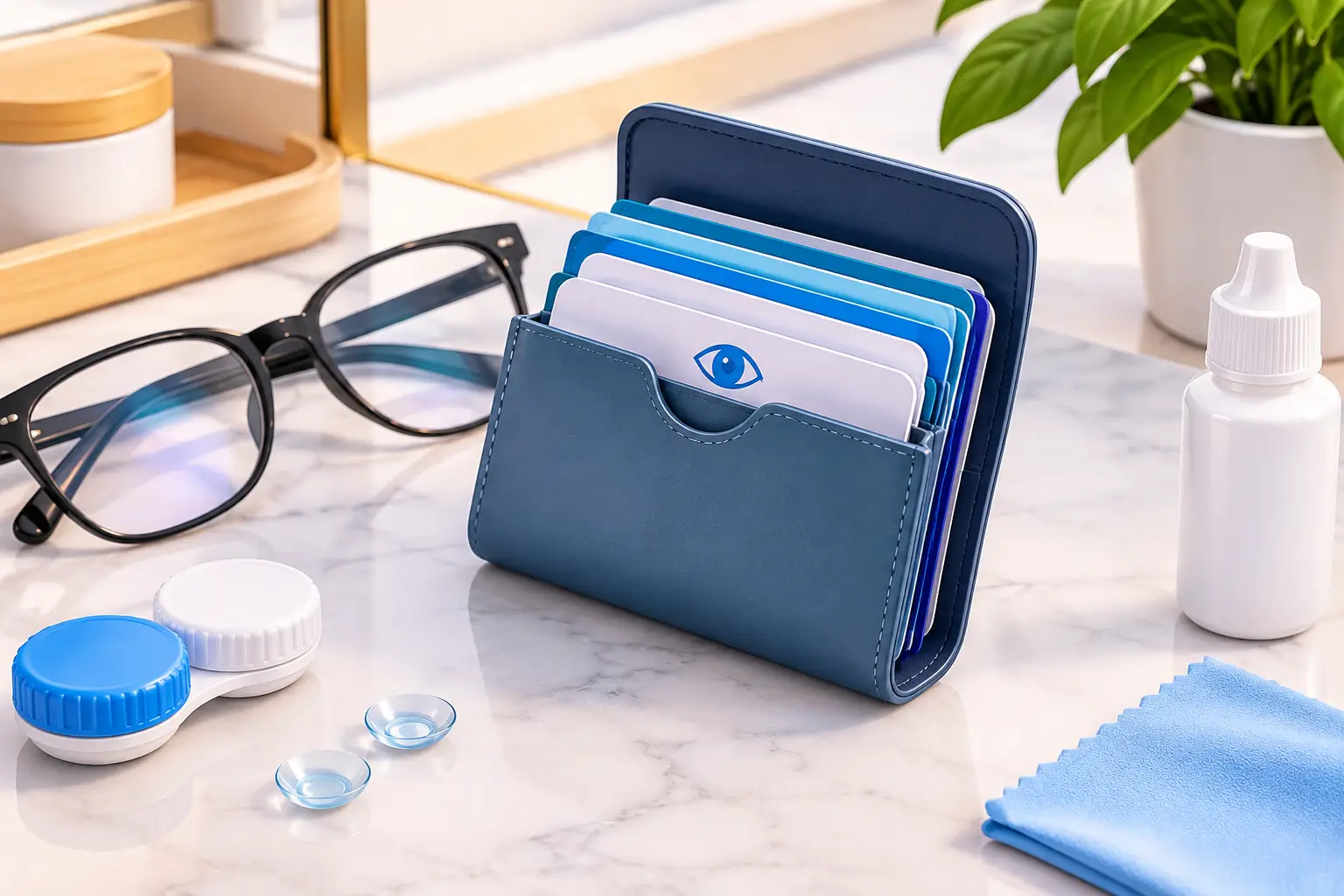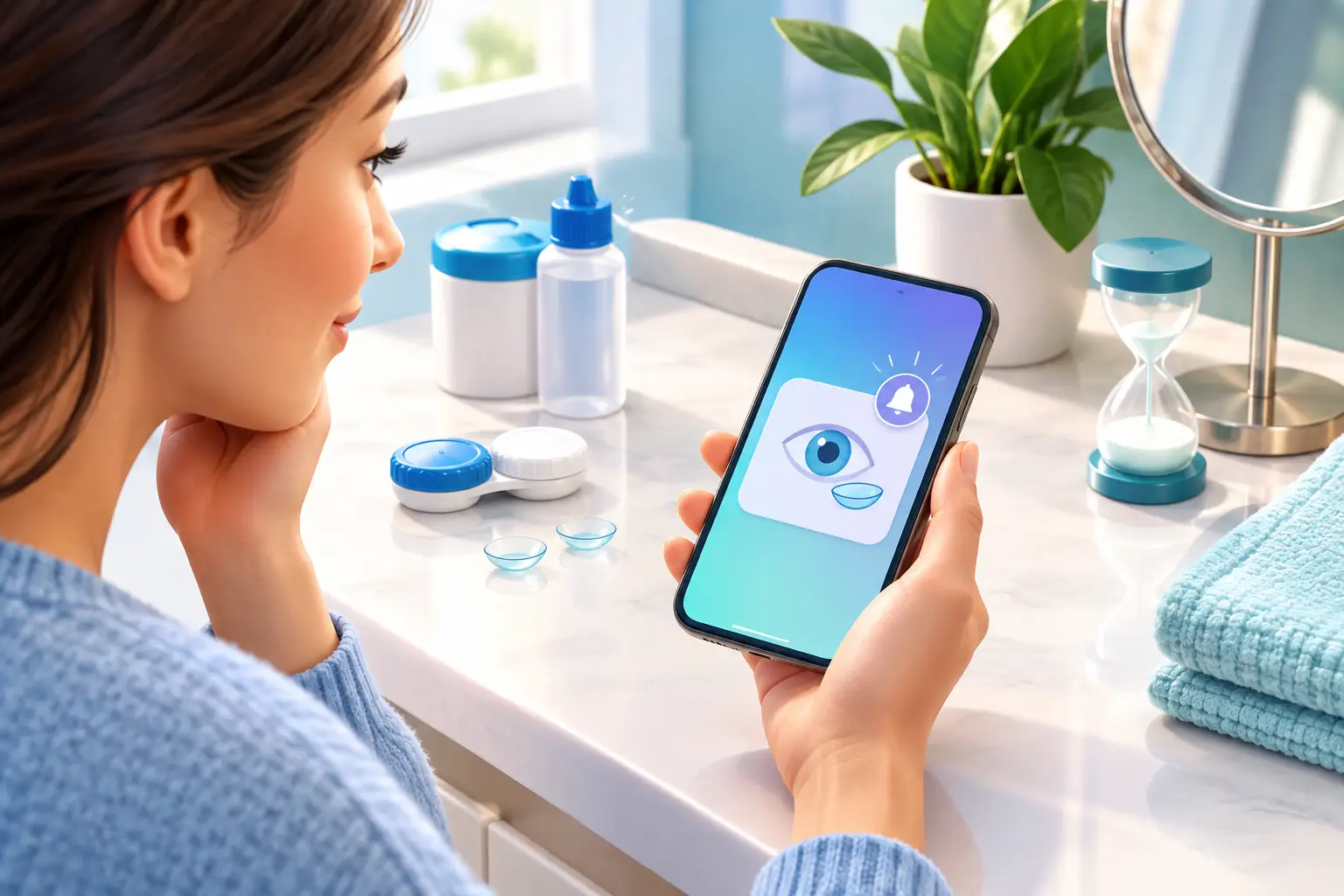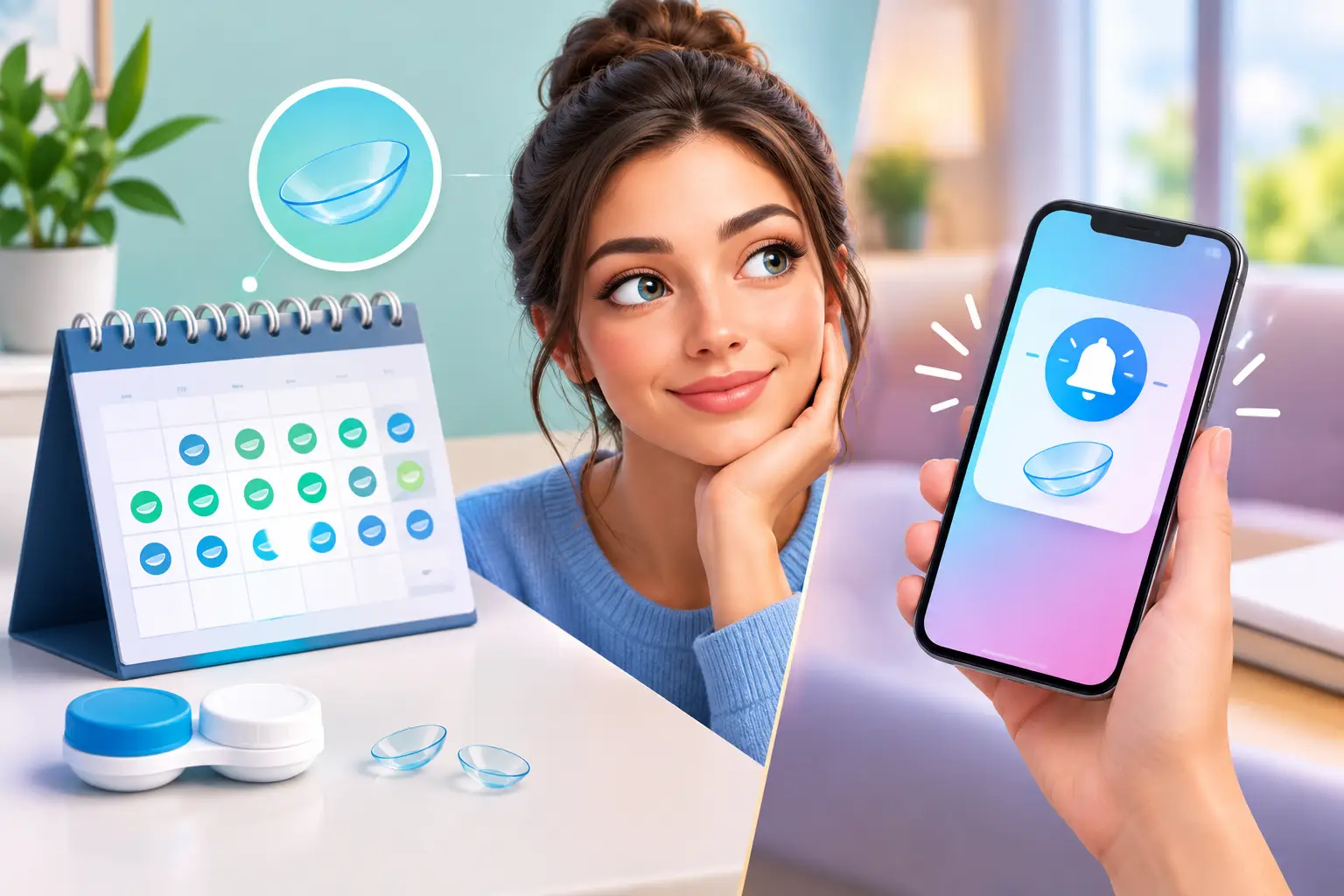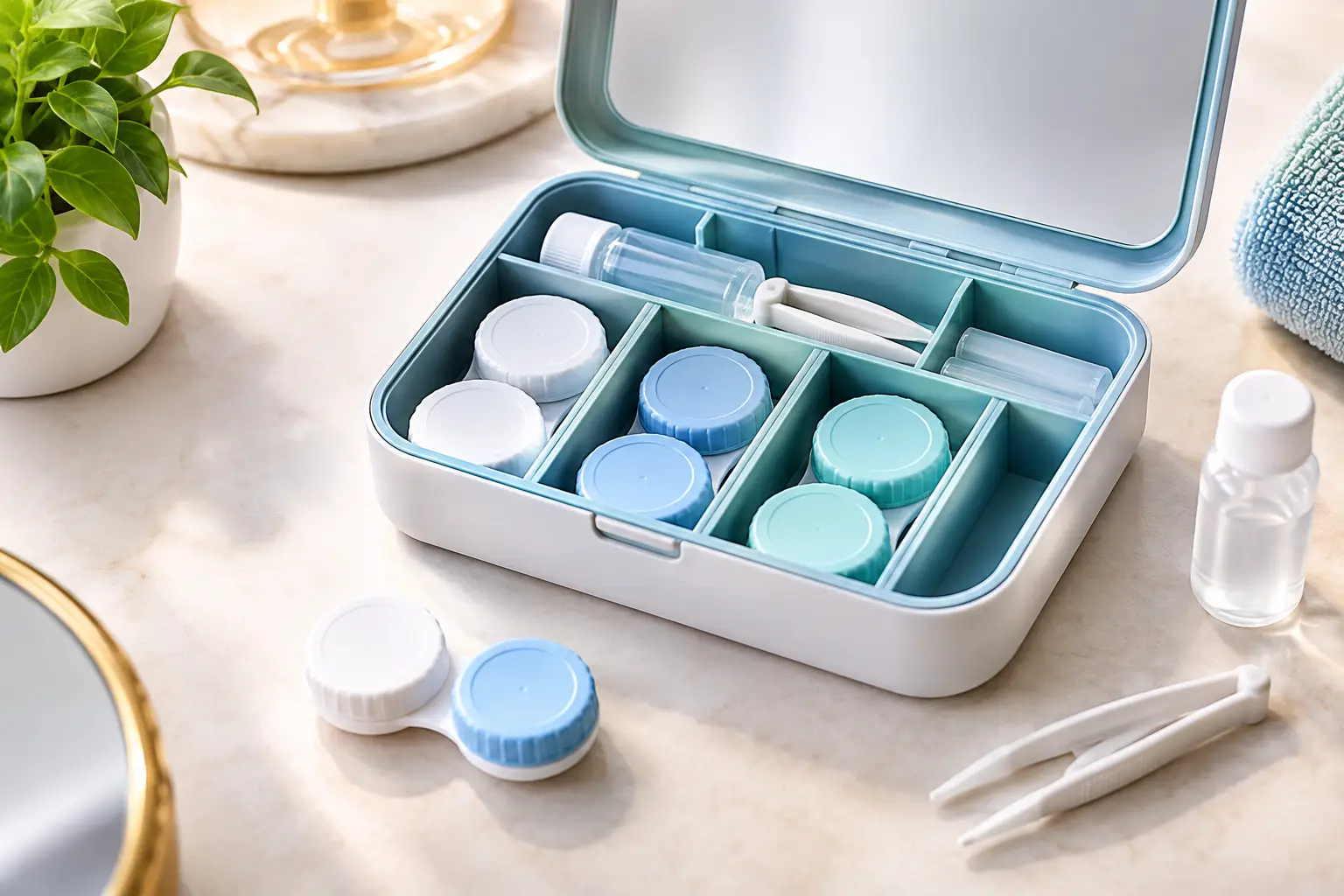
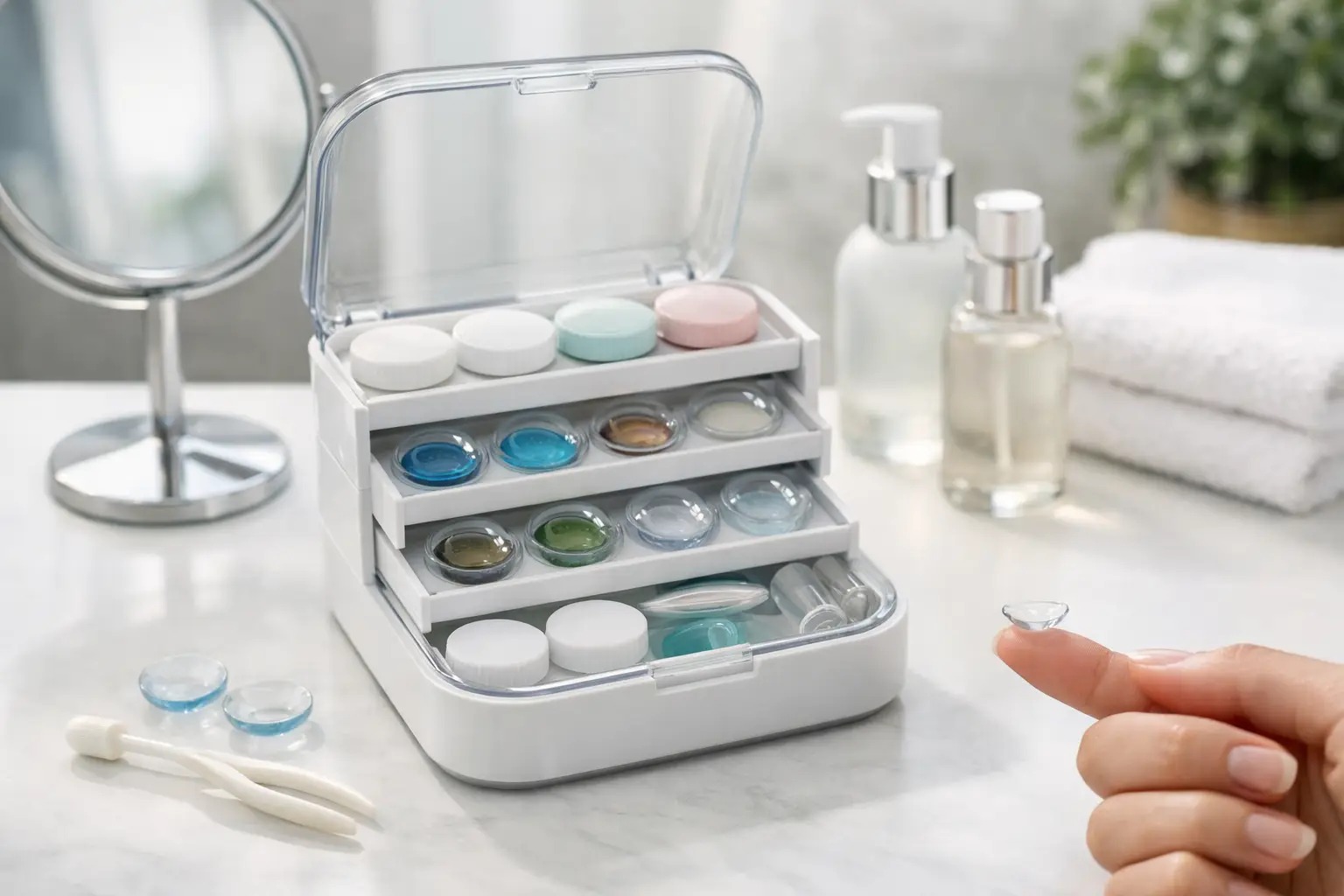
A drawer full of nearly identical contact lens cases can create a surprisingly expensive problem. One pair may be your current prescription, another may be colored lenses for weekends, and a third may be nearing replacement. Without the original boxes and labels, it is easy to forget what is what. The best contact lens organizer for multiple pairs does more than hold cases. It keeps the details that make each pair safe and simple to use.
For people who wear prescription lenses, cosmetic lenses, or both, organization is not about having a prettier bathroom counter. It is about knowing the lens color, prescription, purchase date, replacement schedule, and expiration information before you put a lens in your eye.
What Makes the Best Contact Lens Organizer for Multiple Pairs?
A basic contact lens case serves one purpose: it holds a single pair in solution. That is necessary, but it does not solve the bigger issue when you have several pairs. Once packaging is thrown away, the case alone cannot tell you whether the lenses are daily, monthly, prescription, plano, blue, hazel, or ready to replace.
The best organizer for multiple pairs should bring physical storage and lens information together. You should be able to open one system and quickly identify each pair without guessing, checking old order emails, or opening several cases to compare the lenses inside.
Look for an organizer that gives each pair a dedicated spot and makes room for the information you actually need. At a minimum, that means a place to record prescription details, lens color, purchase date, expiration date, and the date you began using the pair. Clear labeling matters because contact lenses often look similar, especially when cases are the same color.
A useful system should also fit naturally into your at-home routine. Whether you keep it in a bathroom cabinet, on a vanity, or in a drawer, it should replace loose cases and discarded boxes with one reliable home for your lenses.
Why Multiple Lens Pairs Get Confusing So Quickly
Most contact lens clutter starts with a reasonable decision. You save an old pair as a backup, buy a fresh supply, try a new color, or keep different lenses for different looks. Then the boxes take up space, so they get tossed. A few weeks later, the cases all look alike.
The confusion gets worse when you wear colored contacts. A subtle gray, green, or hazel lens may be hard to identify through a lens case. If you have more than one color or more than one prescription, mixing them up can lead to wasted lenses and frustrating mornings.
There is also the replacement timeline to manage. Monthly lenses, for example, need to be replaced based on when you opened them, not when you happen to remember buying them. If that date is nowhere near the case, it becomes easy to wear a pair longer than intended or replace a pair before necessary because you are unsure.
An organizer turns those scattered details into a routine you can see. Instead of asking, “Which pair is this?” you have the answer where the pair is stored.
The Features That Matter Most
Not every storage solution is built for contact lens users. Small bins and cosmetic organizers can keep cases together, but they usually leave you responsible for tracking the important details somewhere else. That may work for one pair, but it becomes unreliable as your collection grows.
Dedicated storage for each lens case
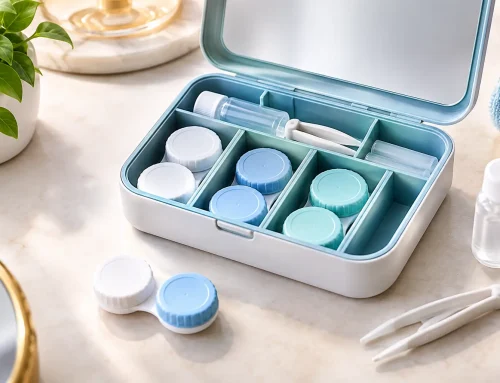
Separate spaces are the first requirement. When each pair has its own designated position, you avoid cases rolling around in a drawer or getting stacked with unrelated products. Dedicated storage also makes it easier to notice when a case is missing, empty, or ready to be cleaned or replaced.
A place to record lens details
This is the feature that separates a true lens organizer from an ordinary container. Your prescription can change, and lens colors or brands can overlap. Keeping usage details alongside each pair removes the need to hold onto bulky retail packaging just to remember the basics.
For multiple-pair users, the most helpful details to track are prescription, color, replacement type, purchase date, expiration date, and the date opened. If you use cosmetic lenses without vision correction, color and replacement information are still essential.
Clear visual identification
Color coding and easy-to-read labels reduce decision fatigue. You should be able to identify a pair at a glance, particularly during a busy morning or before a night out. A good visual system is not just convenient. It makes it less likely that you will reach for the wrong pair because two cases look the same.
Easy upkeep
The organizer itself should support a clean, repeatable process. Lens cases still need to be emptied, rinsed, and maintained according to your eye care professional’s guidance and your lens care instructions. Organization does not replace proper lens hygiene, but it makes the care routine easier to keep consistent because everything has a designated place.
How to Set Up Your Lens Organization System
The most effective setup is simple enough to maintain. Start by gathering every lens case, unopened box, backup pair, and written prescription you currently have. This may reveal more duplicates and older pairs than you expected.
Next, match each case to its lens information before discarding any remaining packaging. Record the prescription for each eye if applicable, the lens brand or type, the color, the purchase date, the expiration date, and the date you first opened the pair. If you are not certain about a case, do not guess. Set it aside until you can confirm the details from your order history, eye doctor, or original packaging.
Then assign each confirmed pair one location in the organizer. Keep your most frequently used pair in the easiest-to-reach space, with occasional colors, backups, or unopened replacements clearly separated. The goal is not to create a complicated filing system. It is to make the correct choice obvious.
Finally, build one small habit into your routine: update the record the day you open a new pair. That one step prevents the most common tracking problem – trying to reconstruct dates weeks later.
When a Simple Case Is Enough
A multi-pair organizer is not necessary for every lens wearer. If you use one prescription pair at a time, never keep backups outside their original box, and replace lenses on a schedule you already track reliably, a standard case may be enough.
The value changes when you manage two or more active pairs, keep cosmetic lenses, have different prescriptions, or frequently lose the details that came with your lenses. In those situations, a system that stores cases and records lens information in one place saves more time than another generic bathroom container.
It also helps people who like to keep their routine visually tidy. A pile of cases in a medicine cabinet can look minor, but it creates repeated friction. Every time you pause to identify a pair or search for an expiration date, the system is asking you to remember information it should be holding for you.
A Purpose-Built Option for Lens Wearers
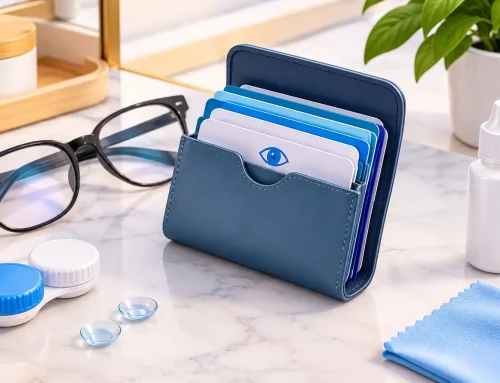
EYEBOX® was designed around this exact problem: lens cases without the information that makes them useful. It provides a compact at-home storage system for multiple pairs while preserving key details such as prescription, color, expiration date, and purchase information alongside the cases.
That combination is especially helpful if you alternate between prescription lenses and colored contacts. Rather than relying on memory or keeping old boxes in a drawer, you can see which pair belongs where and what you need to know before wearing it.
The right organizer should make your contact lens routine feel calmer, not more complicated. Give every pair a home, write down the details while you have them, and let your setup do the remembering for you.