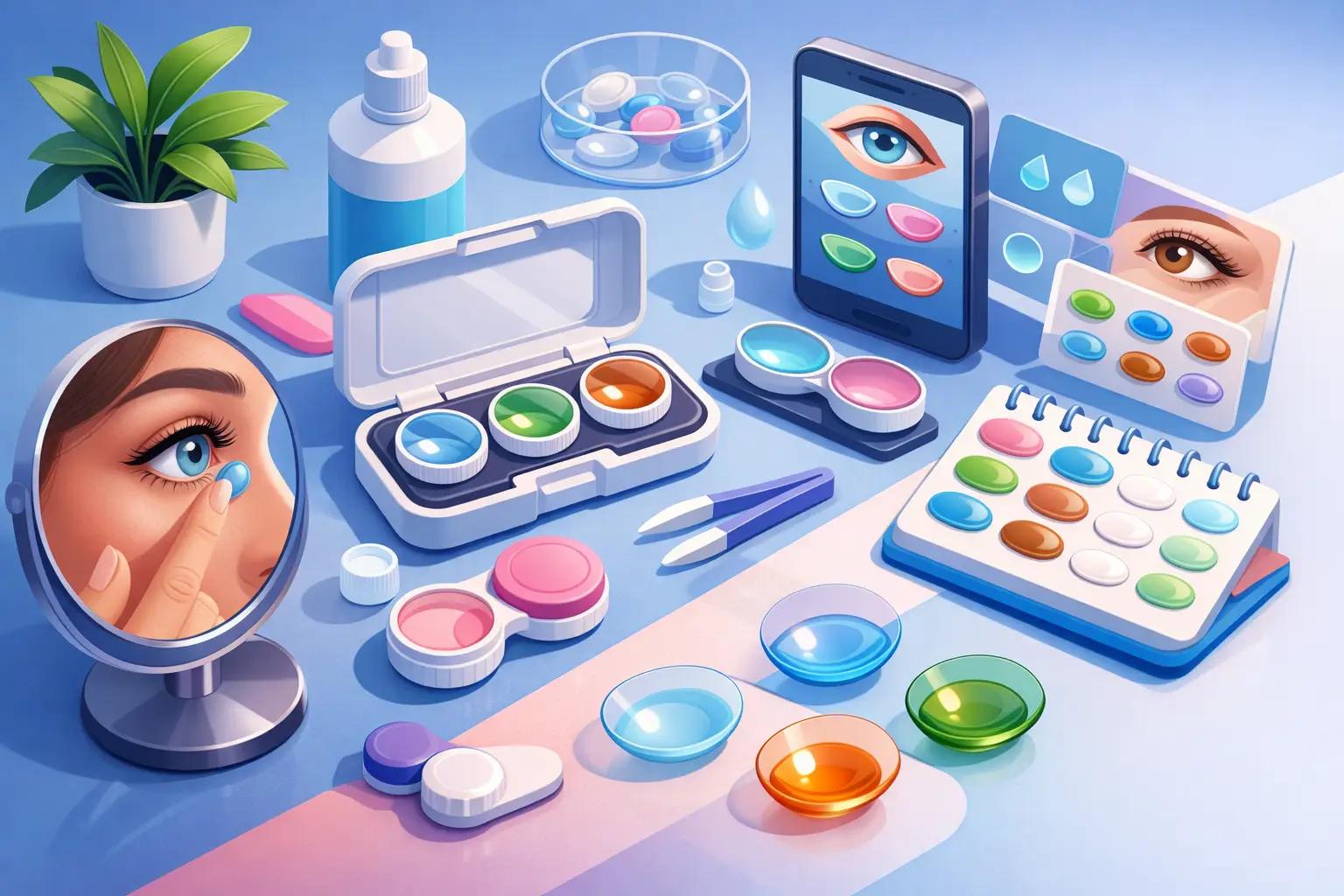
A gray case, a hazel case, and a case you are pretty sure holds your everyday prescription lenses can look exactly the same in a bathroom drawer. That is where confusion starts. Knowing how to keep track of colored contacts is not about being extra organized. It is about knowing what you are putting in your eyes, when it should be replaced, and whether it is still safe to wear.
Colored contacts often come with more details to manage than one everyday pair. You may have a different prescription in each eye, several colors, an occasional pair for events, and replacement schedules that do not match. Once the outer boxes are tossed, those details are easy to lose. A simple system keeps every pair identifiable from the first wear to replacement day.
Start With the Information That Matters
Before organizing cases, gather the information from each lens box, blister pack, or prescription. Do this before you discard any packaging. The goal is to create a record that stays with the lenses instead of relying on memory.
For every pair, record the brand, color name, right-eye and left-eye prescription, base curve, diameter, purchase date, package expiration date, and replacement schedule. Also write down the date you opened the pair. The package expiration date and the date a lens needs to be replaced after opening are not the same thing.
For example, an unopened monthly lens may have a future printed expiration date, but once you open it, it should follow its one-month replacement schedule. A daily disposable should be discarded after one day of wear, even if it looks clean. Your eye care provider’s instructions and the lens manufacturer’s directions should always set the schedule.
If you wear cosmetic lenses with no vision correction, record those details too. Colored contacts are medical devices, whether or not they change your prescription. They should be prescribed, fitted, and cared for like any other contact lens.
Give Every Pair a Clear Identity
The fastest way to avoid mix-ups is to label each pair by more than color. “Brown” may not be enough when you own warm brown, honey brown, and natural brown lenses. A useful label includes the color, the prescription or intended eye, and the open date.
Instead of writing only “Blue,” write something like “Blue Gray – R – opened June 3” and “Blue Gray – L – opened June 3.” If both eyes have the same prescription, still mark right and left. Keeping lenses in their designated sides prevents accidental swapping and makes your routine more consistent.
Avoid identifying lenses by the look of the solution or the case alone. Lens cases are easy to move, and colored lenses can appear different under bathroom lighting. A written label gives you a reliable answer when you are rushing in the morning or putting lenses away at night.
A permanent marker, small label, or index card can work, as long as the information remains readable and stays near the correct case. The best choice is the one you will update every time you open a new pair.
Create One Home Base for Your Contacts
Contacts become difficult to track when cases, boxes, solution, and notes are stored in different places. One pair ends up by the sink, another in a drawer, and the prescription information disappears with the original packaging. Create one dedicated home base where every active pair and its details belong.
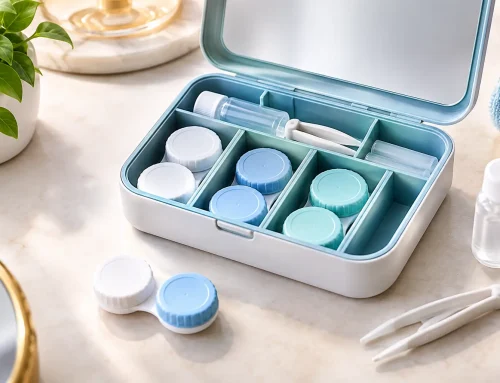
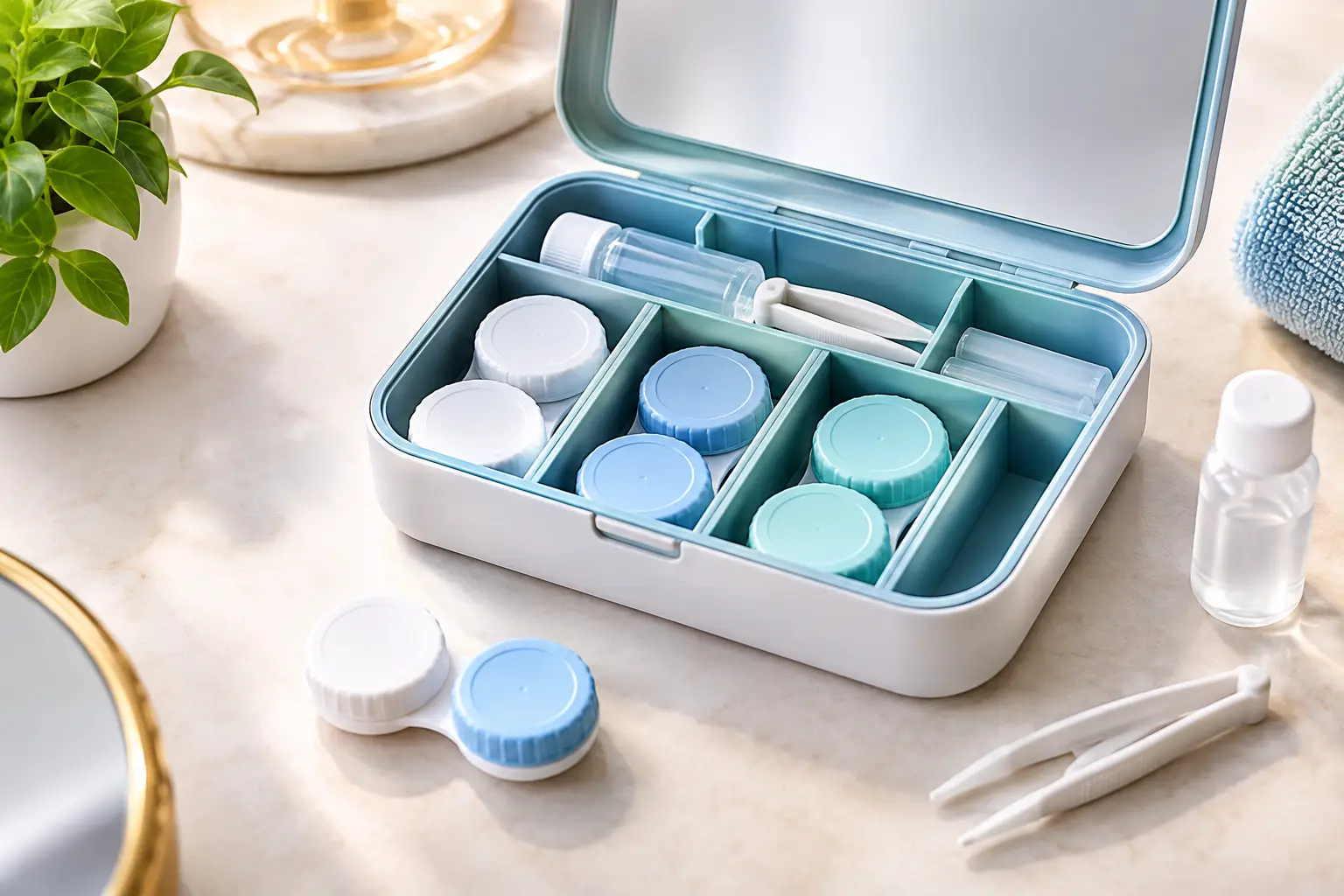
Choose a clean, dry area away from direct heat and moisture. Keep your unopened lenses separate from lenses currently in use. Then arrange active cases so each one has a designated spot beside its label or record. This makes it obvious when a case has been returned to the wrong place or when a pair is missing.
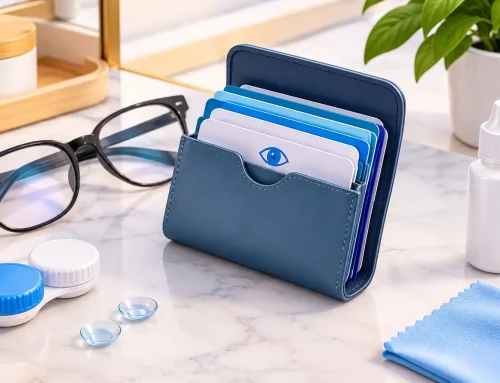
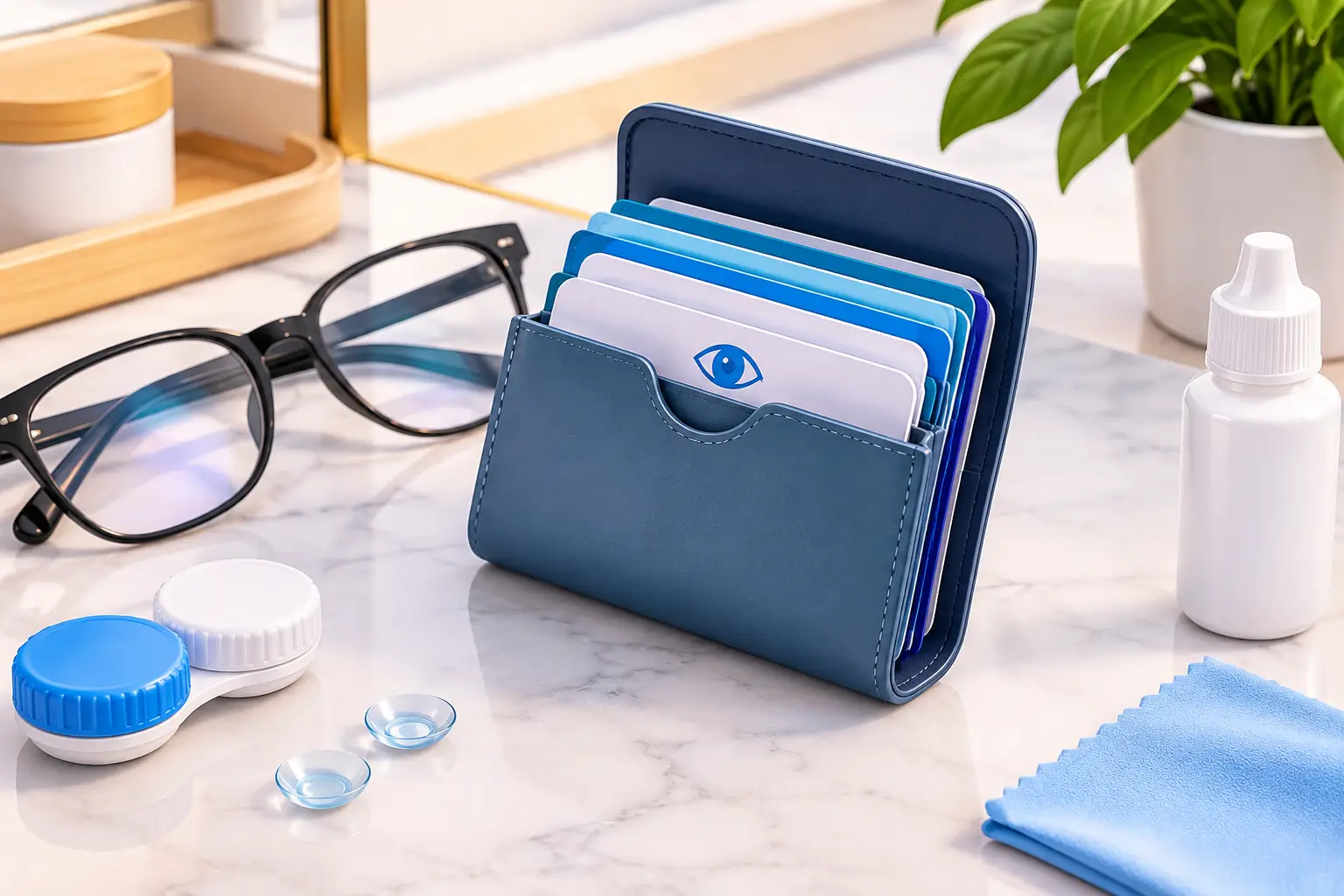
A purpose-built organizer such as EYEBOX can keep lens cases and essential details like color, prescription, expiration, and purchase information together in one place. The real benefit is not just a tidier counter. It is being able to check the details before you wear a pair instead of searching through old boxes or guessing.
Your home base should also make the next step easy: keeping replacement dates visible. If the system feels complicated, you are less likely to use it when you are tired.
Use a Two-Date Reminder System
Most contact-lens confusion comes from tracking only one date. There are two dates worth watching: the printed expiration date for unopened lenses and the discard date for lenses that have been opened.
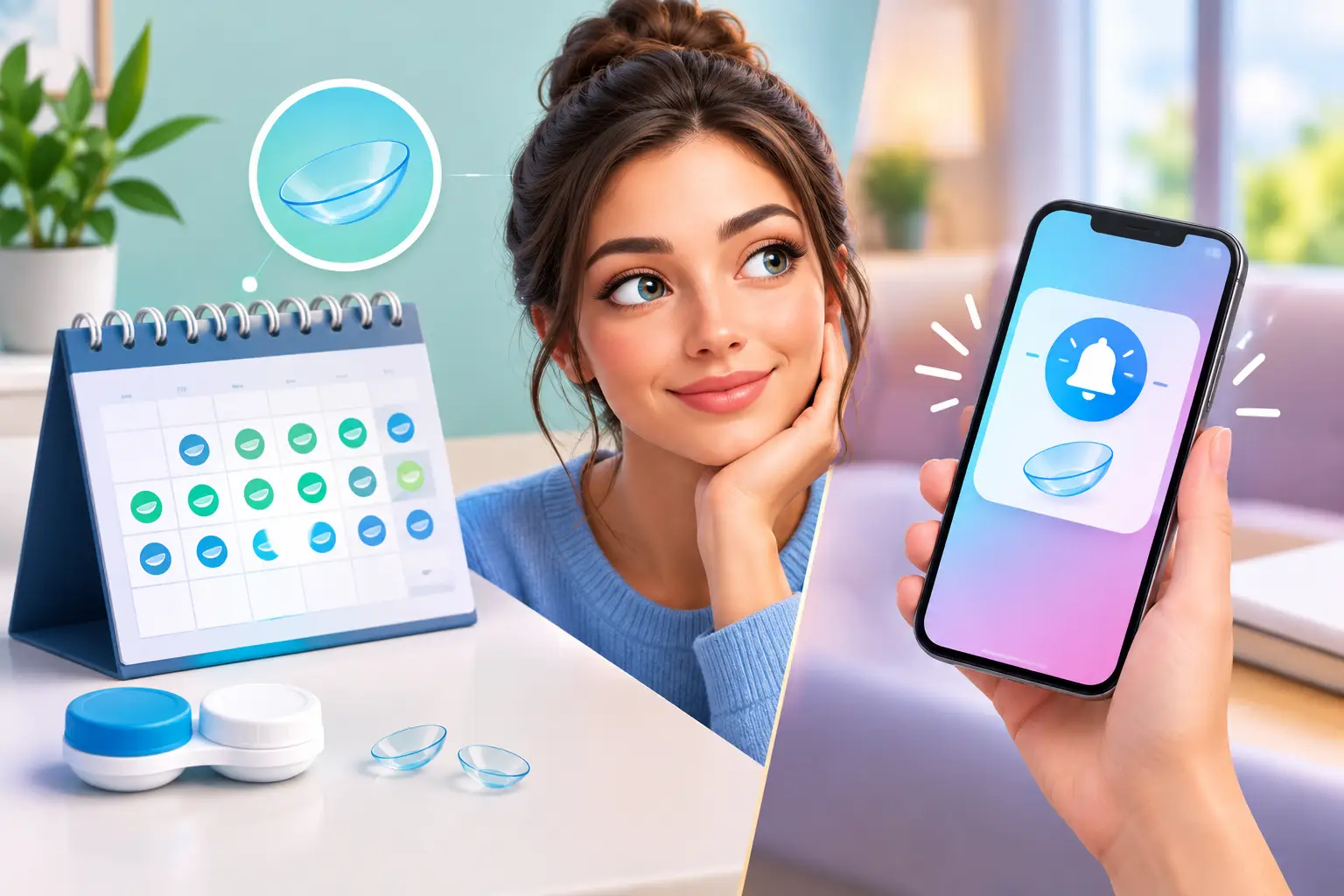
Write the open date on the label or record, then calculate the discard date based on the lens schedule. A monthly pair opened on July 10 should have a clear replacement reminder for August 10, unless your provider has given different instructions. For lenses worn less often, the replacement timeline still follows the product directions after opening. Wearing them only for special occasions does not automatically extend their usable life.
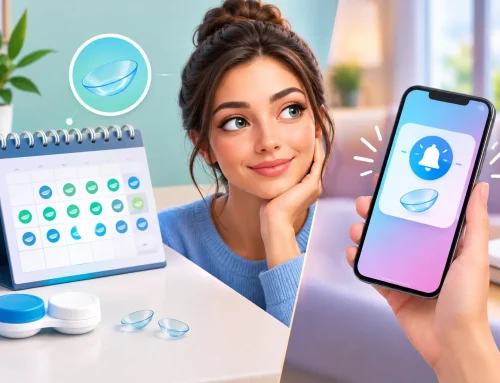
A phone calendar is helpful for reminders, especially if you manage several colors. Name each reminder clearly, such as “Replace Green monthly lenses” rather than simply “Contacts.” The clearer the reminder, the less mental work it takes to act on it.
It also helps to add a quick visual check to your home setup. Put pairs that need replacement soon in a marked section, or use a simple month label. Physical visibility catches what a missed phone notification may not.
Keep a Small Lens Record
You do not need a complicated spreadsheet to stay organized. A short paper record or note on your phone can answer the questions that cause the most frustration: Which color is this? What is the prescription? When did I open it? Do I have a backup pair?
For each color, keep one line with the key details and update it when you open or discard a pair. Include where you bought it and the purchase date if you tend to reorder the same lenses. That information is useful when you need to confirm what worked well, check a past order, or talk with your eye care provider.
A basic record can also stop unnecessary spending. When you can see exactly what is unopened, active, or ready to replace, you are less likely to buy a duplicate pair because you could not find the one you already had.
Make Cleaning Part of the Tracking Routine
Organization works best when it is connected to lens care. Each time you remove reusable colored contacts, look at the label, clean and disinfect the lenses according to the instructions for your lens type and solution, and return them to the matching case. This small sequence reinforces which pair is which.
Do not top off old solution. Empty the case, use fresh recommended solution, and follow your eye care professional’s instructions for rubbing, rinsing, and soaking if those steps apply to your product. Water is not a substitute for contact lens solution, and lenses should never be stored in water.
Replace lens cases regularly, typically at least every three months or as directed by your eye care professional. When you replace a case, transfer the label and confirm the pair’s color, prescription, and discard date before placing the lenses in the new case. That prevents a clean case from becoming a fresh source of confusion.
Know When a Pair Should Not Be Worn
A good tracking system is also a safety check. Do not wear a lens if you cannot confidently identify it, if it is past its replacement date, or if the package expiration date has passed. When in doubt, use a fresh prescribed pair or contact your eye care provider.
Remove lenses and seek advice from an eye care professional if you have pain, redness, swelling, unusual discharge, blurry vision, or ongoing irritation. Do not try to solve discomfort by switching randomly between old colored pairs. The record you keep can help you explain exactly which lenses you wore and when symptoms began.
Colored contacts should make getting ready feel more fun, not more uncertain. When each pair has a labeled place, a recorded open date, and a visible replacement reminder, you can choose your color with confidence instead of sorting through mystery cases.