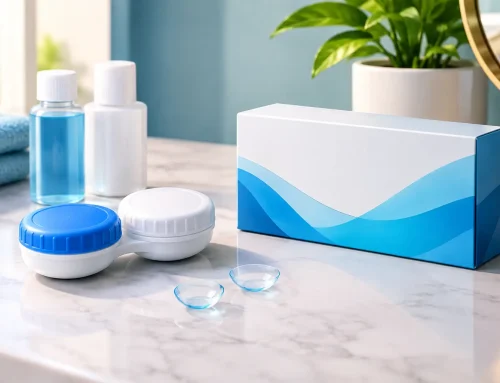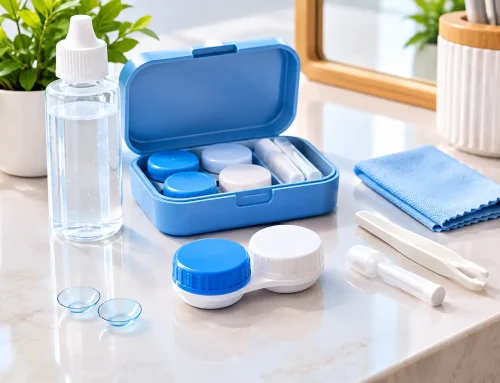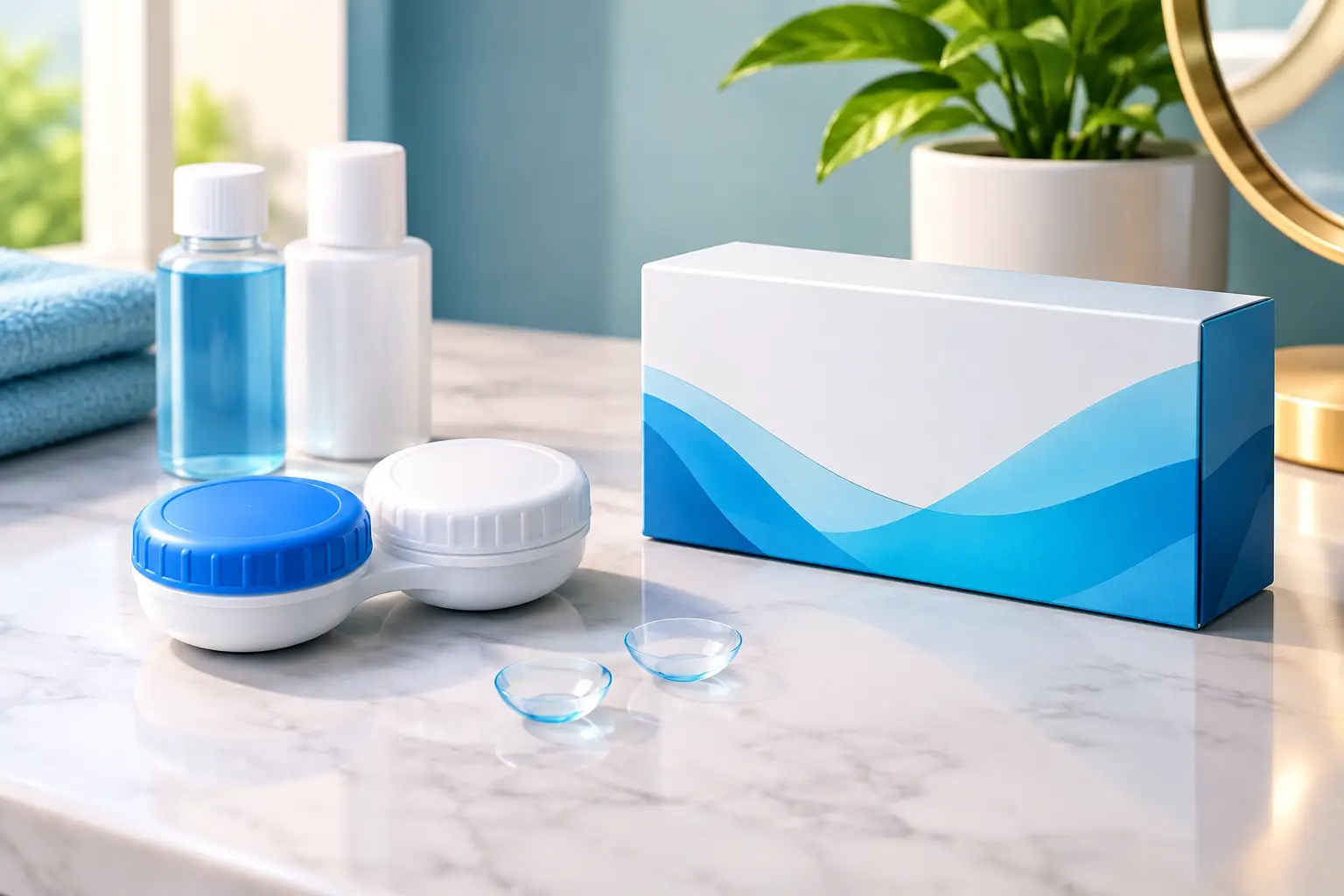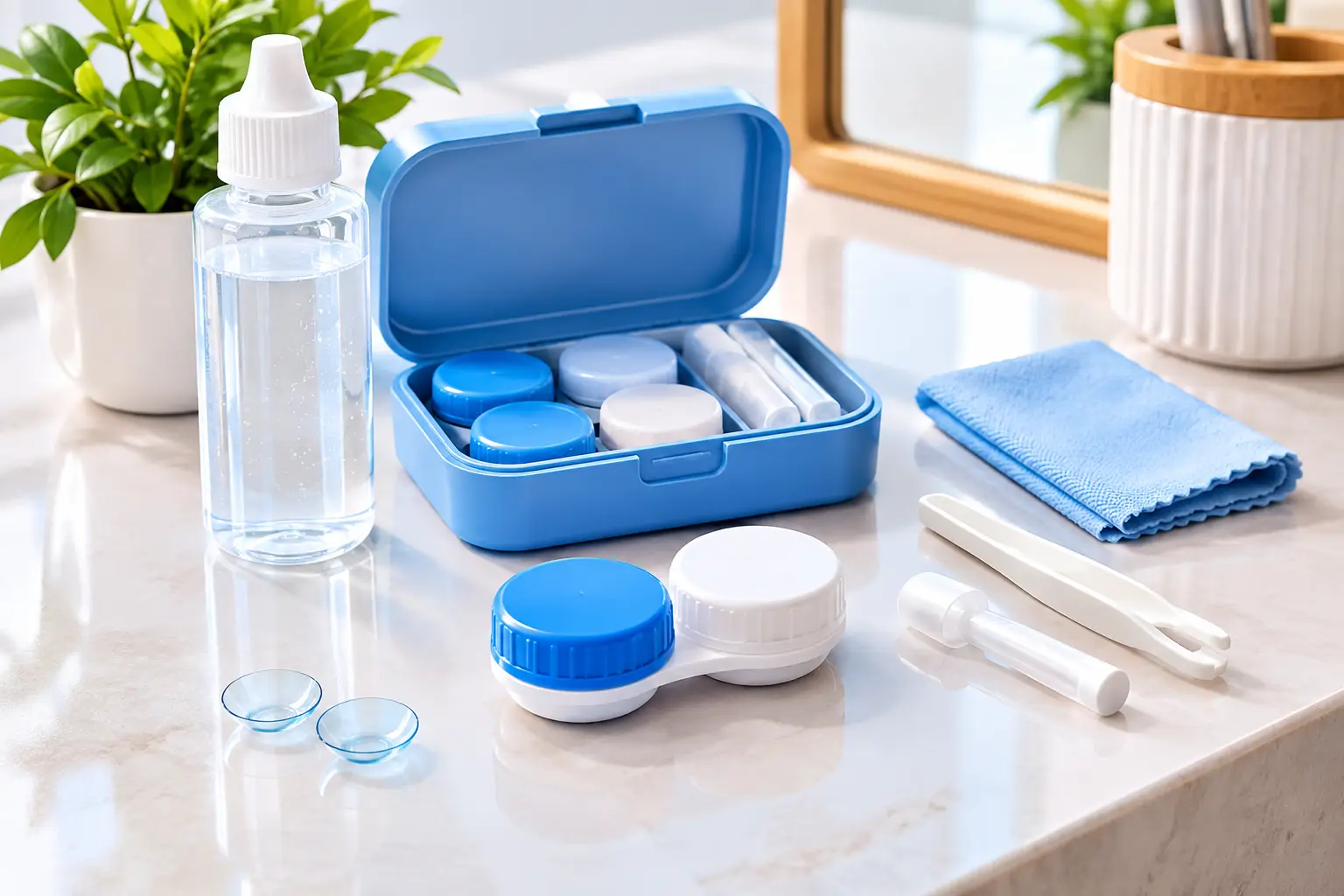
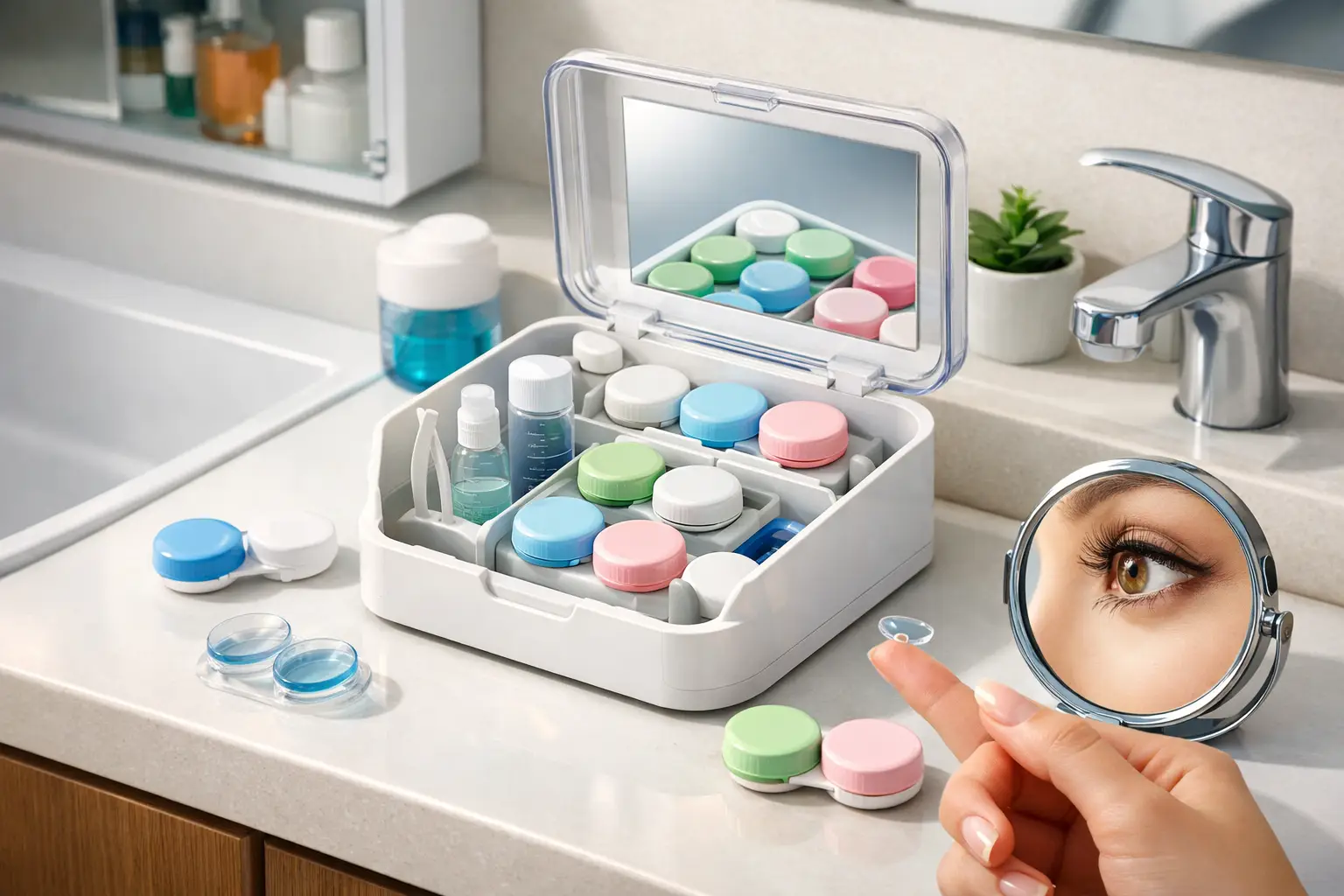
If your bathroom counter has become the place where lens cases go to disappear, you are not imagining it. A good contact lens case organizer for bathroom use fixes a very specific problem: keeping your lens cases clean, visible, and matched to the right pair of lenses without forcing you to rely on memory.
That matters more than most people expect. Contact lens users often keep more than one pair in rotation, especially if they wear prescription lenses, cosmetic lenses, or different colors for different looks. Once the original packaging is tossed, the details usually go with it. What is left behind is a cluster of similar cases, half-remembered dates, and the low-level stress of wondering whether you are using the right pair.
Why a contact lens case organizer for bathroom setups matters
The bathroom is where most lens routines begin and end. It is where people insert lenses in the morning, remove them at night, and store the small items that make the routine work. But it is also one of the easiest places for small accessories to become messy.
A loose contact lens case on the counter can get mixed in with skincare, makeup, and other daily items. A case tucked into a drawer solves visibility but often creates a new problem: now you have to dig for it, and if you use more than one pair, the chance of a mix-up goes up fast.
A purpose-built organizer does more than hold cases. It creates a system. Instead of storing contact lens accessories wherever there is room, you assign each pair a place and keep the identifying information connected to it. That difference sounds small until you have had to guess which blue lens is which, or try to remember when a pair was opened.
What to look for in a bathroom lens organizer
Not every small container works as a contact lens organizer. A random tray may reduce clutter, but it does not necessarily reduce confusion. The right solution should make your routine easier, not just make your counter look tidier for a day or two.
Start with visibility. If you cannot quickly tell which case belongs to which pair, the organizer is not doing enough. Contact lens wearers who use multiple pairs need a setup that helps them identify lenses at a glance, especially when the cases themselves look nearly identical.
Next is record keeping. This is the part most people do not realize they are missing until the packaging is gone. Prescription strength, color name, purchase details, and expiration timelines all matter, especially when you switch between pairs. A strong organizer system keeps that information with the case instead of leaving you to search old emails, texts, or order confirmations.
Clean storage also matters. Your bathroom is functional, but it is not always calm or spacious. Steam, splashes, and crowded counters can turn a simple lens routine into a cluttered one. An organizer should help you keep lens cases in a designated spot away from the general mess, so your setup stays consistent.
The difference between storing and organizing
This is where many contact lens users get stuck. They do store their cases. They put them in a drawer, a makeup bag, a cup, or a corner of the medicine cabinet. But storing is not the same as organizing.
Storing means your lens case has a place to sit. Organizing means you know exactly what that case contains, when you bought it, how long it is meant to be used, and how it fits into your routine. If you wear one pair of clear prescription lenses all the time, a basic storage spot may be enough. If you rotate multiple pairs, especially cosmetic lenses, a basic storage spot usually breaks down.
That is why a true contact lens case organizer for bathroom use should solve both physical clutter and information loss. It should help prevent the common chain reaction that starts with discarded packaging and ends with uncertainty.
Who benefits most from a contact lens case organizer for bathroom use
Some people feel the problem right away. Others only notice it after they have bought a few pairs and realized they are trying to manage them with memory alone.
If you wear both prescription and colored contacts, organization becomes practical very quickly. The same is true if you keep backup pairs, try different colors, or switch between daily life and event-specific lenses. Even people who are generally organized can lose track of lens details because the original boxes are bulky and rarely stay in the bathroom long.
This is also helpful for people who want a cleaner routine without adding extra steps. A good organizer should reduce decision-making, not create more of it. You should be able to reach for the right case, confirm the right details, and move on.
How a better system reduces everyday mistakes
Most contact lens mistakes are not dramatic. They are repetitive. You forget which pair you opened first. You are not fully sure whether a case belongs to a current pair or an older one. You cannot remember the exact color name or prescription because the box is gone. None of that feels major in the moment, but it makes the routine less reliable.
An organizer changes that by removing guesswork. When each case has a defined place and the key details stay attached to that pair, you no longer need to reconstruct information from memory. That saves time, but more importantly, it gives you more confidence in what you are using.
There is also a financial benefit. Contact lenses are not cheap, and replacing a pair because you lost track of basic information is frustrating. Better organization protects the value of what you already bought.
A practical setup that works in real bathrooms
The best bathroom systems are the ones you will actually maintain. That usually means keeping your organizer near the part of the counter or cabinet where you already handle your lenses. If it is too far removed from your routine, there is a good chance cases will end up drifting back into random spots.
If you have limited counter space, a compact organizer is usually the better fit than a broad tray or improvised bin. The goal is not to create a display. The goal is to give each lens case a stable home while preserving the information that usually gets lost.
For many contact lens users, the real upgrade is not just neatness. It is control. A product like EYEBOX was created around that exact issue – storing lens cases while keeping prescription, color, expiration date, and purchase information together in one system. That is what turns a messy countertop habit into a routine you can trust.
When a simple tray is enough and when it is not
There is a trade-off here. If you use only one pair and replace it on a very predictable schedule, a small tray or designated drawer section may be enough to keep things tidy. In that case, your biggest issue may be clutter, not confusion.
But if your problem is mixing up cases, forgetting lens details, or losing track of expiration timelines, a tray will not solve the actual issue. It may look cleaner, but it still leaves you managing important details in your head. That is where a purpose-built organizer earns its place.
So the question is not just, where will I put my lens case? The better question is, how will I know exactly what I am using a week, a month, or three months from now?
Choosing the right organizer for your routine
When comparing options, think about your real habits instead of your ideal ones. If you know you throw away boxes quickly, choose a system that preserves those details elsewhere. If you tend to buy similar shades or multiple colored contacts, choose something that supports clear identification. If your bathroom gets crowded easily, prioritize compact storage that keeps your lens area separate from everything else.
The right organizer should make your routine feel lighter. You should not have to stop and decode your own setup every morning or night. You should be able to look at it and know what belongs where.
That is the standard worth aiming for. A contact lens case organizer for bathroom use is not just about neatness. It is about making sure the small but important parts of lens care stay clear, accurate, and easy to manage, even on busy days.
When your contact lens routine has a real system behind it, the bathroom stops being the place where details get lost and starts being the place where everything is exactly where it should be.