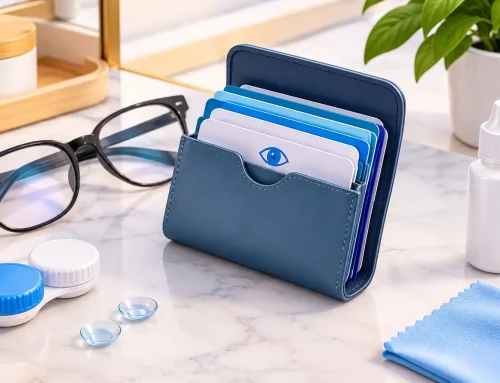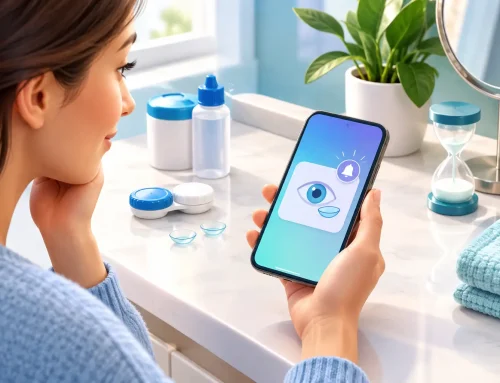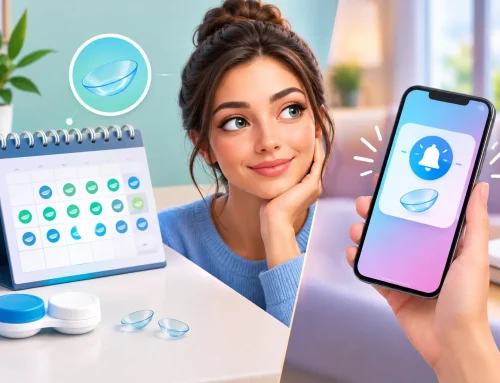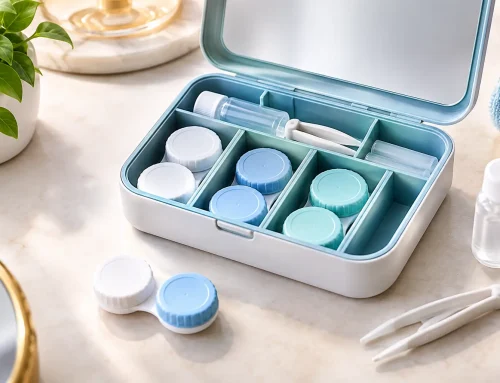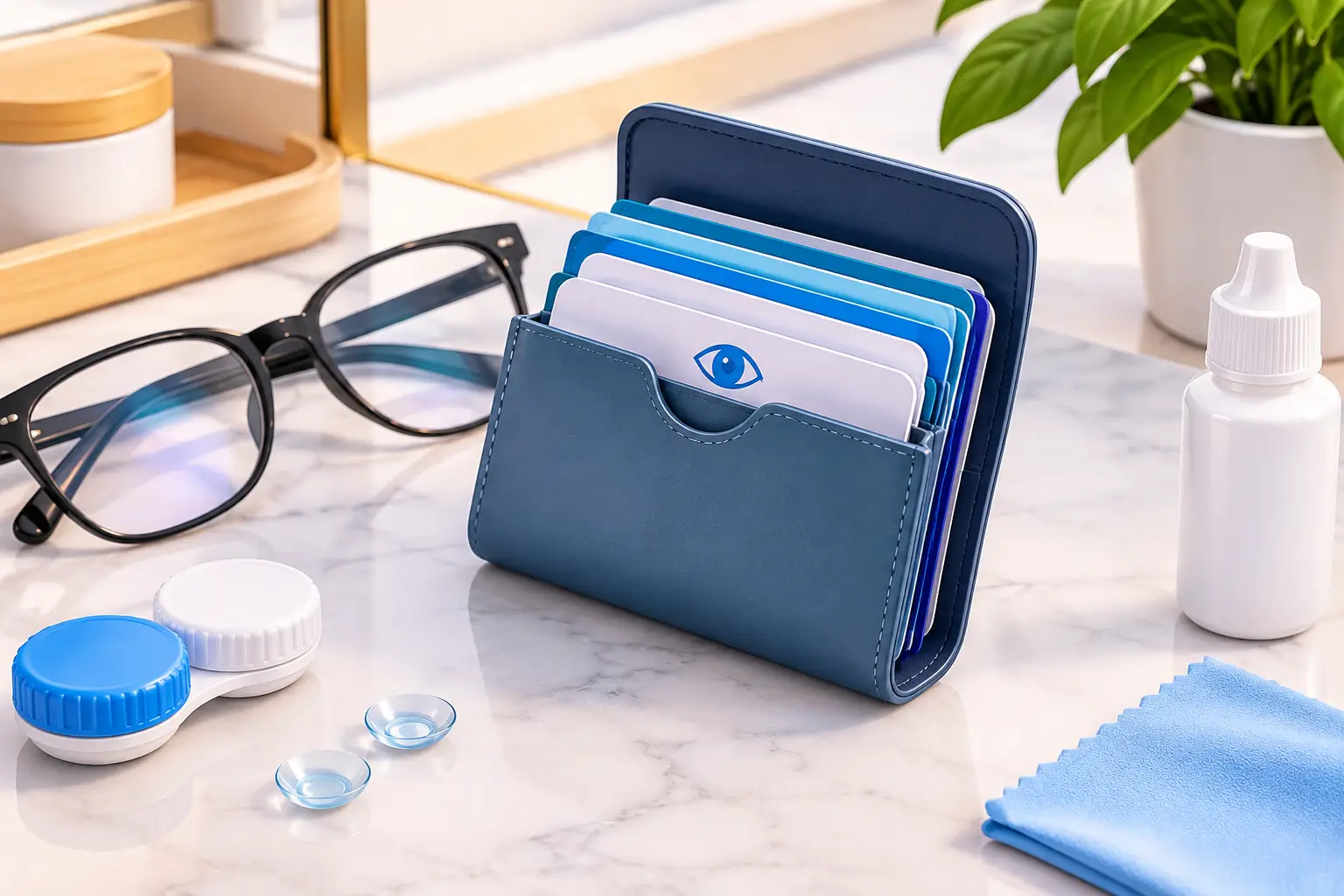
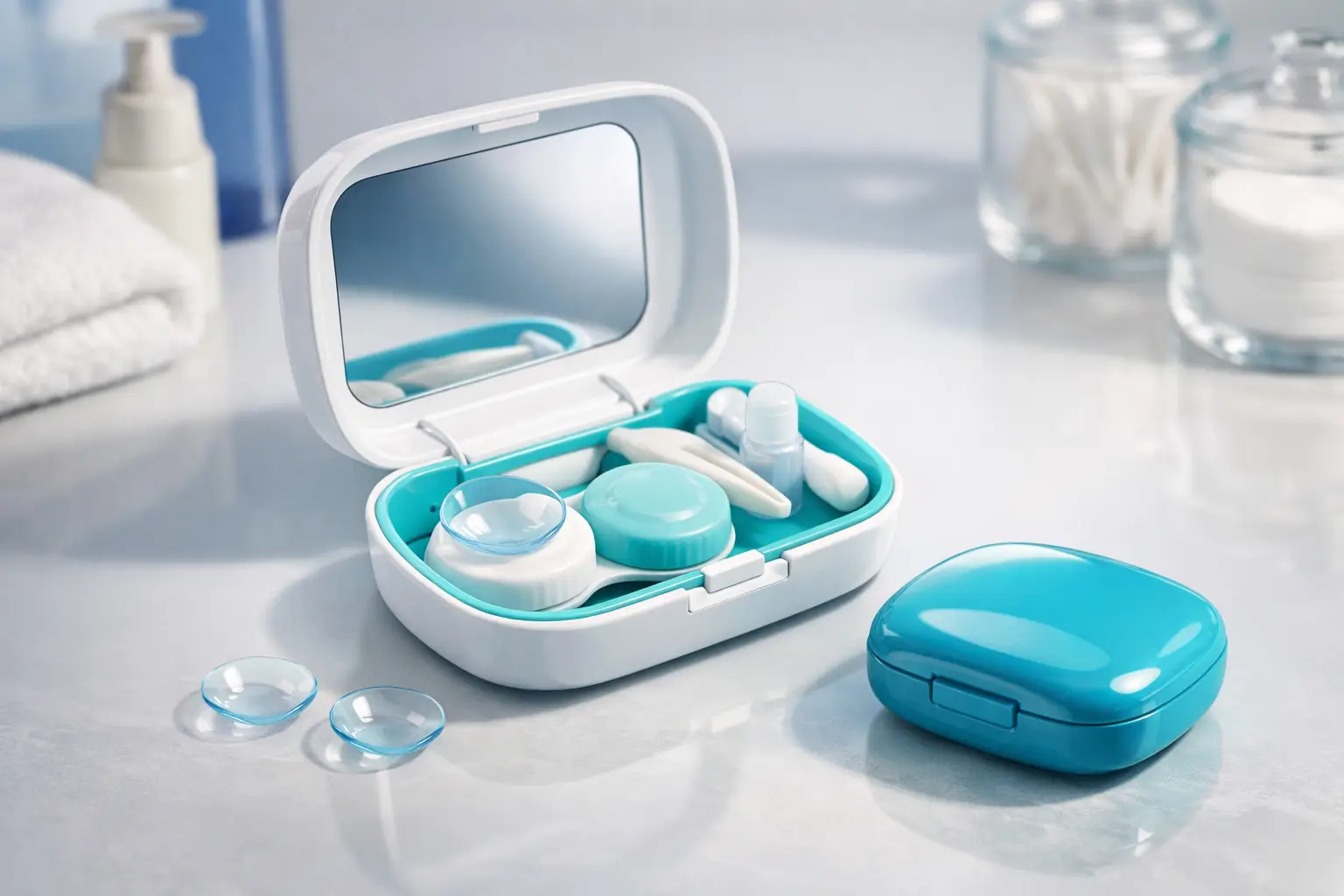
A compact contact lens storage system solves a frustrating problem most lens wearers know well: a drawer full of nearly identical cases and no clear way to tell what is inside them. You may remember that one pair is blue, another is for everyday vision, and another was opened months ago – until you do not. When prescription details, color names, purchase dates, and replacement timelines are scattered across boxes, emails, and memory, a simple routine gets harder than it needs to be.
The right system gives every lens case a place and keeps the information that matters beside it. That means less guessing at the bathroom counter, fewer discarded details, and a clearer view of what you own and what needs attention.
Why lens storage gets confusing so quickly
Contact lens cases are small by design. They are useful for holding lenses, but they do not preserve the context that tells you which lenses they contain. Once you throw away the original packaging, it can be difficult to remember the prescription, brand, color, expiration date, or when a pair was purchased.
This gets more complicated for people who wear more than one type of lens. You may have daily vision lenses, colored contacts for occasional wear, a backup pair, or different prescriptions for each eye. Similar cases can look interchangeable, especially when they are loose in a medicine cabinet, drawer, or countertop bin.
The usual workaround is not really a system. People write notes on paper, save photos on their phone, keep boxes long after opening them, or promise themselves they will remember. Each option can help for a while, but the details are still separated from the lens case itself. When you are getting ready quickly, that separation creates room for mistakes.
A dedicated organizer changes the setup from a pile of individual items into one clear reference point. Instead of asking, “Which case is this?” you can identify the pair before opening it.
What a compact contact lens storage system should do
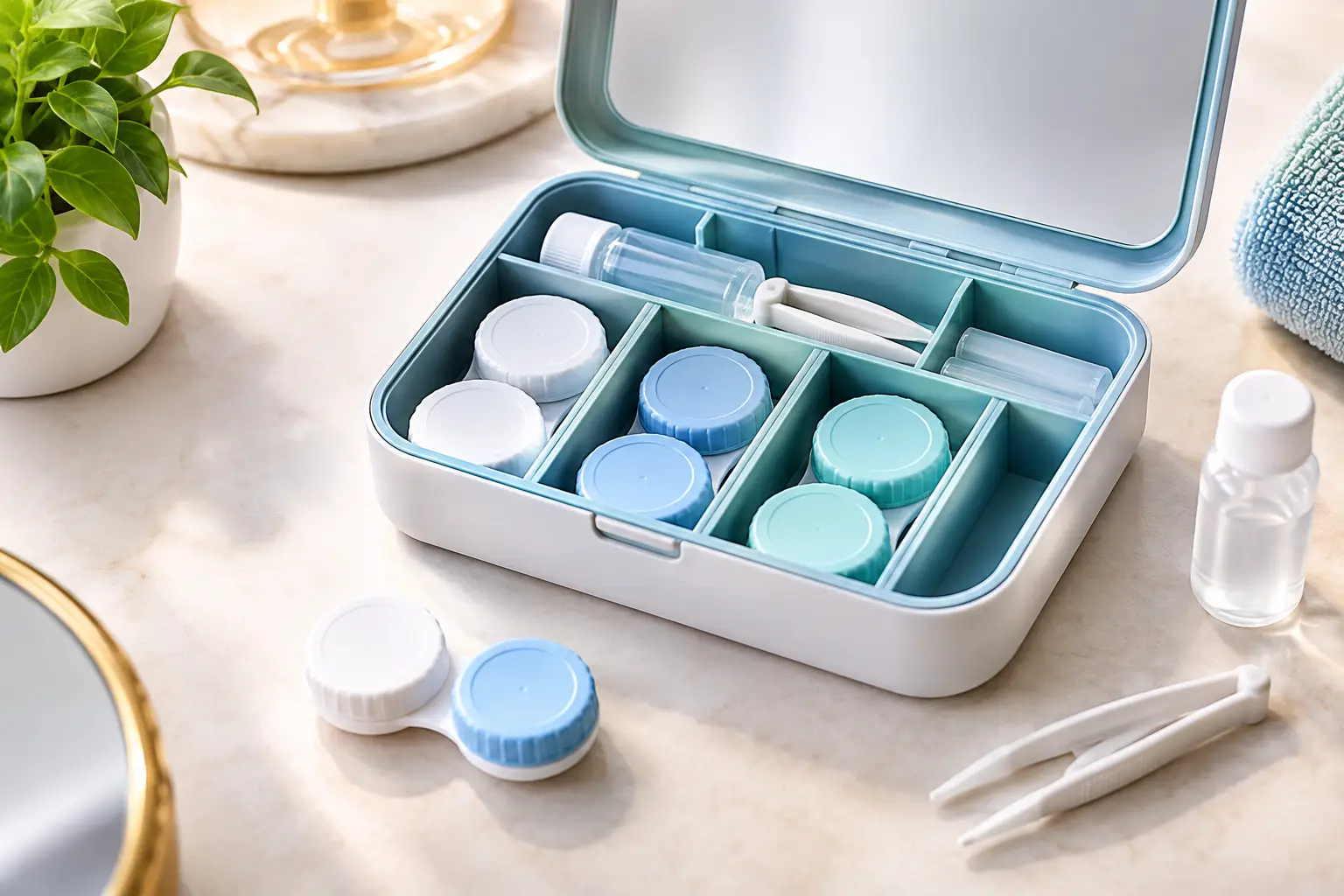
Compact should not mean cramped or vague. A useful compact contact lens storage system makes efficient use of the space you already have while keeping each pair distinct and easy to identify. The goal is not to store every eye care item you own. The goal is to organize the lens cases and their essential details in one practical place.
Look for a setup that supports both physical organization and record keeping. Each stored case should have an assigned spot, with room to note the information you would otherwise lose when packaging is discarded. That can include prescription strength, lens color, expiration date, purchase date, and any helpful personal note, such as “special occasion” or “left eye backup.”
Color-coded identification is especially helpful when you use cosmetic lenses or manage multiple pairs with similar cases. A quick visual cue can save you from opening several cases just to find the correct pair. It also makes your routine easier to follow if someone helps you restock or organize your supplies.
A system should be easy to maintain. If it takes too long to update, it will eventually become another unused organizer. The best approach is simple: place a new case in its assigned space, record the key details once, and check the information whenever you use or replace that pair.
The details worth keeping with every pair
Not every lens wearer needs the same notes, but a few details are consistently useful. Keeping them together helps turn your storage area into a dependable record rather than a collection of mystery cases.
For prescription lenses, record the prescription information that helps you distinguish one pair from another. For colored contacts, add the color or style name. If you own several shades that look close in the case, this one detail can prevent a lot of unnecessary second-guessing.
Dates deserve their own attention. The lens package expiration date is not the same as your personal replacement schedule after opening a pair. Follow the instructions provided by your eye care professional and lens manufacturer for wear, cleaning, storage, and replacement. Your organizer can help you track relevant dates, but it does not change the care instructions for your specific lenses.
Purchase information can also be valuable. It gives you a quick reference when you are deciding whether to reorder, comparing a new pair with an older one, or trying to remember where a certain style came from. You do not need to create a complicated inventory spreadsheet. A clear note beside the case is often enough.
Set up your organizer in a few minutes
The easiest time to organize lenses is when you first open a new pair or bring home a new lens case. Starting then prevents the packaging from becoming the only place where important details live.
First, gather the lens cases you currently use, along with any boxes or labels you still have. Sort them into pairs before placing anything in the organizer. If you cannot confidently identify a case, do not guess. Check your available records or ask your eye care professional for guidance before wearing a lens you cannot identify.
Next, assign each pair a dedicated location. Keep right and left lens information clear if your prescriptions differ. Then record the details you are most likely to need: prescription, color, expiration date, purchase date, and a simple label for how you use the pair.
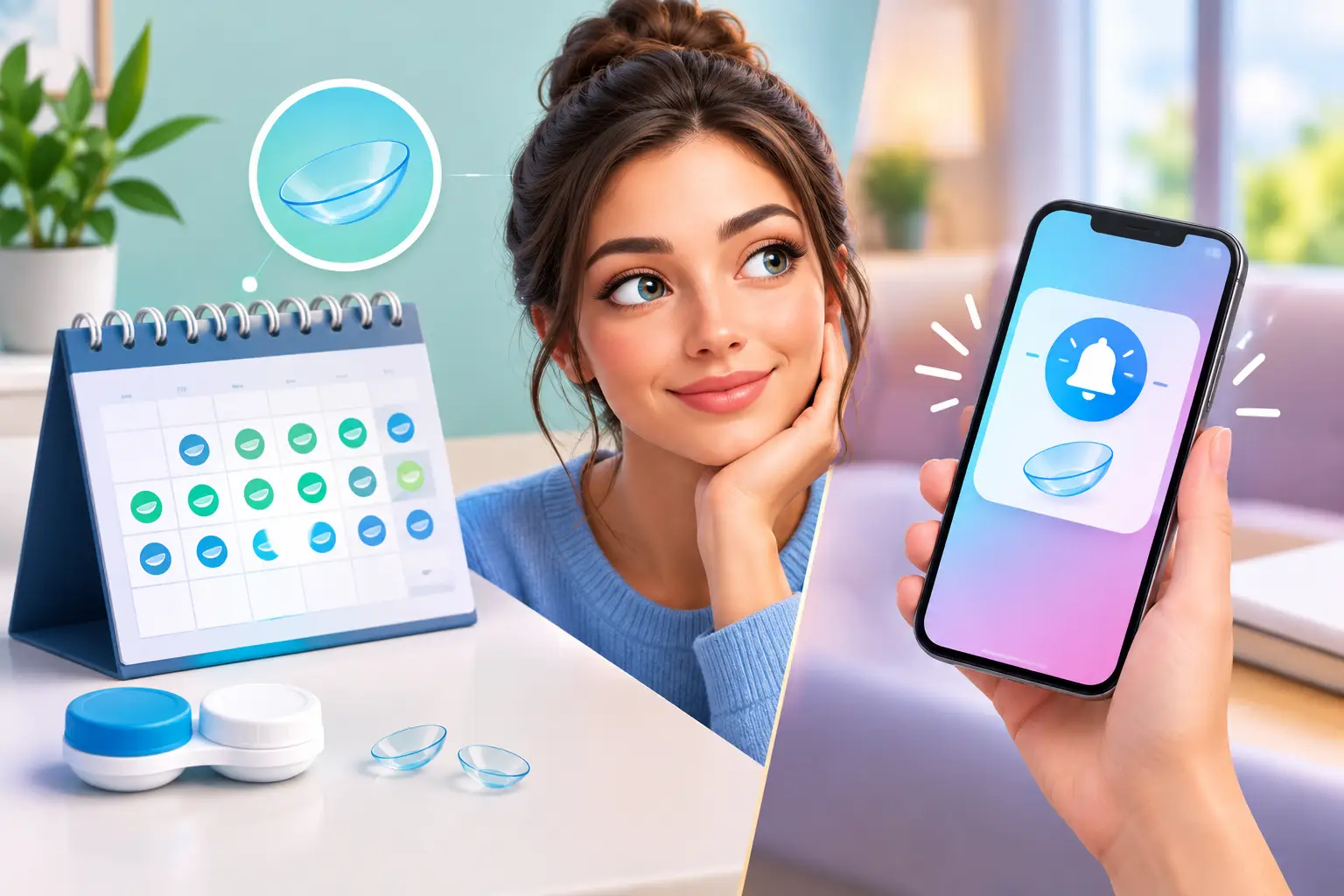
Finally, establish one small habit. When you add a pair, update its record. When you discard or replace a pair, clear that space or update the date. This takes very little time, but it keeps the system accurate. An organizer only reduces confusion when the information inside it stays current.
A better fit for multi-lens routines
A compact organizer is most useful when your routine has more moving parts than a single pair of lenses. Maybe you alternate between clear and colored contacts. Maybe you keep replacement pairs on hand. Maybe you use lenses occasionally and find it harder to remember details because you do not handle them every day.
For these users, visibility matters more than storage capacity alone. A large container can hold many cases, but it can still create confusion if everything is mixed together. A smaller, purpose-built system can be more effective because it gives each pair a defined location and preserves the information that belongs with it.
That is the practical difference between storing lens cases and managing them. Storage hides the clutter. Management makes the contents understandable.
The EYEBOX® is designed around that distinction, combining designated lens-case storage with a simple way to preserve prescription, color, expiration, and purchase details. Rather than relying on memory or old packaging, you have one organized place to check before you reach for a pair.
Keep the system clean and useful
Organization supports good habits, but it does not replace lens hygiene. Always follow your eye care professional’s recommendations and the instructions that come with your lenses and lens care products. Use only the appropriate solution for your lenses, keep lens cases clean, and replace cases as directed.
It also helps to avoid overfilling your storage area with old or uncertain items. If a pair is expired, no longer needed, or cannot be identified, do not let it take up a labeled space just because it is there. Keeping only current, clearly documented pairs makes the system easier to trust.
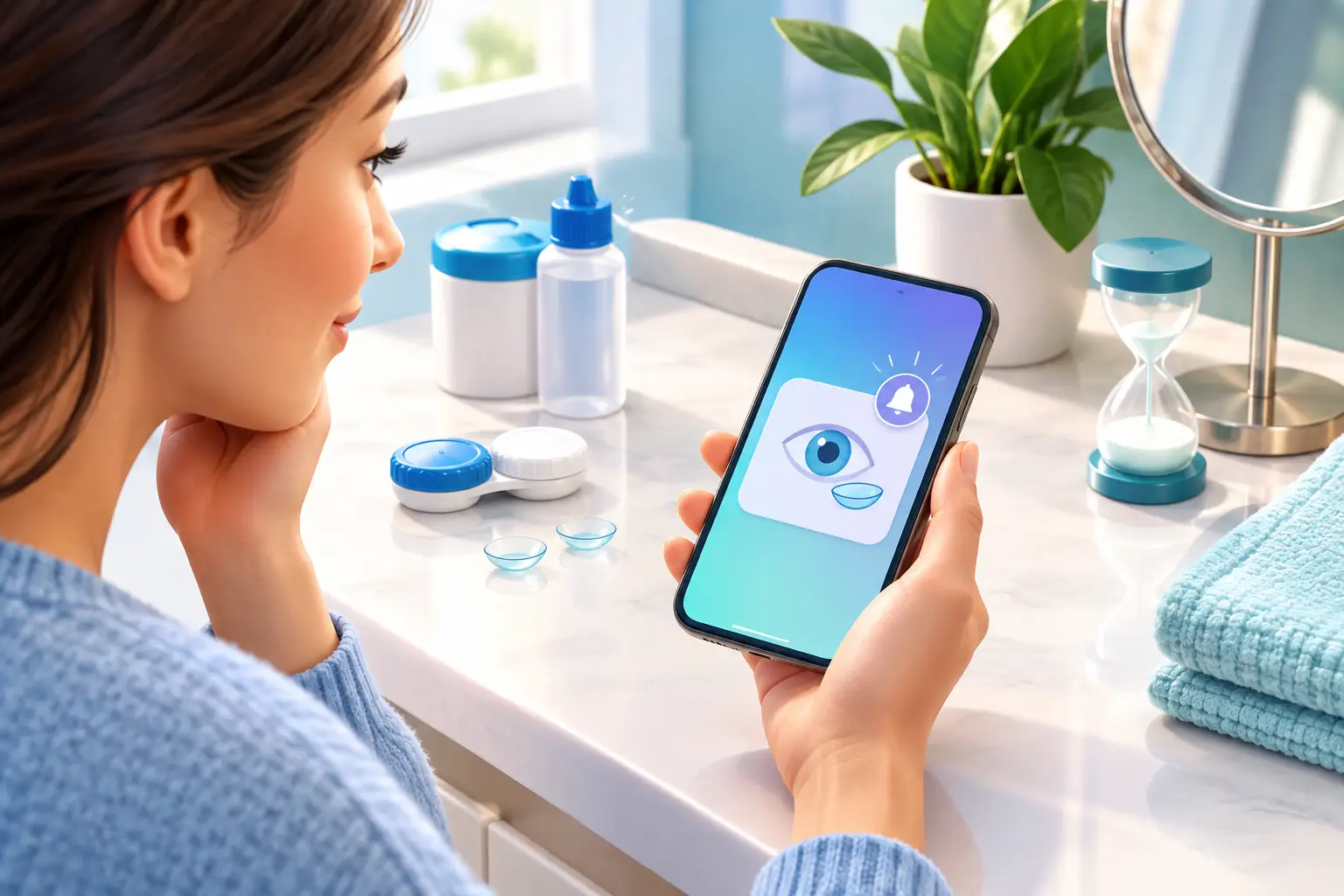
A quick review once a month can be enough. Check for upcoming expiration dates, confirm that labels still make sense, and remove records for pairs you no longer use. This is particularly helpful before you order replacements, because you can see exactly what is running low and what is still active.
Small organization, less daily friction
The value of a compact lens organizer is not that it adds another step to your routine. It removes the repeat decisions that make the routine annoying: Which case is mine? What color is this pair? When did I buy these? Is this the current prescription?
When the answers are stored with the cases, you spend less time searching and more time feeling confident about what you are using. Start with the pairs you wear most, give each one a clear home, and let your lens routine become one less thing you have to keep in your head.